
You can make your living room feel calm and stylish without overdoing it—start with a neutral base, pick low-profile seating, and layer tactile fabrics for depth. Keep sightlines open with smart storage, introduce one sculptural piece, and pick finishes that balance matte warmth with a few glossy accents. I’ll walk you through 22 focused ideas that simplify choices and elevate the space—so you can edit with confidence and keep the room feeling intentional.
Embrace a Neutral Base Palette
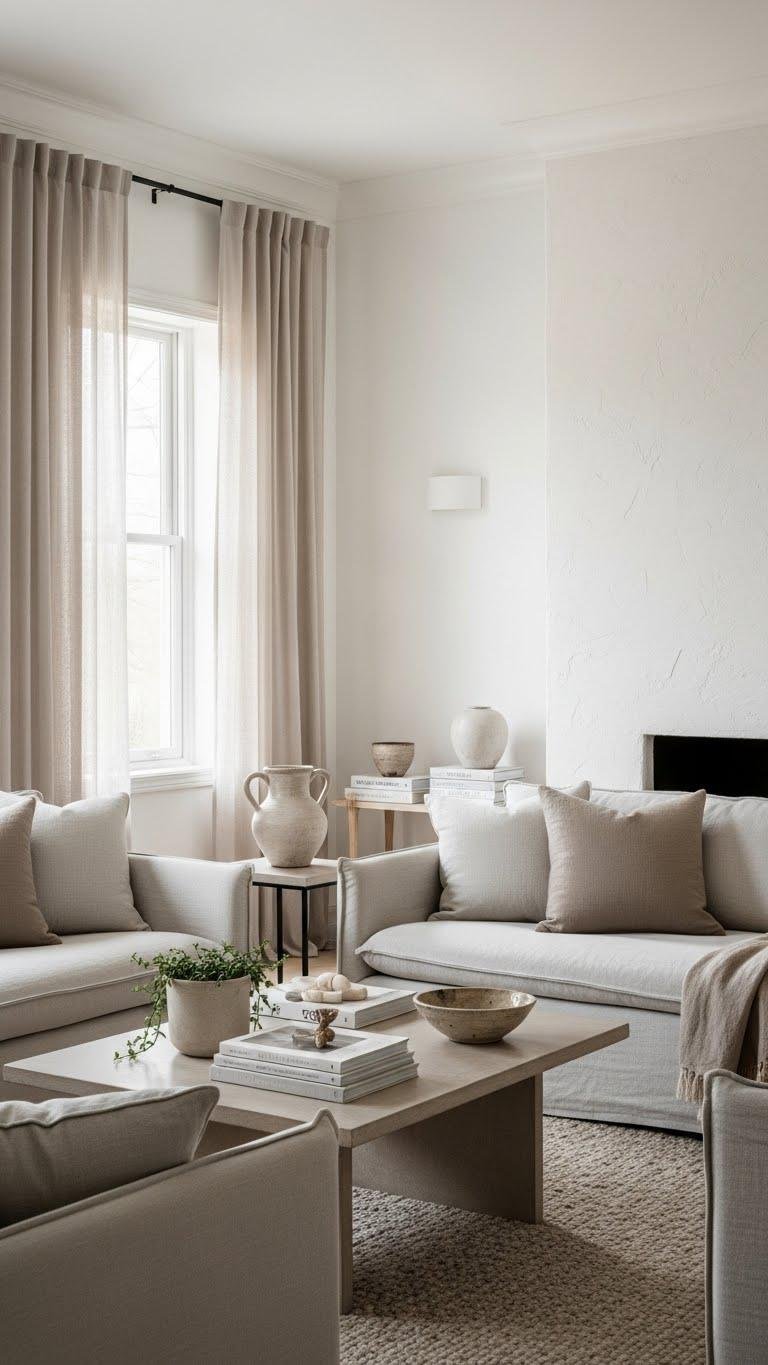
Start with a neutral base palette to give your living room a calm, timeless foundation. You’ll choose soft white walls, layered with linen textures and muted taupe accents to keep visuals light and grounded.
Introduce raw plaster details for tactile warmth and honest materiality. The result feels open, intentional, and freeing—so you can personalize accessories without disrupting the serene core.
Choose Low-Profile Seating
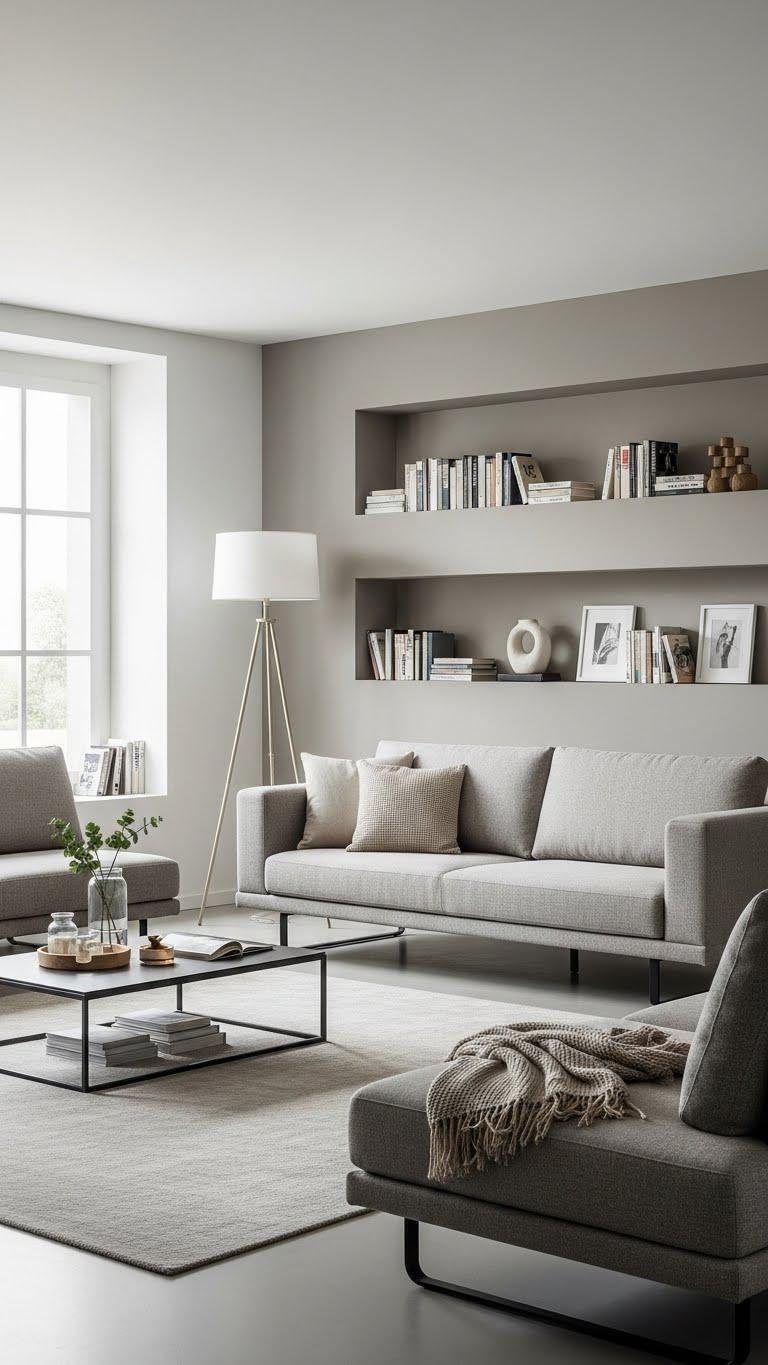
Opt for low-profile seating to preserve sightlines and keep the room feeling airy; you’ll get a grounded, modern look without overwhelming the neutral palette. Choose a low profile sectional or slim sofa with simple lines, and consider recessed seating to maintain open flow.
You’ll enjoy uncluttered visuals, flexible layout options, and a serene living room that feels both liberated and intentionally designed.
Layer Textures Instead of Patterns
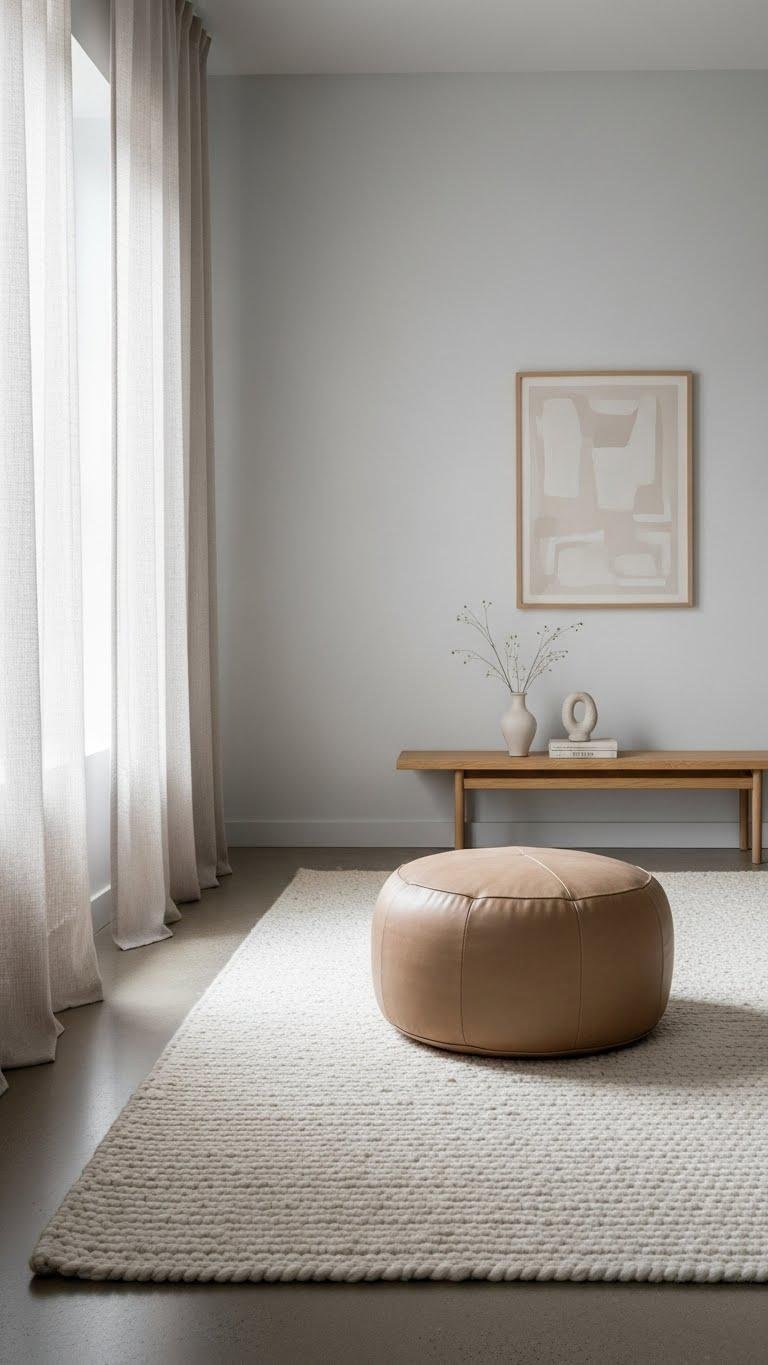
When you skip busy patterns and layer textures instead, the room feels calm and deliberately curated. You’ll create depth with contrast weaves—linen, nubby wool, and a sleek leather pouf—so surfaces speak without shouting.
Embrace tactile layering with neutral tones and spare accents, choosing pieces that feel free and unfussy. The result is a minimalist space that’s inviting, personal, and effortlessly composed.
Add a Sculptural Accent Chair
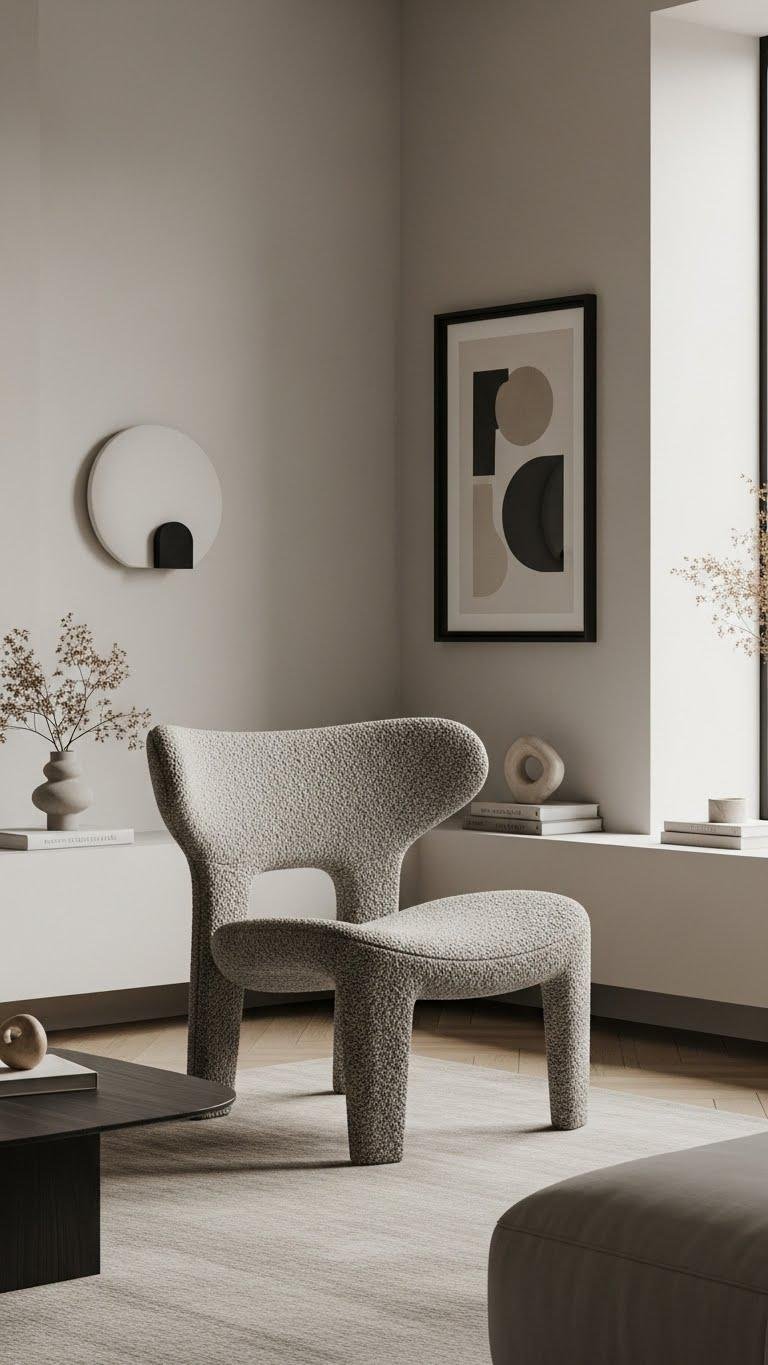
After you’ve layered textures to create a calm, tactile base, introduce a sculptural accent chair to give the room personality and a focal point. Choose a piece with a sculptural silhouette that complements clean lines and adds an unexpected accent texture—think tactile boucle or molded wood.
You’ll create a liberated, refined corner that invites lounging without clutter or visual noise.
Use Hidden and Multifunctional Storage
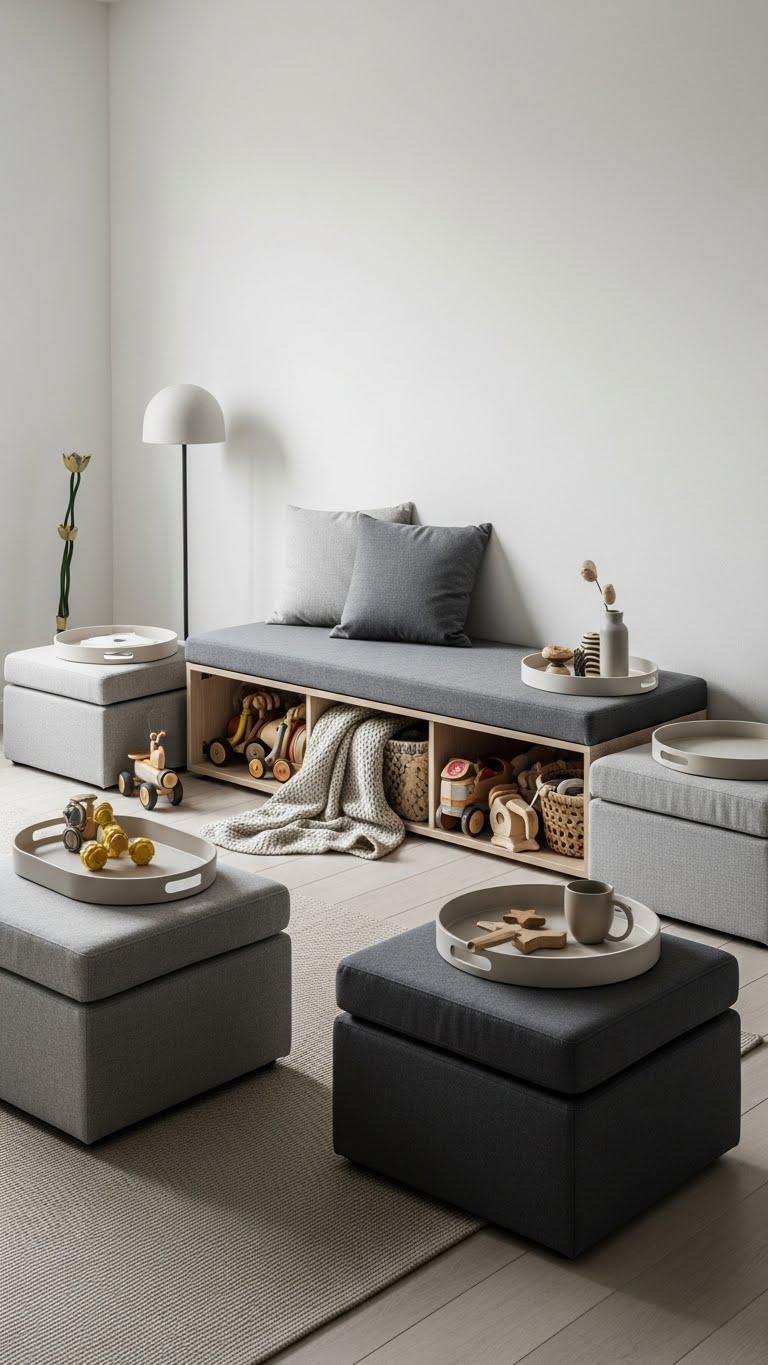
Tuck clutter out of sight with hidden and multifunctional storage that keeps your minimal living room feeling open and purposeful. Choose a concealed bench for tidy toys and blankets, then add modular ottomans that double as seats, trays, or stacked storage.
You’ll simplify daily life, preserve visual calm, and enjoy flexible pieces that let you move freely and edit the room whenever you want.
Opt for Streamlined, Tight-Lined Furniture
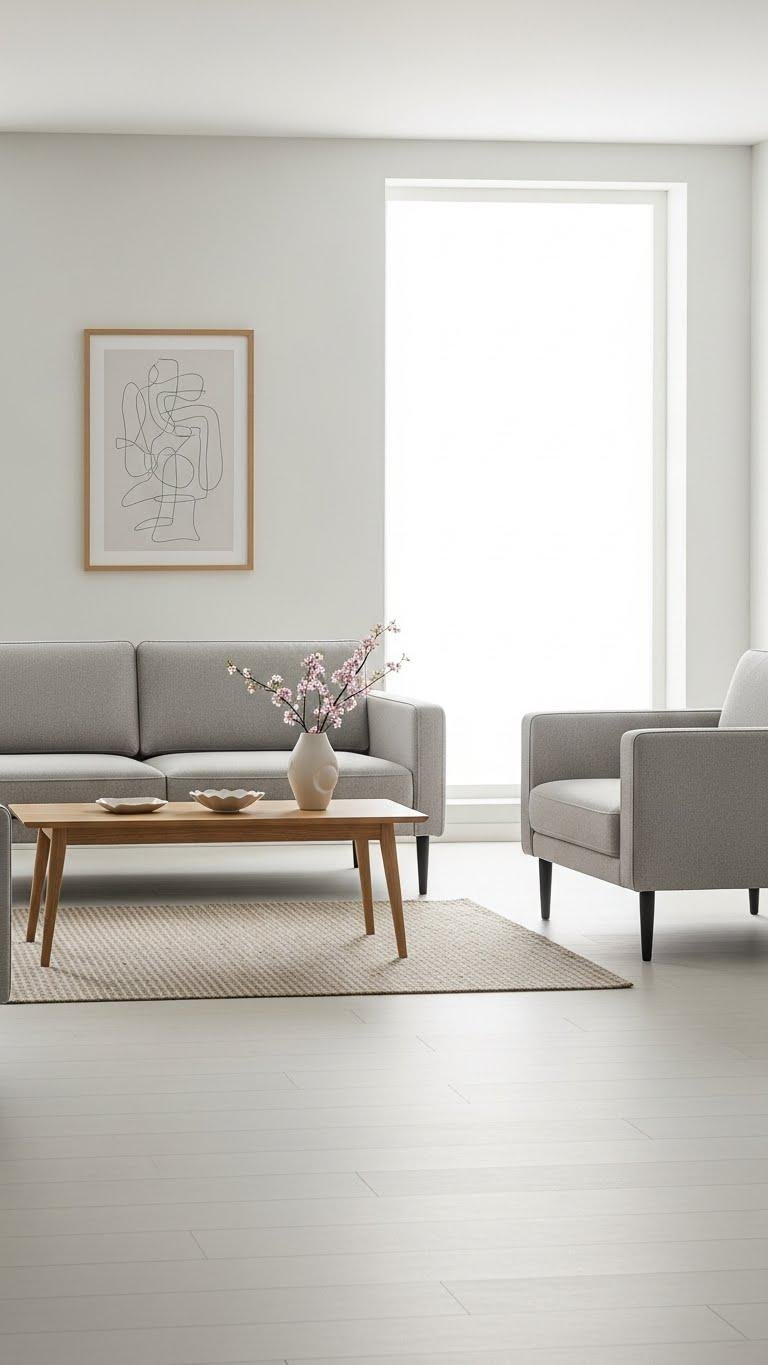
Once you’ve hidden the clutter, choose furniture that keeps lines crisp and sightlines clear: streamlined, tight-lined pieces anchor a minimalist living room without adding visual weight. You’ll favor slim silhouettes and narrow profiles that free movement and focus.
Look for tight seams, subtle detailing, and tapered legs to lift the room visually. These choices feel modern, calm, and unconstrained.
Introduce a Round Wooden Coffee Table
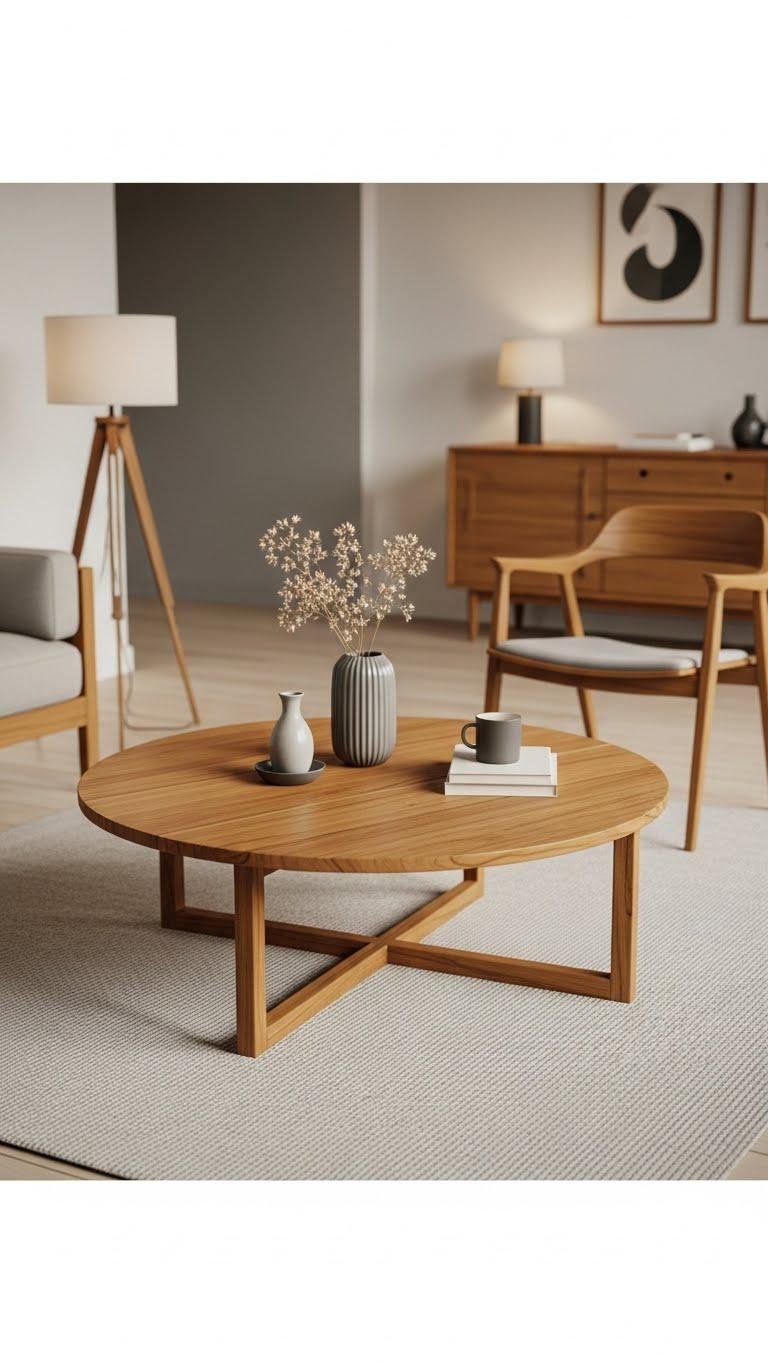
Bring in a round wooden coffee table to soften the room’s geometry and add tactile warmth without disturbing your minimalist lines.
You’ll appreciate its rounded silhouette that encourages flow and conversation. Choose a simple teak piece, accept natural grain, and keep upkeep minimal — light oiling for teak maintenance.
Pair with slim accessories and open floor space to preserve calm, airy freedom.
Install Statement Lighting Fixtures
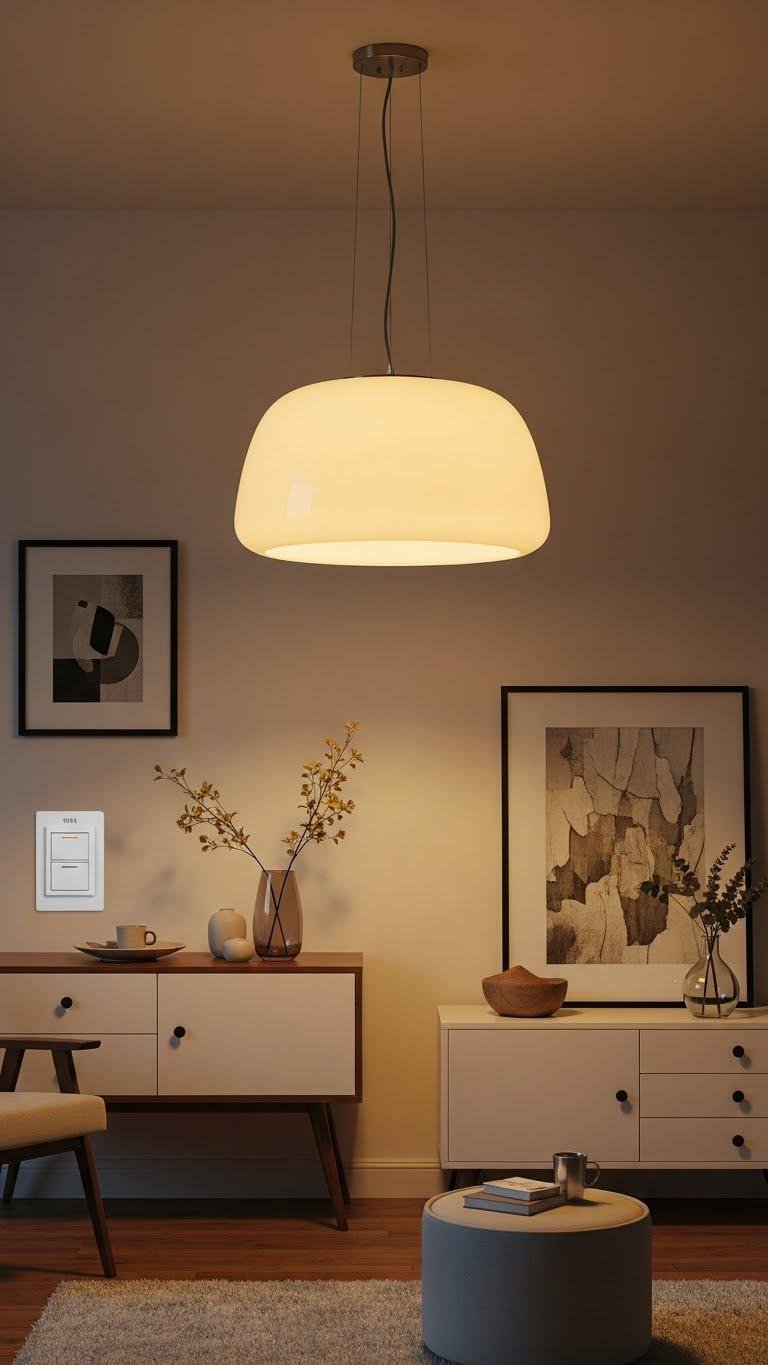
Install a bold fixture to anchor the room and set the tone—statement lighting does more than illuminate; it defines style. Choose an oversized pendant or sculptural sconce that feels freeing, pared-back and poetic. Keep surrounding decor minimal so the piece breathes.
Add integrated dimmers to shift mood easily, letting you control drama and calm without clutter or fuss.
Maximize Natural Light With Minimal Window Treatments
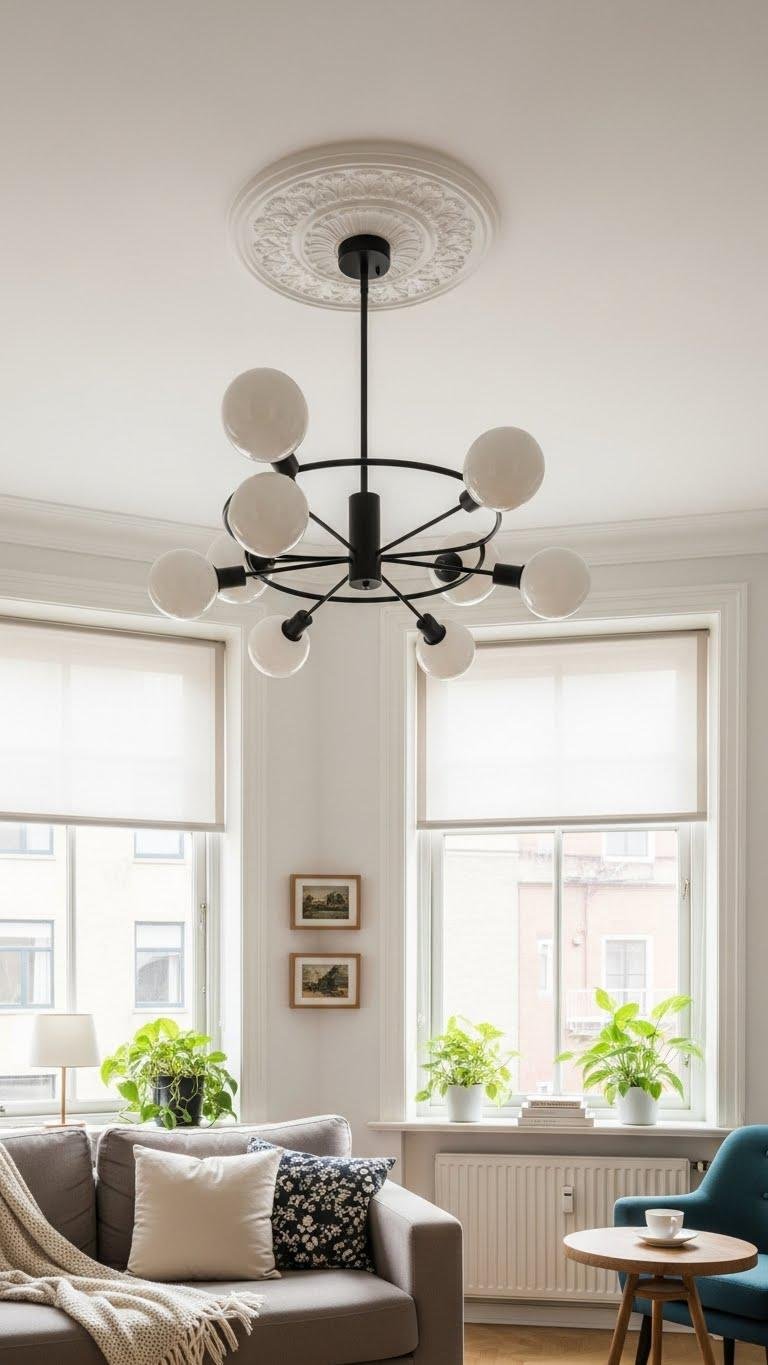
After you’ve let a bold light fixture claim center stage, let daylight work with it rather than against it—minimal window treatments keep views clear and let natural light shape the room’s mood.
Choose airy sheer panels for softness and privacy, or slim solar shades for glare control without bulk. You’ll enjoy an uncluttered, liberated space that breathes and adapts to daylight.
Create a Monochromatic Ton-sur-Ton Scheme
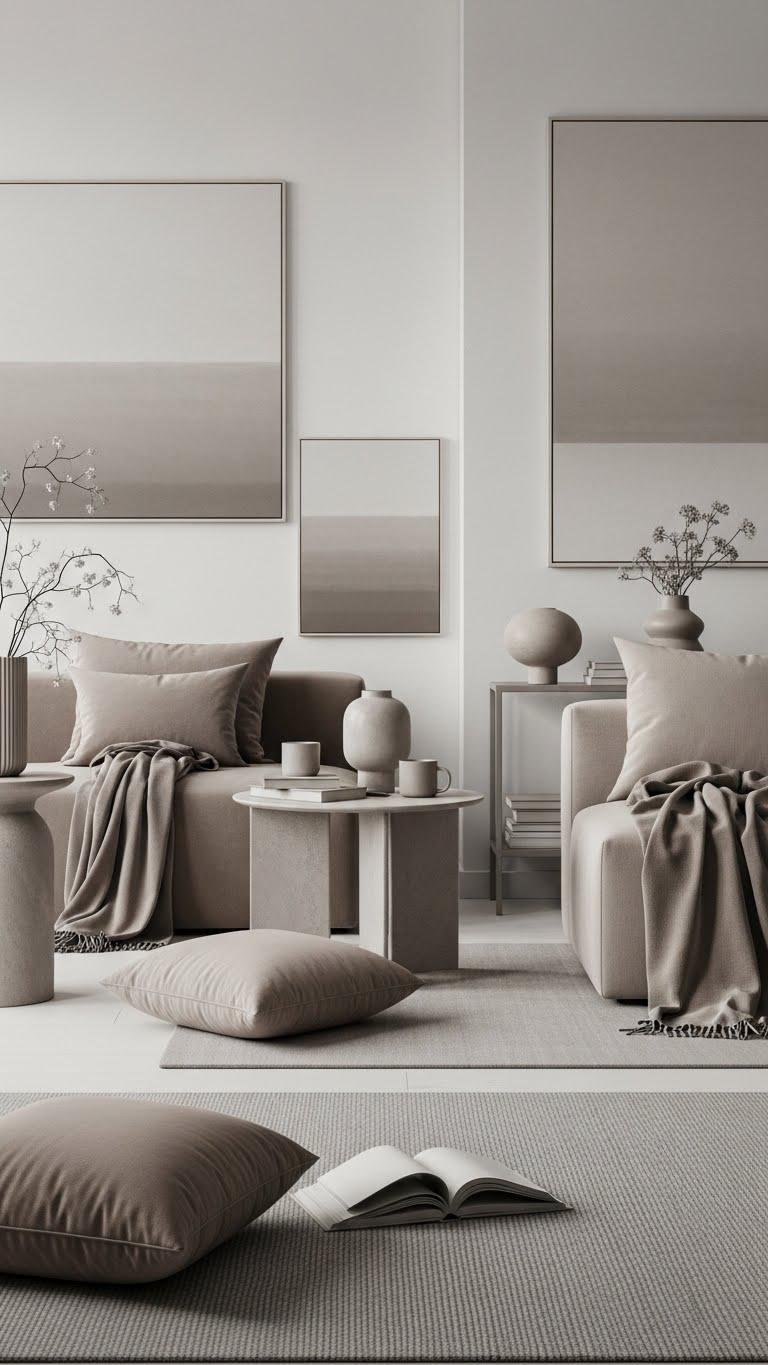
Lean into depth rather than contrast: pick a single hue and layer varying tones, textures, and finishes to build interest without clutter.
You’ll curate ton sur ton textiles—velvet cushions, linen throws, matte rugs—and choose tonal artwork pairings that echo undertones.
Keep furniture silhouettes minimal, add glossy or brushed accents for shine, and let subtle shifts in shade create calm, airy freedom in your living room.
Incorporate Warm Earth-Toned Accents
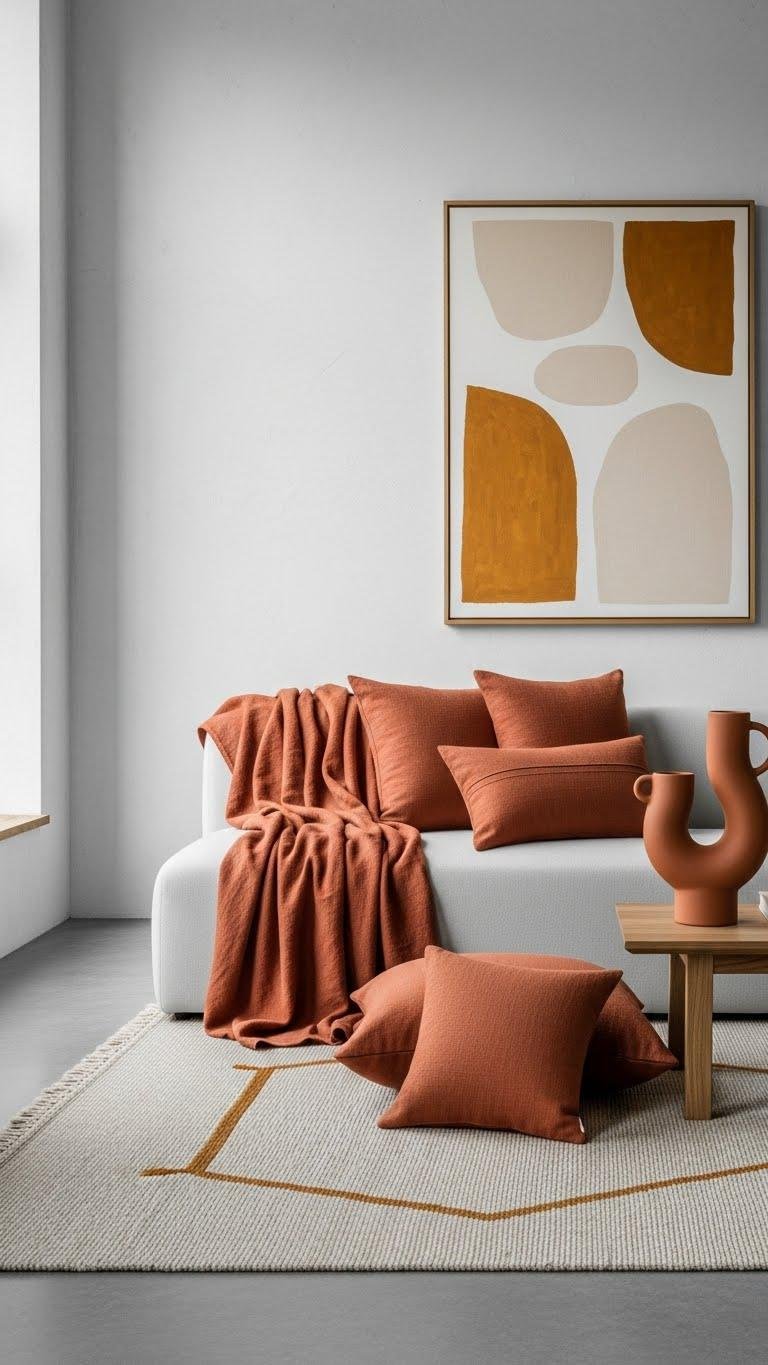
Moving from a serene monochrome palette, introduce warm earth-toned accents to bring subtle warmth and tactile contrast to the room.
You’ll layer terracotta textiles—throws, cushions, a low rug—and add ochre accents in artwork or a sculptural vase.
Keep shapes simple, textures organic, and color placements deliberate so the space stays minimal yet inviting, free, and quietly refined.
Keep Accessories Intentional and Purposeful
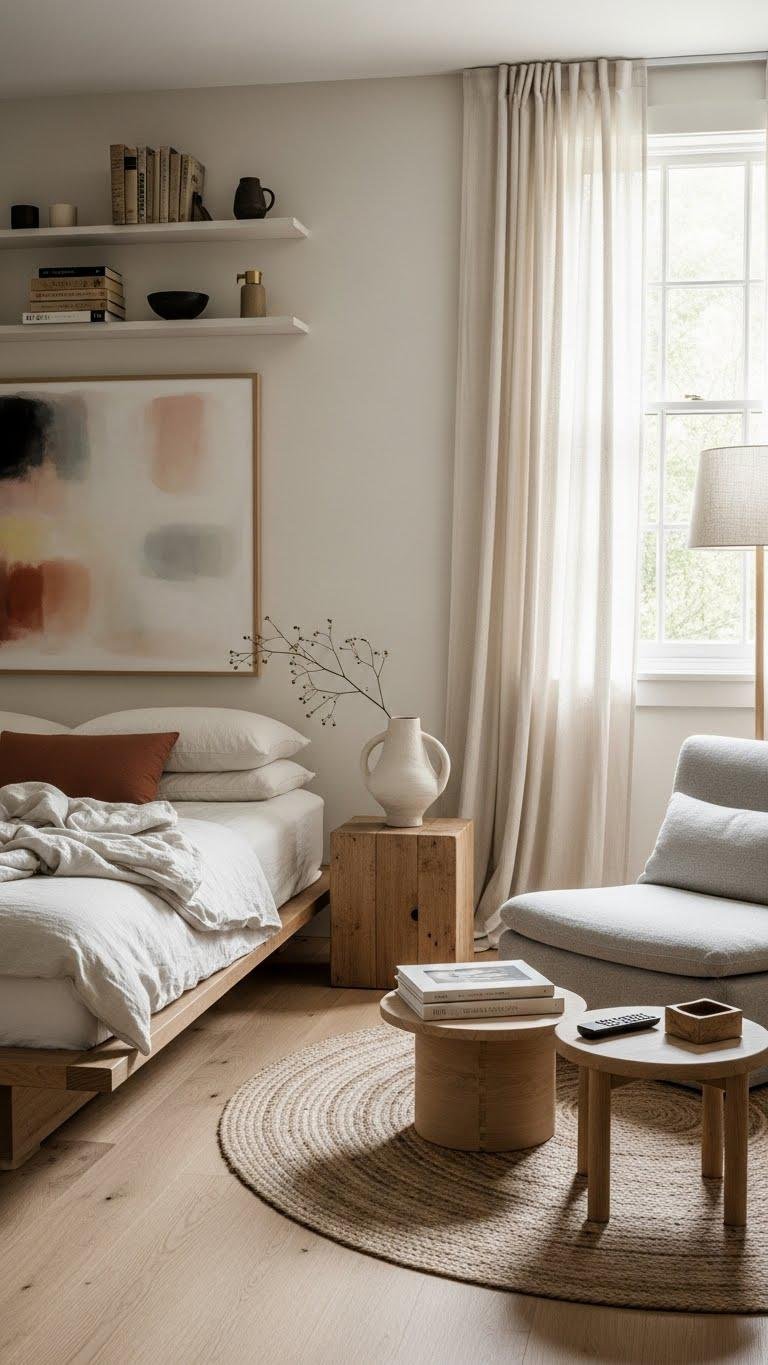
When you choose accessories with purpose, each object earns its place and the room breathes with quiet clarity.
You edit down to essentials, treating edited negatives as design choices that reveal air and movement. Let curated negatives frame focal pieces, limit colors, and select multipurpose items.
You’ll create calm, intentional layers that free visual space and let the room feel deliberate, airy, and authentically yours.
Soften the Space With Plush Throws and Rugs
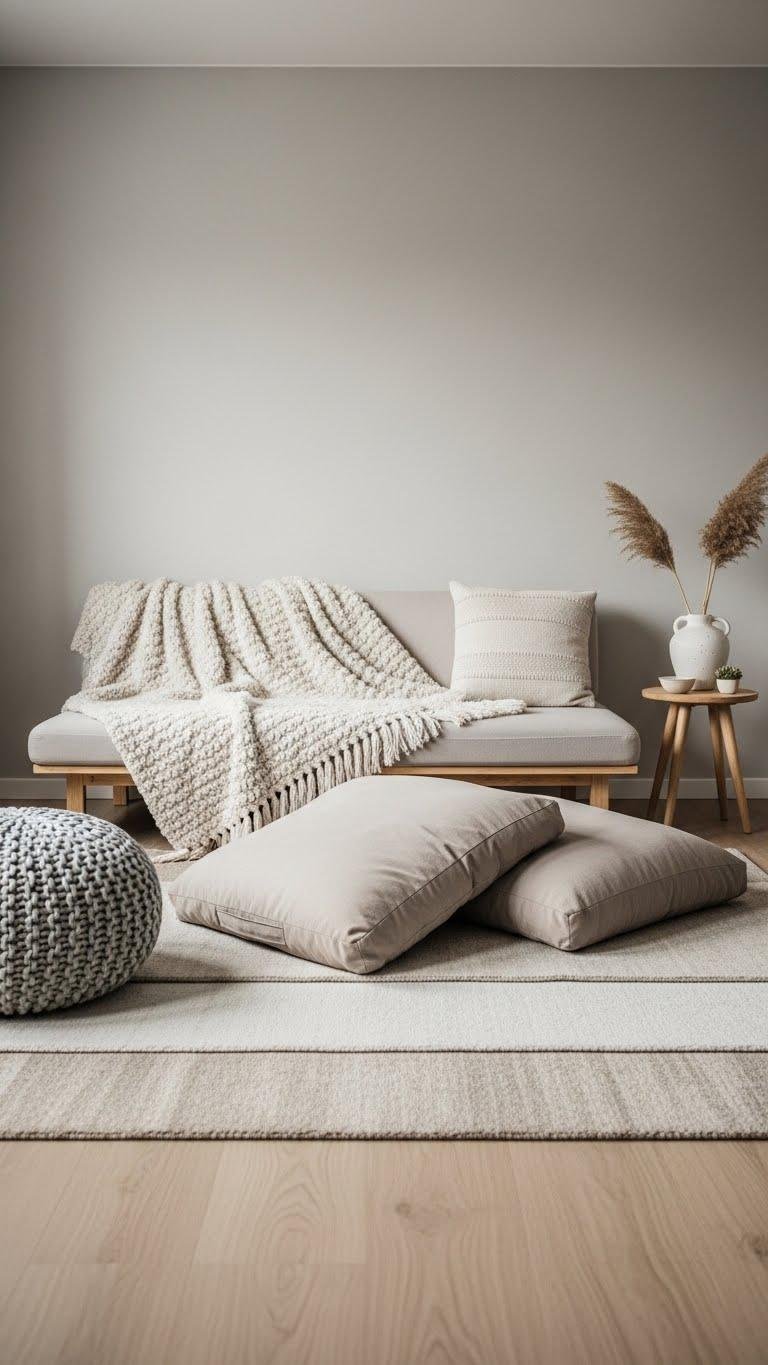
Often a single plush throw or layered rug will instantly soften a minimal living room and make it feel inviting without cluttering it.
You’ll add texture and warmth with a neutral rug, a couple of plush floor cushions for relaxed lounging, and a chunky knit pouf as a sculptural seat.
Keep colors muted and shapes simple to preserve calm while expressing freedom.
Position Mirrors to Amplify Light and Space
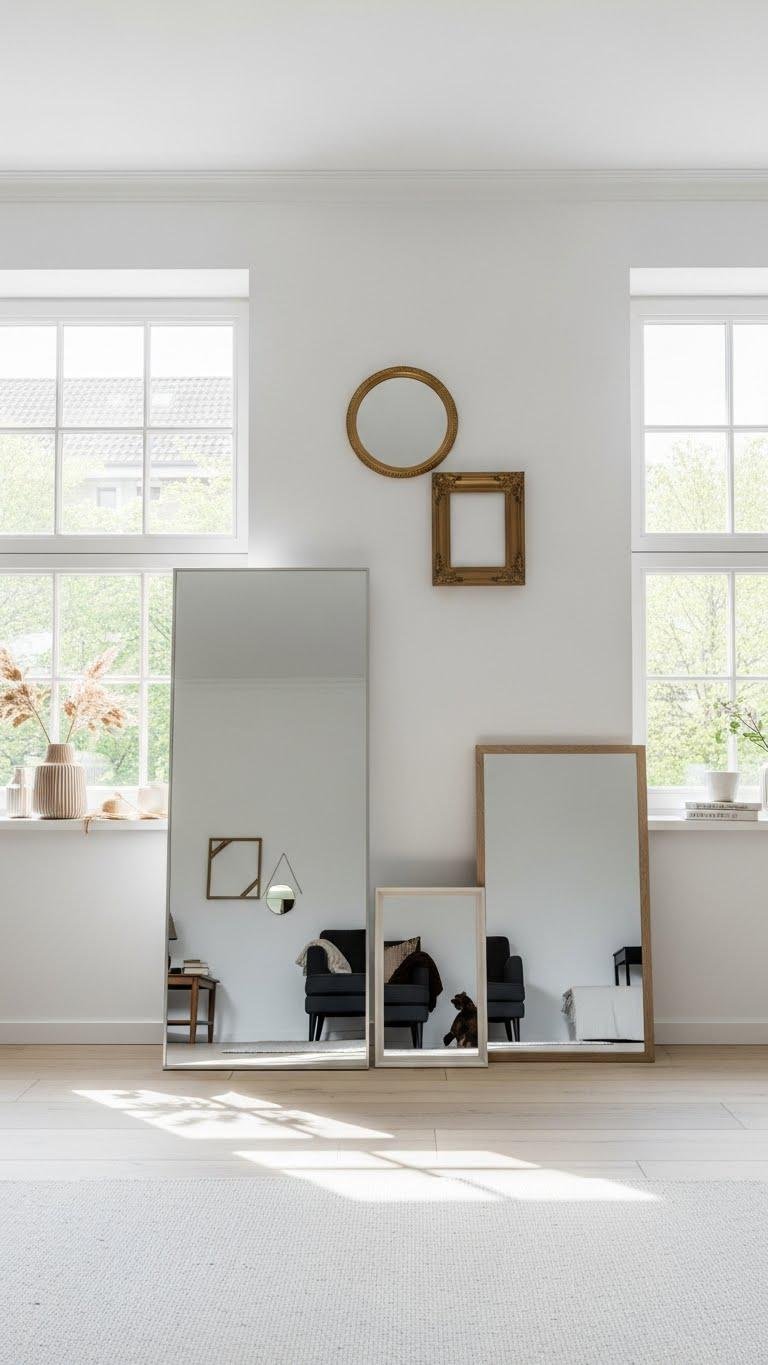
Hang mirrors to bounce light and visually widen your minimal living room; place them opposite windows or light sources to double daylight and pull the view inward. You’ll use angled placement for depth, choose decorative frames sparingly, and embrace natural reflection to keep calm.
Try layered mirrors for texture and freedom — they amplify space without clutter, feeling intentional and effortless.
Blend Curved Forms With Clean Lines
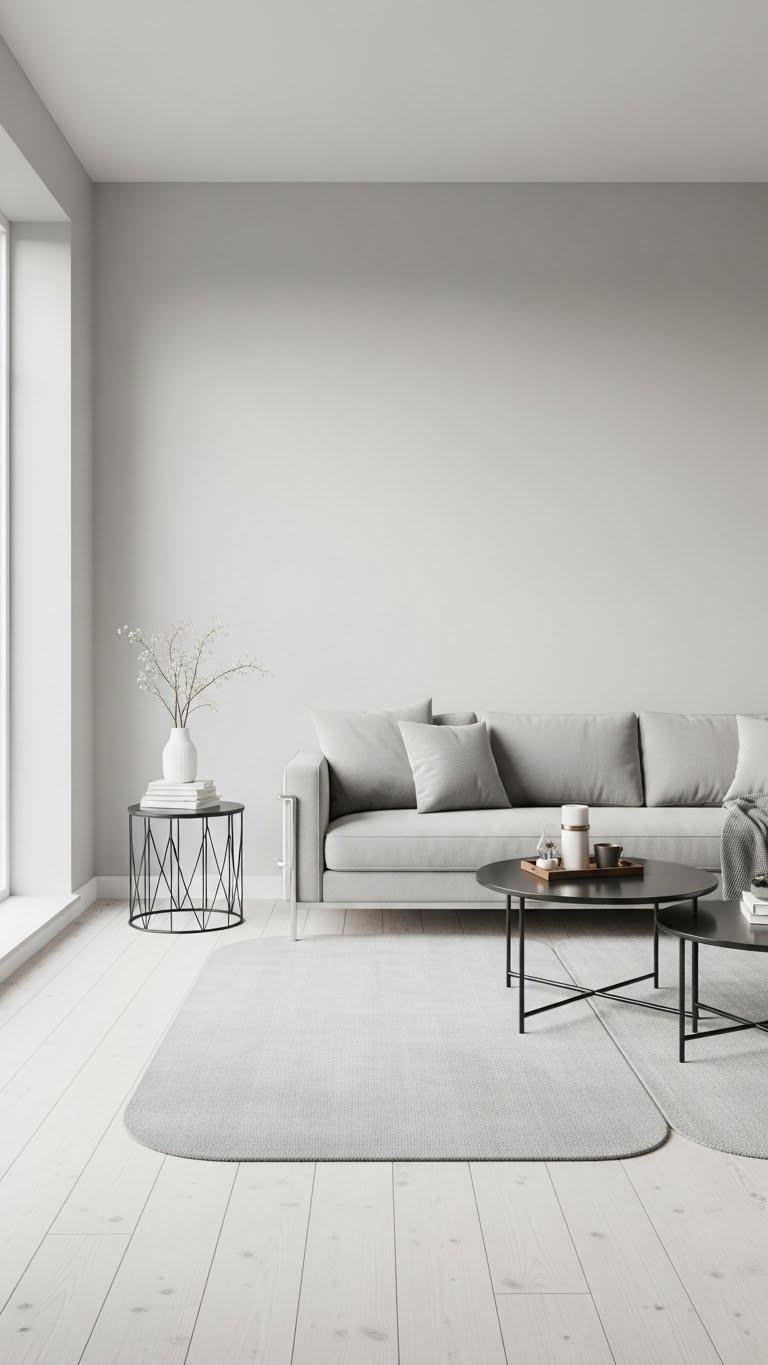
Mirrors amplify light and openness, but you can soften that crispness by pairing rounded shapes with straight edges—this balance keeps the room modern without feeling stark. Choose softly rounded seating and organic silhouettes to invite relaxation, then counterpoint them with furniture featuring crisp edges and slim linear accents.
You’ll create a restrained, airy space that feels liberated and beautifully composed.
Select Sustainable, Natural Materials
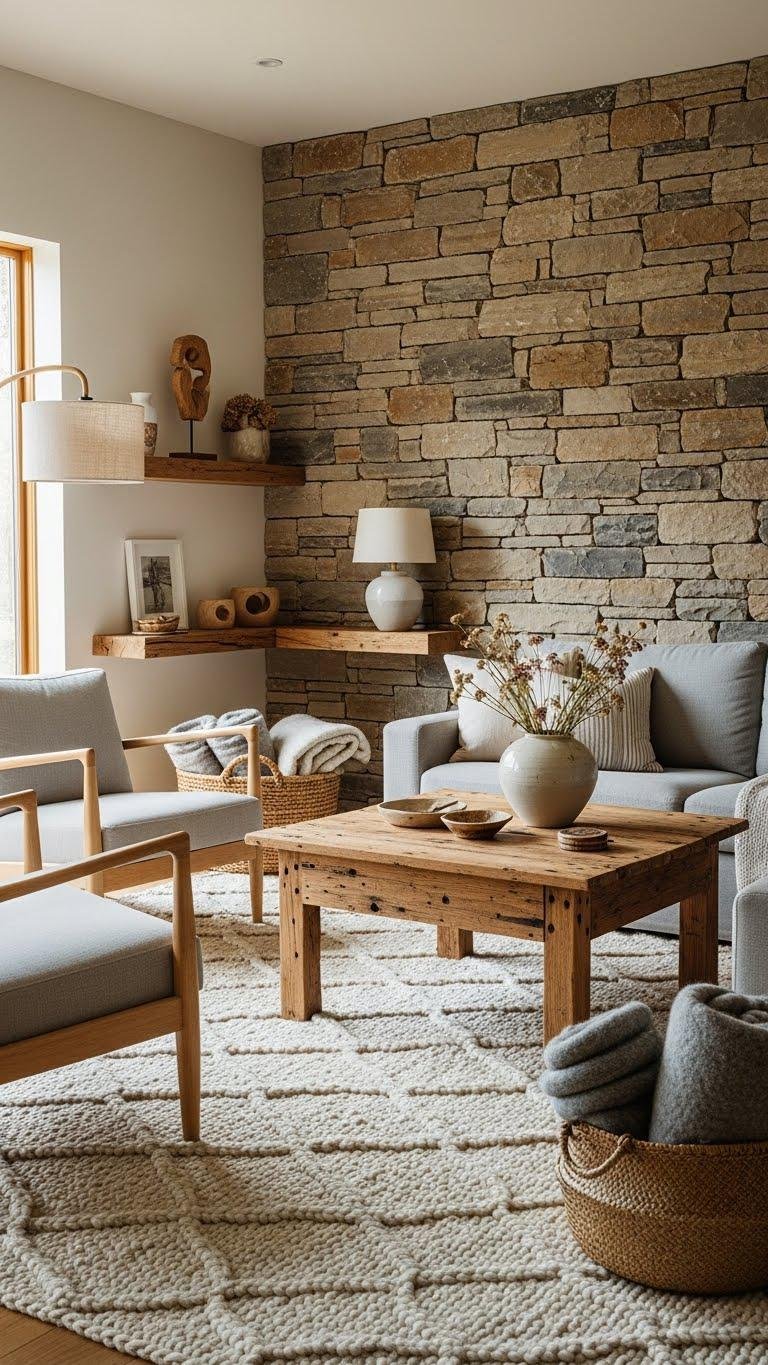
Choose materials that tell a story: reclaimed wood, low-VOC finishes, natural fibers like hemp or linen, and stone sourced with transparent practices. You’ll favor reclaimed teak for durable character and choose hemp upholstery for breathable comfort.
Opt for simple palettes, honest textures, and locally made pieces that reduce footprint. These choices free your space, feel refined, and age with effortless grace.
Add Single-Piece Biophilic Accents
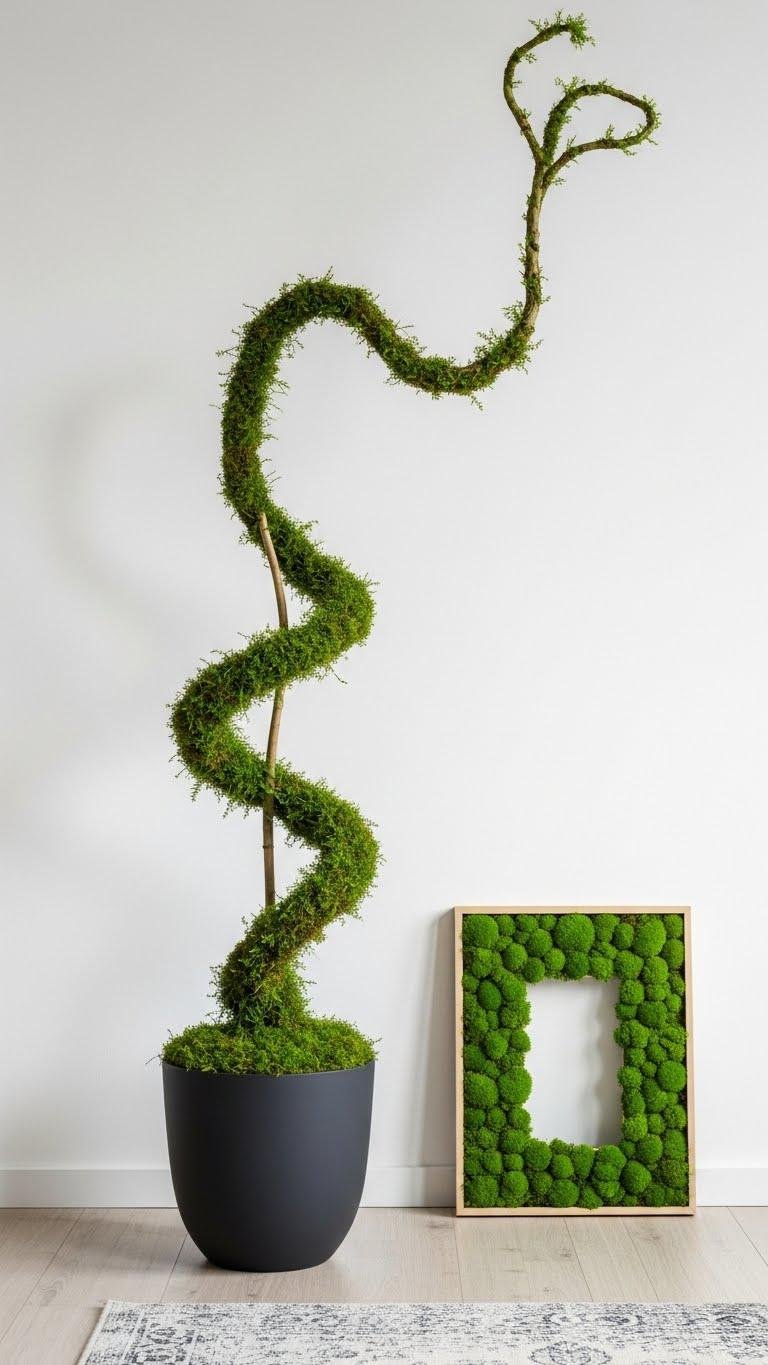
A single, sculptural plant or a statement natural element can anchor your living room and bring biophilic calm without cluttering the space. Choose one standout piece—a sculptural fern, a compact living wall panel, or a framed moss frame—to create a focal point.
You’ll keep the room airy, intentional, and freeing while enjoying a crisp, nature-driven accent that feels deliberate and serene.
Use Warm Wood Tones for Visual Warmth
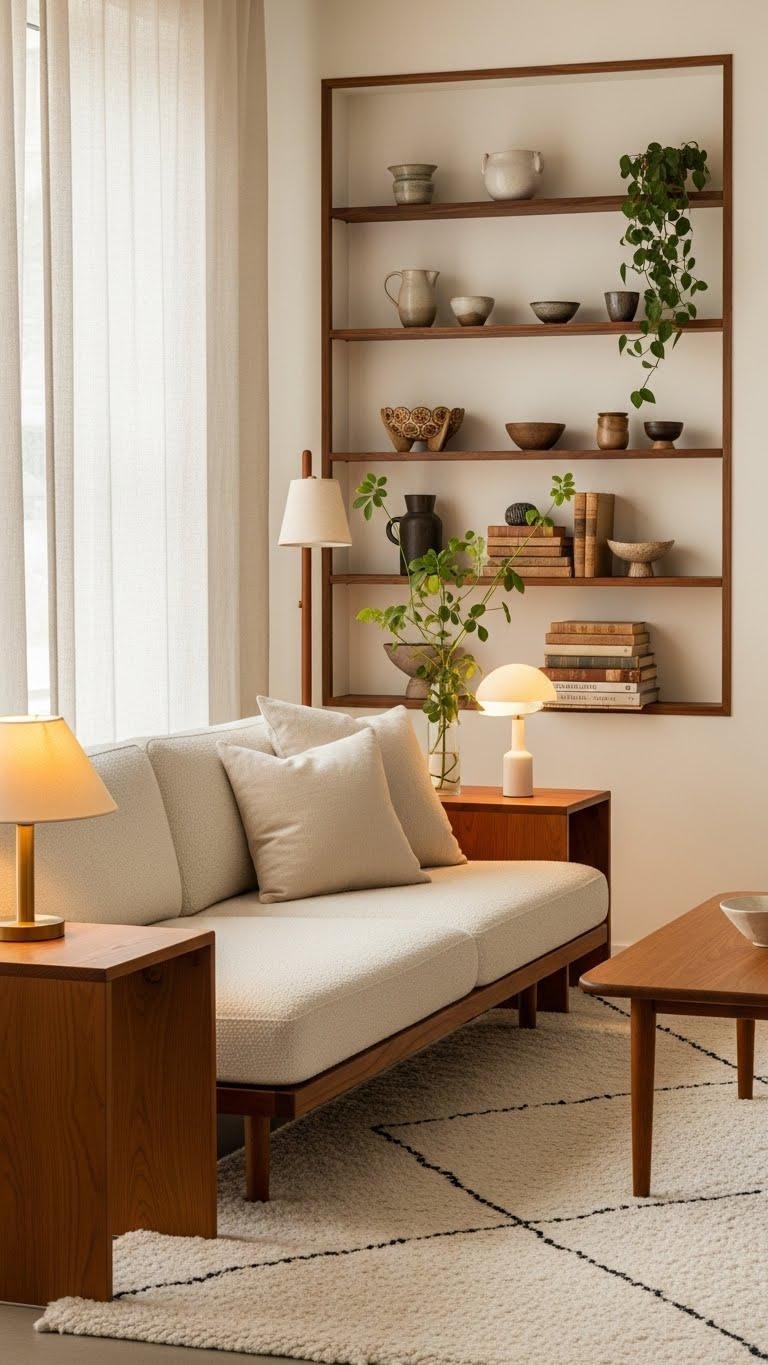
Consider layering warm wood tones to instantly soften a minimalist living room and give it approachable depth. You’ll mix handcrafted oak furniture with teak accents for contrast, then add aged walnut shelving to anchor the space.
Keep lines simple, let materials speak, and finish sparingly with vintage brass hardware or a small lamp. That restrained warmth keeps the room calm and liberating.
Maintain Clear, Open Traffic Flow
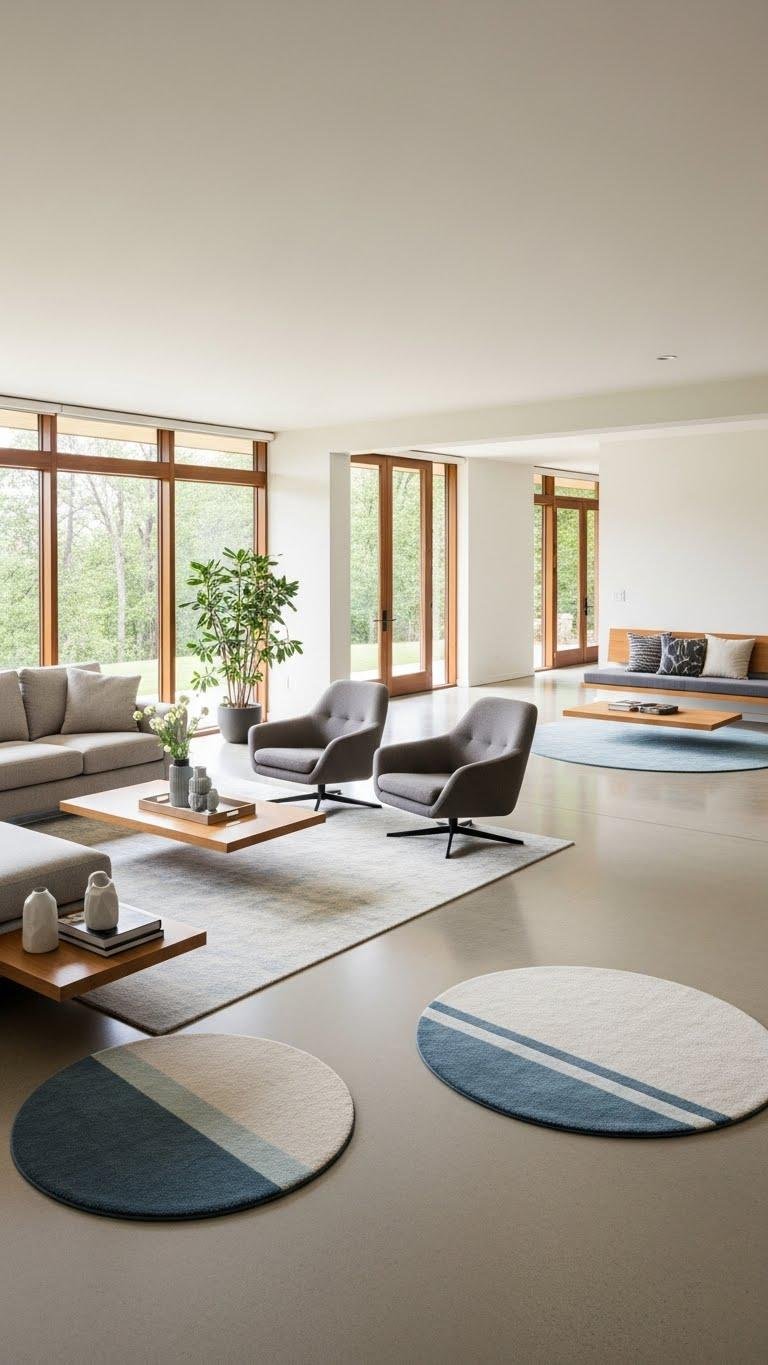
When you plan furniture placement around natural pathways, people move through the room without bumping into corners or clutter. Keep clear pathways by angling seating, floating rugs, and limiting low tables.
Preserve unobstructed sightlines to windows and doorways so light and movement feel effortless. You’ll enjoy a minimalist layout that feels open, free, and intentionally calm without excess.
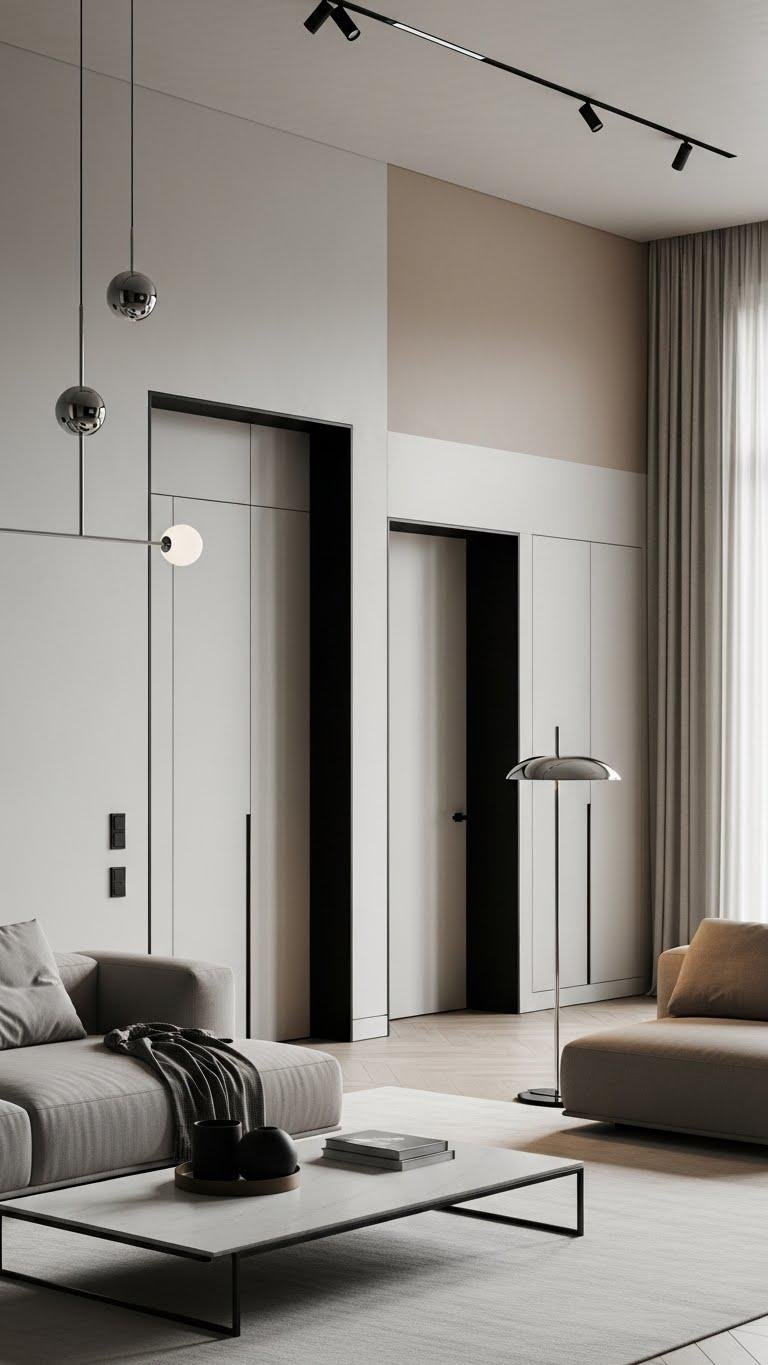
Choose Matte and Gloss Finishes Strategically
Limit Color Palette to Two or Three Hues
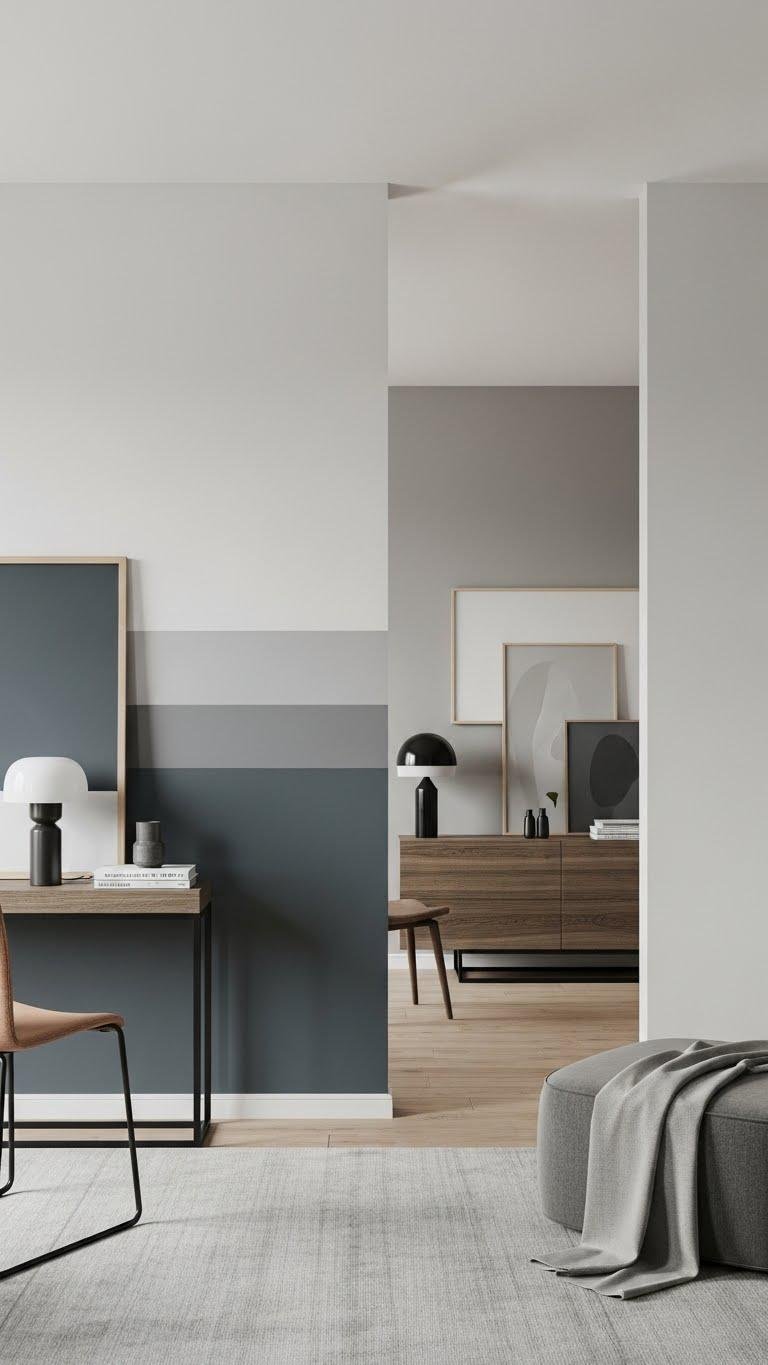
Design for Flexible, Multifunctional Living
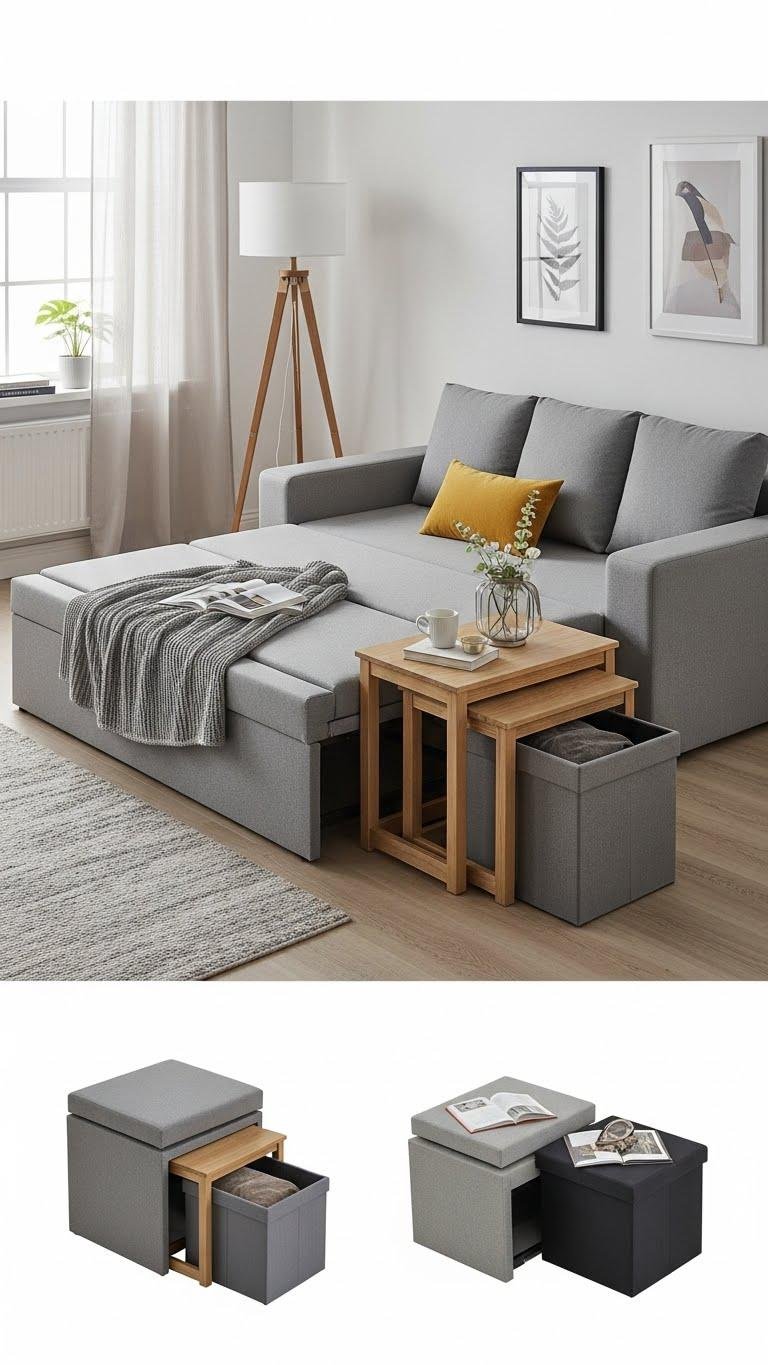
Because your home has to do more than just look good, design with pieces that shift easily between tasks: a slim sofa that converts to a guest bed, nesting tables that stack away, and storage ottomans that double as seating and conceal clutter.
Choose modular seating and convertible surfaces to adapt rooms instantly, keep lines clean, and free your space — thoughtful flexibility that feels effortless.