
You’ll create a calm, curated home by mixing Japanese restraint with Scandinavian warmth: think muted beiges, mossy greens, low-profile wood pieces, and tactile linens. Favor functional forms, handcrafted ceramics, and soft, layered lighting to invite quiet moments. Keep vignettes edited and materials honest, then introduce a few wabi‑sabi accents for character—here are 25 practical ways to get there.
Embrace a Neutral, Muted Color Palette
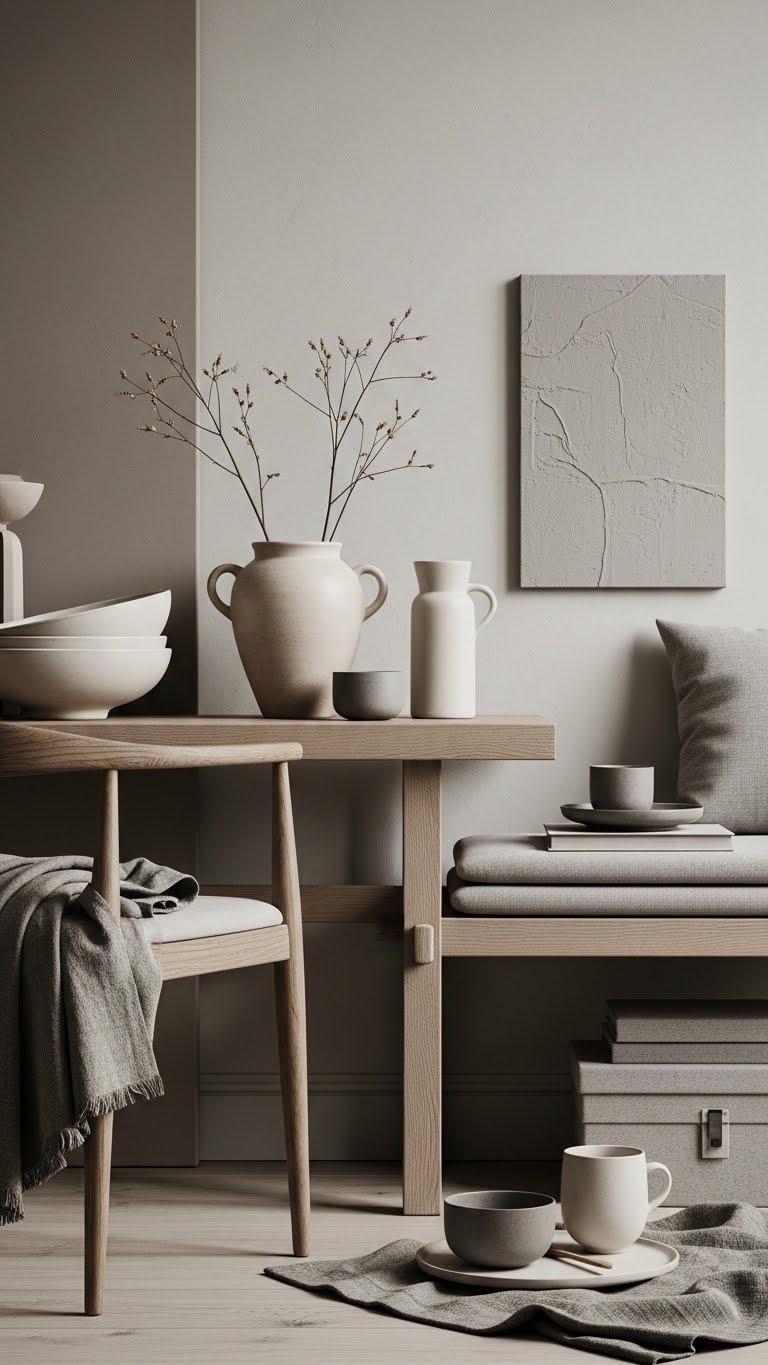
When you choose a neutral, muted palette, you let texture and form take center stage—soft beiges, warm grays, and off-whites create a calm backdrop that highlights natural wood, matte ceramics, and simple silhouettes.
You’ll favor soft taupes and misty greys, layering tactile linens, raw clay, and subtle grain. The result feels liberated, refined, and quietly intentional—every piece breathes.
Choose Low-Profile, Functional Furniture
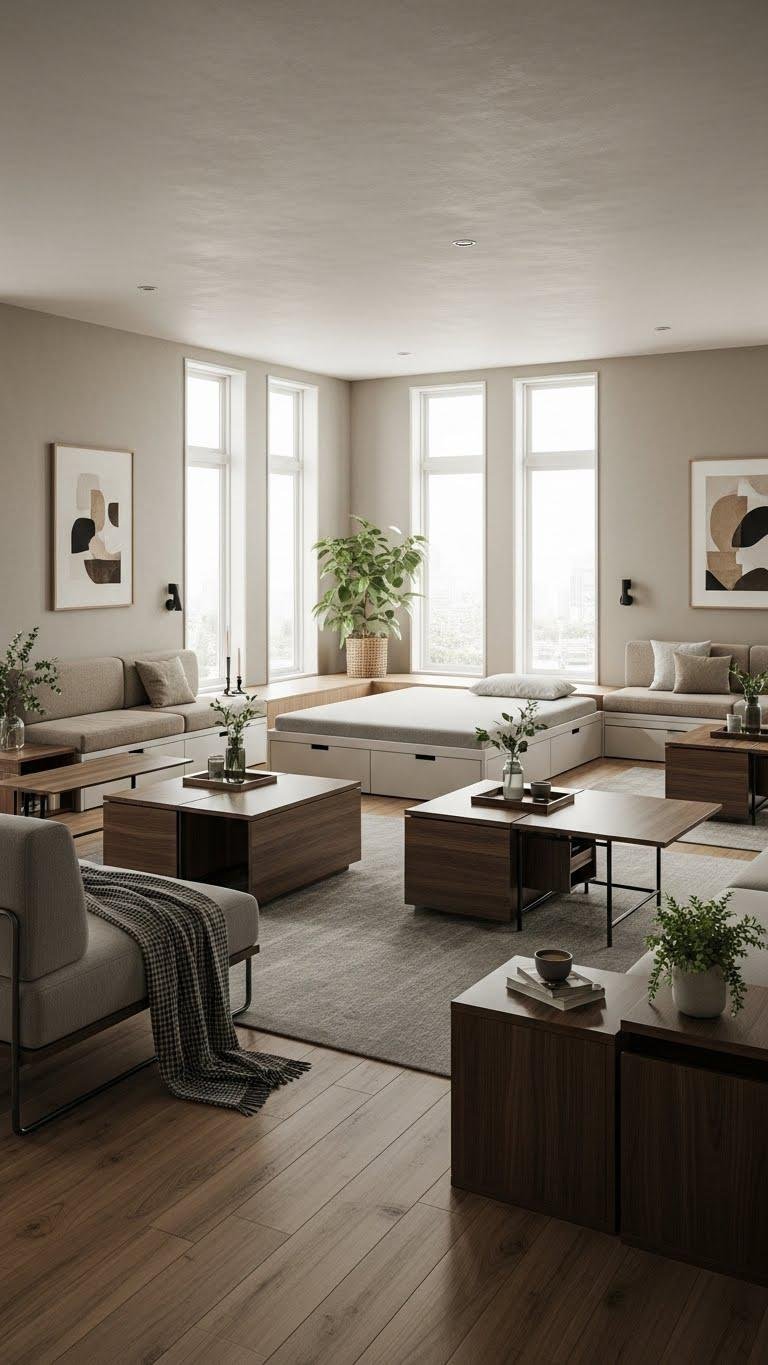
Choose pieces that sit low to the ground and serve more than one purpose—think streamlined sofas, platform beds, and bench-style seating that anchor the room without overwhelming it. You’ll favor low profile seating and multifunctional tables that keep sightlines open.
Opt for slim storage units and hidden compartments so you can move freely, edit belongings, and enjoy a calm, uncluttered space that breathes.
Incorporate Natural Wood Tones
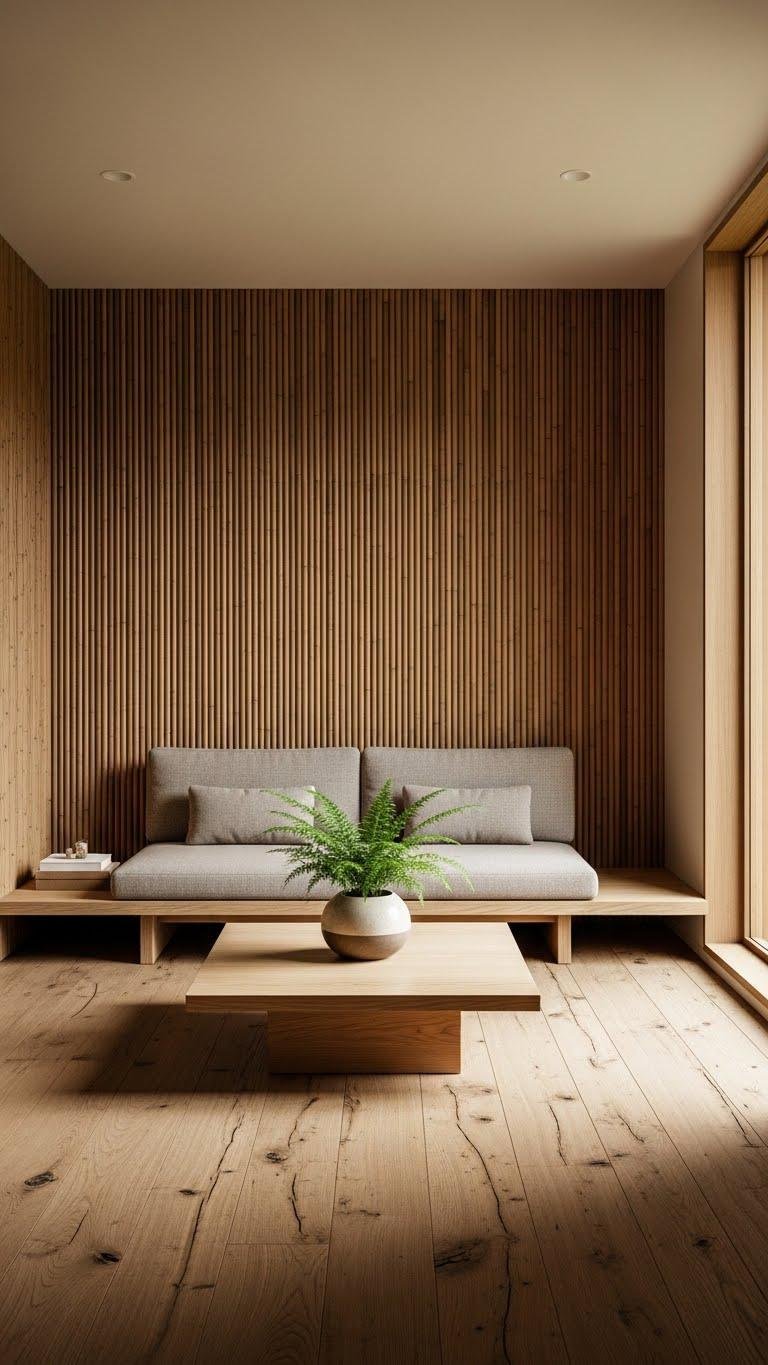
Low-profile furniture looks best against warm, natural wood tones that bring texture and calm to the room. Embrace aged oak for floors or shelving to anchor your space; its grain feels lived-in, honest.
Add bamboo paneling on a single wall for vertical rhythm and lightness. Choose simple finishes, let wood speak, and you’ll create a liberating, grounded Japandi sanctuary.
Layer Textures With Linen and Wool
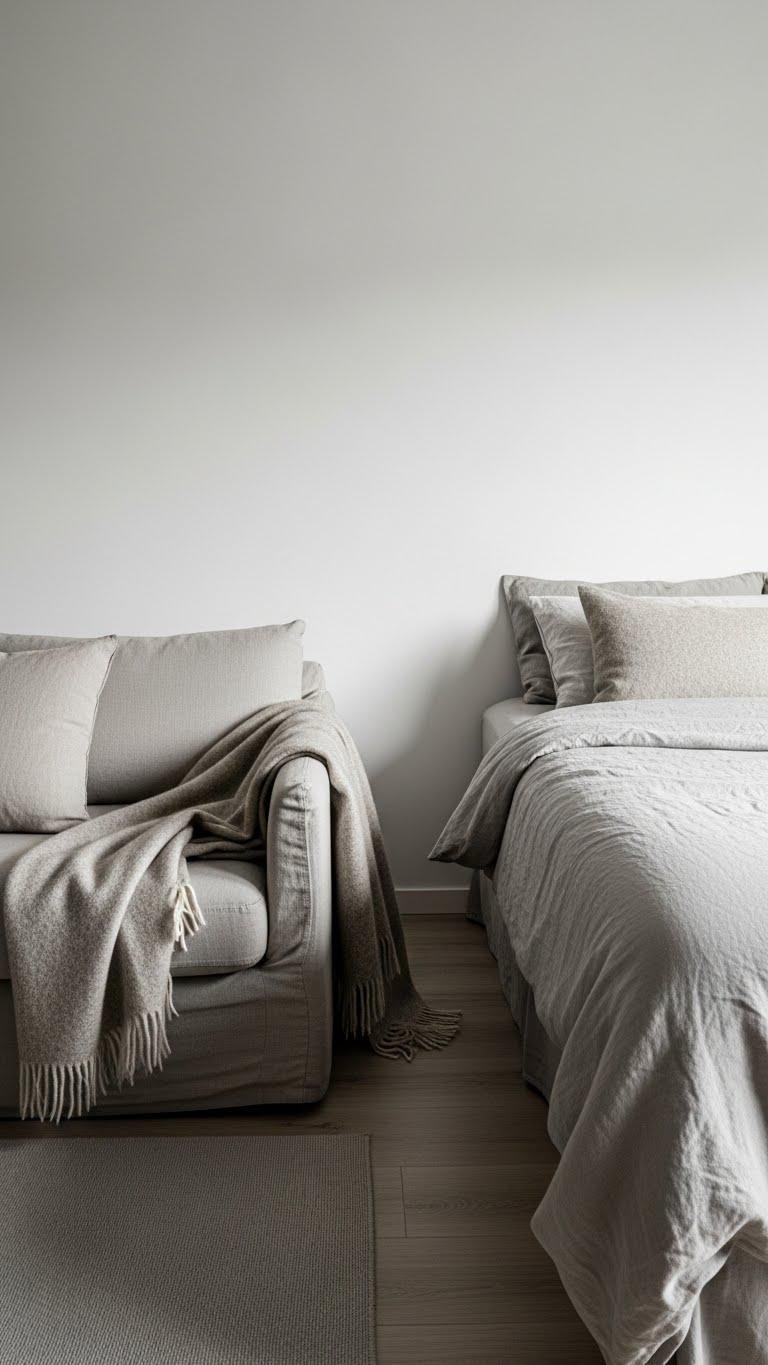
Often you’ll mix linen and wool to create a tactile, lived-in softness that still reads minimal. You’ll embrace linen layering on sofas and beds for airy calm, then add wool felting accents—throws, cushions, rugs—to deepen warmth and texture.
Keep palettes muted, forms simple, and let tactile contrasts guide movement. This balance frees your space, inviting quiet, intentional living without excess.
Add Simple, Handcrafted Ceramics
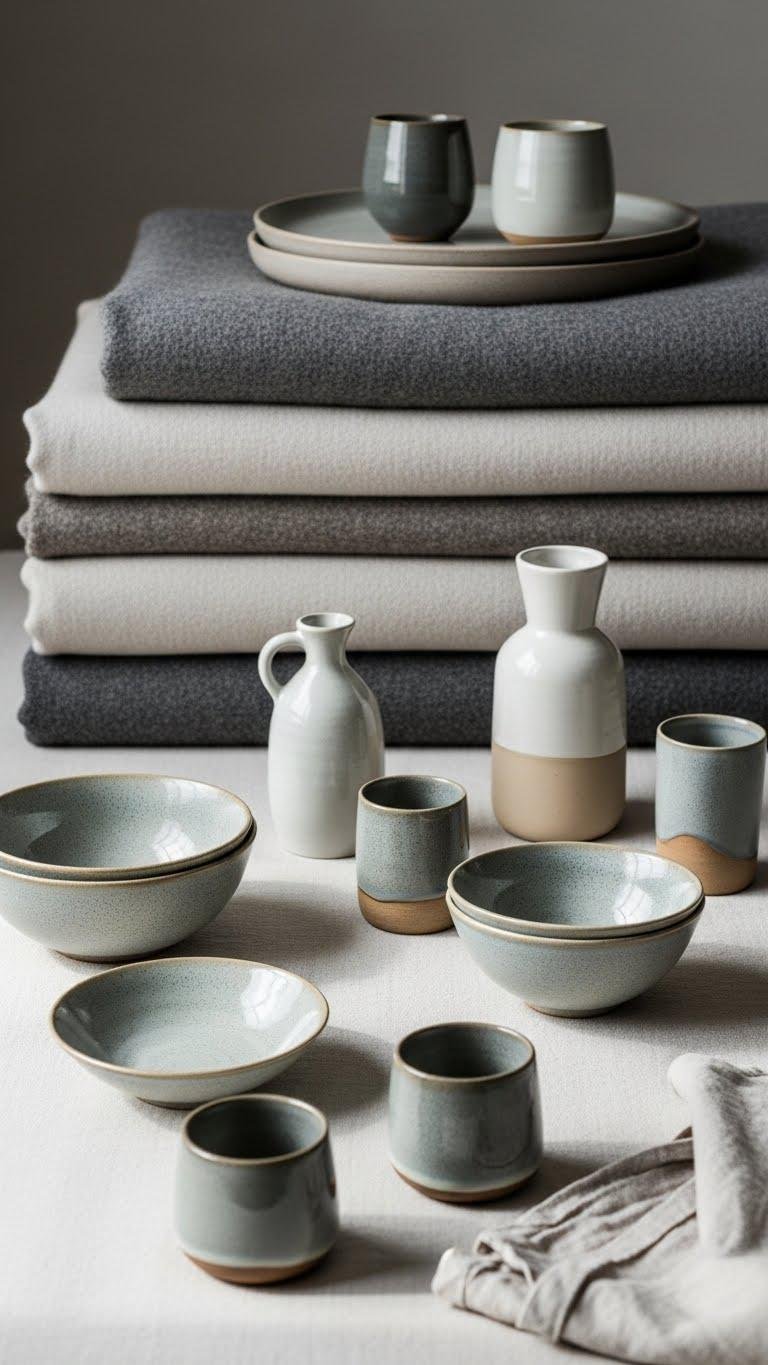
After layering linen and wool for tactile warmth, bring in simple, handcrafted ceramics to anchor surfaces and add quiet character. Choose pieces with a muted handmade glaze and organic forms that let light and space breathe. You’ll curate bowls, vases, and cups that feel lived-in yet deliberate.
Learn basic clay care to preserve finish, and rotate objects to keep the room uncluttered and freeing.
Use Sliding or Minimal Window Treatments
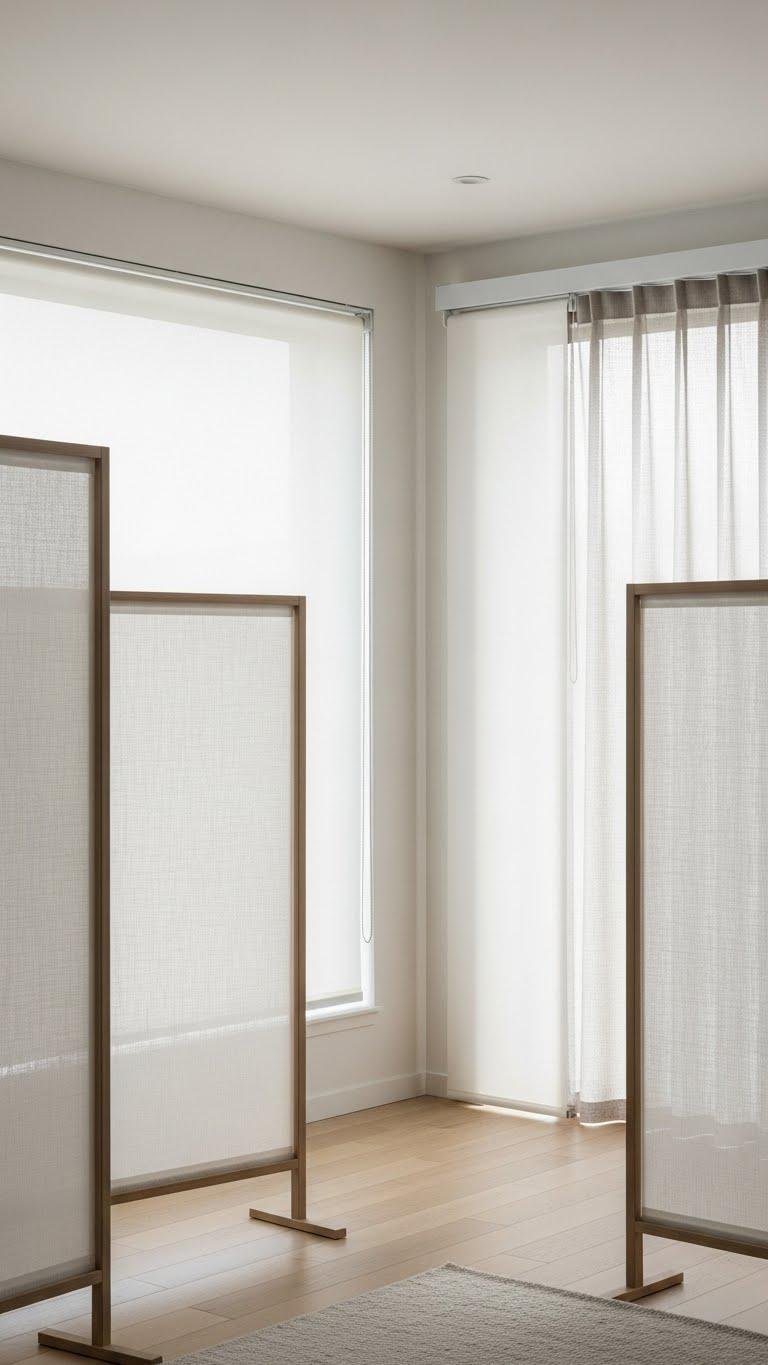
Slide in slim, quiet treatments to frame windows without weighing the room down — think rice-paper panels, flush-mounted tracks, or thin linen panels that glide open and closed.
You’ll choose privacy screens and sheer panels that filter light, maintain sightlines, and support calm. Minimal hardware and neutral tones keep spaces airy, so you move freely and control mood with simple, elegant gestures.
Bring Nature Inside With Potted Plants
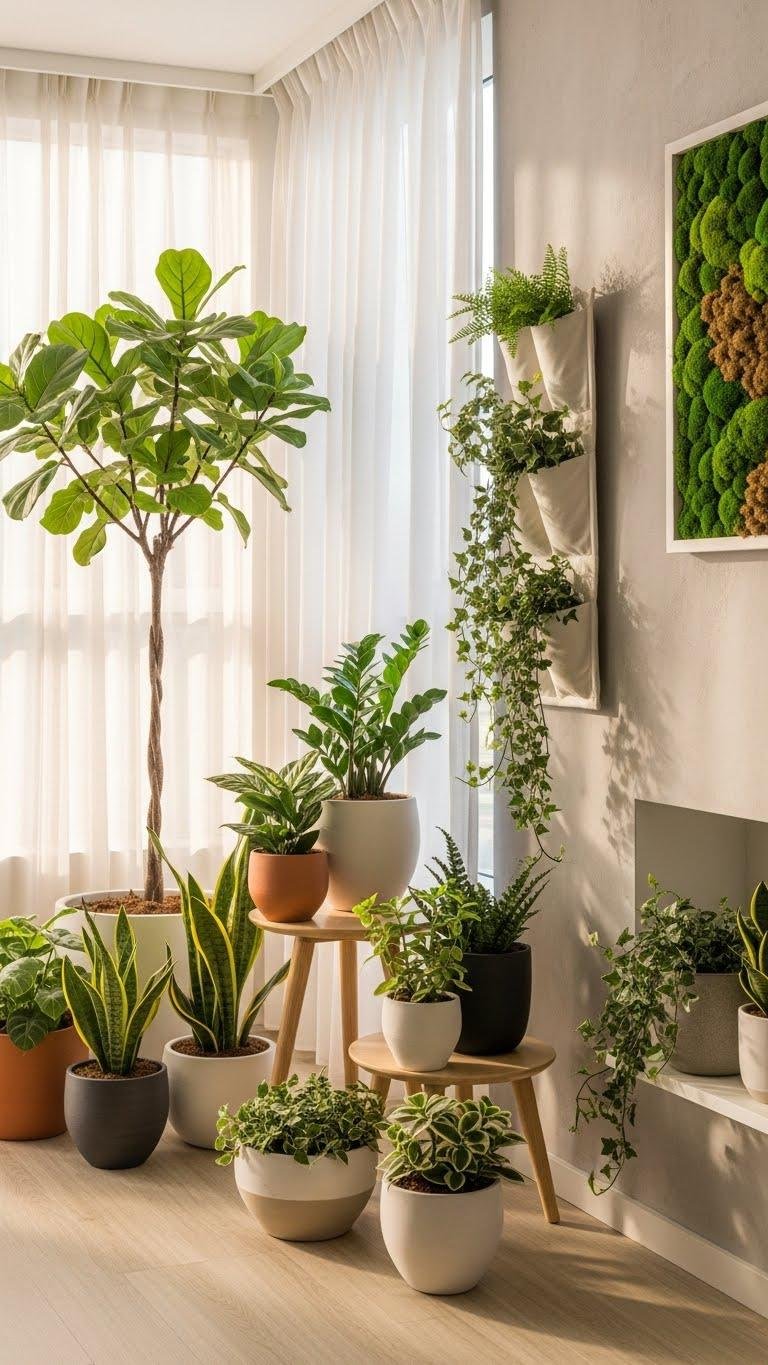
With window treatments that soften light and define space, bring that same calm energy down to eye level by introducing potted plants. You’ll choose simple ceramic pots, sculptural foliage, and low-maintenance varieties that support movement and ease.
Mix vertical gardens and moss frames to add texture and freedom of placement, creating serene green vignettes that feel intentional, airy, and truly yours.
Create Calm Zones With Minimal Accents
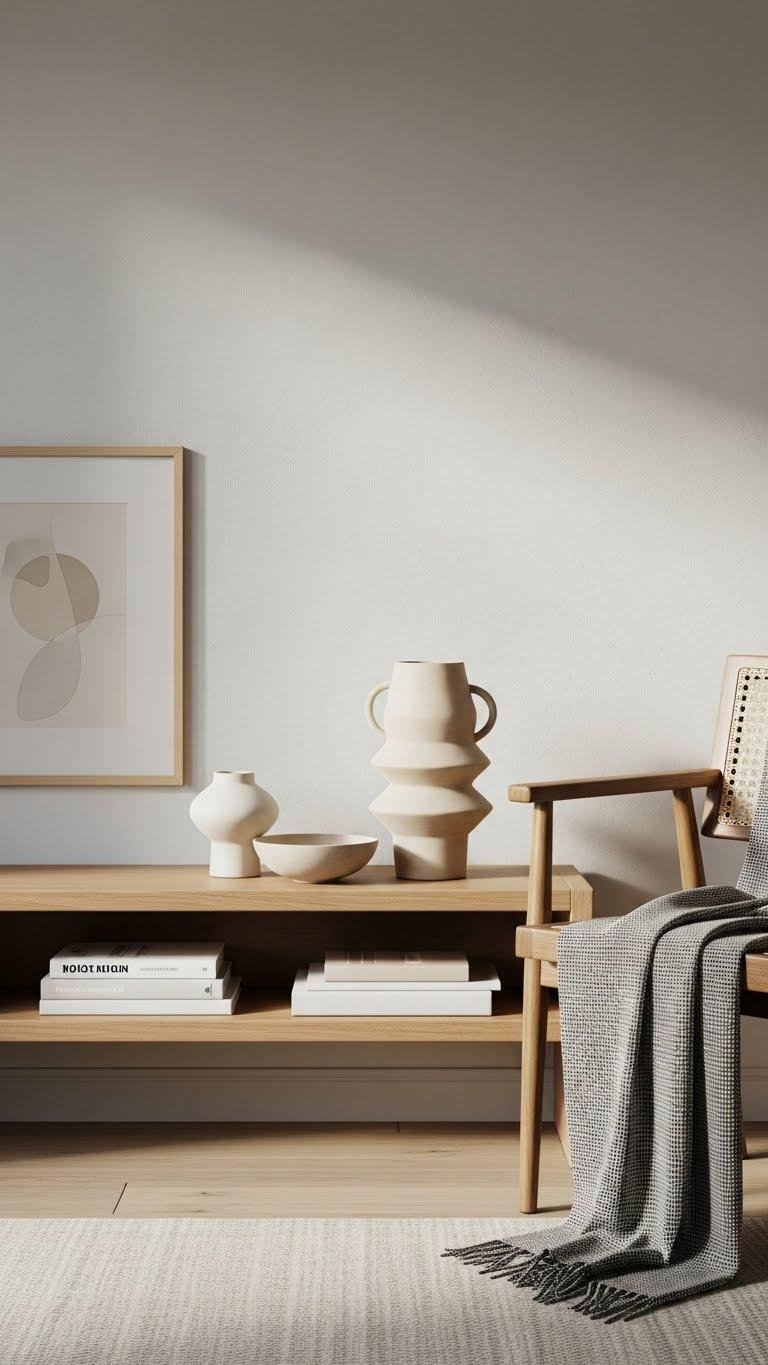
When you pare a room back to a few deliberate objects, you let quietness and balance take center stage.
Choose a low shelf, a sculptural vase, and a textured throw to define a calm zone. You’ll invite soft meditation and muted music without clutter, keeping surfaces open and intention clear.
This minimalist approach frees movement, mind, and style.
Opt for Clean Lines and Gentle Curves
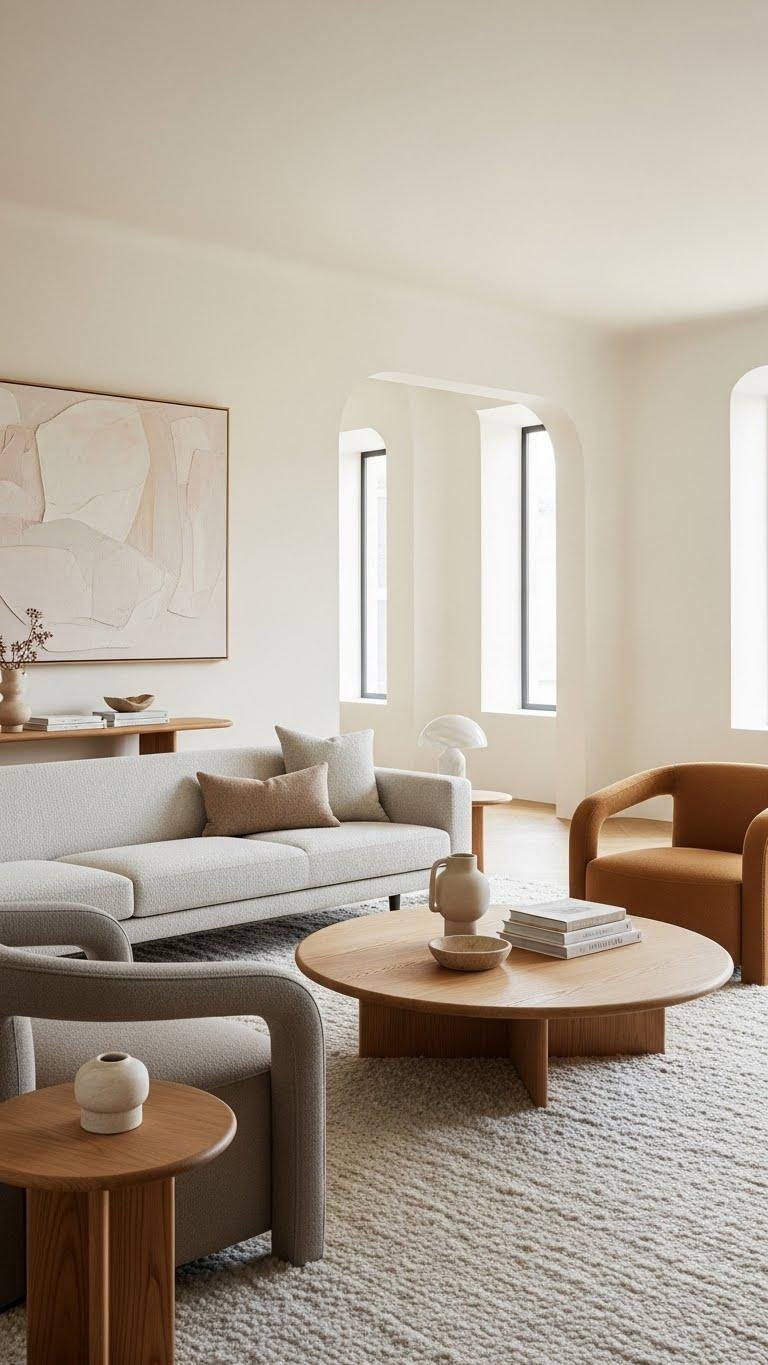
Calm zones thrive on restraint, and that same restraint guides your choice of forms: pair clean, linear furniture with a few gentle curves to keep the room feeling modern yet warm.
Embrace rounded joinery and soft silhouettes to invite touch and movement without clutter. You’ll create airy, freeing spaces that feel intentional—minimal, tactile, and quietly refined.
Mix Matte and Natural Finishes
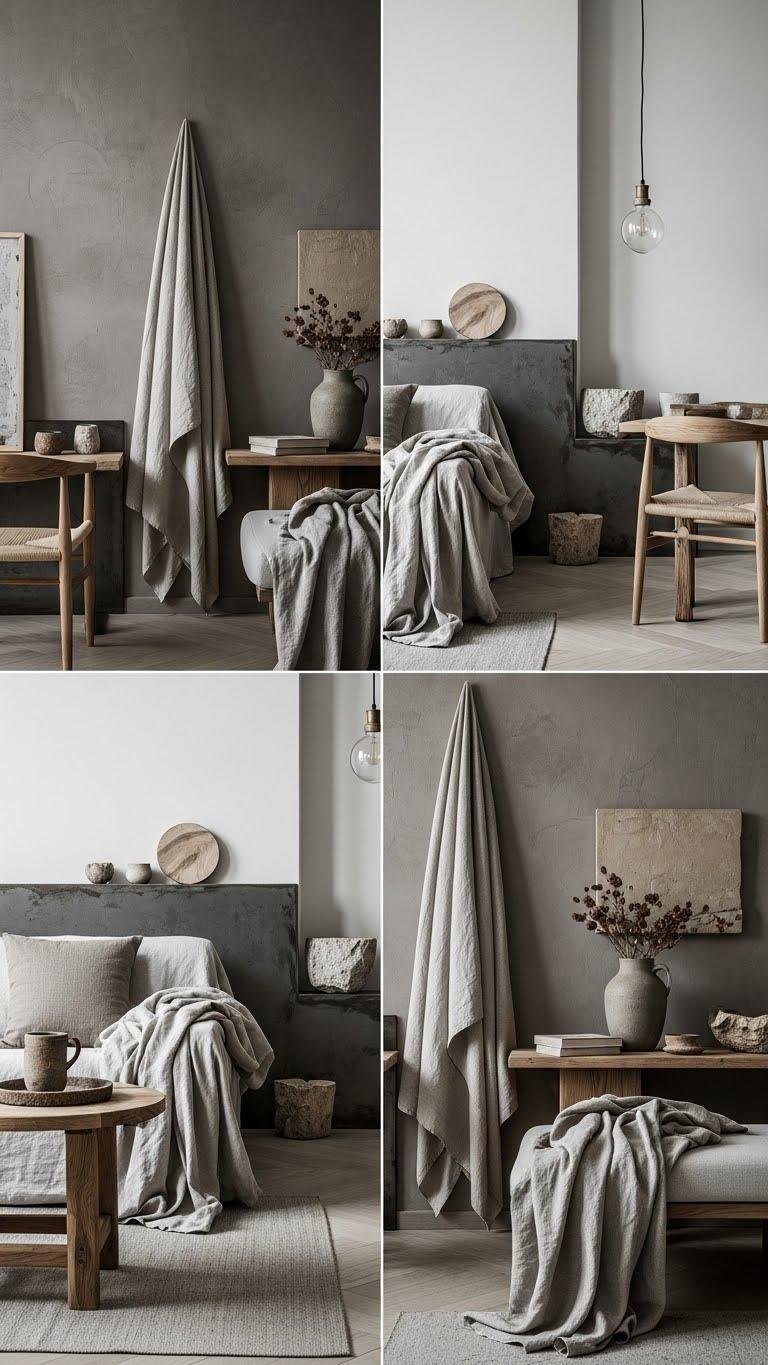
Lean into contrast by pairing matte surfaces with natural finishes to add depth without fuss. You’ll balance matte gloss contrast across walls, ceramics, and textiles while letting wood grain and stone breathe.
Keep palettes neutral, choose tactile linens, and introduce restrained raw metal finishes for edge. The result feels calm, liberated, and intentionally imperfect—everything you need for a serene, personal space.
Include Rattan and Woven Elements
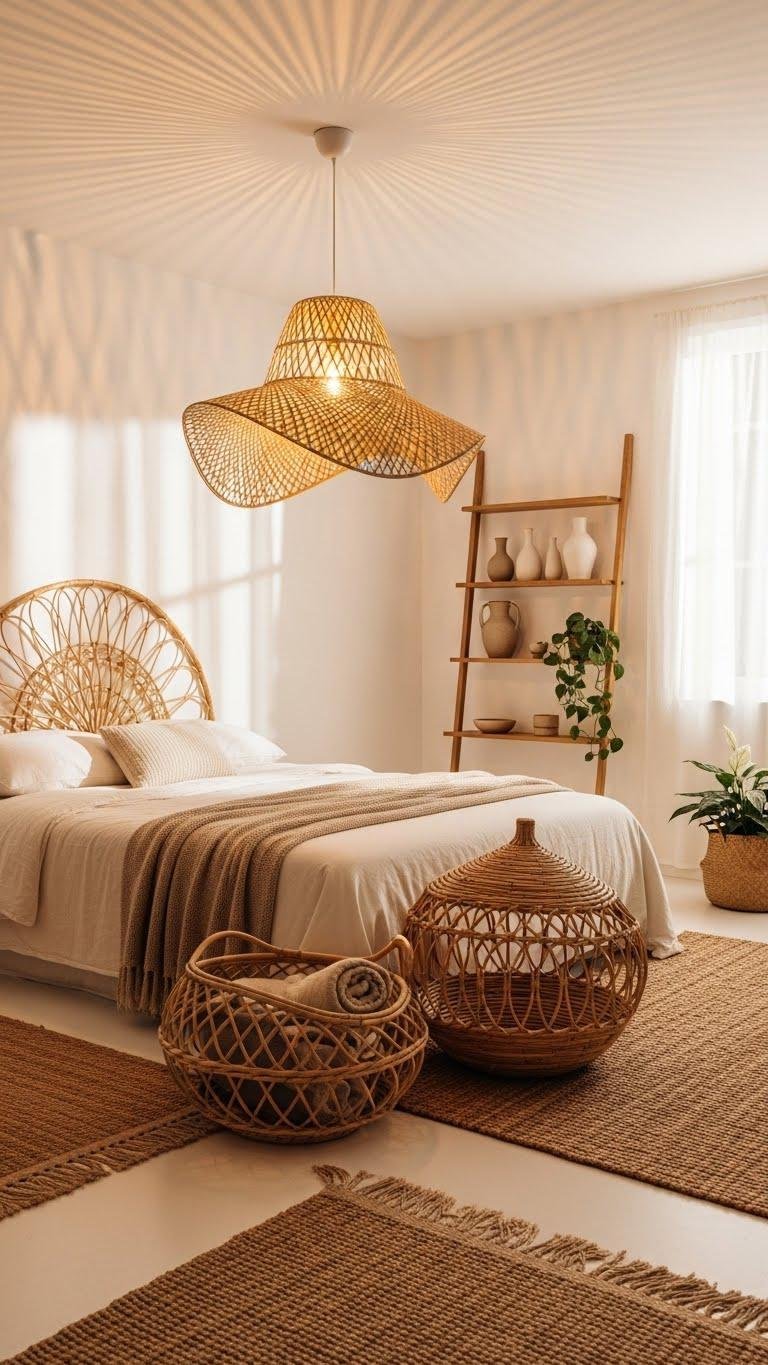
With rattan and woven pieces, you’ll add organic texture that keeps Japandi spaces warm and airy.
Choose rattan lighting to cast soft, natural shadows and pair it with a woven headboard for calm, tactile comfort.
Mix sculptural baskets, slim shelving, and light rugs to maintain openness.
You’ll cultivate freedom through understated, breathable design that feels both modern and timeless.
Use Stone or Concrete Accents
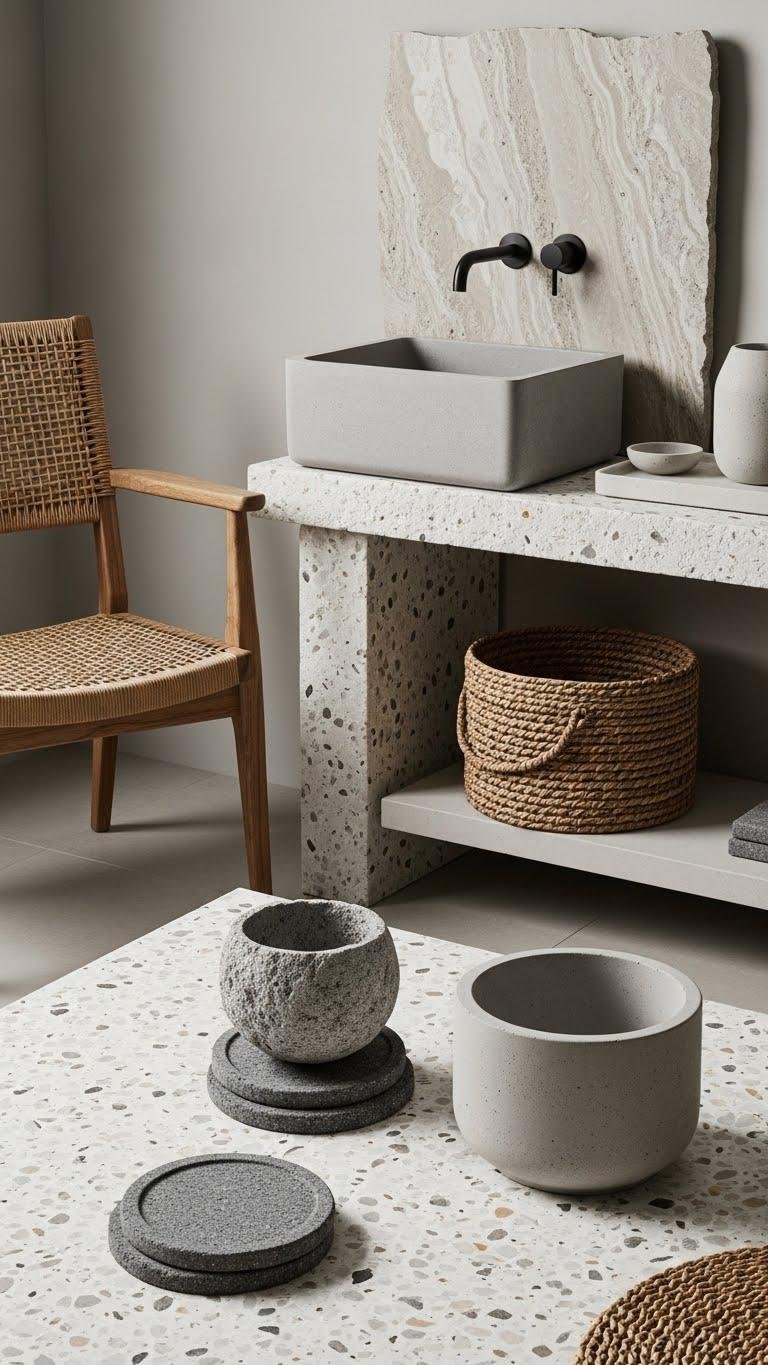
A concrete basin or a slab of honed stone can anchor a Japandi room, bringing cool, grounded contrast to soft woods and woven textures. You’ll mix polished terrazzo countertops, raw basalt coasters, and cast concrete planters to add tactile drama without clutter.
Choose streamlined forms, muted palettes, and natural finishes so each stone piece feels intentional and liberating in your space.
Balance Negative Space and Purposeful Pieces
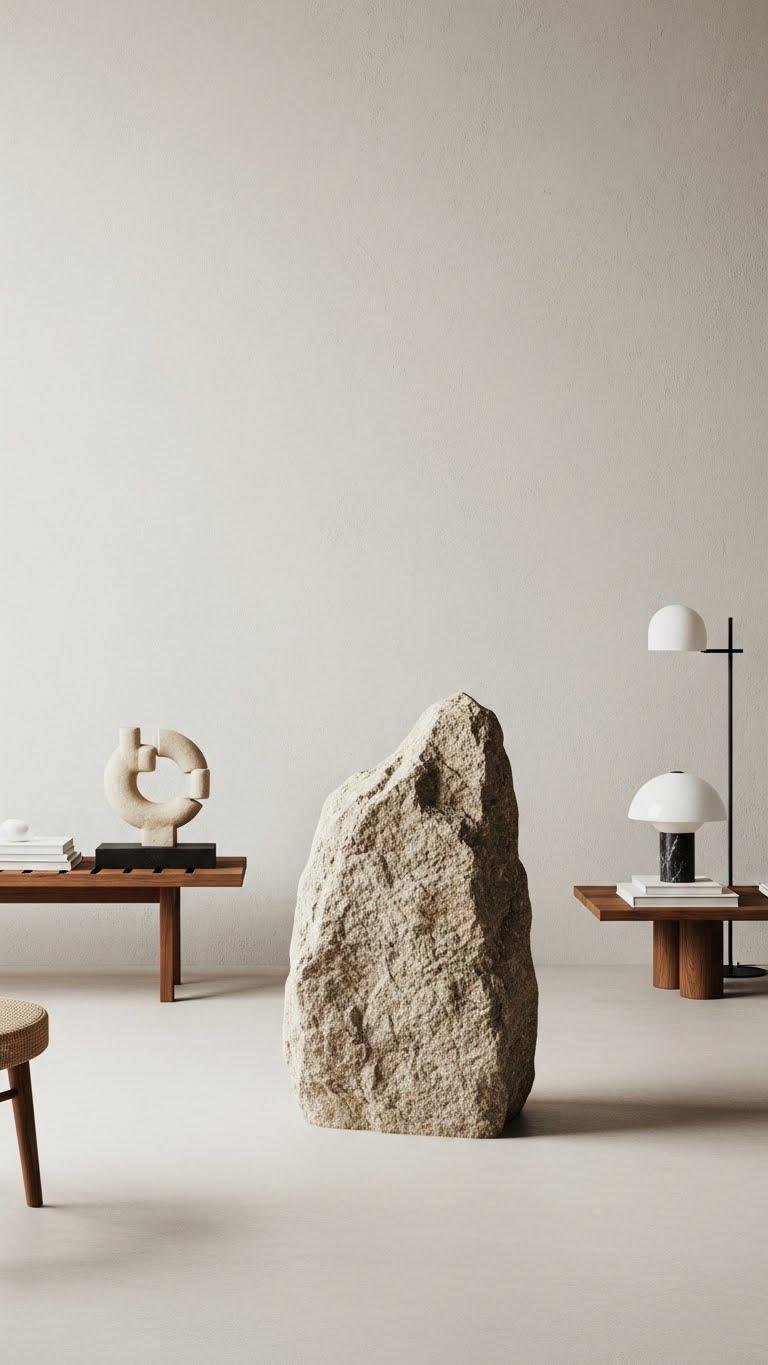
Stone anchors the room, but empty spaces give it air; you’ll want to balance negative space with carefully chosen, purposeful pieces so each element can breathe.
You’ll curate furniture with intentional proportion, choosing forms that feel liberated rather than crowded.
Edit boldly: let sculptural objects, a low wood bench, or a single lamp claim presence, preserving calm and freedom in every sightline.
Introduce Muted Green and Earthy Hues
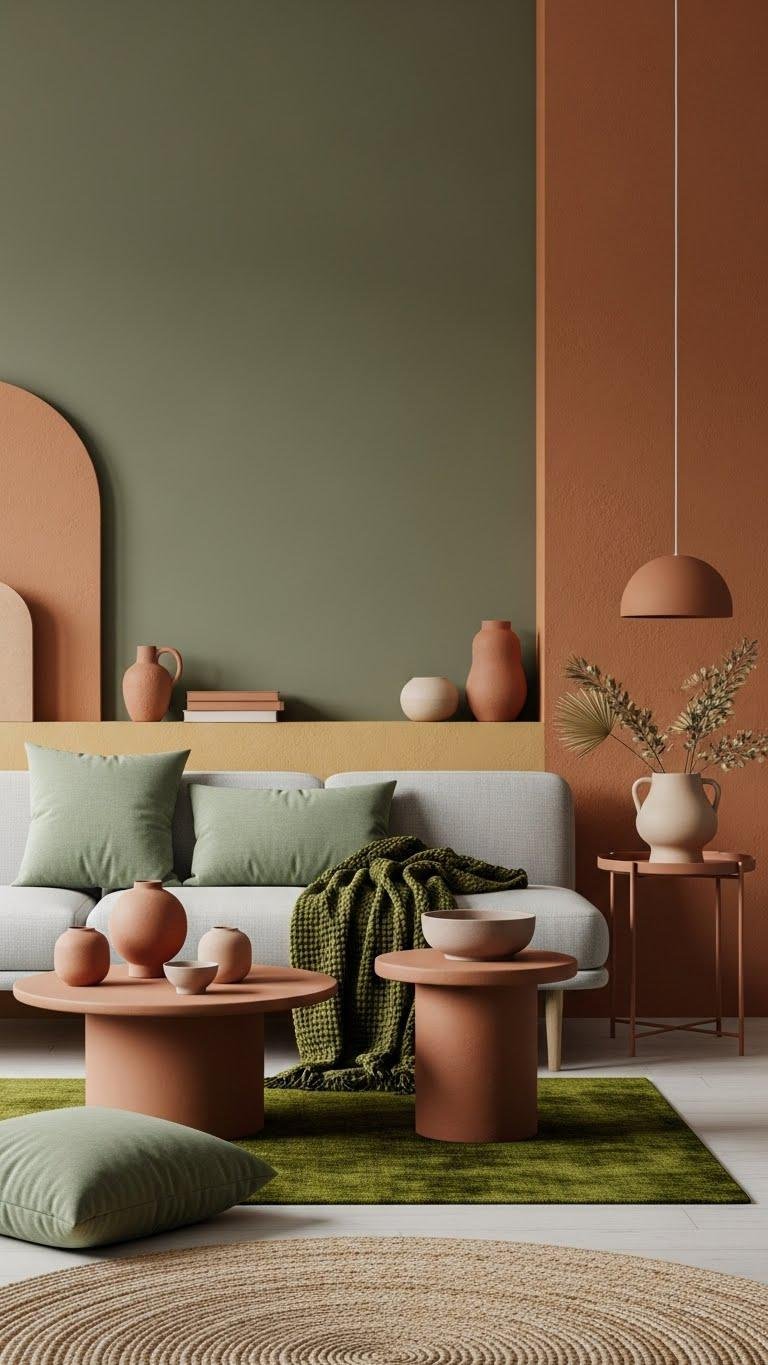
Try introducing a subdued olive or moss as your base accent and pair it with warm, earthy tones—terracotta, clay, and soft ochre—to ground the Japandi palette.
You’ll layer sage accents on cushions and art, choose moss textiles for throws and rugs, and keep surfaces minimal.
This restrained, natural mix lets you breathe, move freely, and enjoy calm, curated simplicity.
Select Multipurpose Storage Solutions
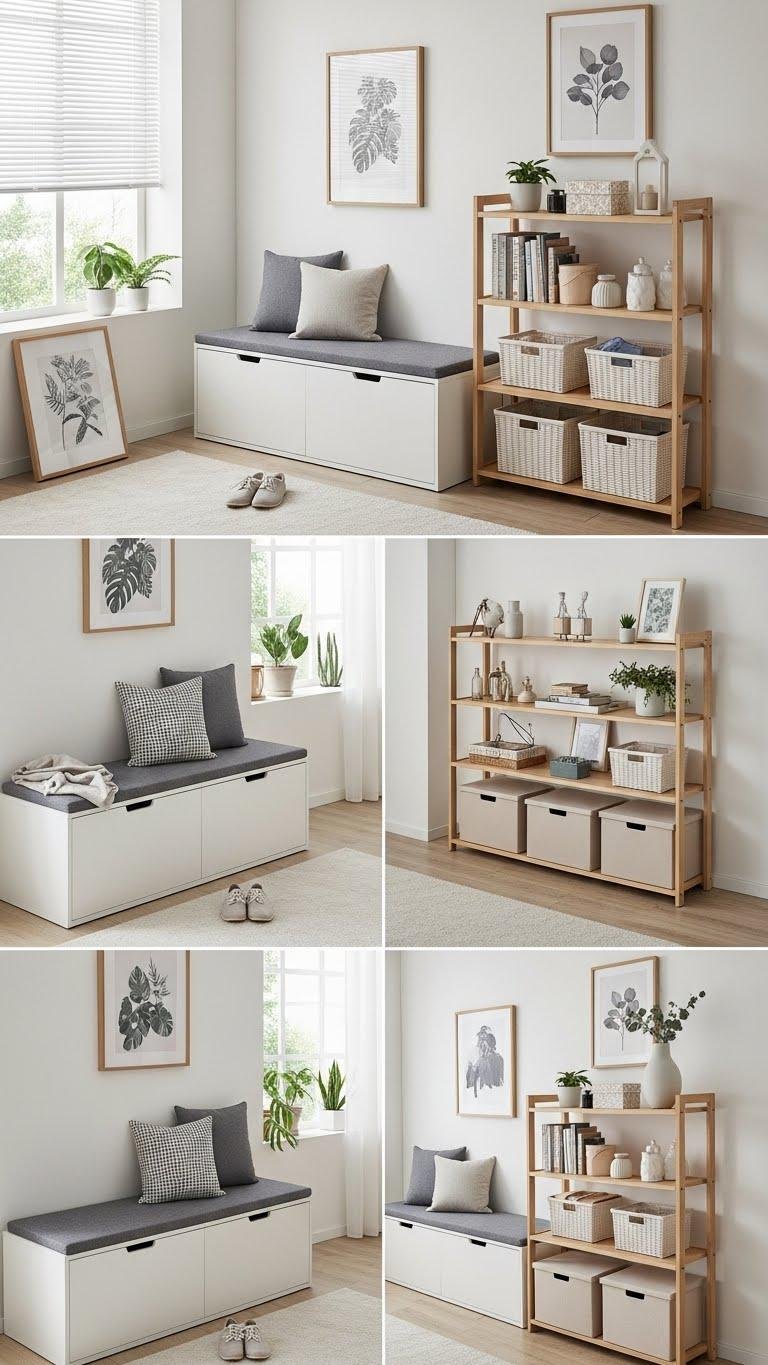
With clean lines and hidden compartments, choose storage that doubles as seating, display, or a room divider so you’ll keep the space uncluttered without sacrificing style.
You’ll favor hidden cabinetry and modular baskets to adapt as needs shift, keeping surfaces clear and movement free.
Opt for natural finishes and slim profiles that respect Japandi restraint while granting practical, liberating flexibility.
Place Low Seating for Relaxed Living
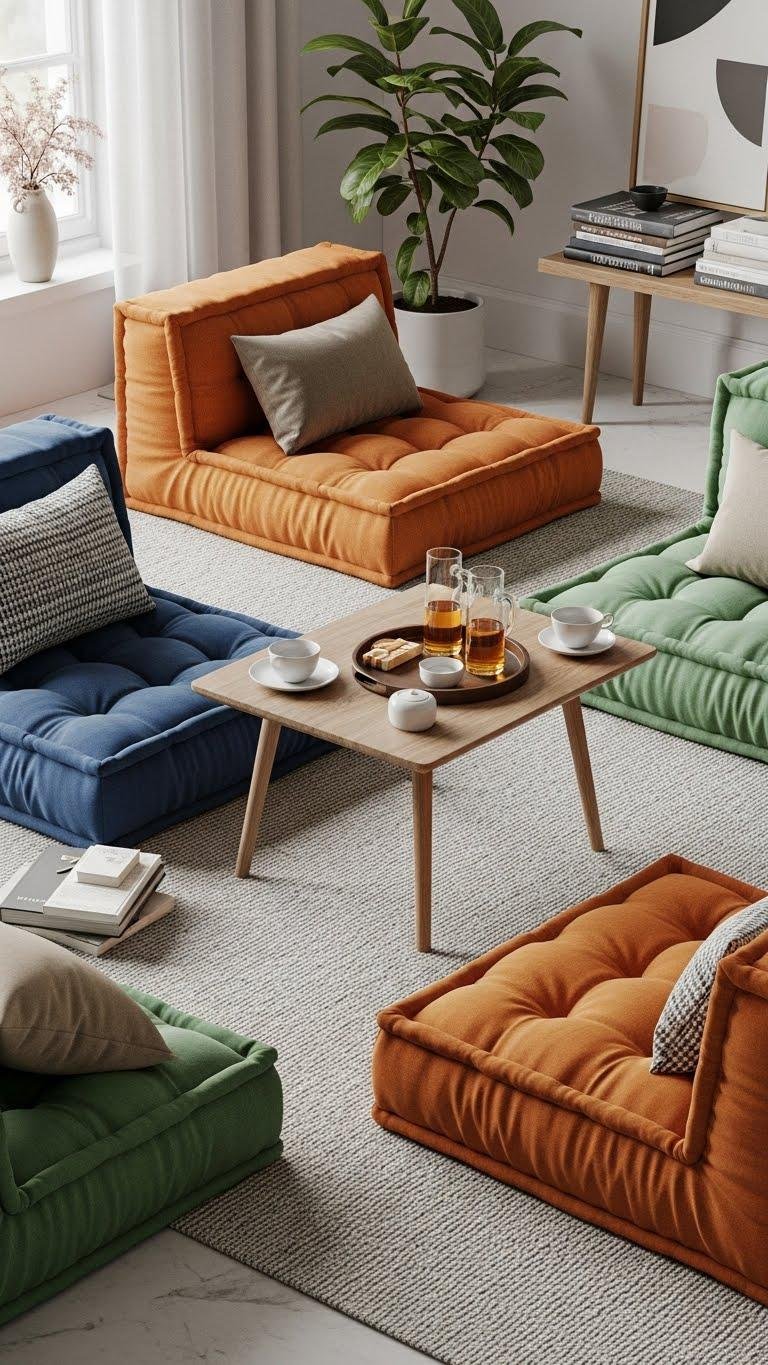
After clearing surfaces and creating flexible storage, bring in low seating to anchor calm, human-scale moments.
You’ll choose floor cushions and simple tea tables that encourage slow rituals and easy gatherings.
Keep lines clean, materials tactile, and color muted so you can move freely.
Mix modular cushions for lounging with compact tea tables for drinks and books, fostering relaxed, intentional living.
Highlight Craftsmanship With Statement Pieces
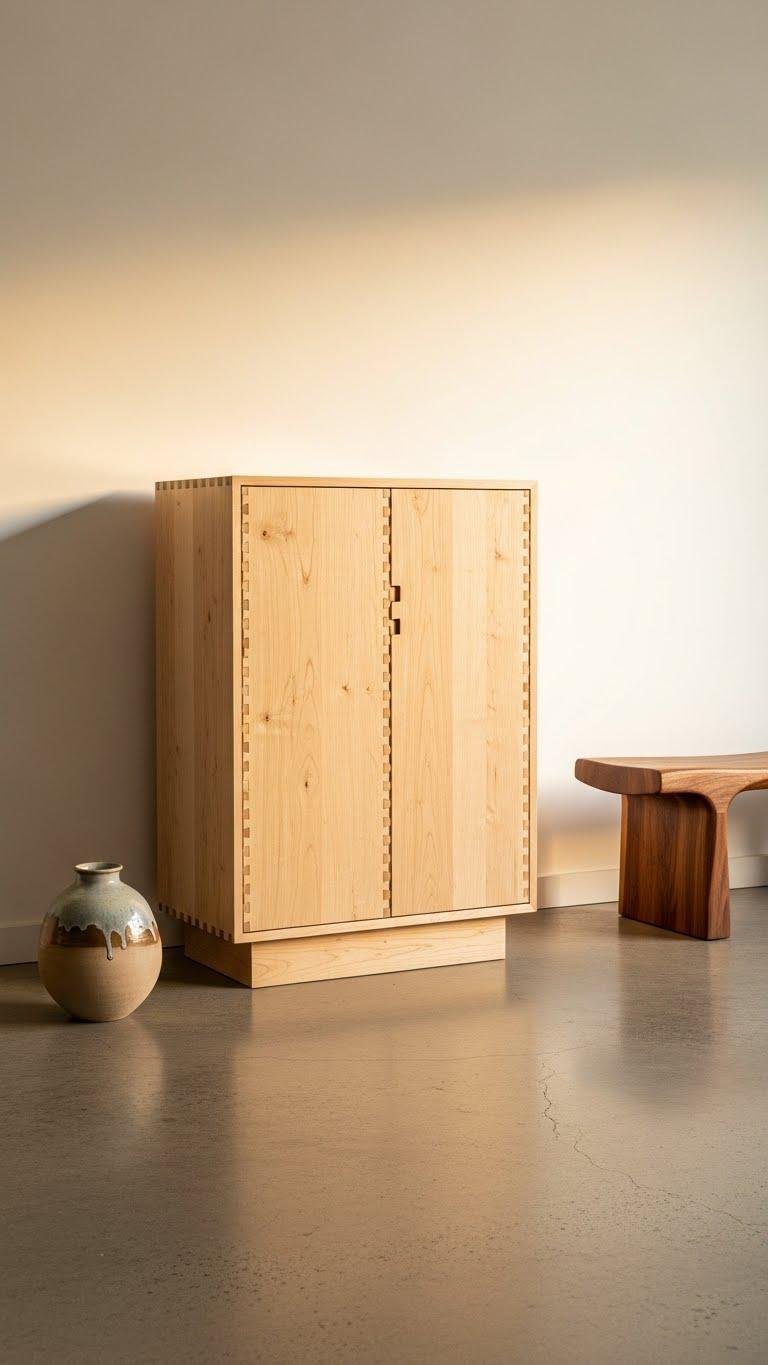
Celebrate craftsmanship by letting a single, well-made object anchor the room—an artisanal cabinet, hand-thrown vessel, or carved wooden bench speaks louder than a dozen mass-market pieces.
You’ll choose pieces with artisan joinery and subtle patina, favoring statement chests or sculptural accents that declare intent.
Keep surrounding elements minimal so each object breathes, inviting calm, autonomy, and considered living.
Bring Warmth With Soft Area Rugs
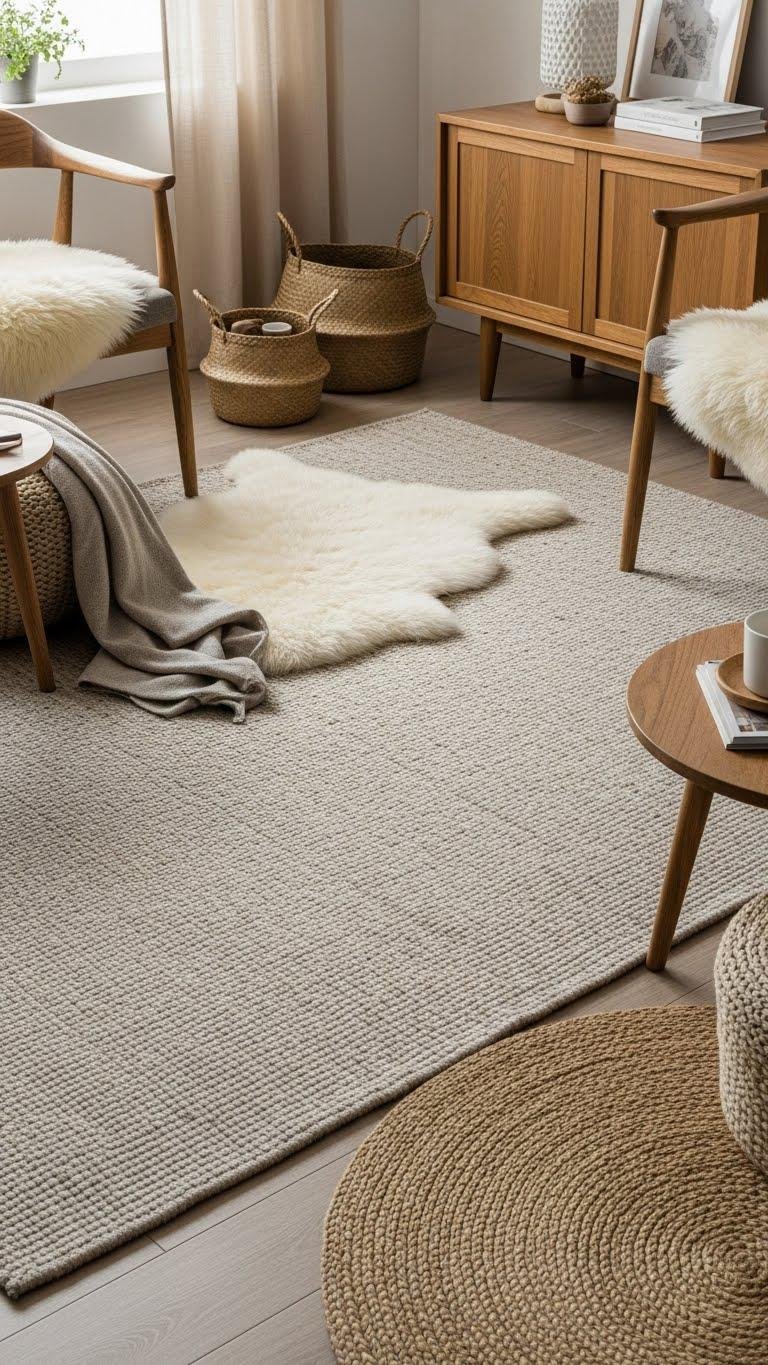
Often, a soft area rug quietly transforms a Japandi room, grounding furniture, muffling sound, and adding tactile warmth underfoot. Choose neutral, low-pile textures that let wood grain breathe.
You’ll pair sheepskin accents for cozy corners and layered sisal for organic structure, balancing minimal lines with inviting surfaces. Rugs define zones, encourage barefoot living, and support a liberated, calm home aesthetic.
Incorporate Subtle, Warm Lighting
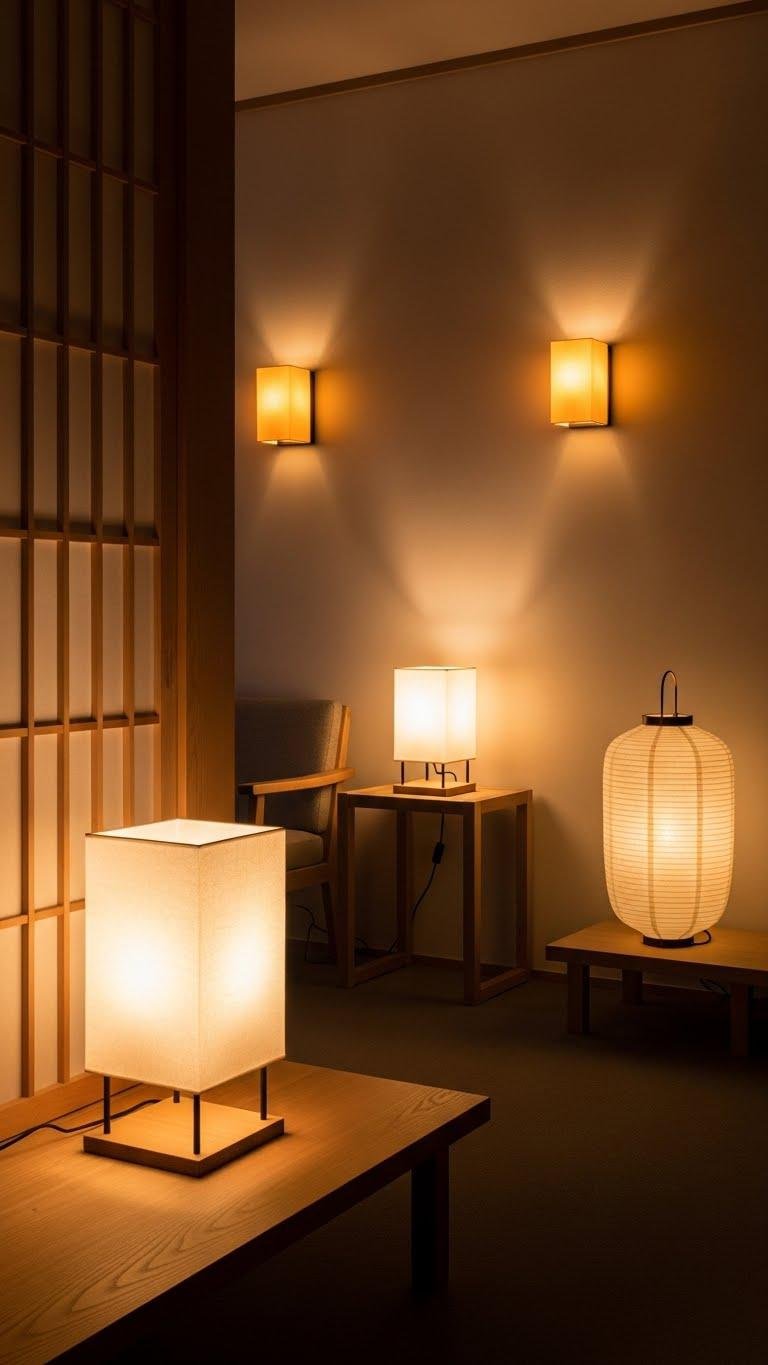
Bring warm light in slowly to soften a Japandi room’s clean lines and natural materials. You’ll choose soft lanterns and amber sconces to craft layered, low-glow zones that feel calm and free.
Dimmed overheads stay rare; instead, you place lamps for reading, sconces for mood, and lanterns for texture. The result is restrained warmth that invites lingering without cluttering the space.
Display Curated Coffee Table Books
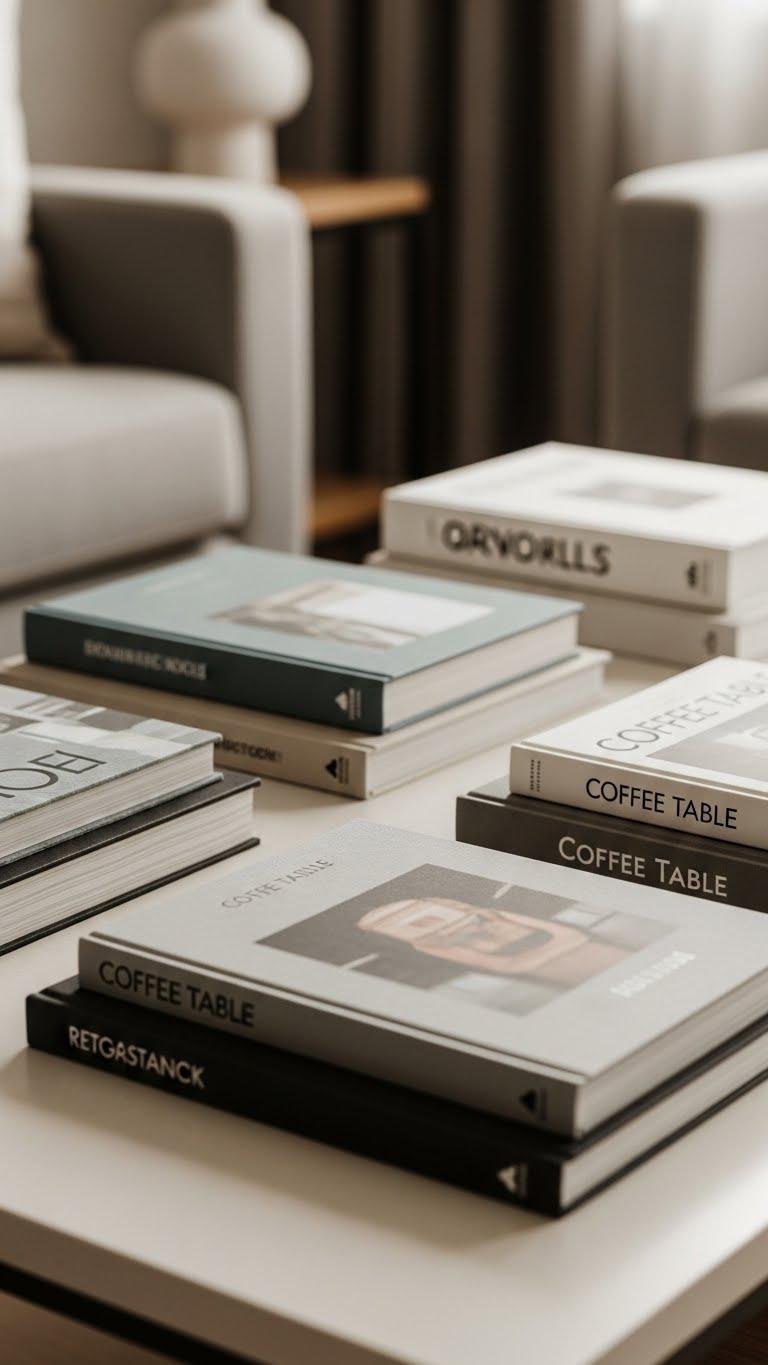
Select a few tactile, artful volumes and let them breathe — stacked low, spaced, and aligned with the room’s lines. You’ll treat the coffee table as a calm stage: mix textures, muted covers, and personal favorites so each piece feels intentional.
Book curation here favors restraint; pick fewer, rotate seasonally, and maintain negative space to keep your living area uncluttered and free.
Use Minimal Art With Calm Motifs
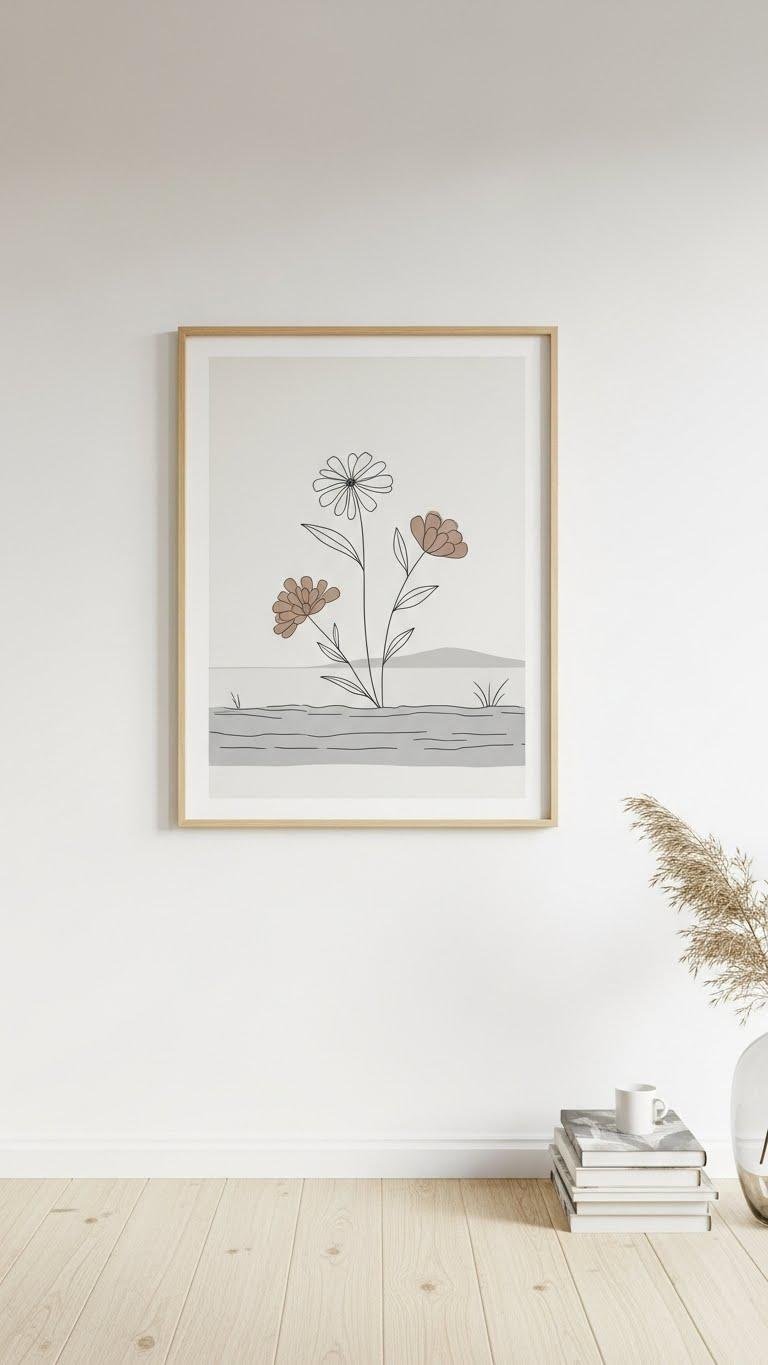
Serenity comes through in pared-back pieces that whisper rather than shout: choose artworks with simple lines, muted palettes, and quiet motifs that echo Japandi’s balance of Scandinavian calm and Japanese restraint.
You’ll favor minimal inkworks and muted botanical prints hung thoughtfully, letting negative space breathe. Select frames and placement that free the room, invite reflection, and keep your interiors uncluttered, intentional, and serene.
Blend Scandinavian Simplicity With Wabi‑Sabi Finds
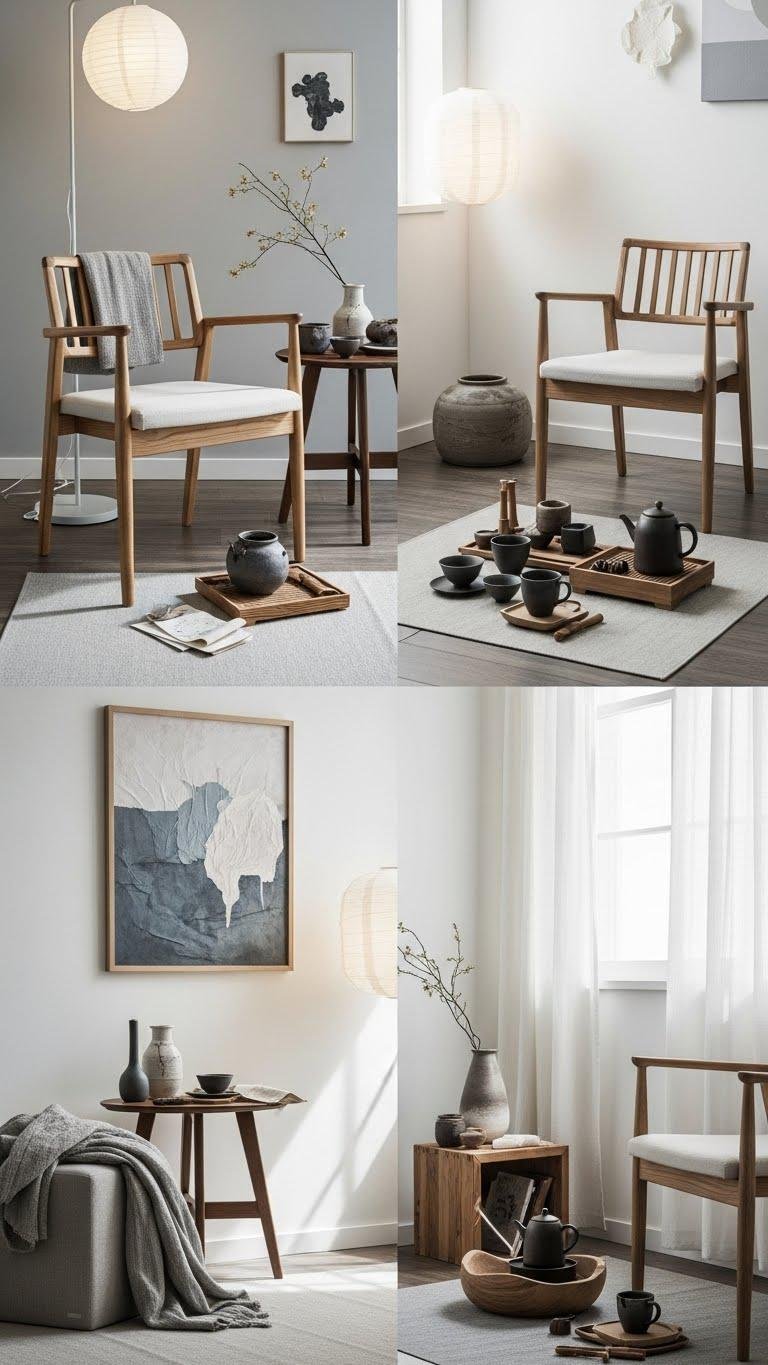
While Scandinavian design favors clean lines and airy function, wabi‑sabi invites you to celebrate imperfection—so pair streamlined furniture with a few handcrafted, slightly worn objects that add warmth and story.
You’ll curate a calm palette, highlight imperfect pottery as focal accents, and create moments of ritual like a silent tea ceremony.
Embrace restraint, natural textures, and freedom to breathe.
Keep Surfaces Clutter‑Free and Intentional
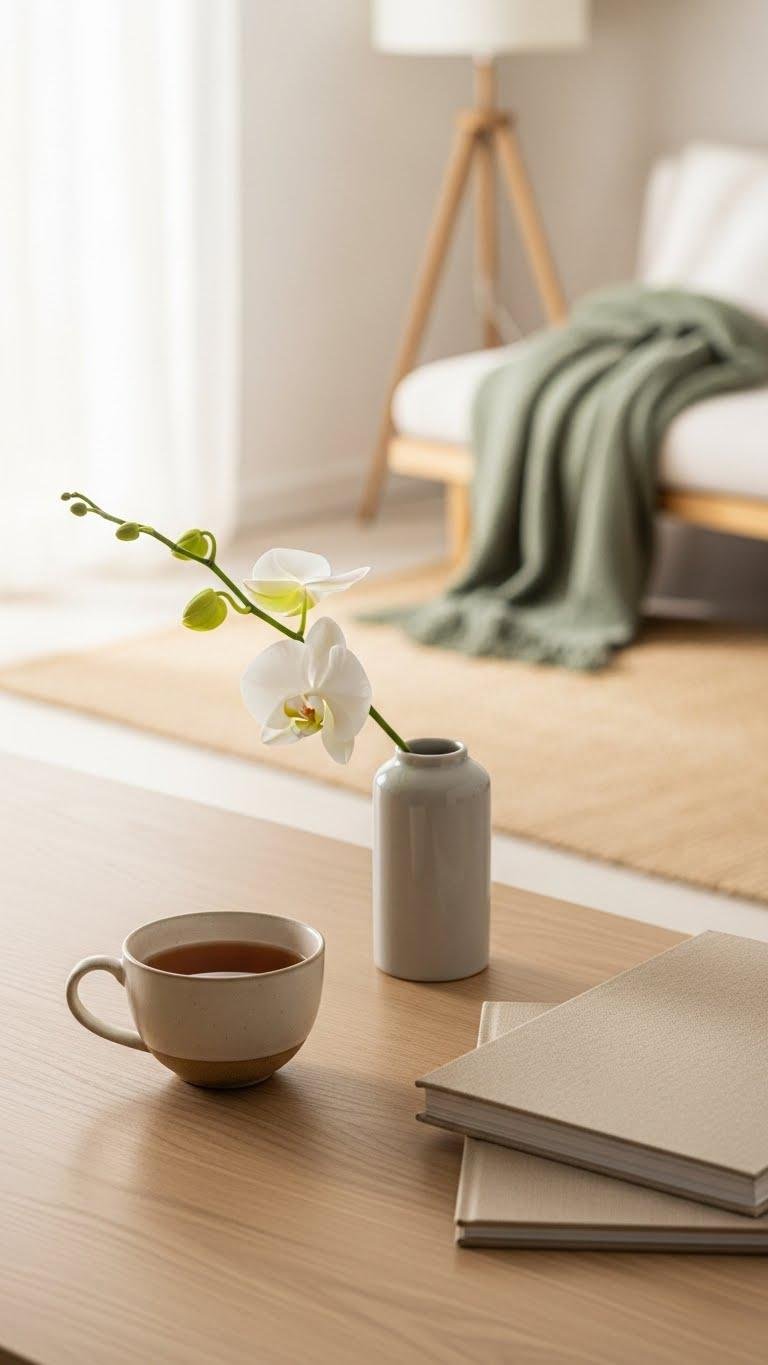
Often you’ll find that clear surfaces are the easiest way to let Japandi’s calm show through: keep countertops and shelves intentionally edited so every object earns its place.
You curtail visual noise by limiting daily essentials to functional, beautiful pieces and arranging intentional vignettes — a teacup, a small vase, a single book.
That restraint gives you freedom and a serene, modern home.
Add Textured Throw Pillows in Muted Tones
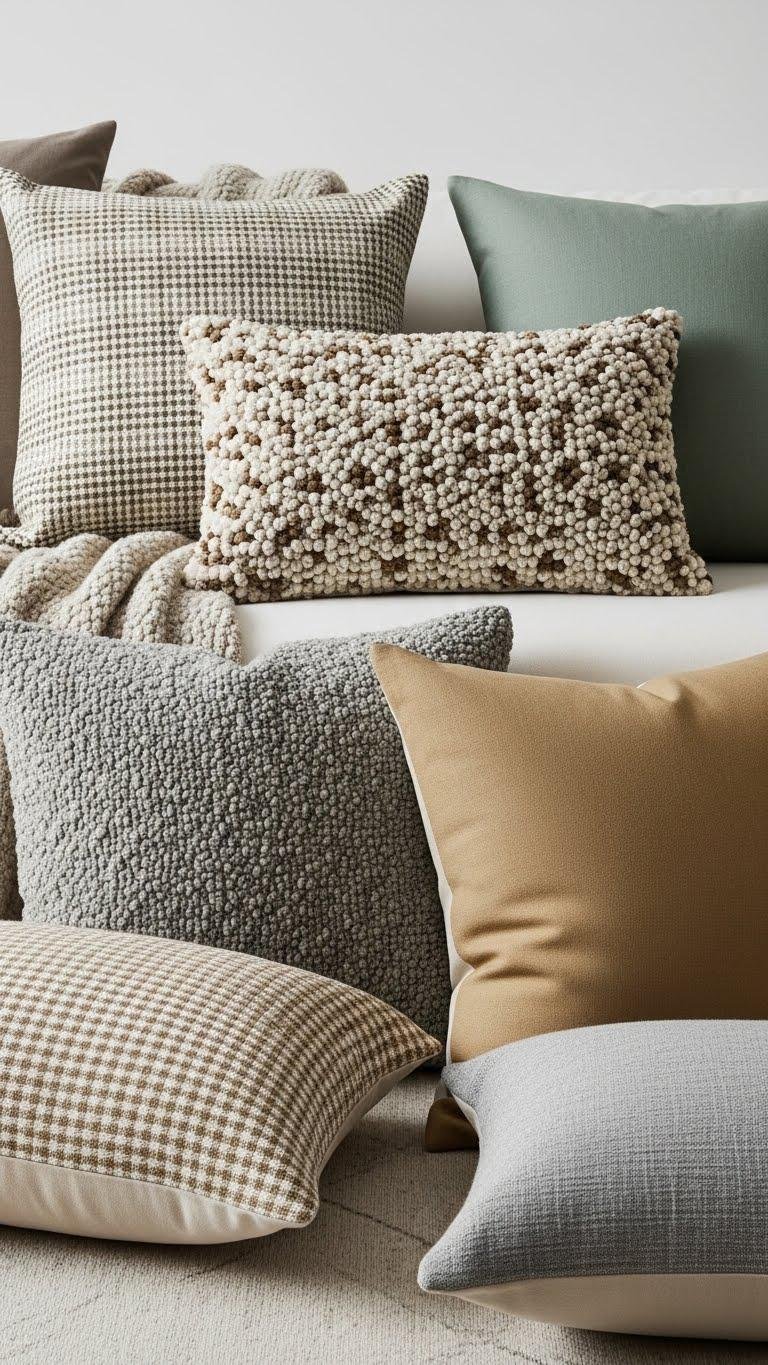
You’ll find that textured throw pillows in muted tones instantly deepen a Japandi scheme without cluttering it; pick linen, boucle, or soft wool in beige, dusty sage, or warm gray to add tactile warmth while keeping the palette restrained.
Mix patterned neutrals with solid pieces and handcrafted textures to create calm contrast.
You’ll layer sparingly, choose quality pieces, and let space breathe.
Opt for Sustainable, Long‑Lasting Materials
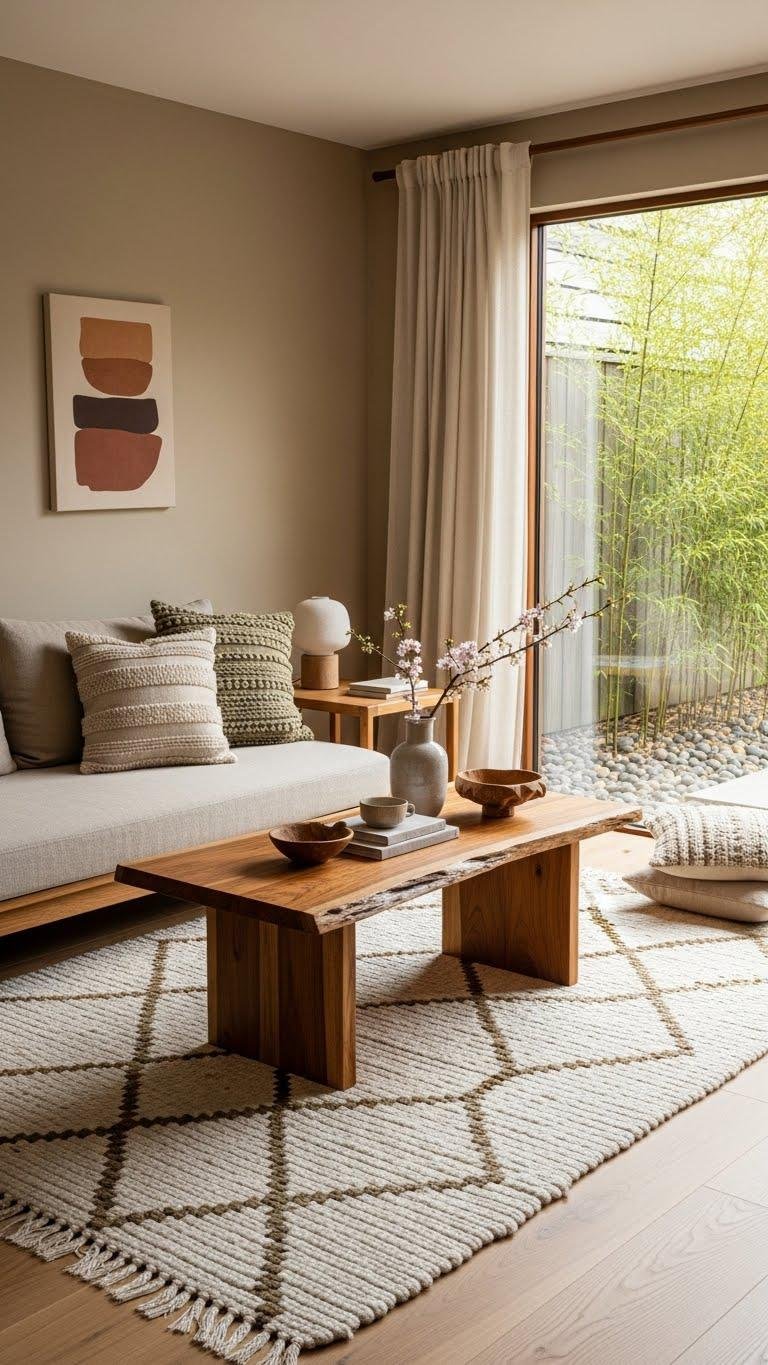
Because Japandi values longevity as much as simplicity, choose materials that age beautifully and reduce turnover: solid wood, natural fibers like linen, wool, and cotton, and low-VOC finishes will keep your space looking timeless and healthy.
You’ll favor durable hemp textiles, reclaimed teak furniture, and simple silhouettes that free you from trends, letting a calm, functional home mature with character and purpose.