
You’ll find ways to make plants shape your rooms, not just fill them — think living walls, sculptural pots, and clustered kokedama that define corners and circulation. I’ll show how to layer texture, light, and height, mix live and preserved elements for low-fuss impact, and use modular systems and removable pots so maintenance stays easy. Start with a single statement specimen, and the rest will fall into place — here’s how.
Lush Living Wall With Mixed Live and Preserved Foliage
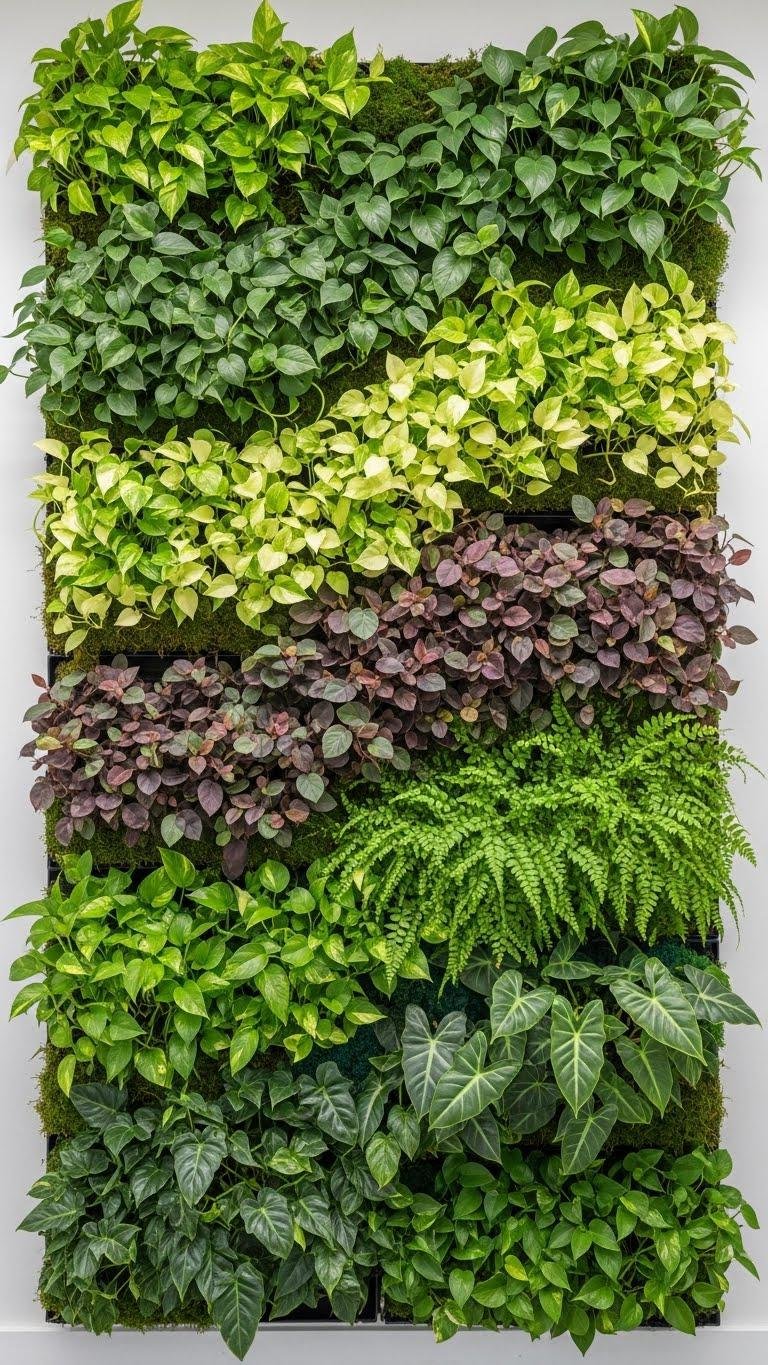
Think of a living tapestry: a vertical garden that pairs hardy live plants—pothos, ferns, philodendrons—with preserved mosses and foliage to give you year-round texture and depth.
You’ll plan botanical layering to guide sightlines, balance color and scale, and zone irrigation.
Position modules for airflow, monitor humidity control, and move elements freely so the wall feels deliberate, breathable, and utterly yours.
Kokedama Cluster Hanging Near a Window
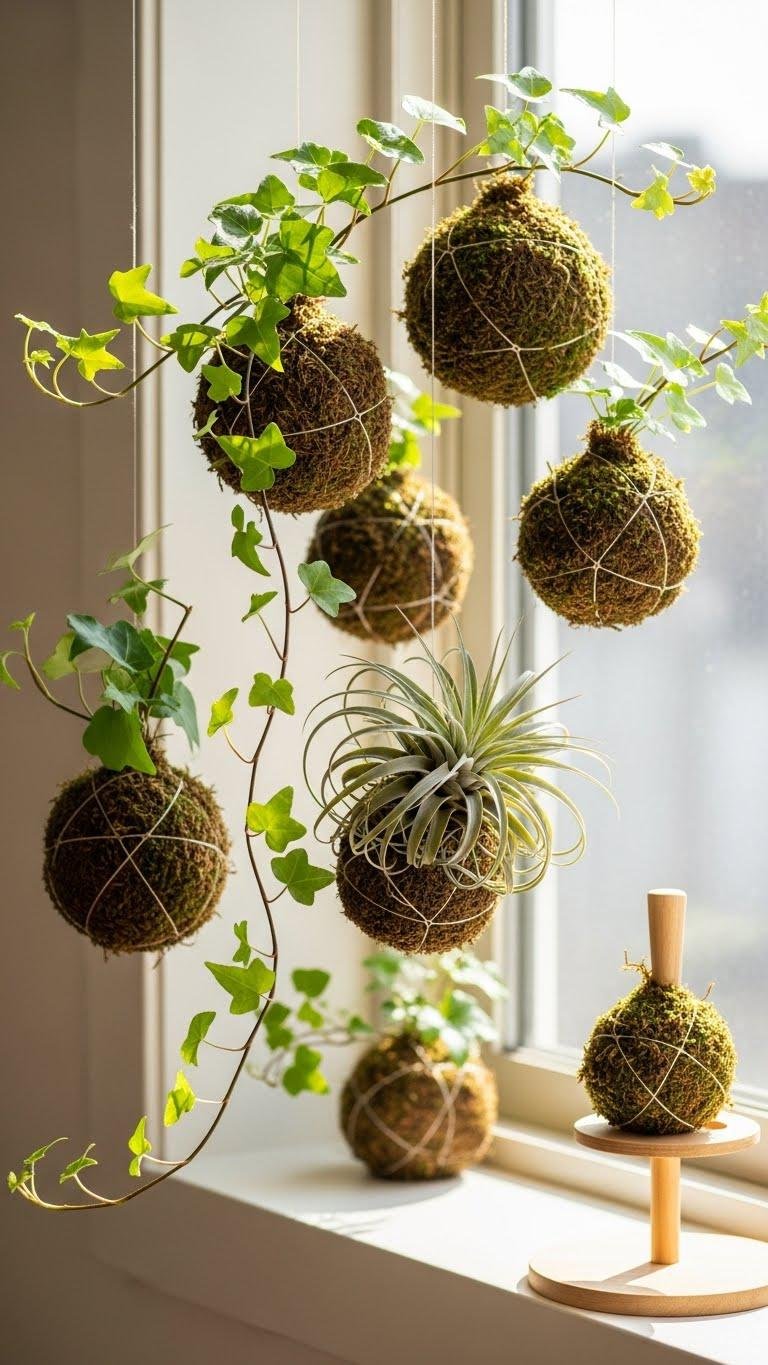
Perched near a sunny window, a cluster of kokedama transforms open air into a suspended mini-garden, each moss-bound ball dangling at slightly different heights to create depth and rhythm.
You’ll arrange suspended mossballs to catch window light, balancing trailing ivy and a compact airplant for contrast.
Use a miniature stand nearby for rotation and storage, keeping the composition airy and free.
Oversized Fiddle Leaf Fig as a Corner Anchor
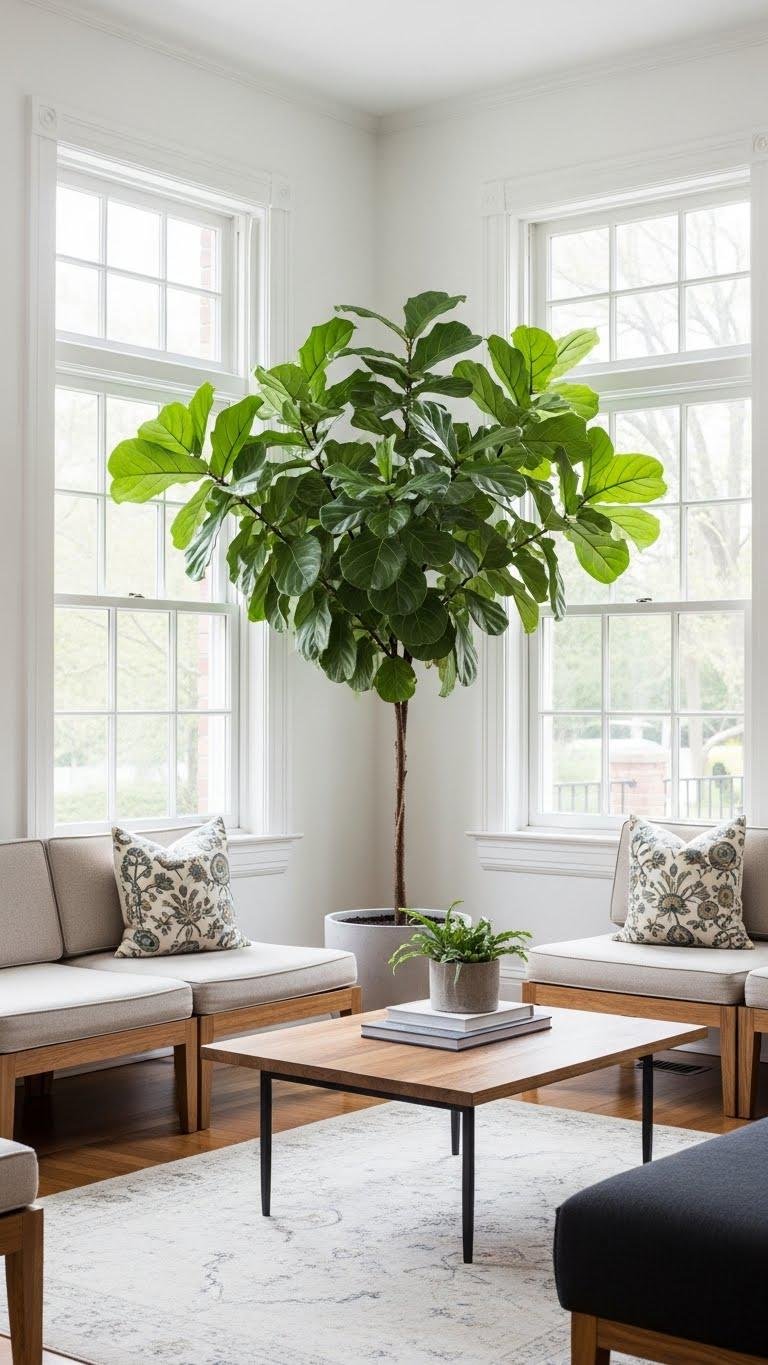
After the light and airiness of a kokedama cluster, you can ground the same sunlit corner with an oversized fiddle leaf fig that anchors the space and defines sightlines. You’ll use it as a Statement anchor for Corner sculpting, shaping negative space, guiding circulation, and balancing height against low seating. Let its bold silhouette free the room while keeping proportions crisp and intentional.
Bold-Colored Curved Planter With a Rubber Plant
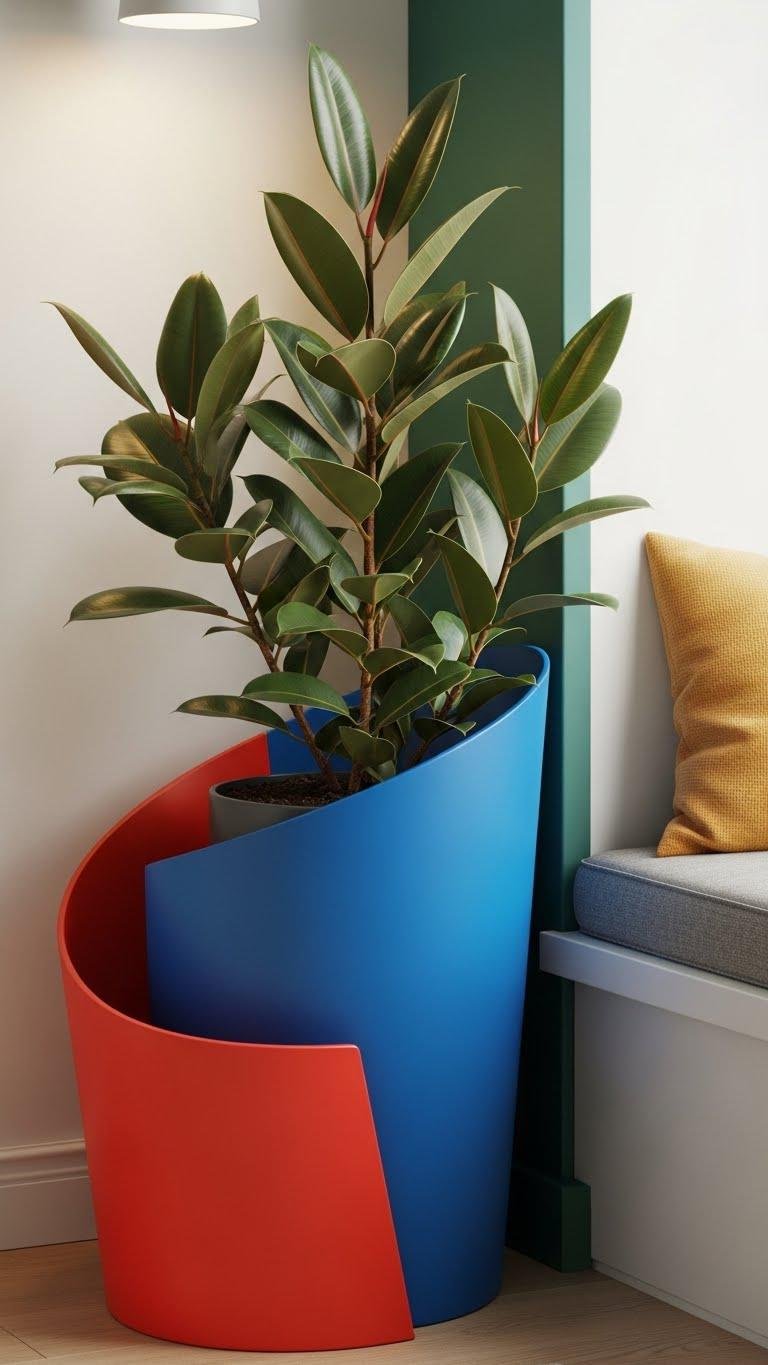
Tuck a rubber plant into a bold-colored, curved planter to introduce a confident sweep of color and form that both anchors and animates a seating nook. You’ll place the sculptural silhouette where sightlines open, its matte finish resisting glare.
The tapered rim refines scale, while monochrome contrast between plant and pot frees you to rearrange boldly, keeping movement and calm in balance.
Modular Vertical Planter Panels for Hallways
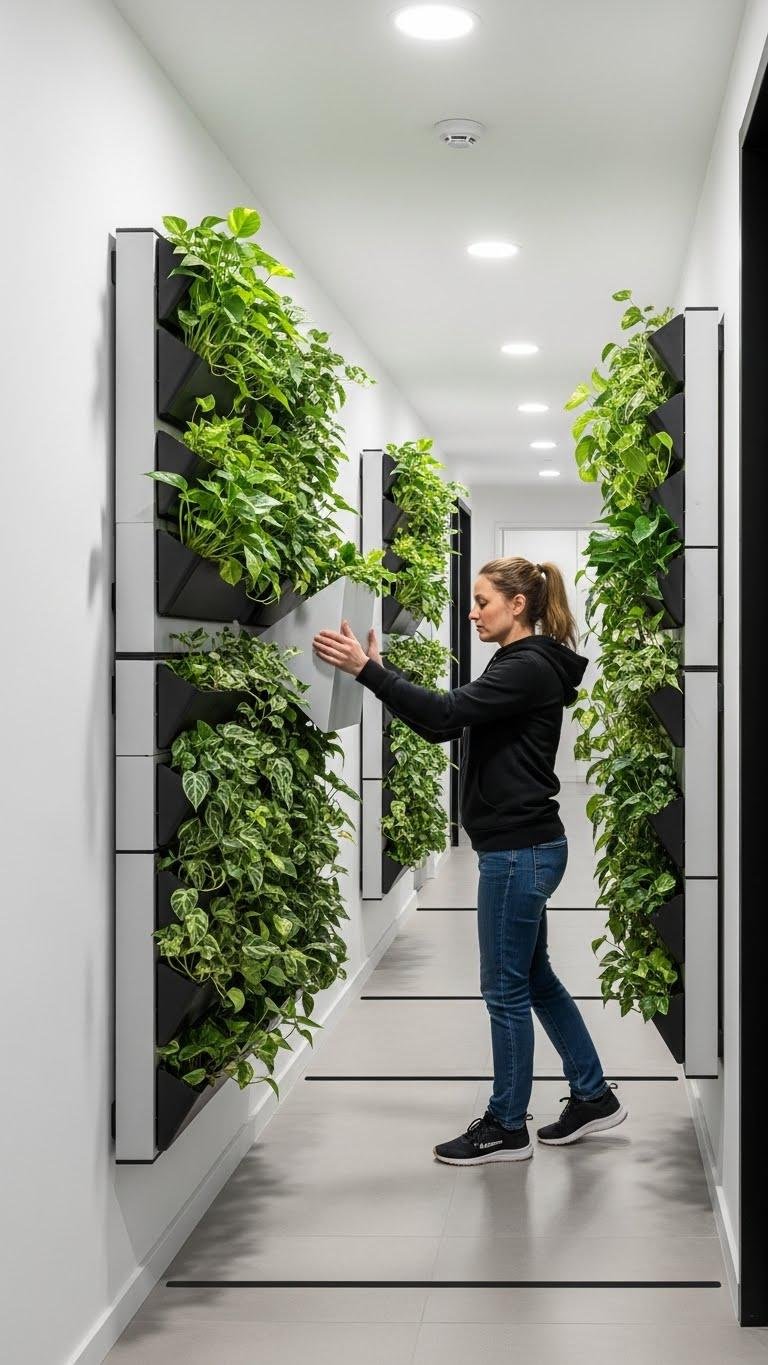
If the bold curved planter anchored your seating nook with sculptural presence, bring that same sense of curated form into narrow circulation by installing modular vertical planter panels along a hallway wall.
You’ll appreciate how magnetic modules let you reconfigure greenery, removable planters simplify panel maintenance, and crisp spacing preserves flow in a narrow hallway, so movement feels free and intentional.
Wall-Sconce Planters With Trailing Pothos
Mounted Driftwood Display for Orchids and Bromeliads
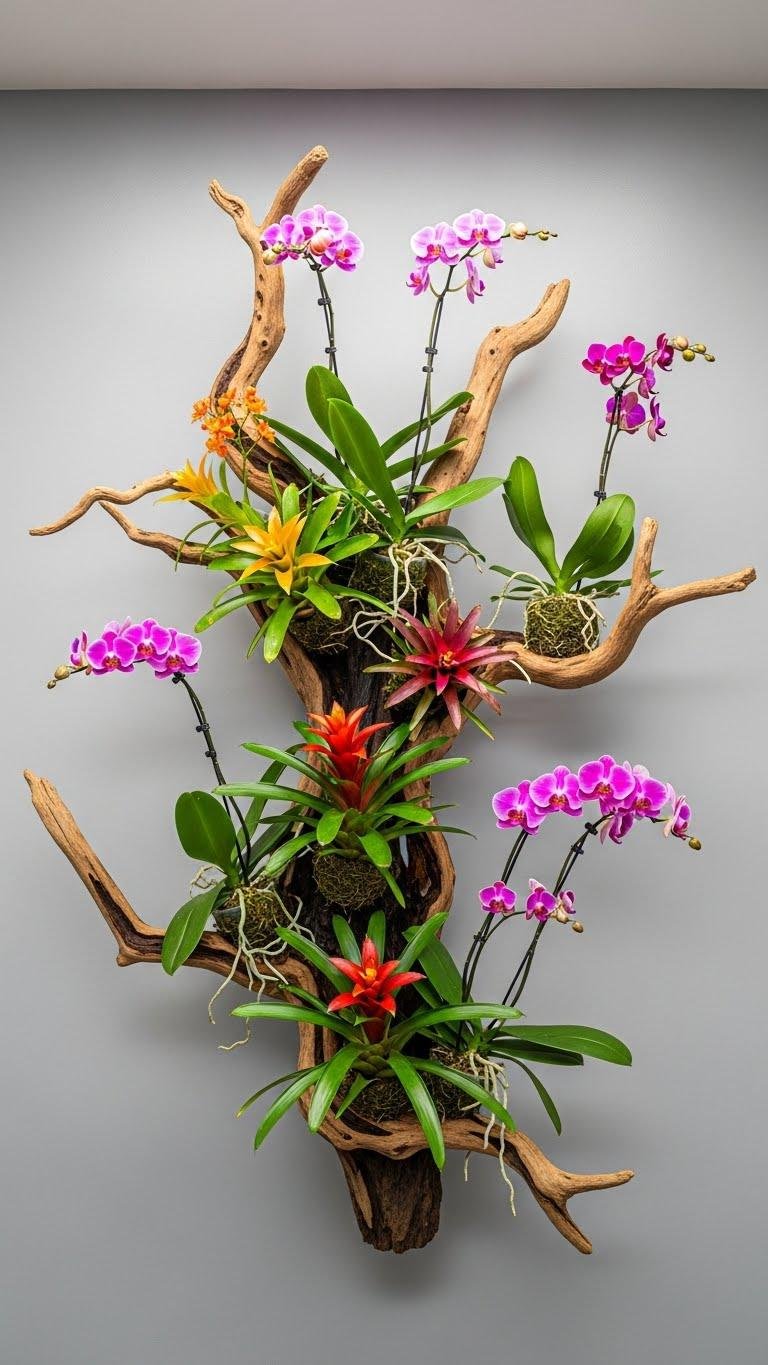
Anchor a sculptural driftwood mount on a focal wall to showcase orchids and bromeliads as living art—its gnarled limbs and natural crevices give each plant a bespoke perch that reads like a gallery installation.
You’ll arrange mounted orchids into airy clusters and carve bromeliad alcoves for snug root beds, balancing negative space and light so each piece breathes and the room feels unfettered.
Living Picture Frame of Moss and Small Ferns
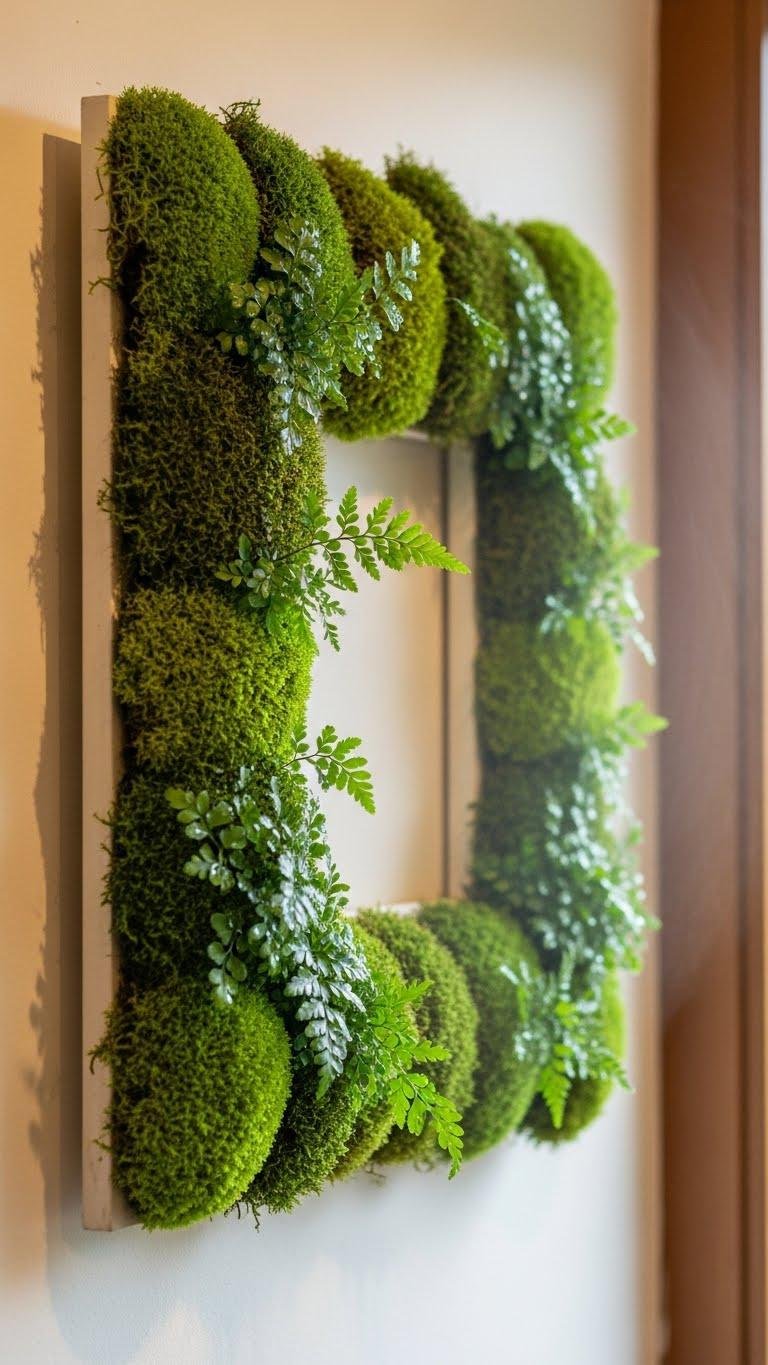
Often overlooked, a living picture frame of moss and small ferns turns a blank wall into a textured, breathing tableau you can arrange like a painter composing a still life.
You’ll craft a compact moss gallery in shallow fernlet frames, positioning each specimen for layered depth and airflow.
Mist lightly, rotate frames for even light, and let the composition evolve with your tastes.
Clustered Heights: Palm, Dracaena, and Fern Grouping
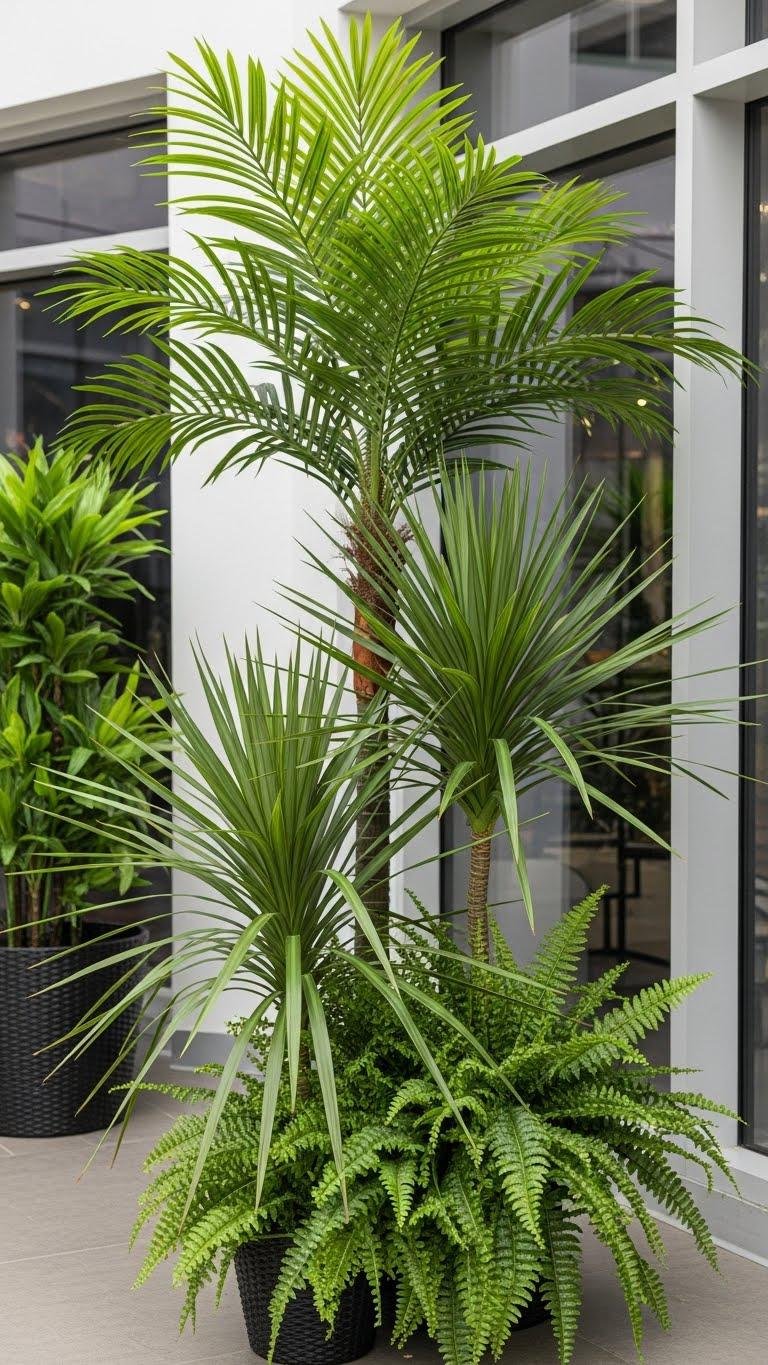
Although they differ in scale and silhouette, grouping a palm, a dracaena, and a fern creates a deliberate vertical cadence that draws the eye upward while keeping the floor plane lively.
You’ll compose tropical texturality through glossy fronds, spiky dracaena blades, and feathery fern skirts, balancing negative space and height layering. Arrange pots by scale and sightlines so movement feels effortless and liberating.
Sleek Pedestal Stand for a Statement Specimen
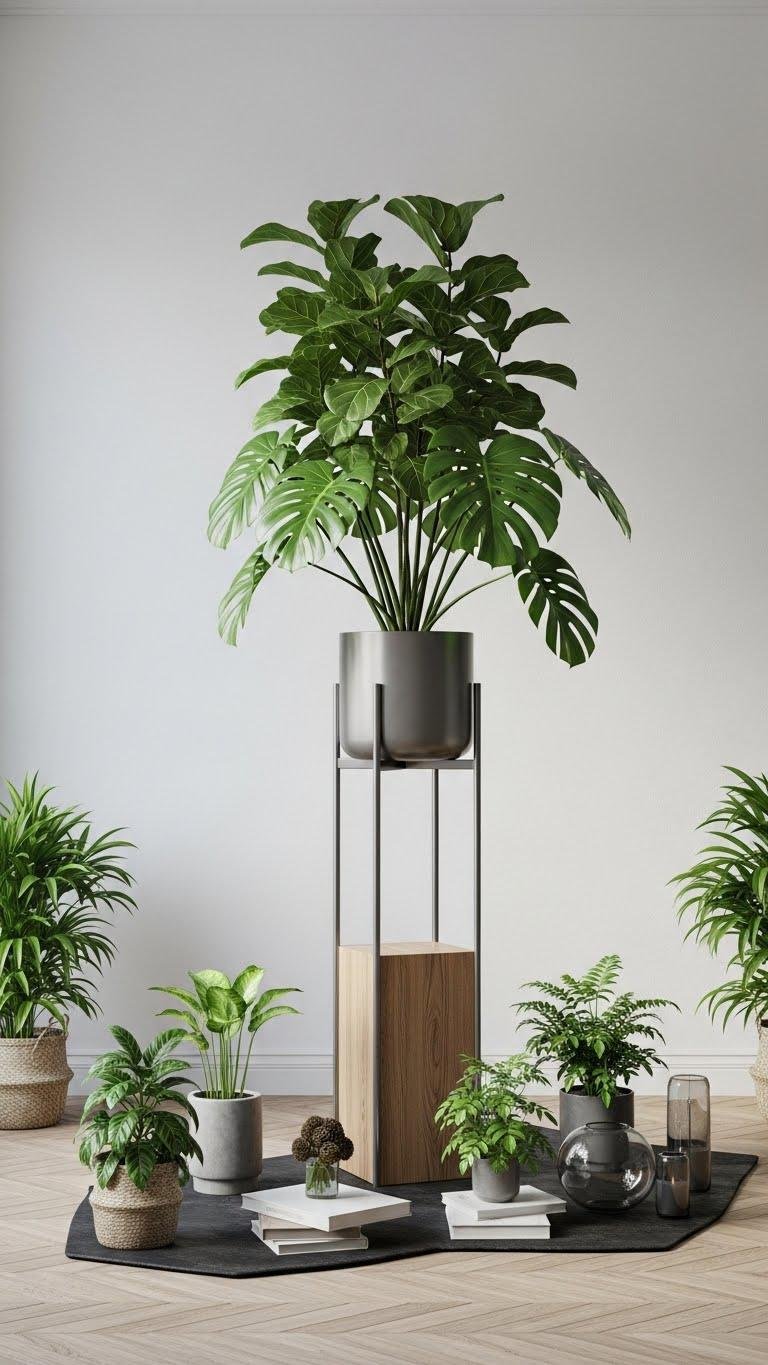
Moving your eye from a layered floor grouping up to a single elevated specimen can change a room’s rhythm—here a sleek pedestal stand turns one plant into a sculptural focal point.
You’ll choose a matte metal stand or wood sculptural plinth to lift a bold fiddle leaf or monstera, defining sightlines, freeing floor space, and asserting sculptural calm without crowding your room.
Terracotta Trough With Mixed Patterned Foliage
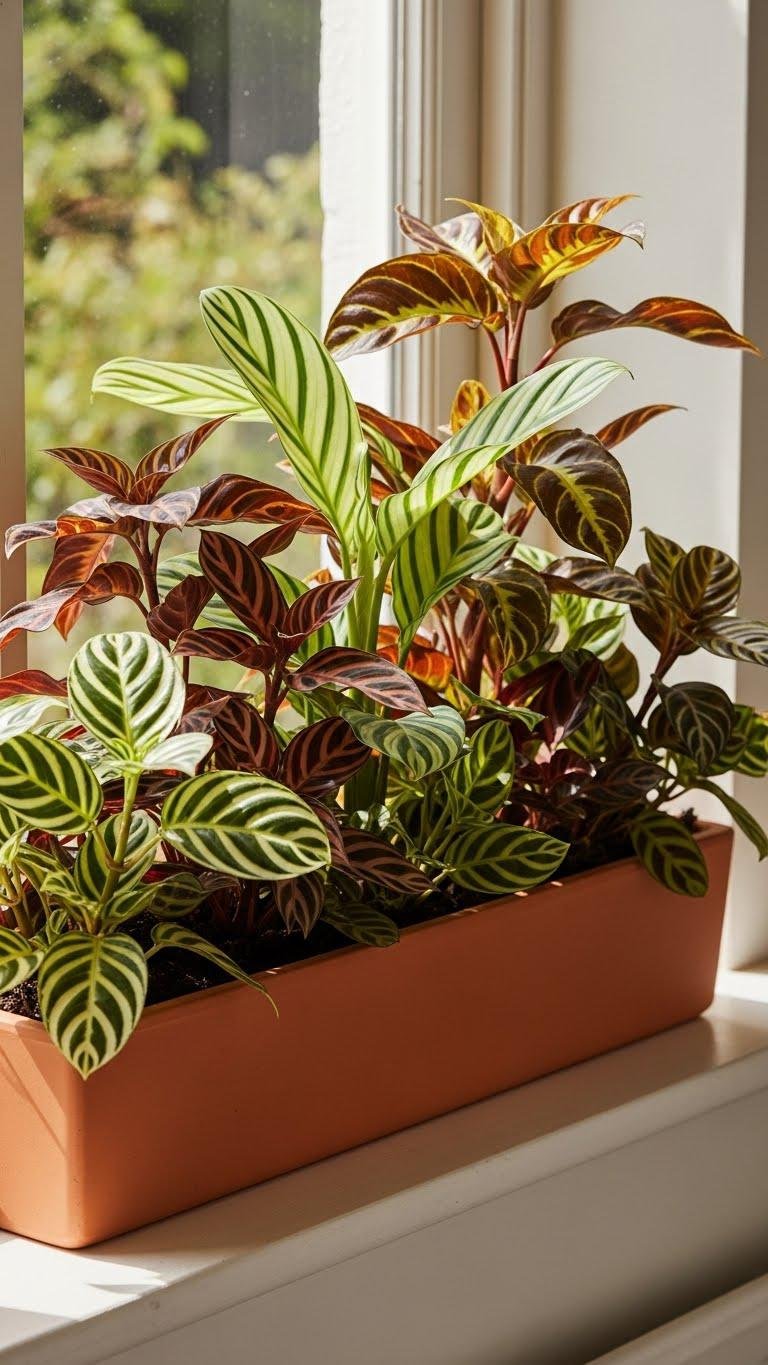
You’ll frequently anchor a sunny windowsill or narrow console with a low terracotta trough, its warm, matte surface grounding a lively mix of patterned foliage.
You’ll arrange varying heights and leaf shapes so light skims glossy stripes and matte variegation.
The textured terracotta adds tactile contrast, defining a liberated, airy vignette that invites rearrangement and easy seasonal swaps.
Glass Closed Terrarium for Humidity-Loving Minis
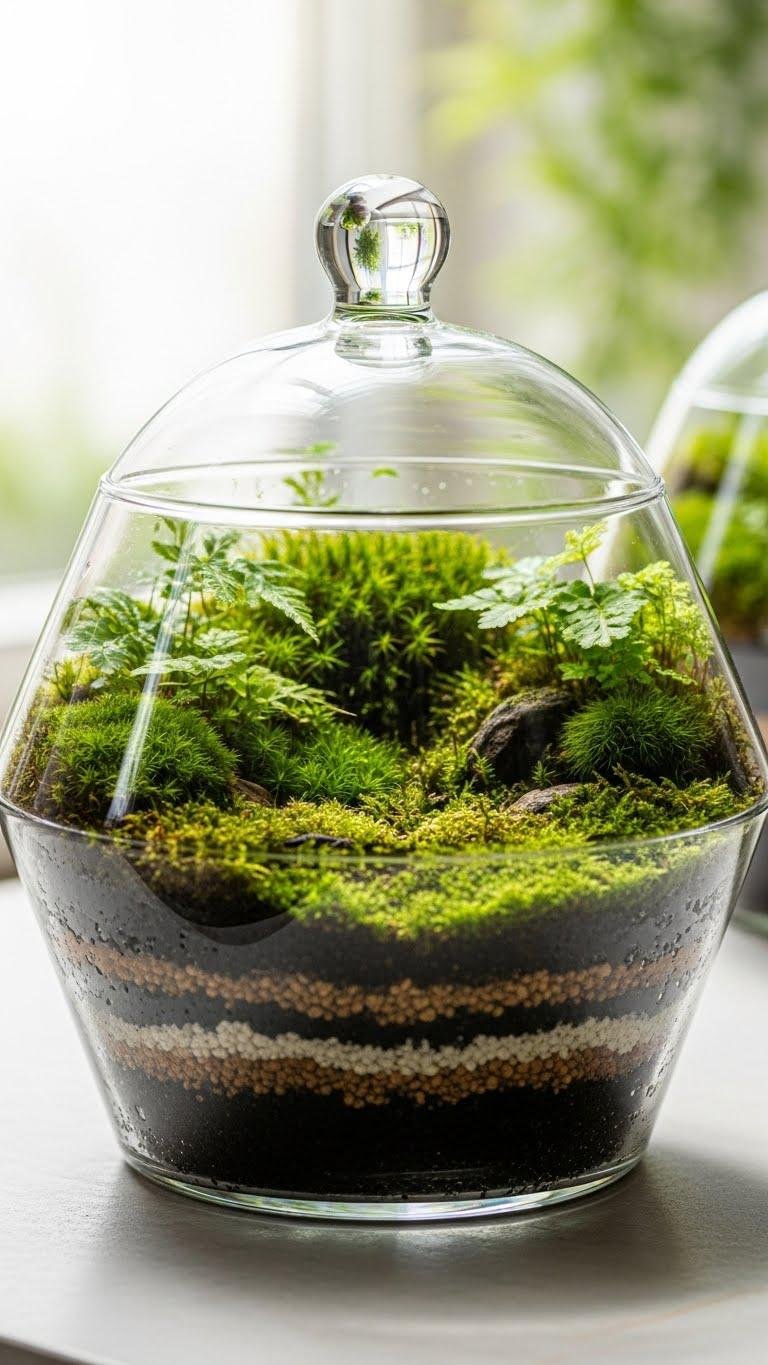
Pop a glass cloche or geometric jar over a tiny jungle and you instantly create a pocket of humid calm that keeps moisture-loving minis thriving.
You arrange a layered substrate, sculpt a moss microcosm, tuck miniature ferns into sun-dappled corners, and seal a closed terrarium that hums with life.
Place it where light filters; you’ll relish low-maintenance, liberated green.
Hanging Glass Orbs With String of Hearts
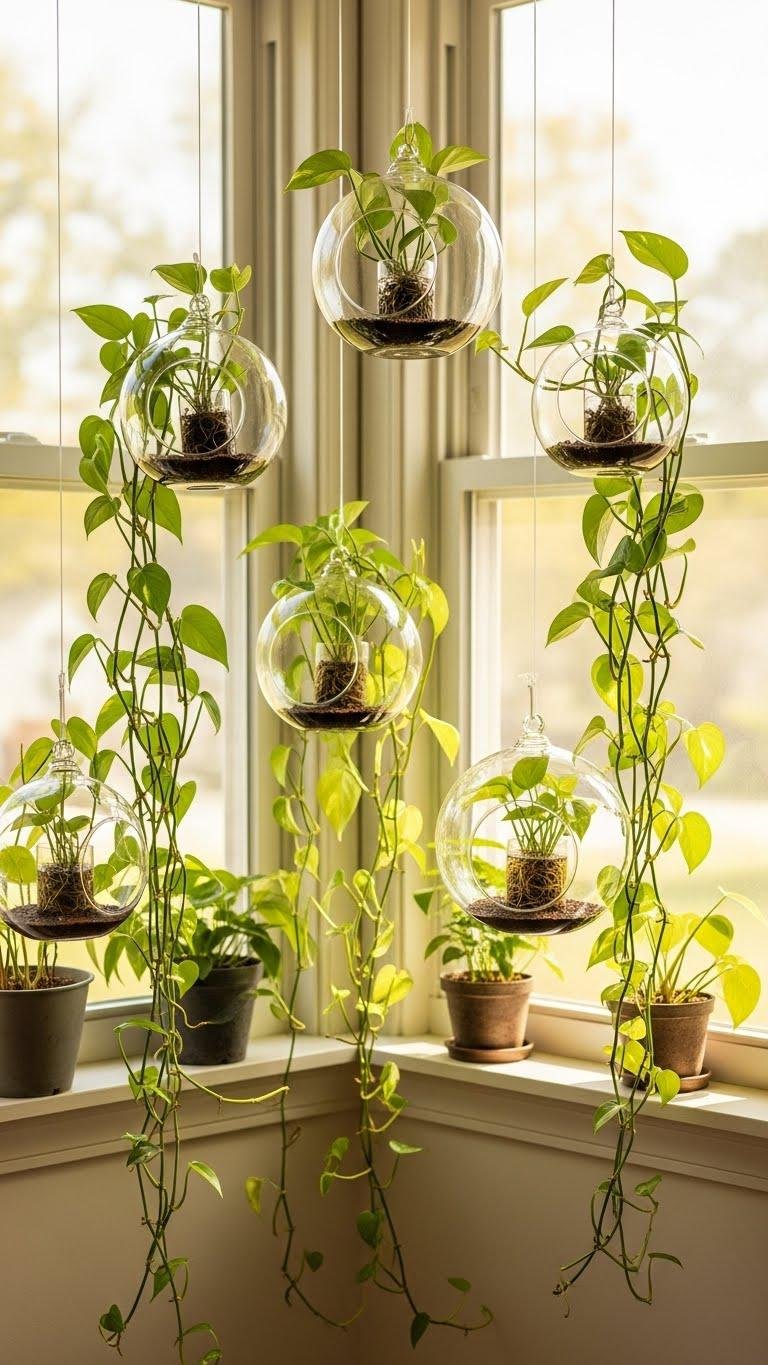
How do you turn a bare corner into a drifting cascade of green? You hang suspended orbs at varying heights, each glass terrarium cradling heart vines that trail like soft punctuation.
Position them near light, rotate for even growth, and use miniature propagation stations inside to root cuttings. The result feels airy, deliberate, and liberating—planting joy that floats through your space.
Micro Herb Garden on a Kitchen Windowsill
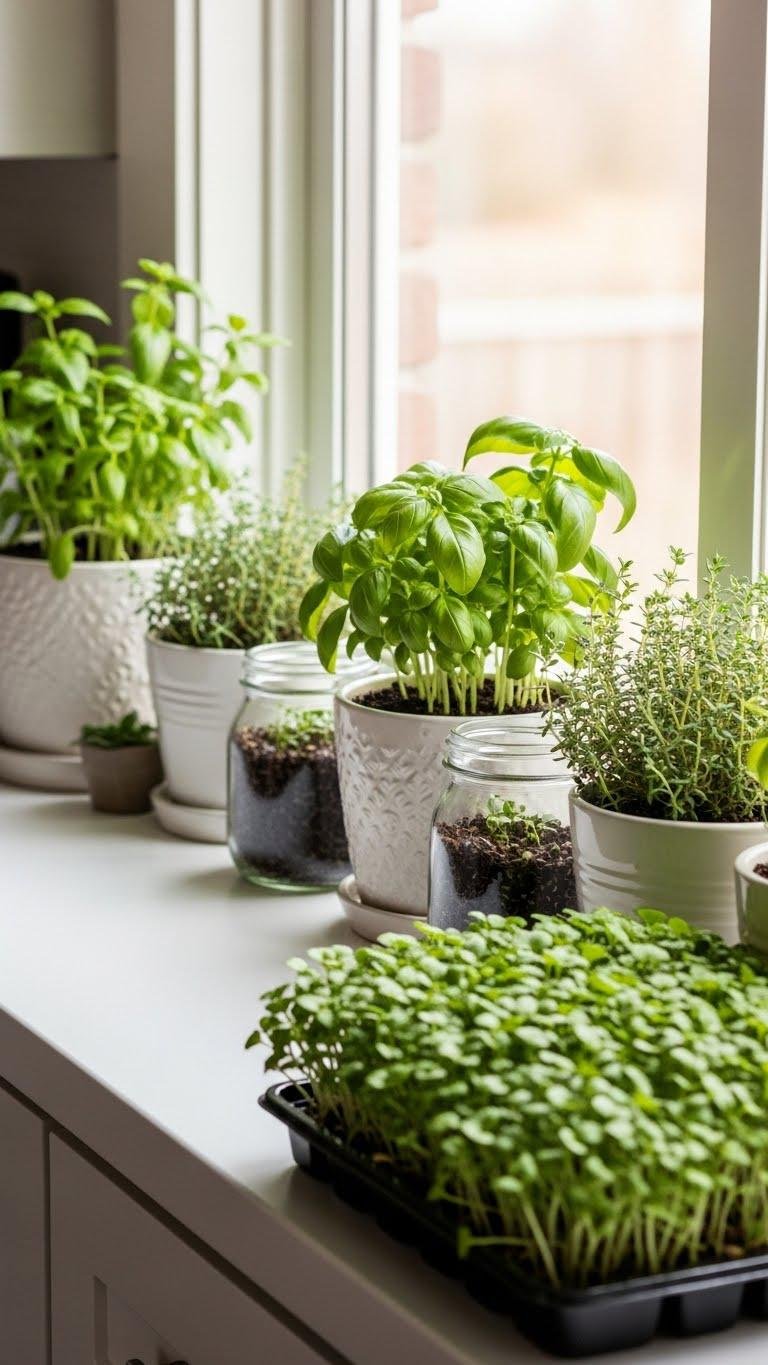
When morning light slants through your kitchen window, a narrow row of ceramic pots and glass jars can turn that sill into a tidy, fragrant micro herb garden that’s both useful and decorative.
You arrange compact basil, thyme and a tray of citrus microgreens, leaving breathing space between pots. You’ll snip snatches for salads, savoring the liberated ritual and clean, sunlit layout.
Patterned Ceramic Shelf Gallery of Small Pots
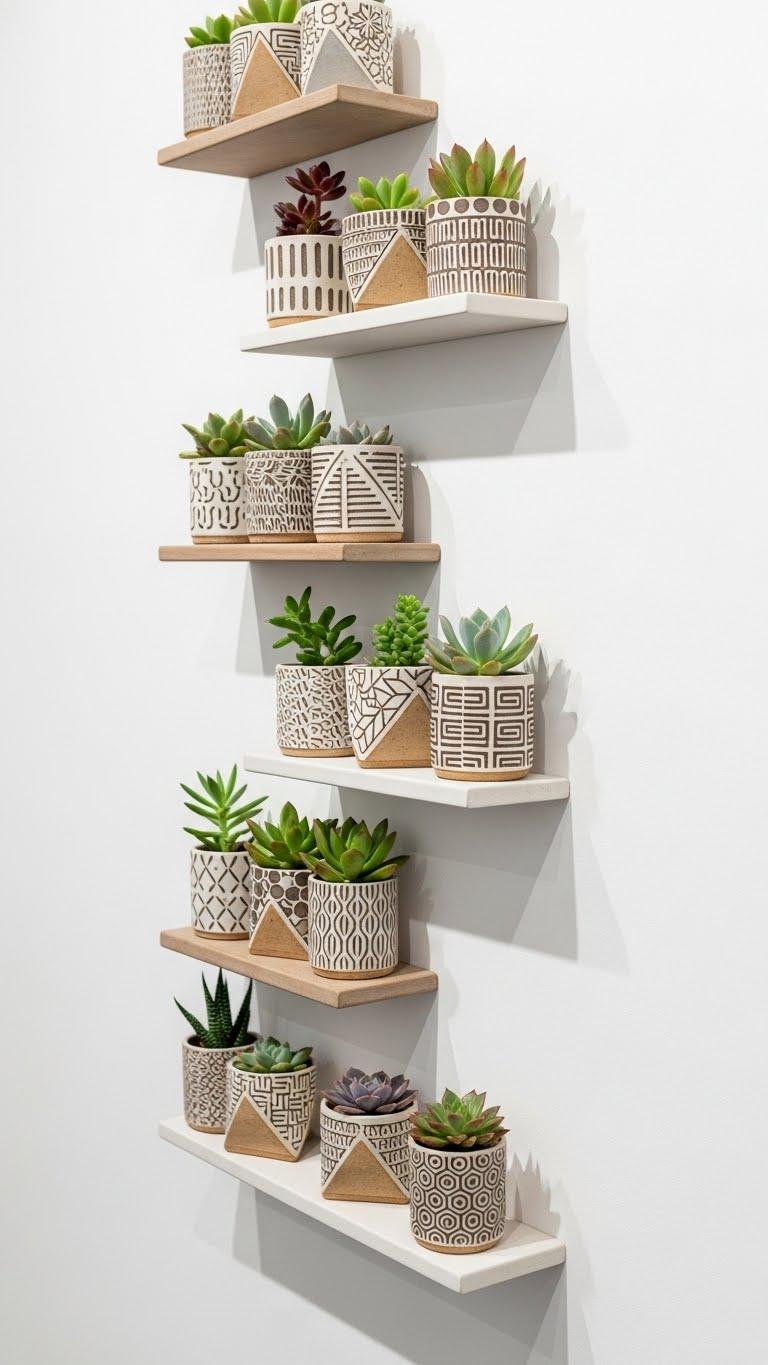
Along a narrow wall, a staggered ceramic shelf becomes a miniature gallery where patterned pots sit like curated artworks—each small vessel chosen for scale, motif, and the tiny plant it cradles.
You’ll arrange hand painted vessels in crisp geometric arrangements, place miniature succulents with deliberate, curated spacing, and enjoy a breezy, liberated display that reads like personal art—compact, confident, and alive.
Wall Trellis With Climbing Ivy or Ficus Pumila
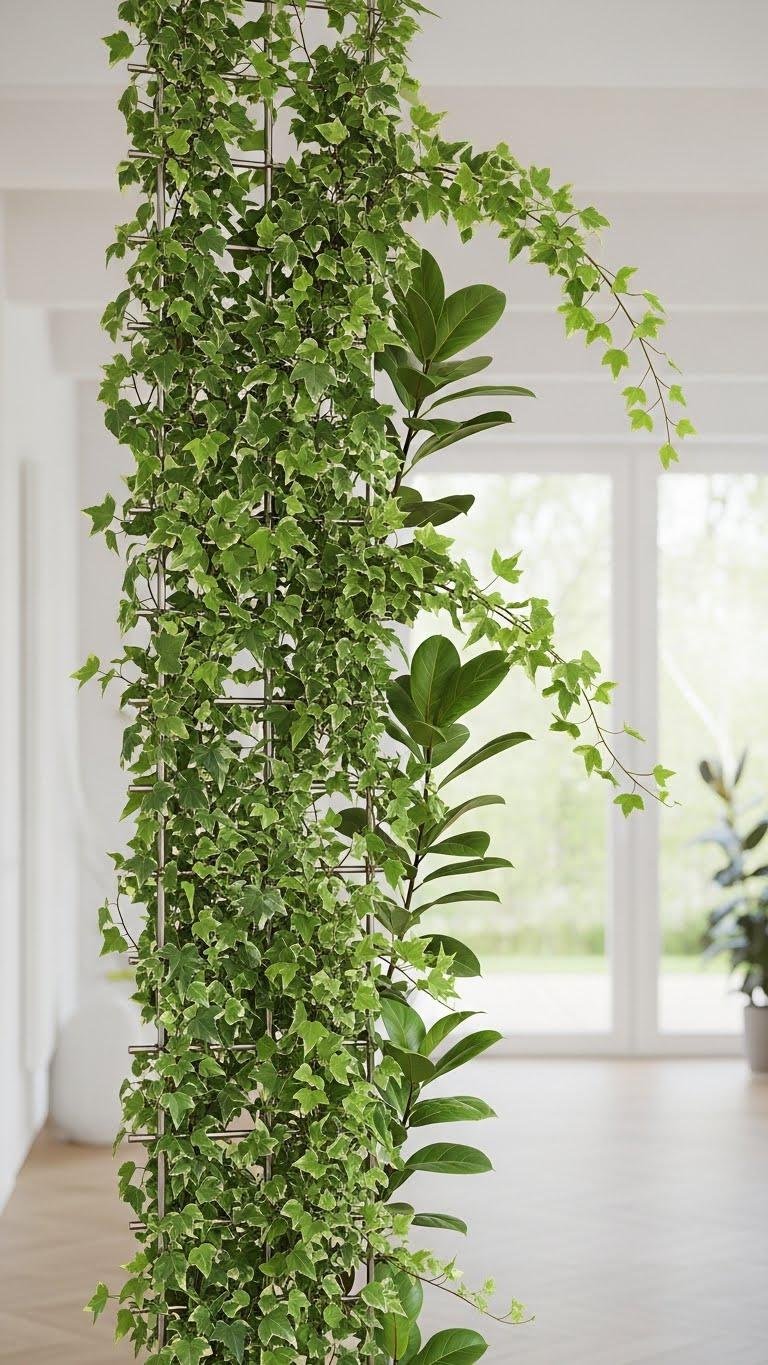
If your staggered shelf felt like a miniature gallery, a wall trellis turns the next vertical plane into living architecture: install a slim lattice of wood or metal, train Ficus pumila or English ivy along rungs, and watch foliage become a textured mural.
You’ll shape movement, plan ivy maintenance into routines, and experiment with ficus propagation to extend green reach without losing the room’s airy freedom.
Driftwood Mounted Hoya and Epiphyte Arrangement
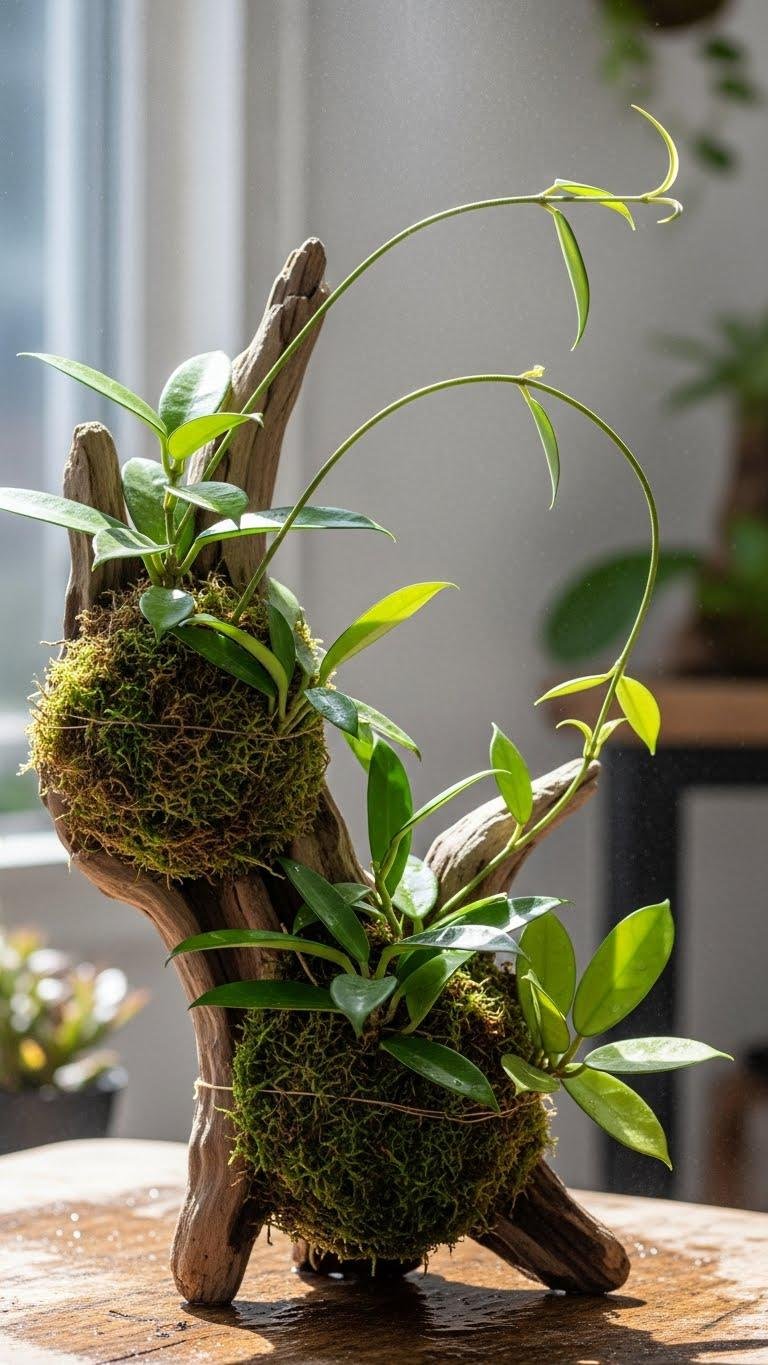
Because driftwood already carries a weathered story, mounting Hoyas and other epiphytes on a sculptural piece lets you create a living, airborne vignette that reads like beach-worn art.
You’ll position stems to arch, secure cuttings for driftwood propagation, and arrange pockets for moss. Balance light, allow airflow, and employ misting routines for epiphyte watering so the installation feels free, coastal, intentional.
Curved Clay Planter With Arching Snake Plant
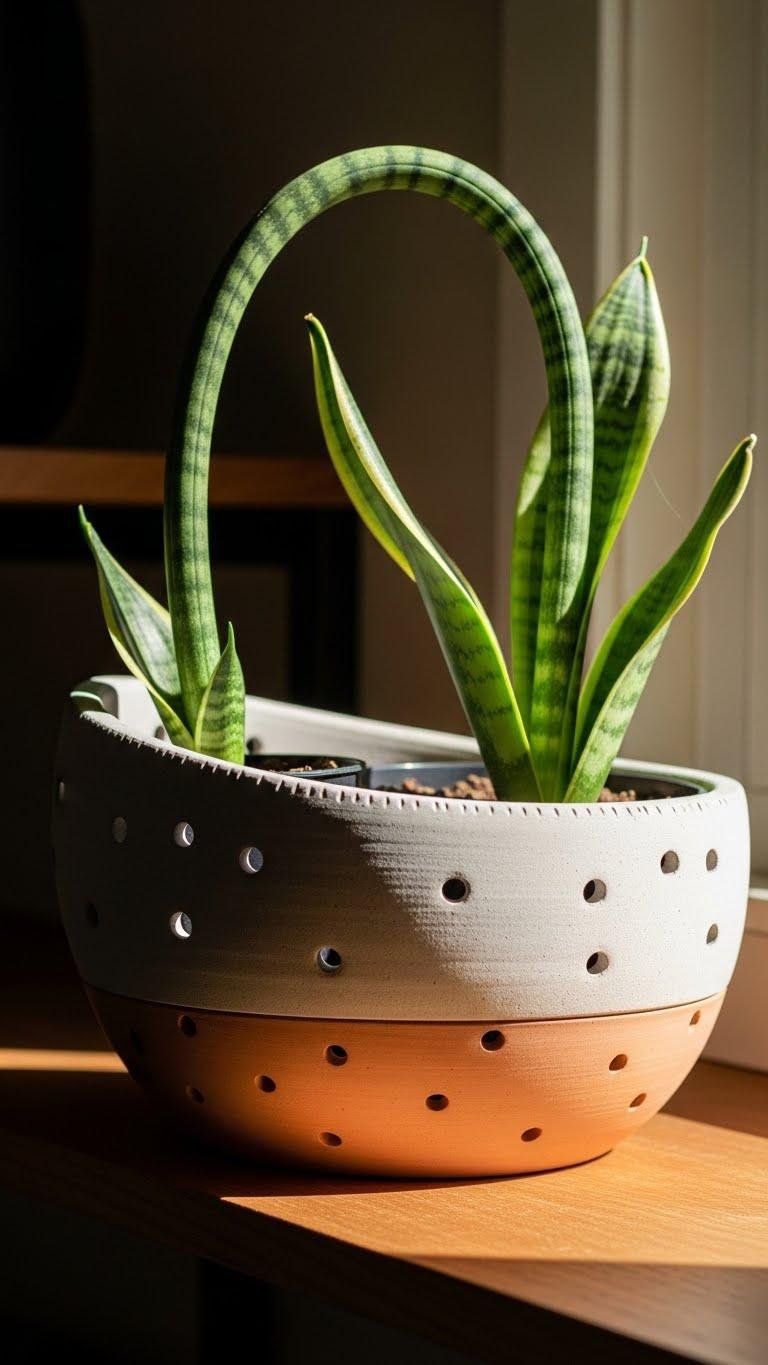
A curved clay planter cradles an arching snake plant like a modern sculpture, the planter’s soft silhouette echoing each blade’s graceful curve.
You place it where light curves across a shelf, the matte glaze catching muted sun, the textured rim adding tactility.
Thoughtful drainage holes protect roots, while the sculptural silhouette frees the corner, inviting movement and a calm, unconfined vibe.
Mini Moss and Pebble Coffee Table Tray
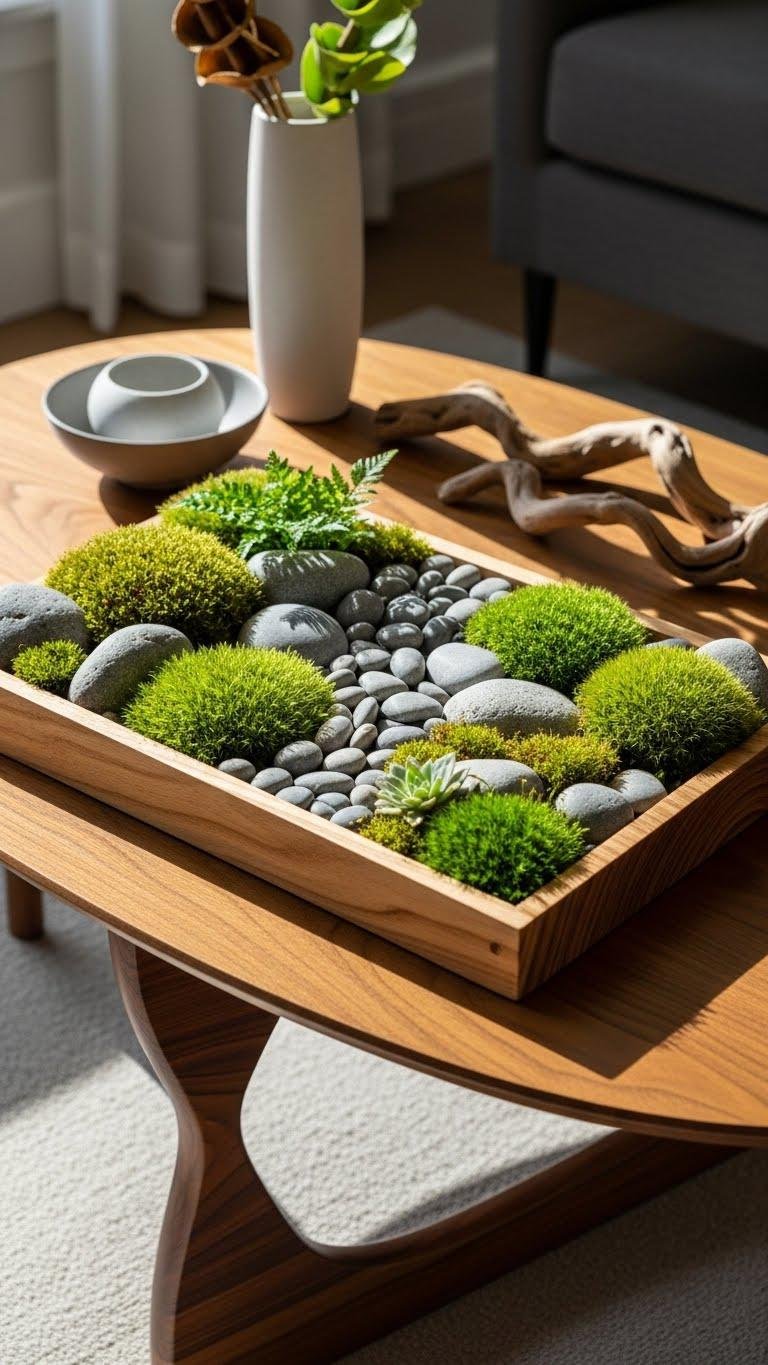
Move the eye from sculptural curves on your shelf to a compact, living vignette at the center of your coffee table: a mini moss and pebble tray that brings a slice of calm down to tabletop level. You’ll arrange stones for pebble aesthetics, tuck varying moss textures, and prioritize easy moss maintenance—trim, mist, rotate—so the tray stays crisp, spare, and freely inviting.
Preserved-Moss Accent Wall for Low-Maintenance Green
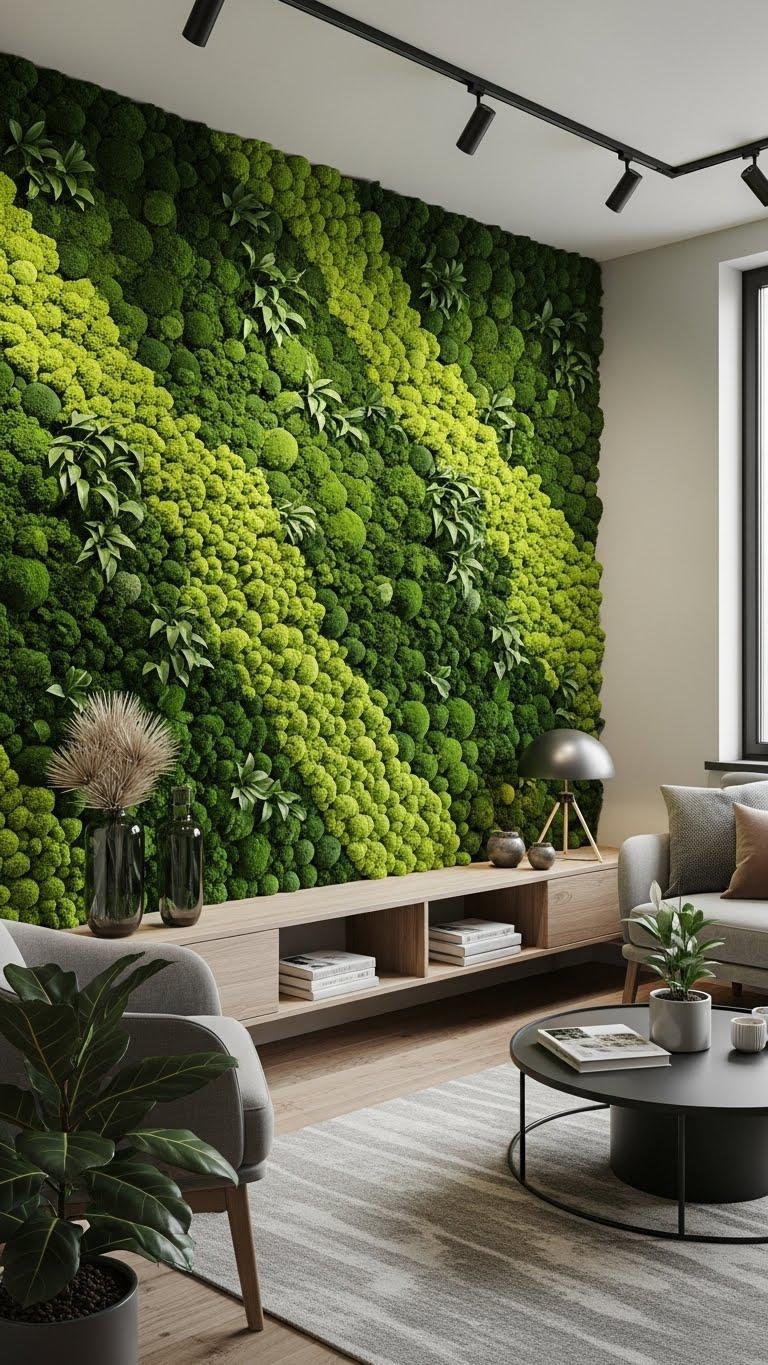
Installing a preserved-moss accent wall brings living texture without the upkeep—perfect when you want a room that feels planted but doesn’t demand daily care.
You’ll outline a framed panel, choose tones for texture contrast, and place it where light and sightlines roam. Low moss maintenance frees you to rearrange furniture, enjoy tactile greenery, and create a liberated, calm focal plane.
Color-Blocked Planter Grouping for a Bold Statement
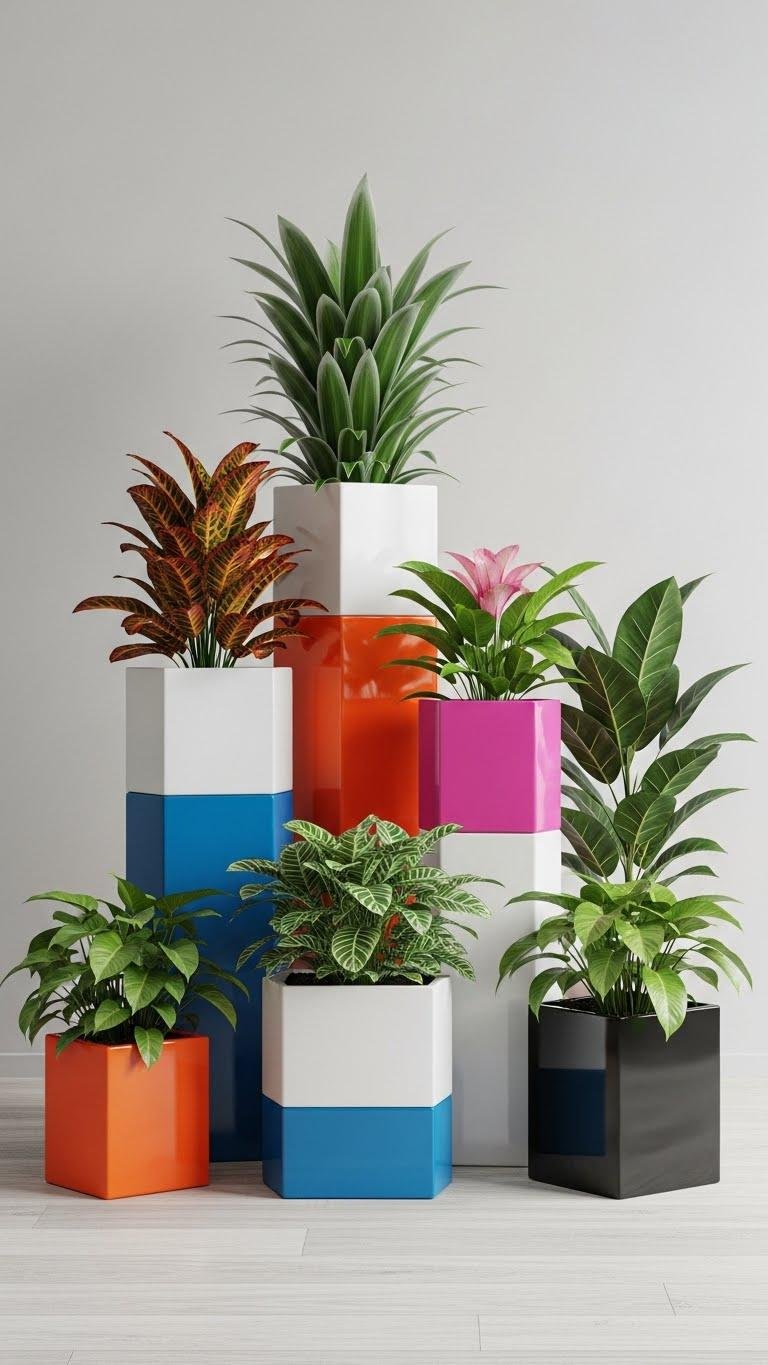
Bring together bold hues and clean geometry to make your plants read like modern art. You’ll pick a palette, stagger heights, and place planters to exploit color contrast and negative space.
A deliberate planter arrangement anchors a free, expressive room—mix matte blocks with glossy pots, align odd numbers, and leave breathing room so each leaf and hue asserts itself without clutter.
Tabletop Terrarium With Baby Tears and Fittonia
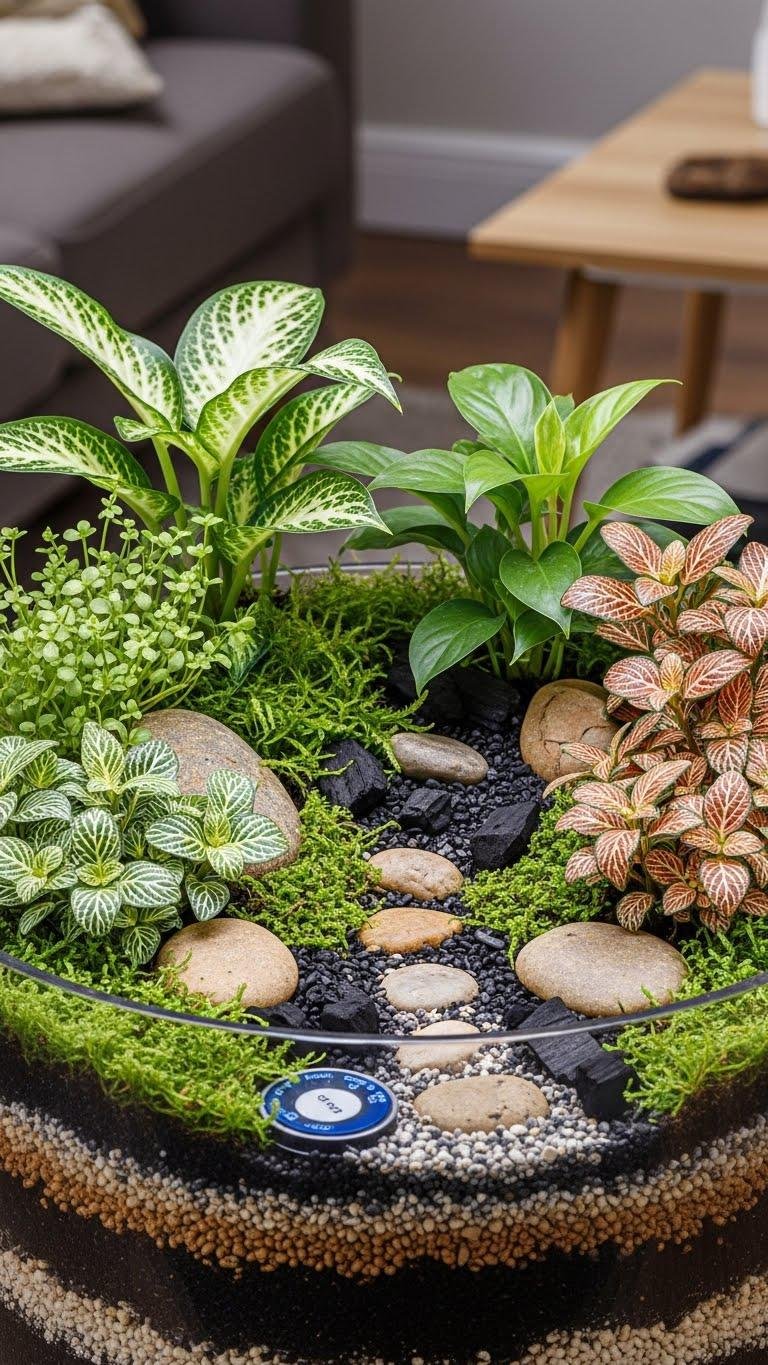
Often overlooked, a tabletop terrarium with baby tears and Fittonia turns a coffee table or shelf into a miniature, living landscape you can actually shape with your hands.
You’ll layer pebbles, activated charcoal, and peat for drainage, place plants to showcase leaf variegation, and orient paths and stones for visual flow. Use discreet moisture monitoring, prune selectively, and rearrange freely to suit mood.
Rattan Hanging Baskets With Trailing String of Pearls
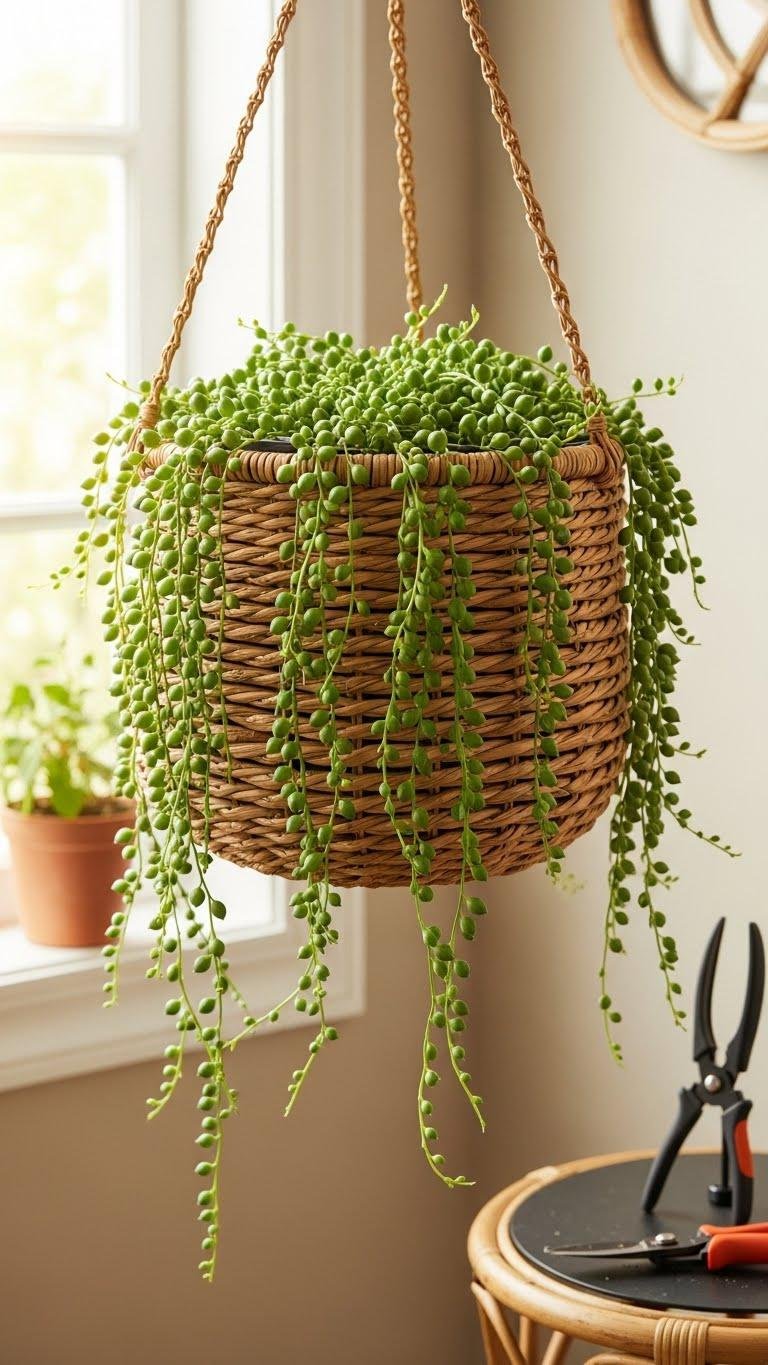
You’ll find rattan hanging baskets instantly elevate a room by adding warm texture and graceful movement as trailing String of Pearls spill over the rim.
You’ll place them near sunlit windows or in airy corners, embracing a rattan revival aesthetic. Prune strategically, rotate for even light, and learn simple pearl maintenance so each bead trails freely, creating liberated, sculptural greenery.
Biophilic Office Desk With Low-Light ZZ and Pothos
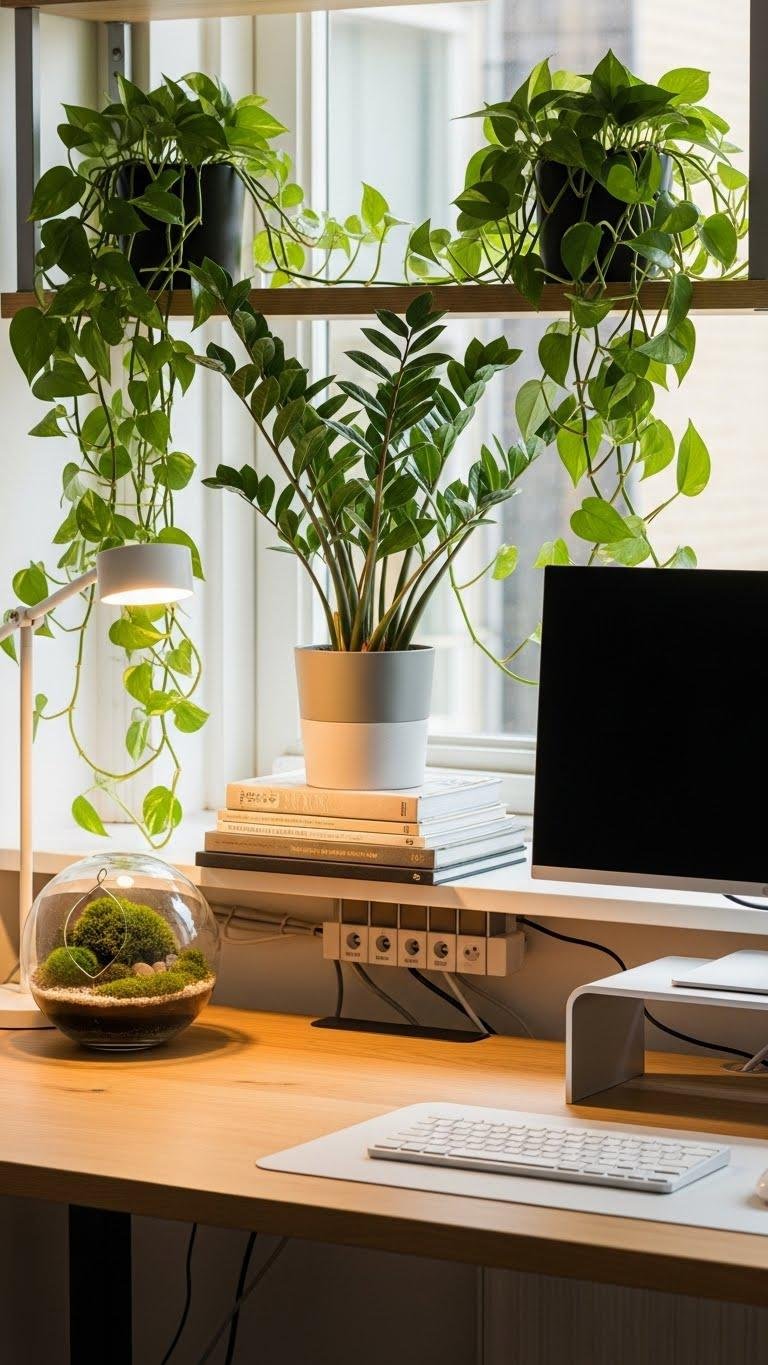
After the rattan’s warm texture has softened your living spaces, carry that same tactile calm to your workspace with a biophilic desk setup centered on low-light ZZ and pothos.
You’ll position the low light ZZ for sculptural height, create a pothos pairing for cascading life, tuck a minimalist terrarium into a corner, and streamline cable management so your desk feels airy, focused, and free.
Large Kentia Palm Under Accent Uplighting
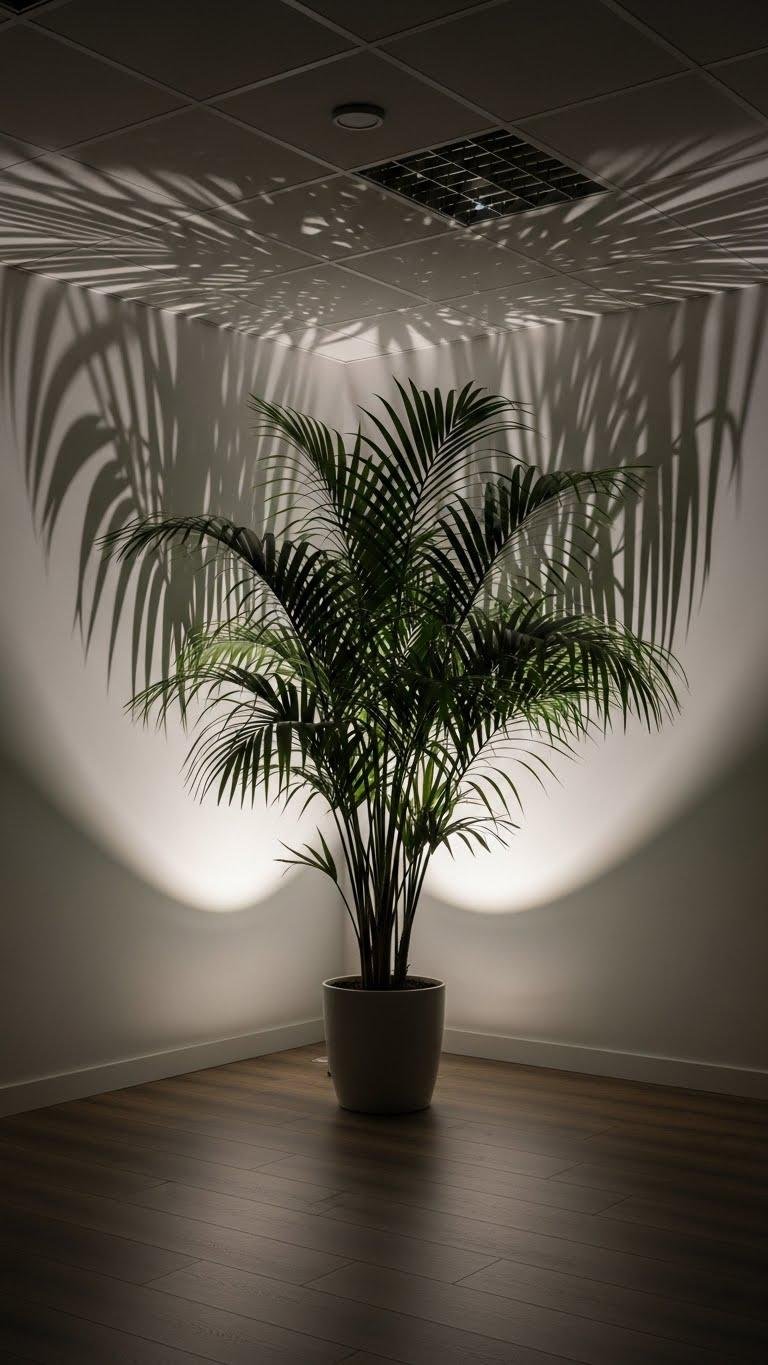
Bring a Kentia palm in and let uplighting carve dramatic, architectural shadows that lift a room’s vertical rhythm. You’ll position fixtures low, aiming for soft backlighting to halo fronds while accent lights create textural trunk highlights.
Scale matters: give the palm breathing room, traffic clearance, and a pared-back pot. The effect feels liberating, sculptural, and quietly cinematic without fuss.
Mixed Real-and-Faux Wall Grid for Low-Maintenance Impact
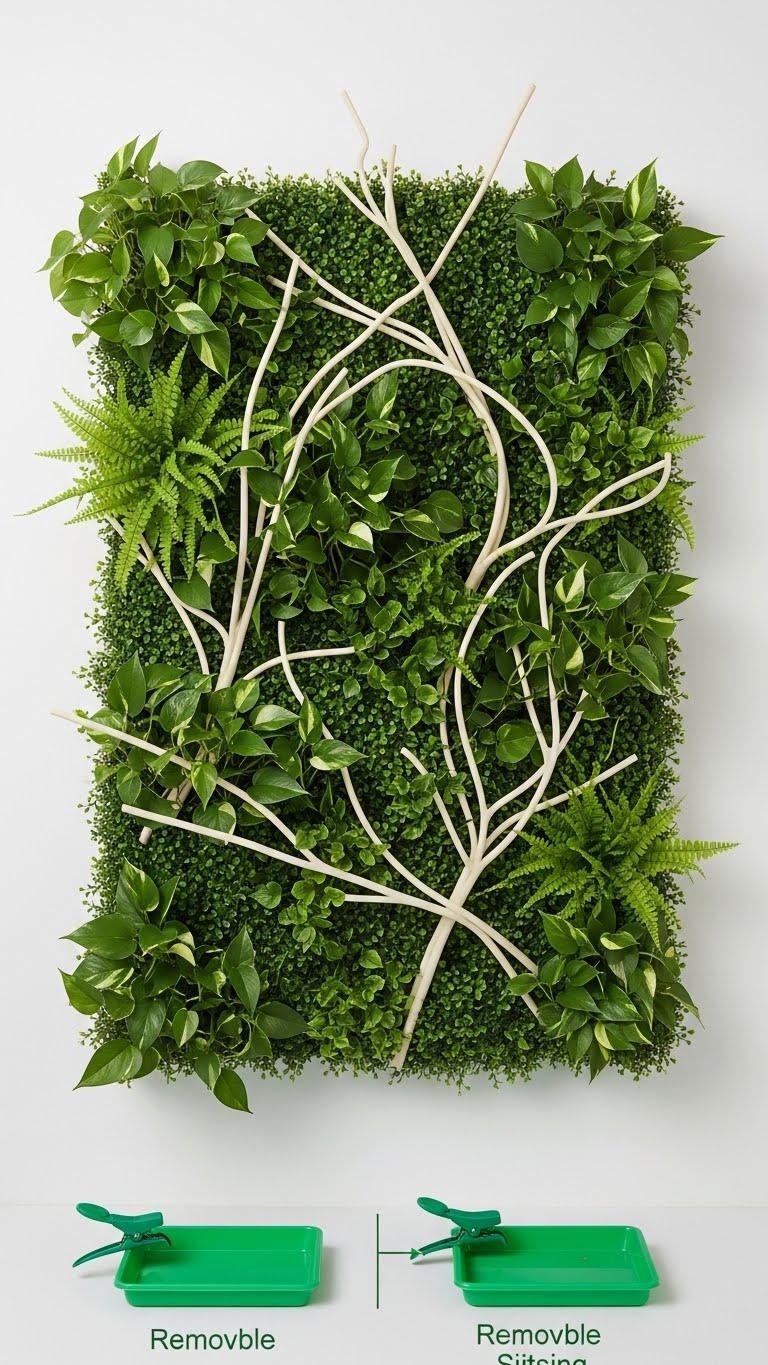
When you combine live pothos and ferns with sculptural faux stems in a clean grid, the wall reads like a curated green tapestry that stays crisp without constant care.
You’ll enjoy visual depth and faux realism where needed, placing plants to balance light and negative space. Use simple maintenance hacks—removable clips, targeted watering trays—to keep life and art aligned, freeing your daily routine.
Sconce-Mounted Orchid Display With Natural Mounts
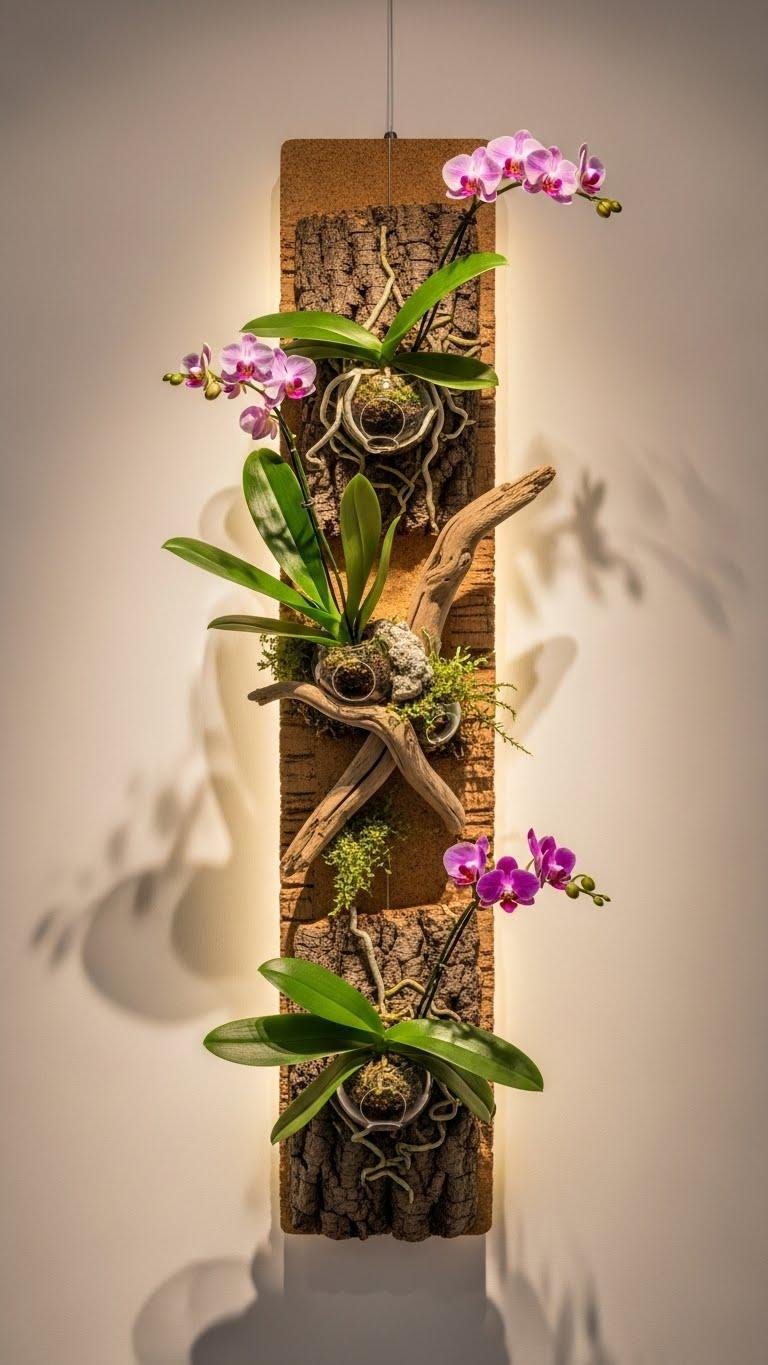
Perched on a slim sconce and anchored to a slab of cork, driftwood, or reclaimed bark, orchids mounted on natural materials turn vertical walls into sculptural gardens you can actually touch.
You’ll place orchid mounts and tucked mounted sphagnum against natural bark, balancing light, airflow, and scale. Sconce terrariums add humidity pockets and a liberated, gallery-like rhythm across your wall.
Compact Micro-Garden Shelf for Collector Hybrids
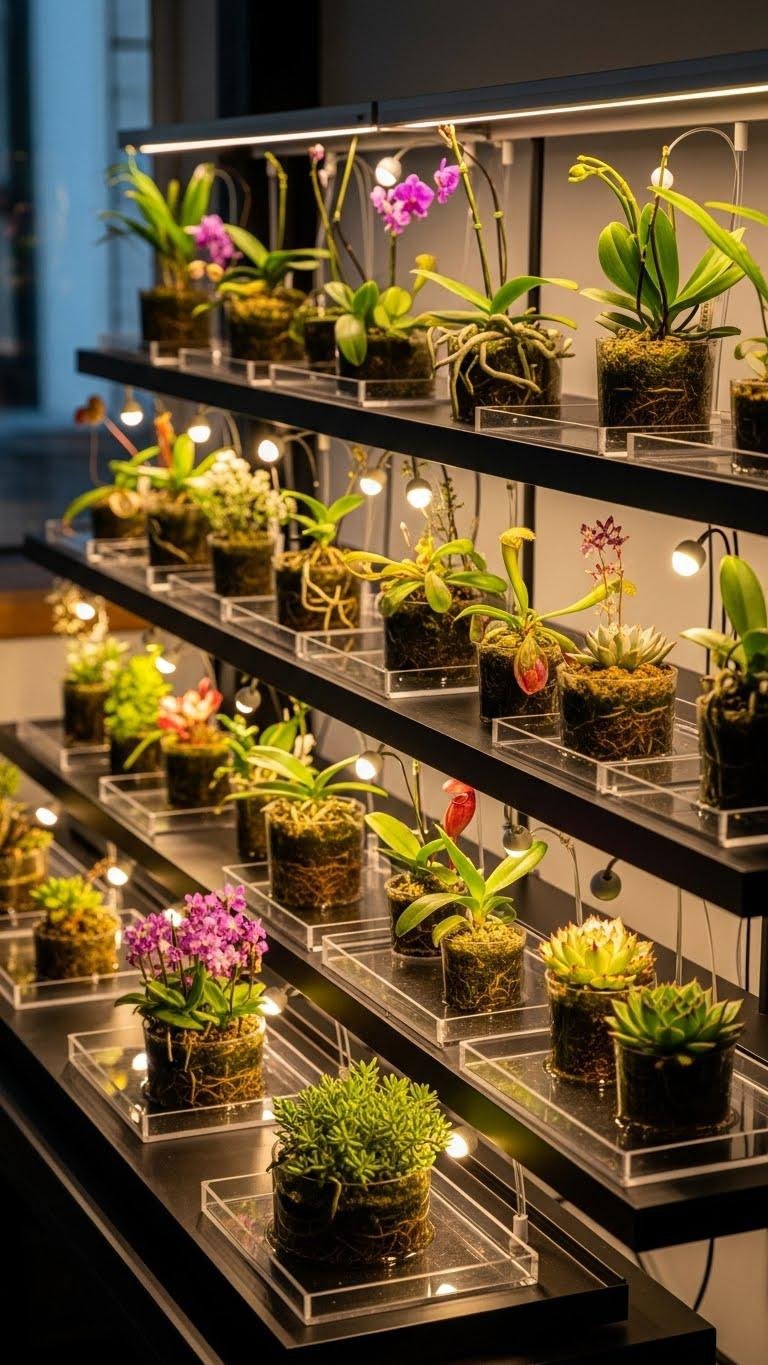
Although your space may be small, a compact micro-garden shelf lets you arrange collector hybrids with museum-like precision: think staggered shallow ledges that keep crowns dry, adjustable spot lighting that sculpts each flower, and shallow trays for humidity control without waterlogging roots.
You’ll plan shelf rotation, tailor airflow channels, and position pieces so each specimen breathes—practical, liberated, and impeccably composed.