
You’ll build a calm, airy home by starting with a soft, neutral base and adding only one warm accent to keep things grounded. Focus on tonal textures, low-profile seating, and recessed storage so surfaces stay clear. Choose a single sculptural lighting piece and hang linen drapery high for a quiet, elevated feel. Keep decor minimal and purposeful, and you’ll notice how much room you have to breathe—now let’s look at specific ideas.
Stripped-Back Neutral Base With a Single Warm Accent
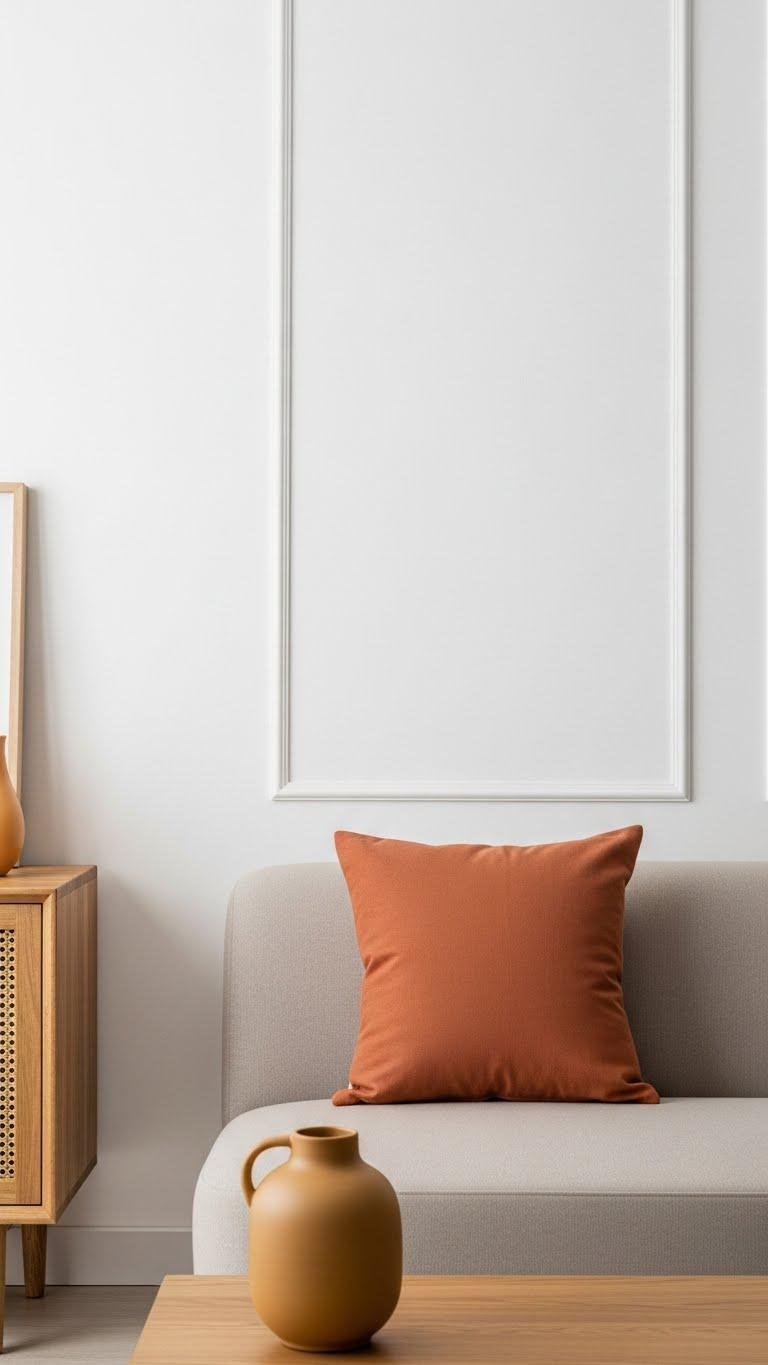
When you pare a room back to a neutral base—think soft whites, warm greiges, and natural wood—you create calm and visual clarity that lets a single warm accent sing without shouting.
You choose one soft terracotta pillow or a muted ochre vase to ground the space.
That deliberate contrast frees movement and thought, keeping the room airy, purposeful, and quietly inviting.
Ton-sur-Ton Layering for Subtle Depth
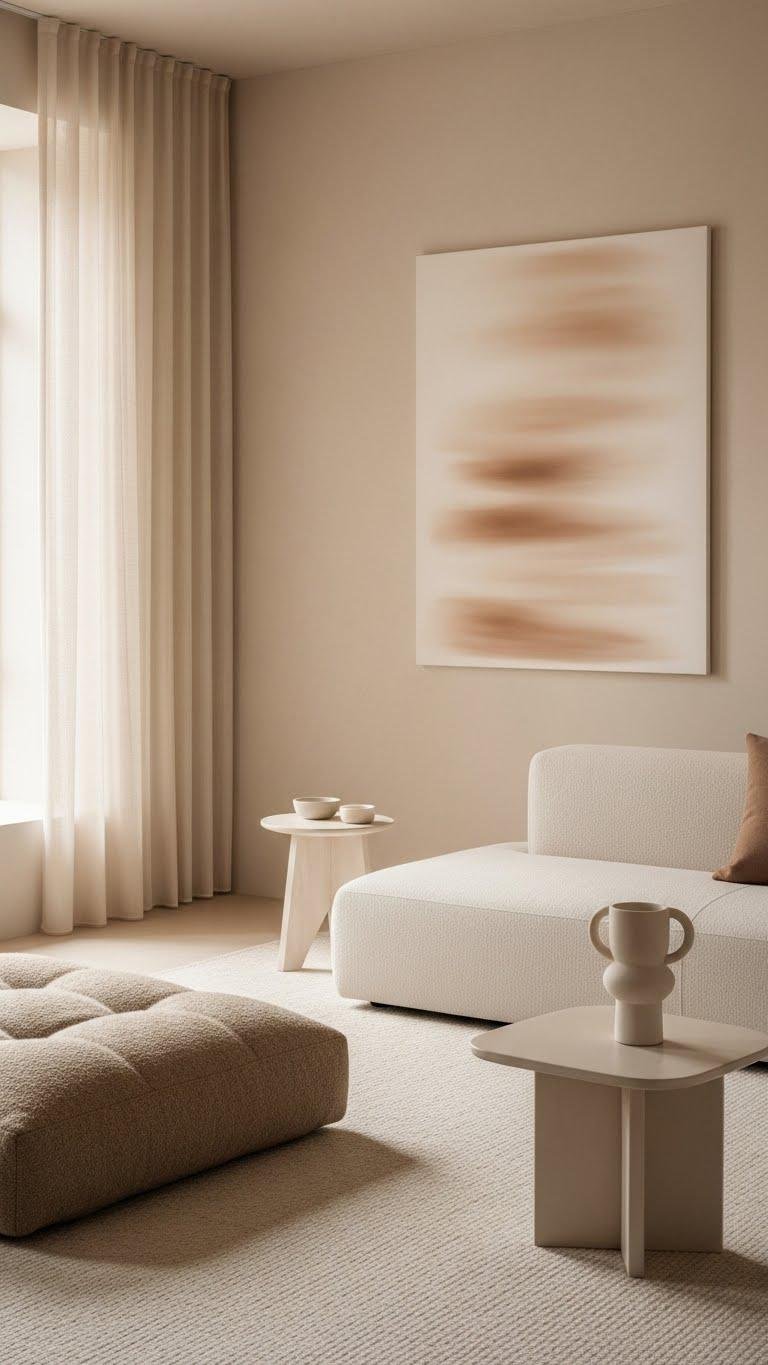
Low-Profile, Clean-Lined Sofa Placement
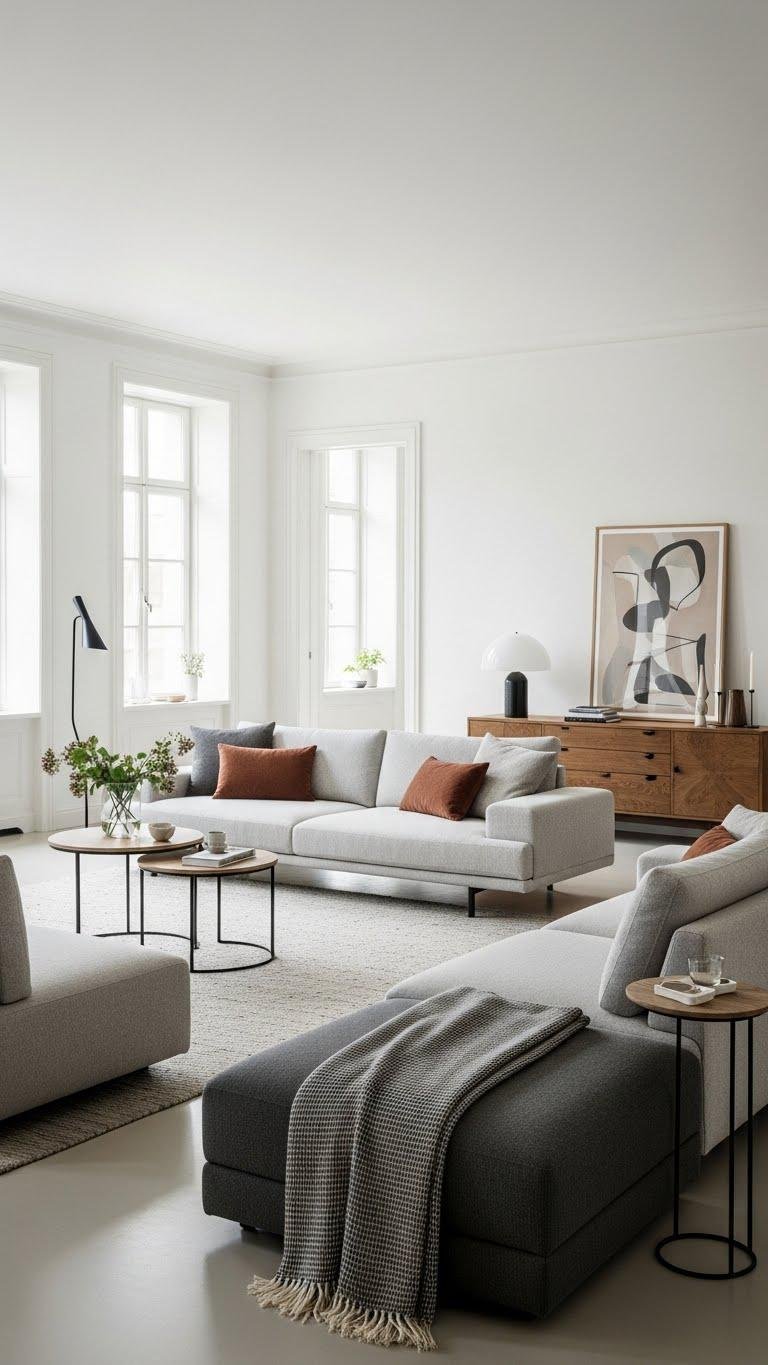
Pull a low-profile, clean-lined sofa into the center of your seating area to anchor the room without overwhelming it. You’ll favor low slung placement to keep sightlines open and flow effortless.
Choose a modular configuration so you can recompose seating for guests or solitude. Keep accessories minimal, pick tactile fabrics, and let air and light define the space for a freer, calmer daily life.
Concealed Storage to Keep Surfaces Clear
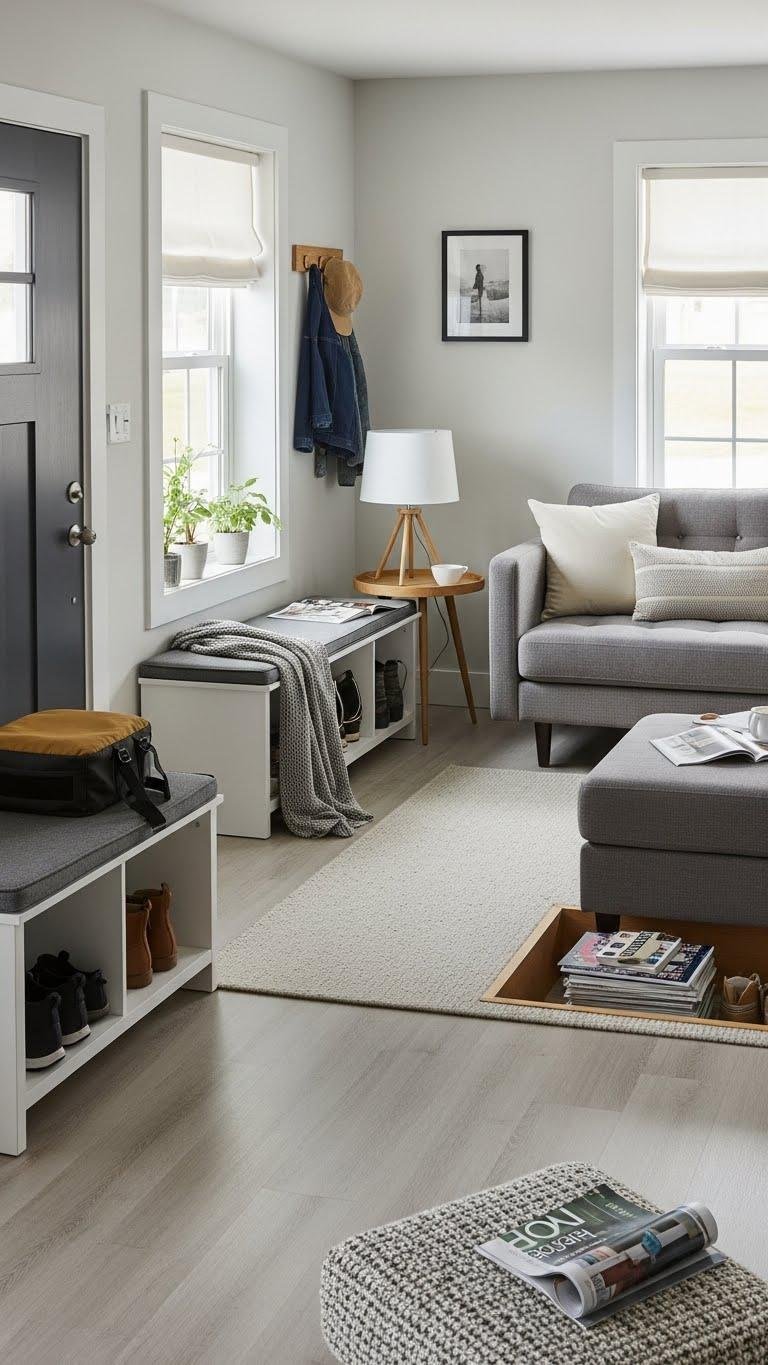
Placing your low-profile sofa center stage makes the room breathe, and hidden storage helps keep that calm visible.
You’ll welcome a hidden bench by the entry to stash shoes and gear, and a recessed ottoman under a window for blankets and magazines. These choices clear tabletops, simplify routines, and let you move freely through a tidy, intentional space that feels open and effortless.
Built-In Shelving With Uniform Containers
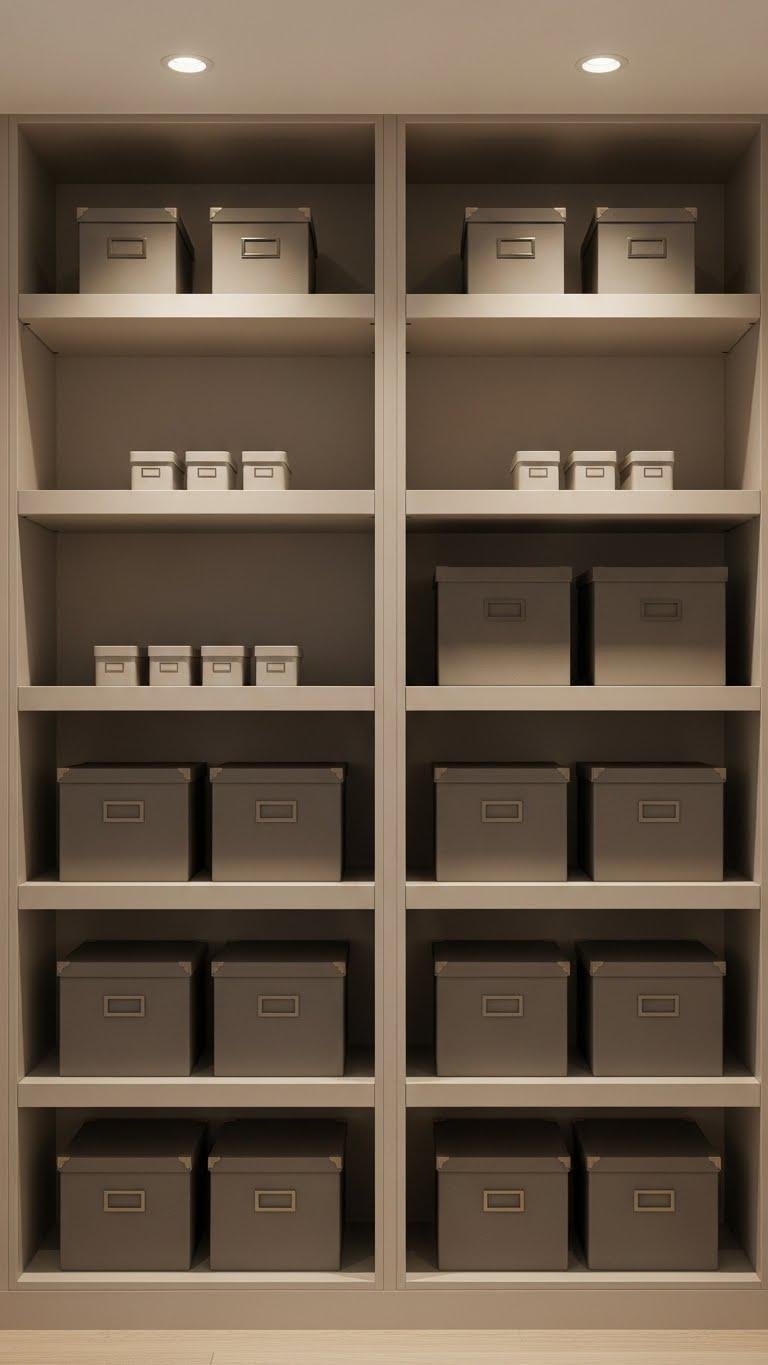
Install built-in shelving with uniform containers to make storage look deliberate and calm. You choose containers that match size, color, and label consistency so everything feels orderly. Arrange items sparingly, leaving breathing room. Add subtle recessed lighting to highlight textures without clutter.
This setup lets you move freely, find essentials fast, and maintain a balanced, intentional space that supports a simpler, freer life.
Single Statement Rug to Anchor the Room
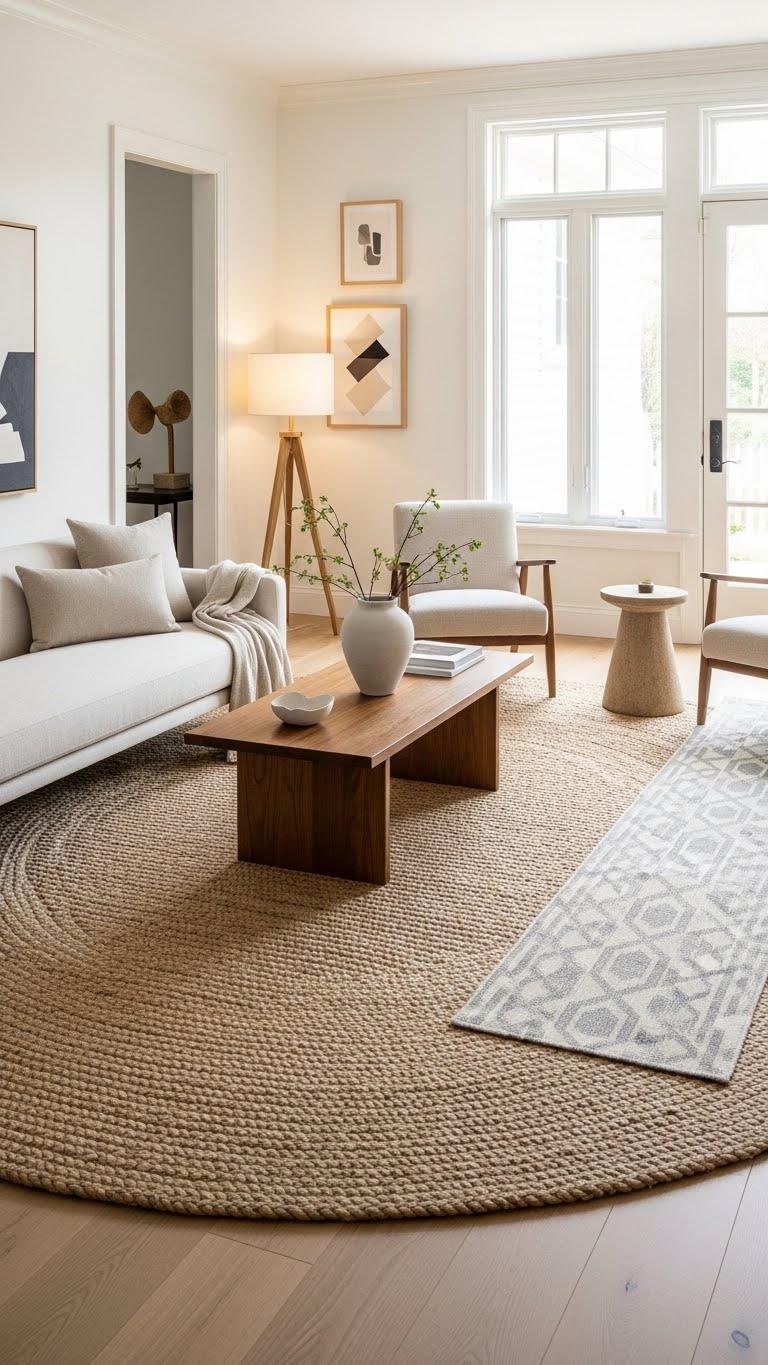
After you’ve pared down storage and given each item a calm, deliberate place, bring the room together with a single statement rug that anchors the space.
Choose an oversized sisal for natural texture or a subtle patterned runner to define flow.
Let this singular piece set rhythm and scale, freeing your layout to breathe while keeping visual focus intentional and quietly bold.
Sculptural Pendant as a Subtle Focal Point
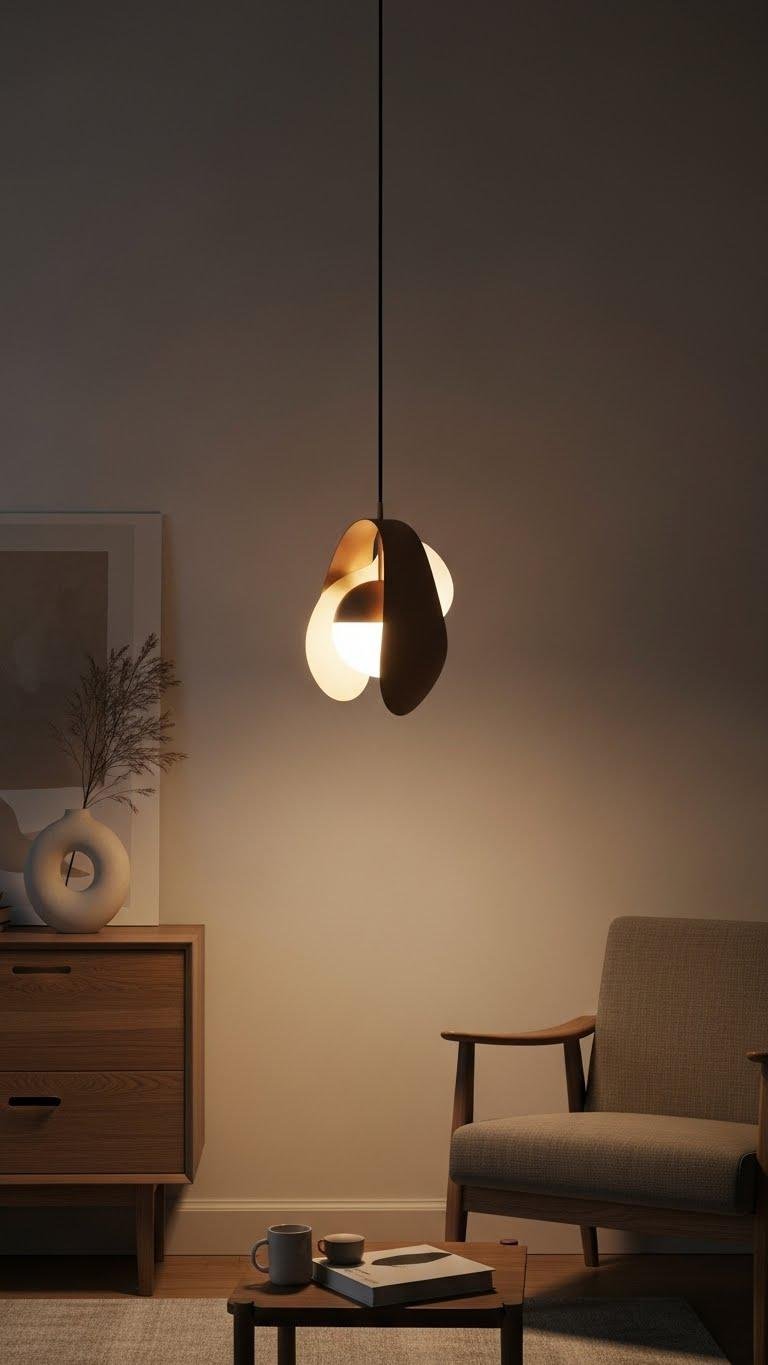
When you want a single, quiet anchor above the room that still reads as art, choose a sculptural pendant that complements the pared-back palette and proportions.
You’ll use sculptural pendants to create visual balance, letting material contrast play softly against simple furnishings. Keep suspended scale modest so the piece feels freeing, intentional, and calm without shouting for attention.
Matte Finishes and Soft Reflective Surfaces
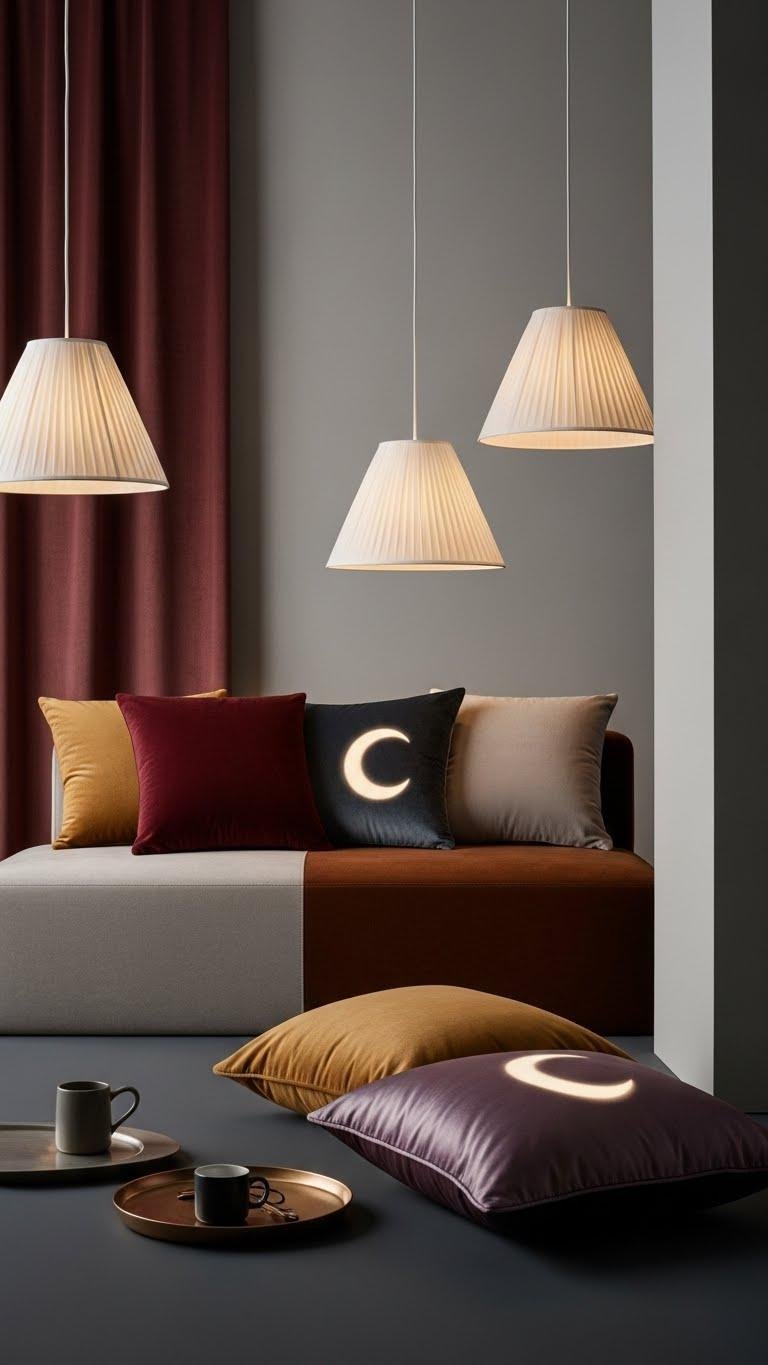
Often you’ll choose matte finishes to ground a room while introducing soft reflective surfaces to catch light without glare.
You’ll layer velvet matte textiles with subtle moonlit satin accents on cushions or lampshades, letting surfaces breathe.
This balance keeps spaces calm and open, invites touch, and lets light move gently.
You get freedom to edit, keeping pieces purposeful and quietly luminous.
Natural Wood Elements for Tactile Warmth
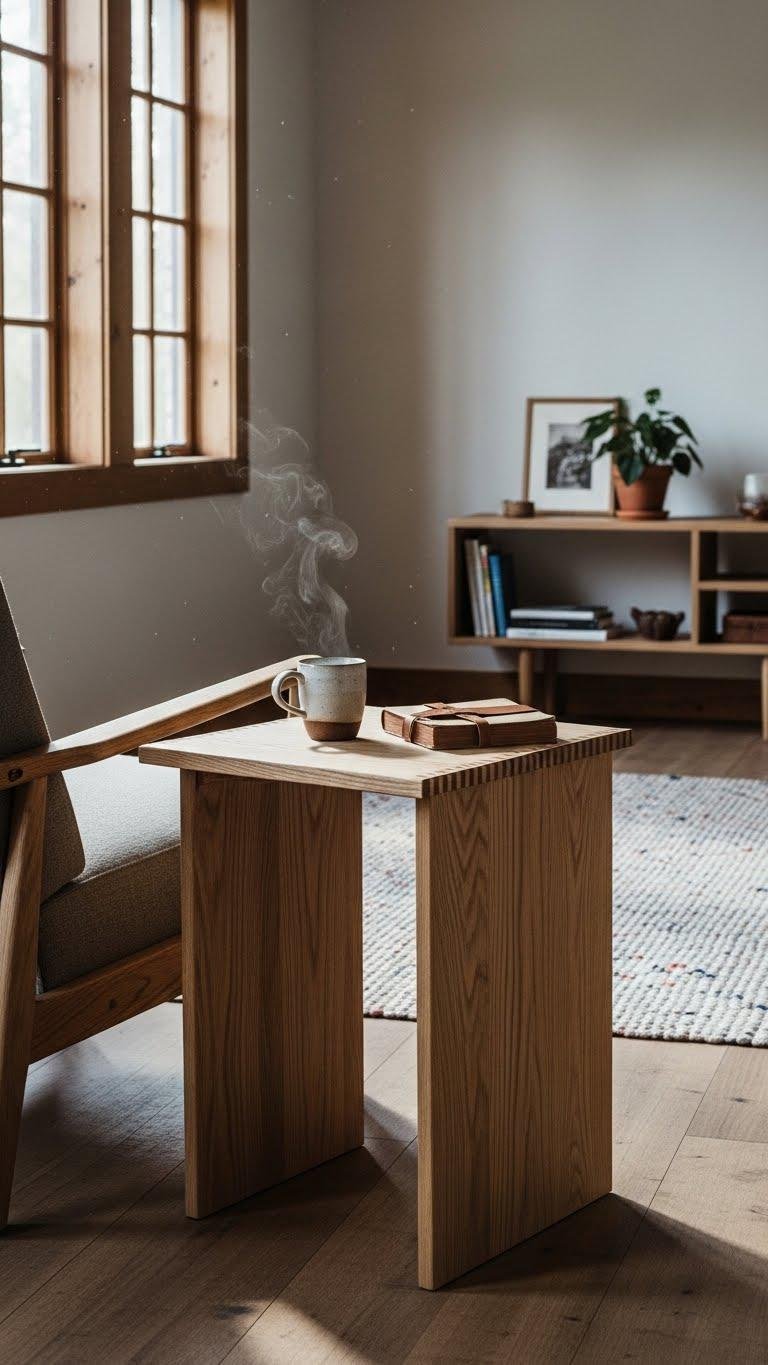
A single oak side table can change how a room feels by adding tactile warmth and quiet structure; choose woods with visible grain and a matte or lightly oiled finish so you can touch them without glare.
Let unfinished edges and textured joinery show honest craft.
You’ll pair wooden pieces sparingly, keeping sightlines open and your space calm, free, and purposeful.
Linen Drapery to Maximize Light and Privacy
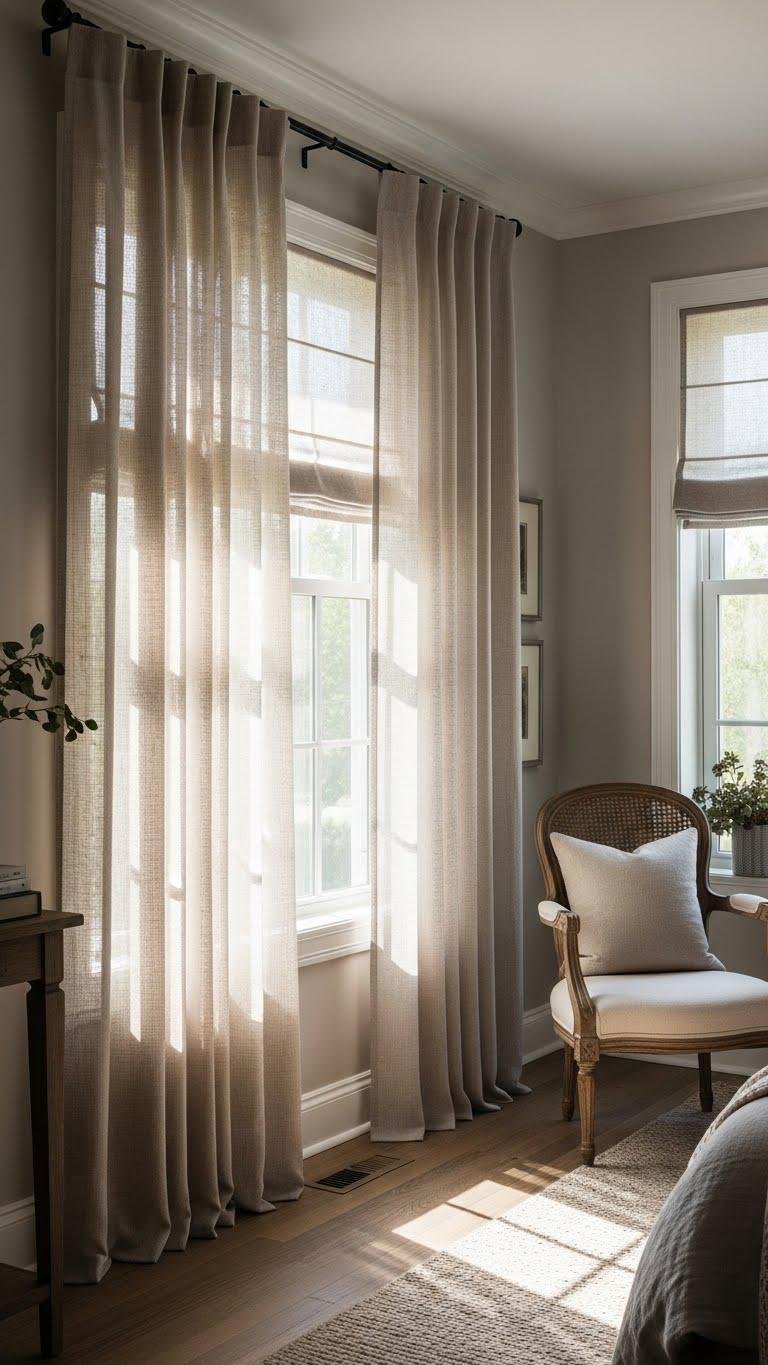
Linen drapery softens sunlight while preserving privacy, so you get bright, comfortable rooms without feeling exposed. You’ll choose neutral, breathable panels for sheer privacy that diffuse glare and keep views subtle.
Pair a single lightweight layer or adopt layered translucency with heavier curtains for evening. Hang close to the ceiling, let fabric skim the floor, and move freely to shape atmosphere.
Multi-Functional Furniture to Reduce Clutter
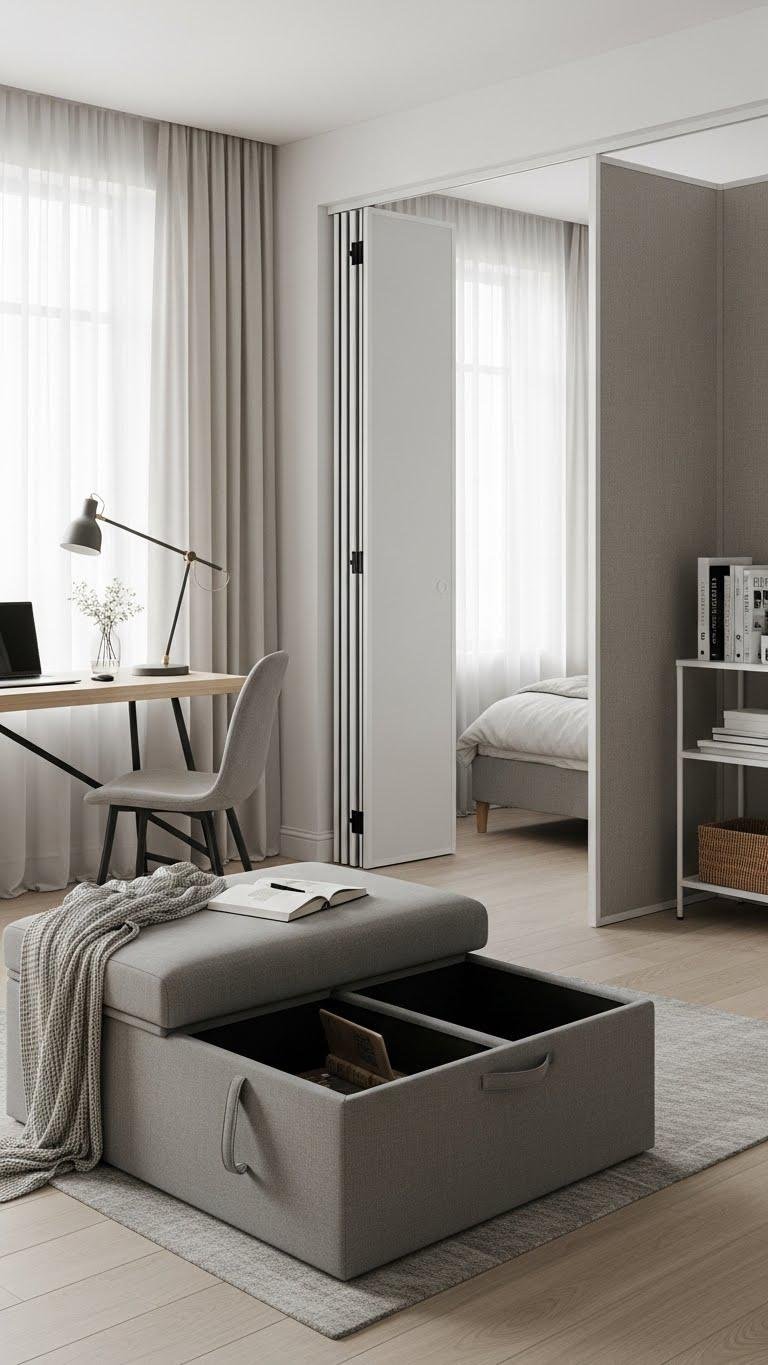
Soft, airy curtains set the tone for a calm room, and the furniture should support that same streamlined feeling. Choose a convertible ottoman for hidden storage and extra seating, and a folding partition to define zones when you need privacy. You’ll keep surfaces clear, move freely, and enjoy a pared-back space that adapts to work, rest, or guests without visual noise.
Generous Negative Space Around Key Pieces
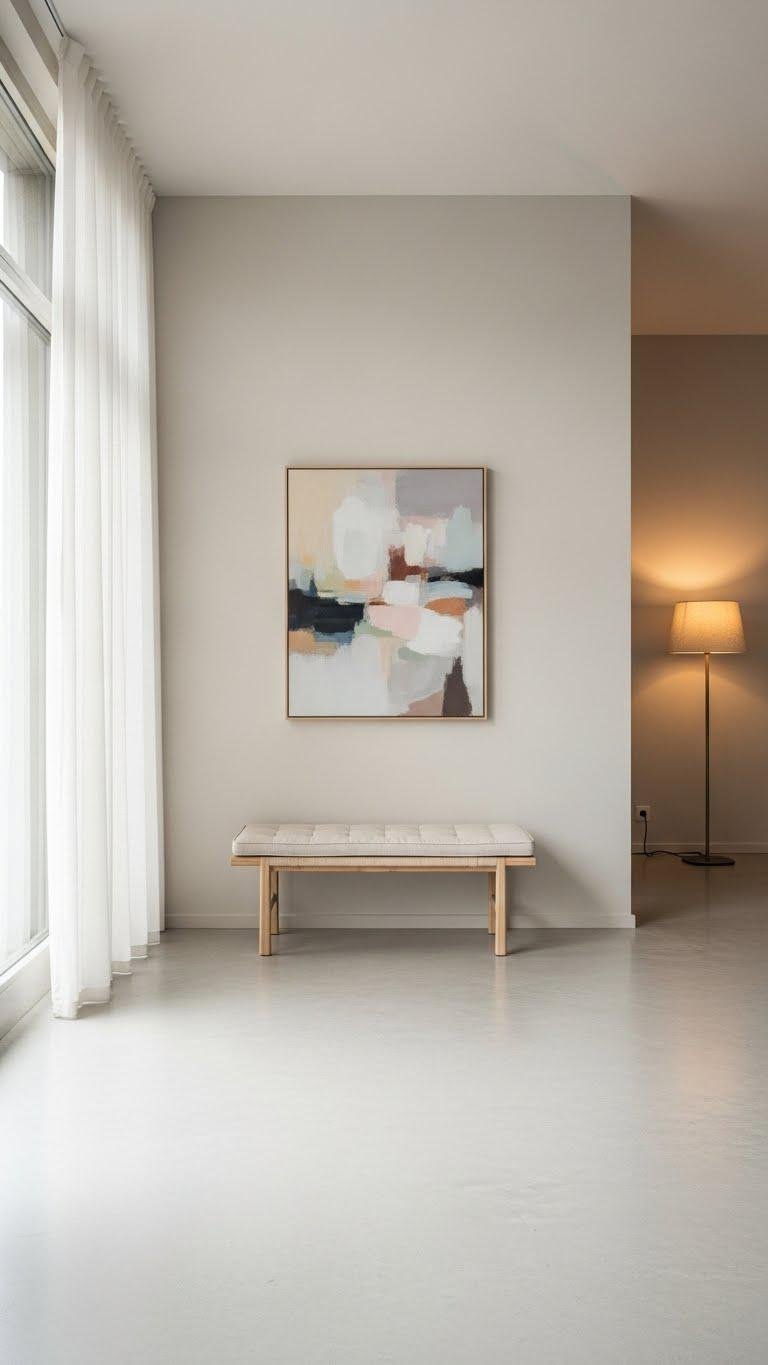
When you leave generous negative space around a few carefully chosen pieces, each item gets room to breathe and your eye can rest, making the room feel purposeful and calm.
You embrace wide breathing, placing art or furniture with deliberate gaps and an empty foreground so movement feels free. The restraint highlights essentials, invites clarity, and gives you space to live without excess.
Warm LED Lighting With Dimmers
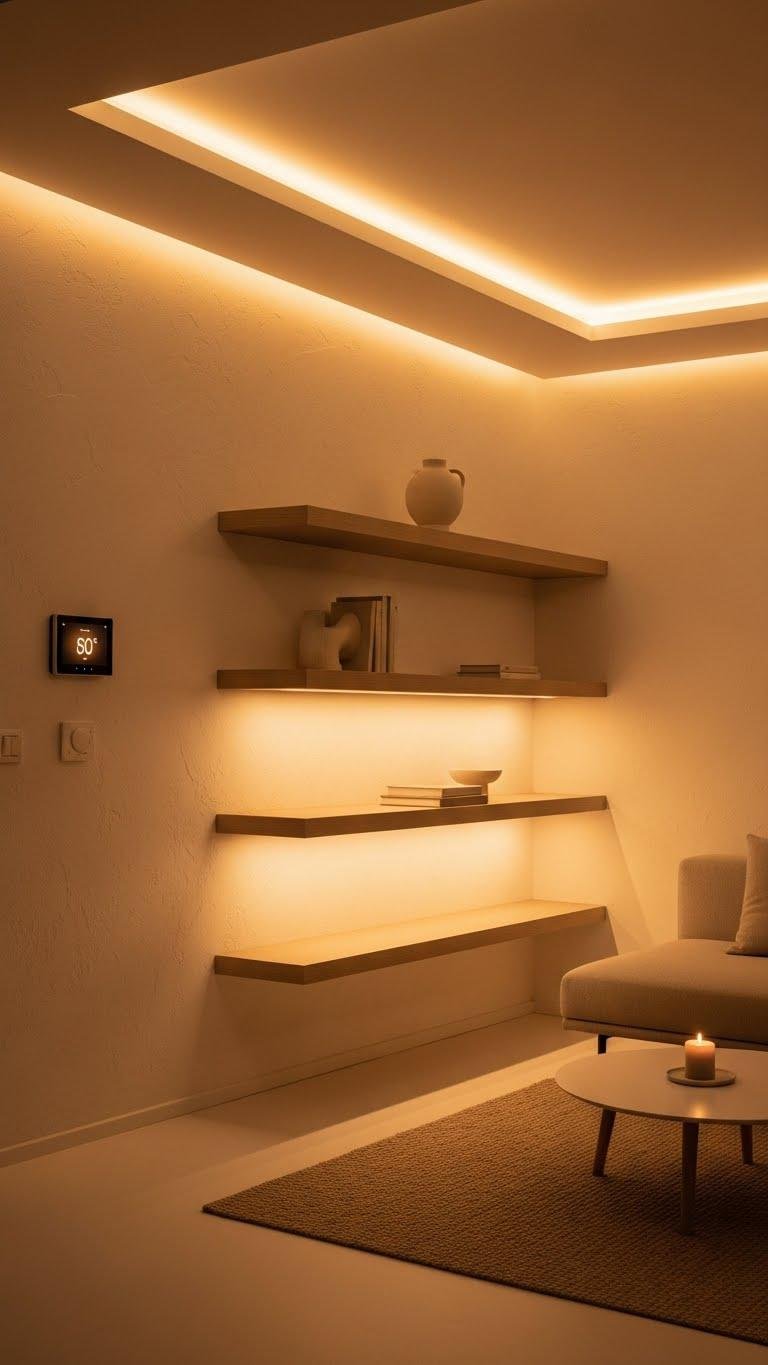
Often you’ll find that warm LED lighting with dimmers transforms a minimal room from stark to inviting without adding clutter.
You can install dimmable LED strips under shelves or along coves to shape mood and focus.
Use smart warmers to schedule soft shifts, giving you control and calm.
Keep fixtures hidden, let light define space, and enjoy uncluttered freedom and balance.
One Curated Art Piece on a Dominant Wall
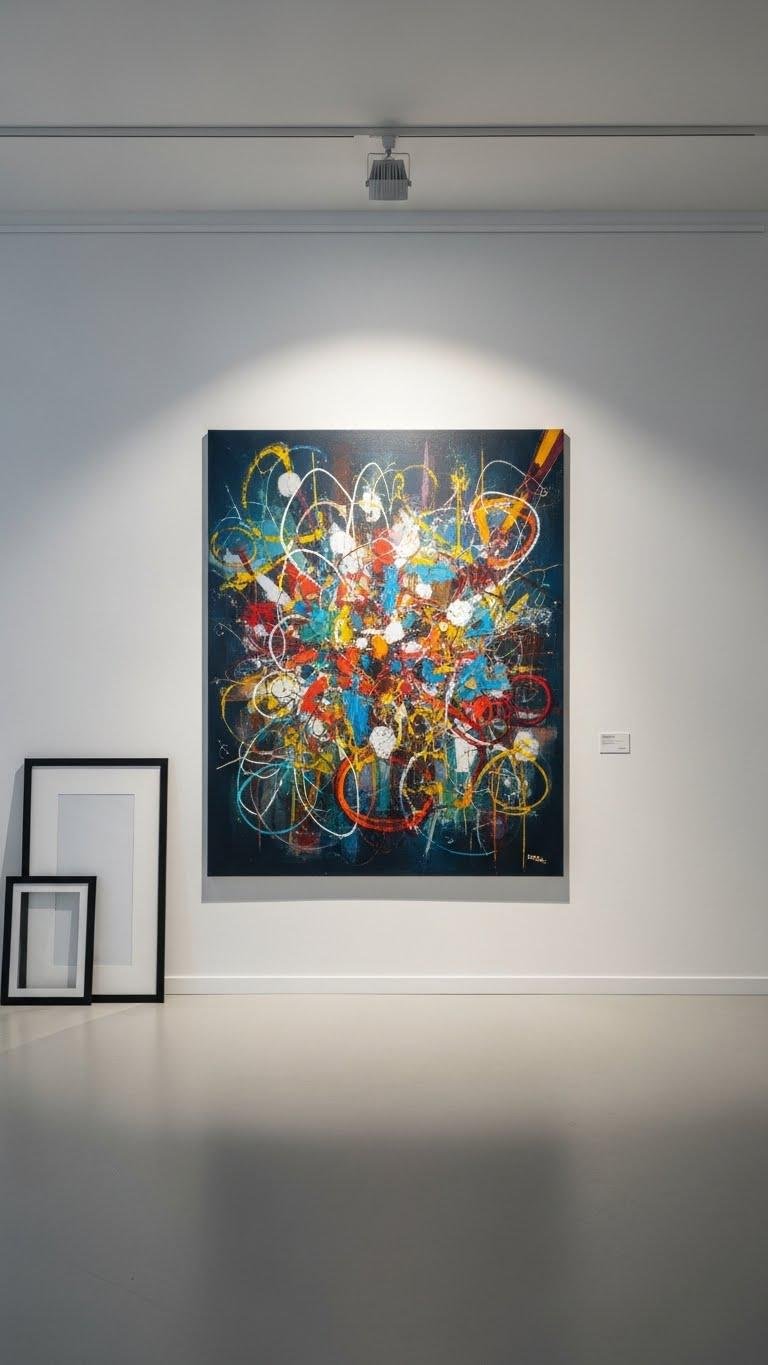
Pick a single, carefully chosen artwork and let it anchor the room — a dominant wall becomes your statement without crowding the space.
You’ll balance negative space with a piece sized in proportioned scale to the wall and furniture. Use gallery lighting to highlight texture and color. Keep framing minimal, let the art breathe, and enjoy the freedom of a focused, uncluttered focal point.
Sculptural Plants for Architectural Interest
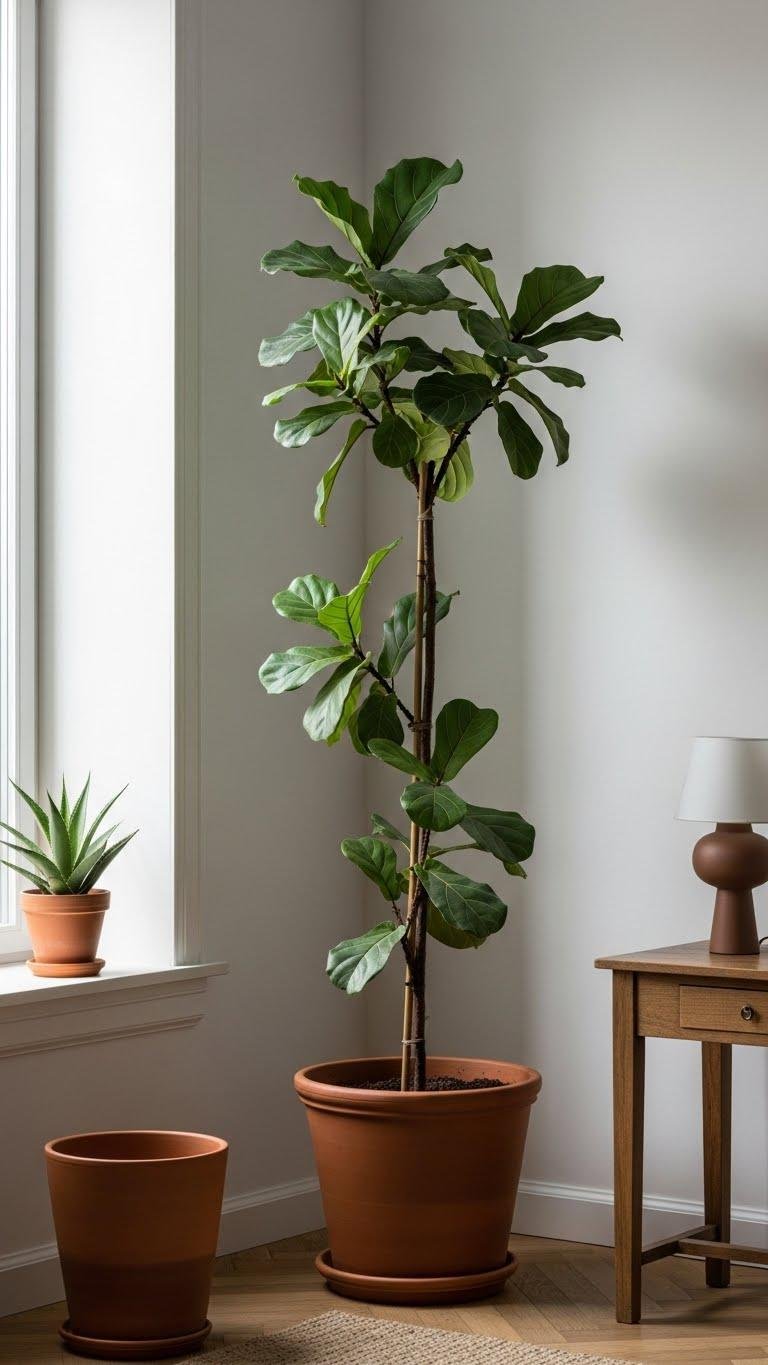
Bring a tall, architectural plant into the room to add form and movement without cluttering surfaces. You’ll choose sculptural pieces—architectural succulents or a sculpted fiddle leaf—paired with terracotta forms to ground the look.
Place one statement plant in a simple corner, let light shape its silhouette, and keep surrounding elements minimal so the plant feels like a calm, liberating focal point.
Low-Pile Rugs and Layered Textures
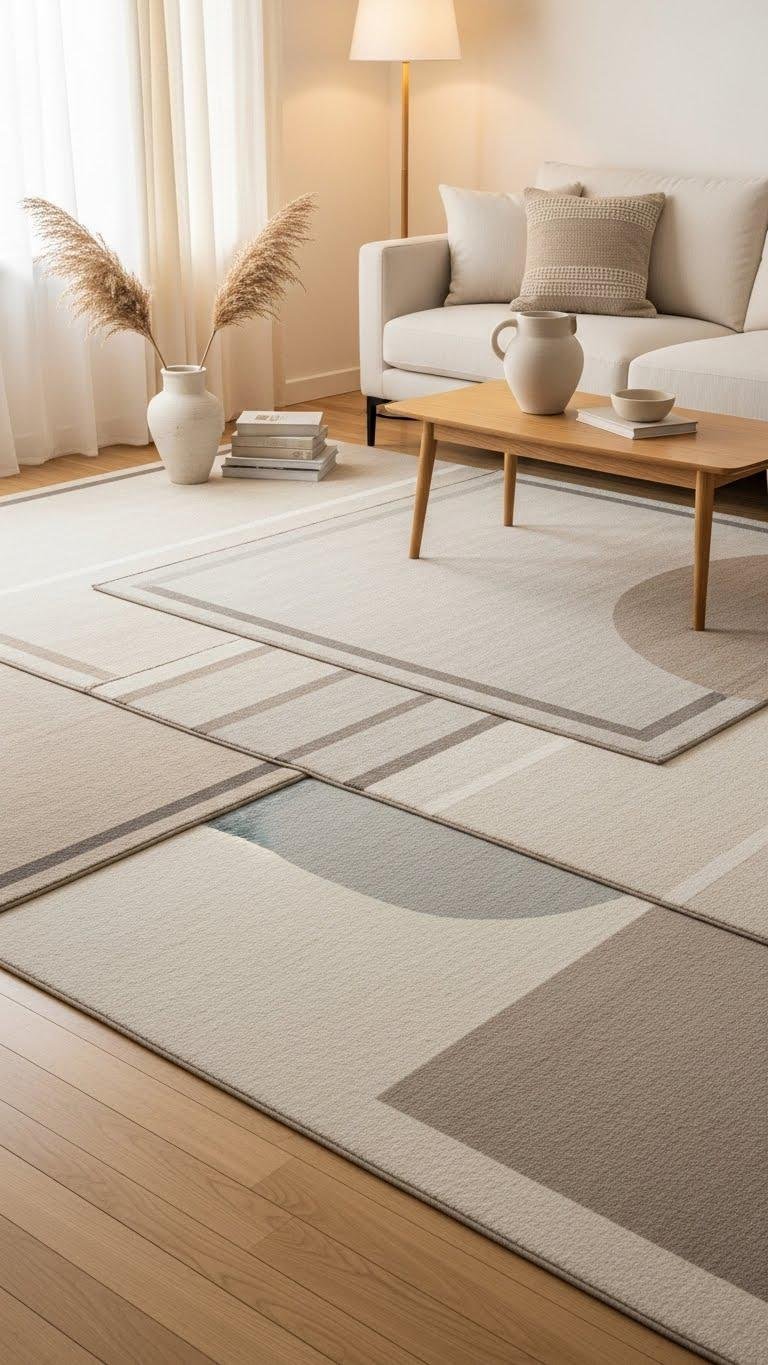
When you layer low-pile rugs, you add warmth and definition without overwhelming a room’s clean lines. You’ll choose low profile textures that feel grounded and easy to maintain, mixing neutral pile contrasts to create subtle depth.
Keep shapes simple, scale intentional, and allow breathing space so each layer supports movement and calm. This approach frees you to edit with purpose.
Limited Palette of 3–4 Colors per Room
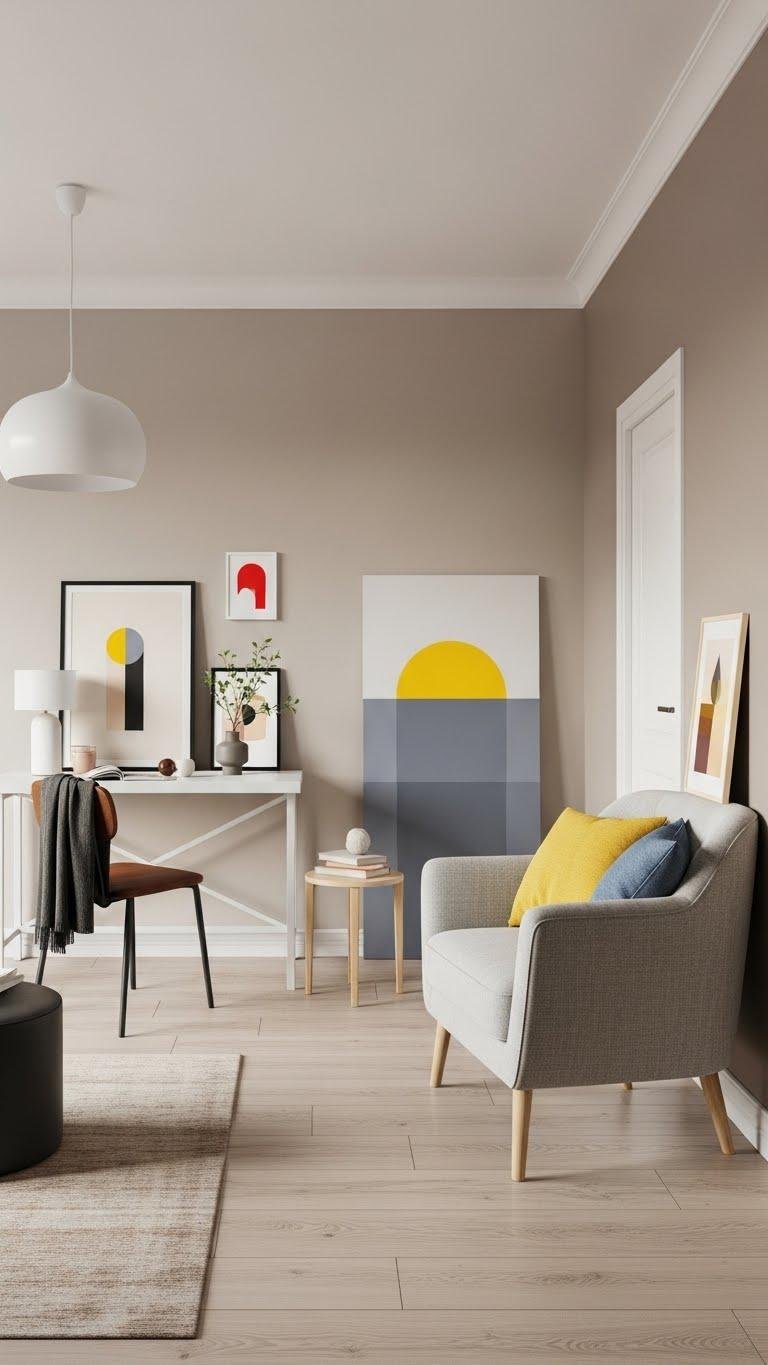
Choose three to four colors and stick to them throughout a room so each element feels deliberate and calm. You’ll use a monochrome accent to deepen mood, a neutral base for breathing space, and a single pop for joy.
Color zoning defines function without clutter; you’ll make choices that free movement and focus, keeping the room intentional, balanced, and quietly expressive.
Warm Metallic Accents in Small Doses
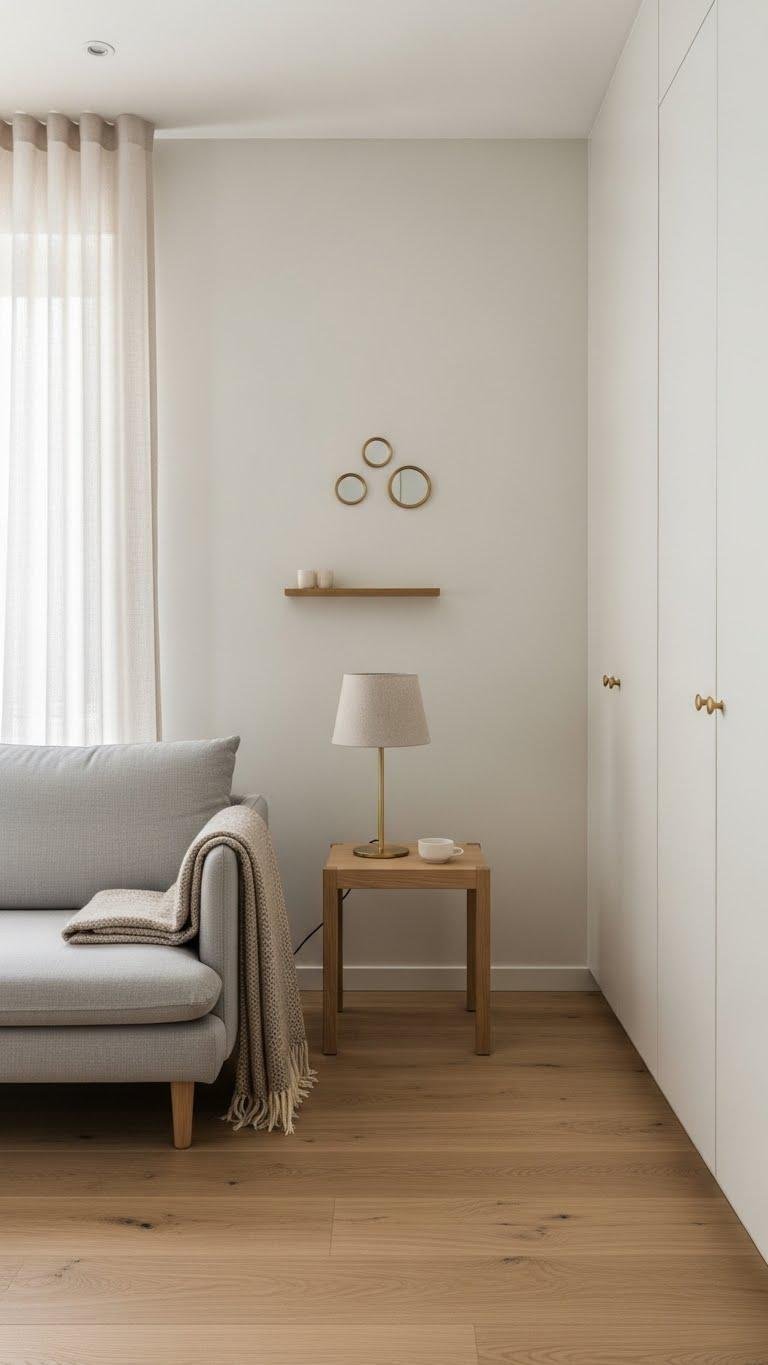
Once you’ve set a restrained palette, add warmth and sparkle with small touches of brass, bronze, or warm gold to lift the room without overwhelming it. You’ll choose brushed brass knobs, a slim lamp base, or tiny mirrors to catch light.
Place accents sparingly so each piece breathes; they’ll anchor the space, feel intentional, and let you move freely within a calm, elevated room.
Designated Landing Zones for Daily Items
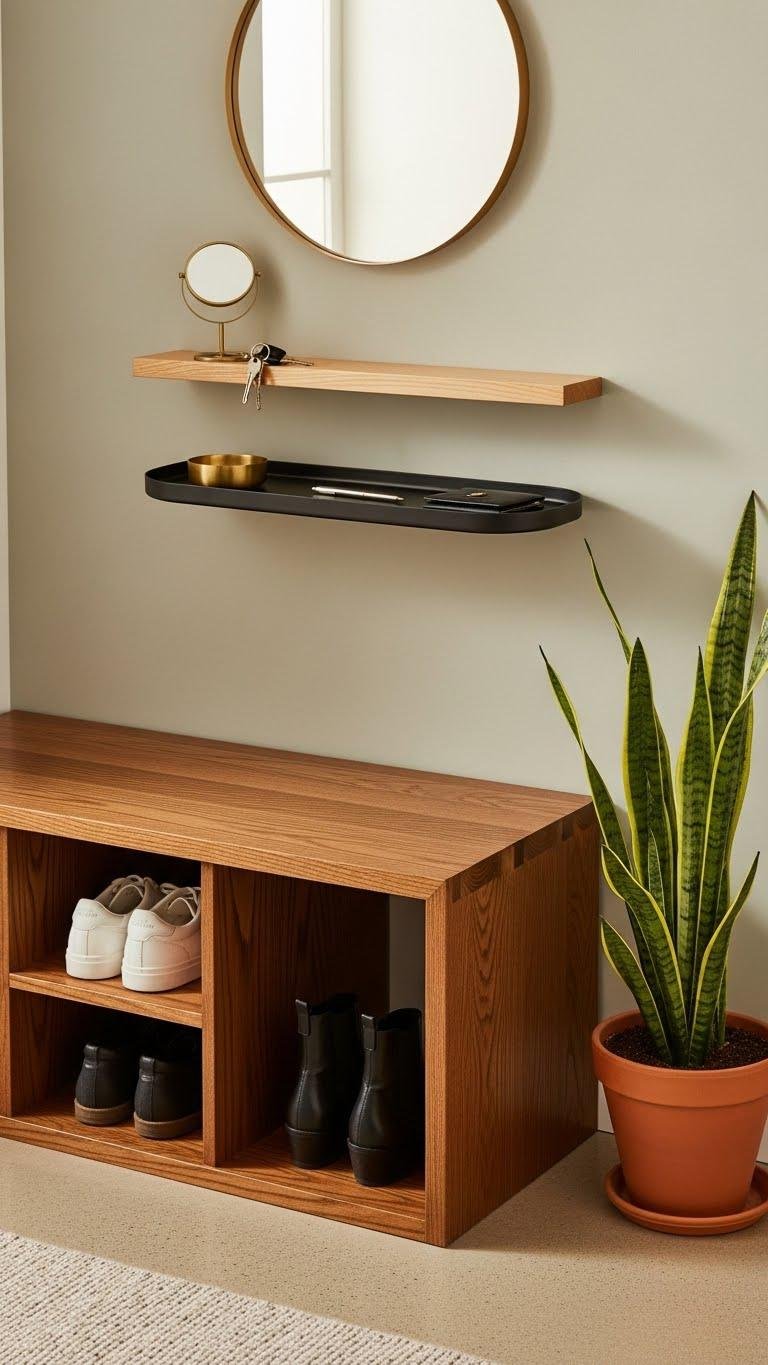
Set clear landing zones for daily items so you always know where keys, mail, and phones belong. You’ll place an entry bench near the door for shoes and quick sits, and set a slim catch all tray for tiny essentials.
Keep surfaces uncluttered, limit items to what you use daily, and enjoy the ease of a tidy, intentional routine that frees your mind.
Uniform Baskets and Boxes Inside Closets
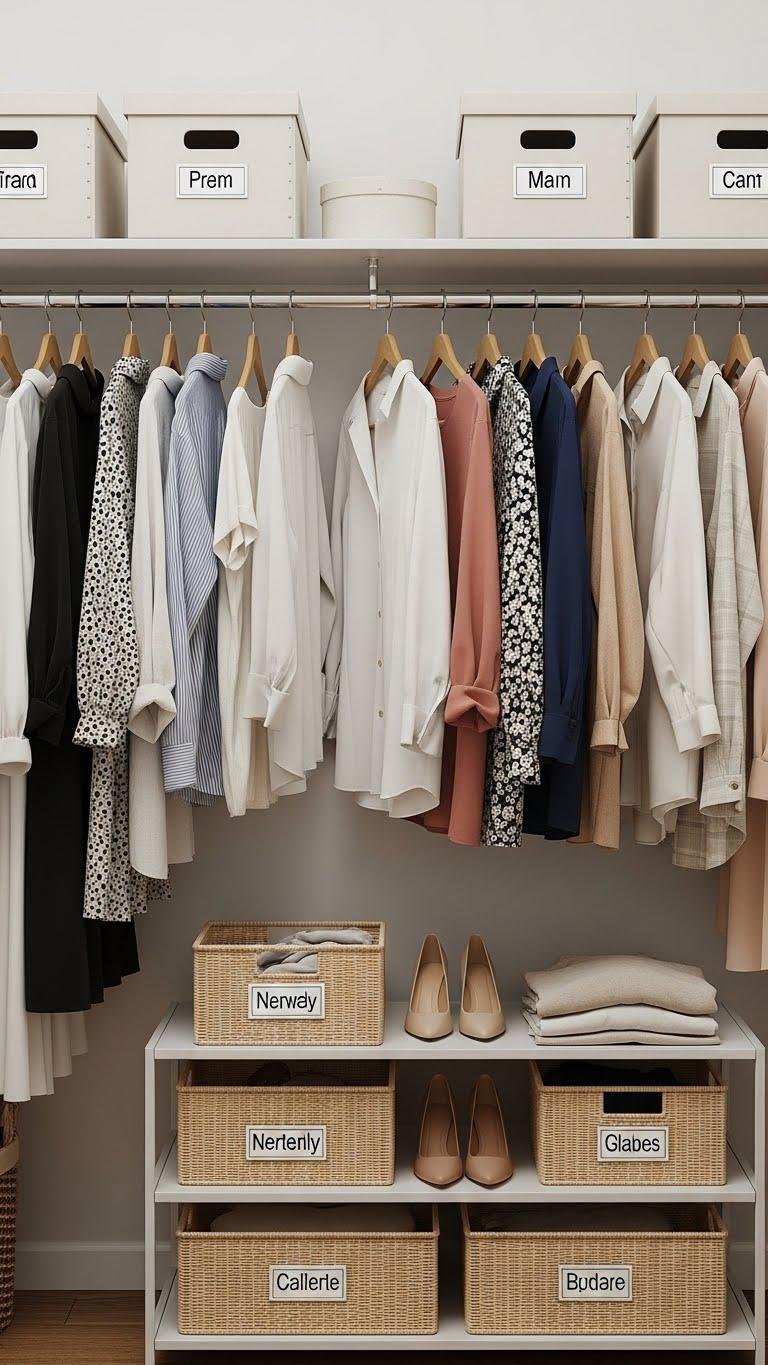
Tuck matching baskets and boxes onto your closet shelves to create an instantly calm, cohesive look that makes everything easy to find.
You’ll appreciate uniform containers with labelled lids so items stay identified without fuss.
Use a simple system for seasonal rotation, keeping current clothing upfront and storing extras neatly.
This tidy approach gives you visual relief and practical freedom to move through daily life.
Handcrafted Ceramics as Quiet Accents
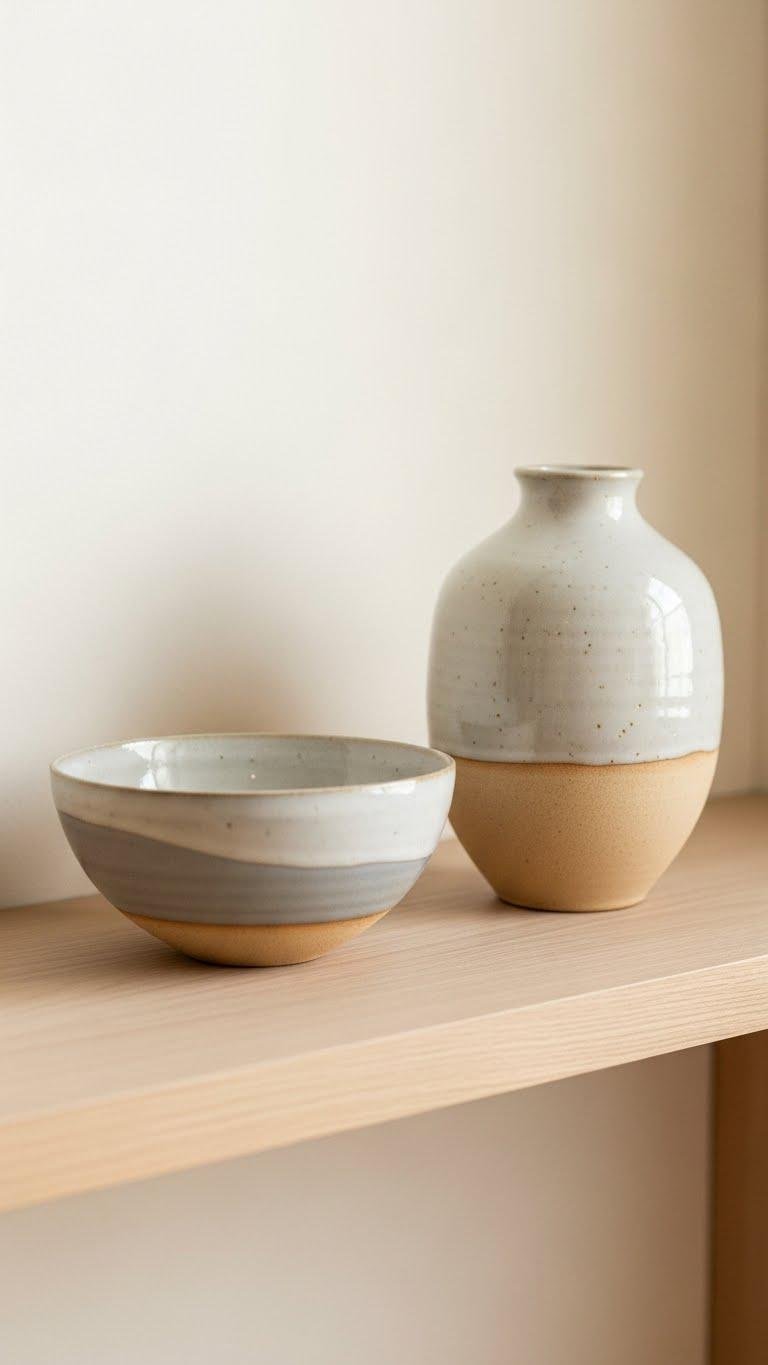
Bring handcrafted ceramics into your space to add quiet, tactile accents that ground a minimalist room. You’ll choose pieces with restrained shapes, natural tones, and handmade glazing that reads as calm texture.
Place a single bowl or vase on a shelf or table so subtle imperfections feel intentional. These objects let you edit freely, celebrate craftsmanship, and keep surfaces uncluttered, peaceful, and purposeful.
Performance Fabrics for Easy Care
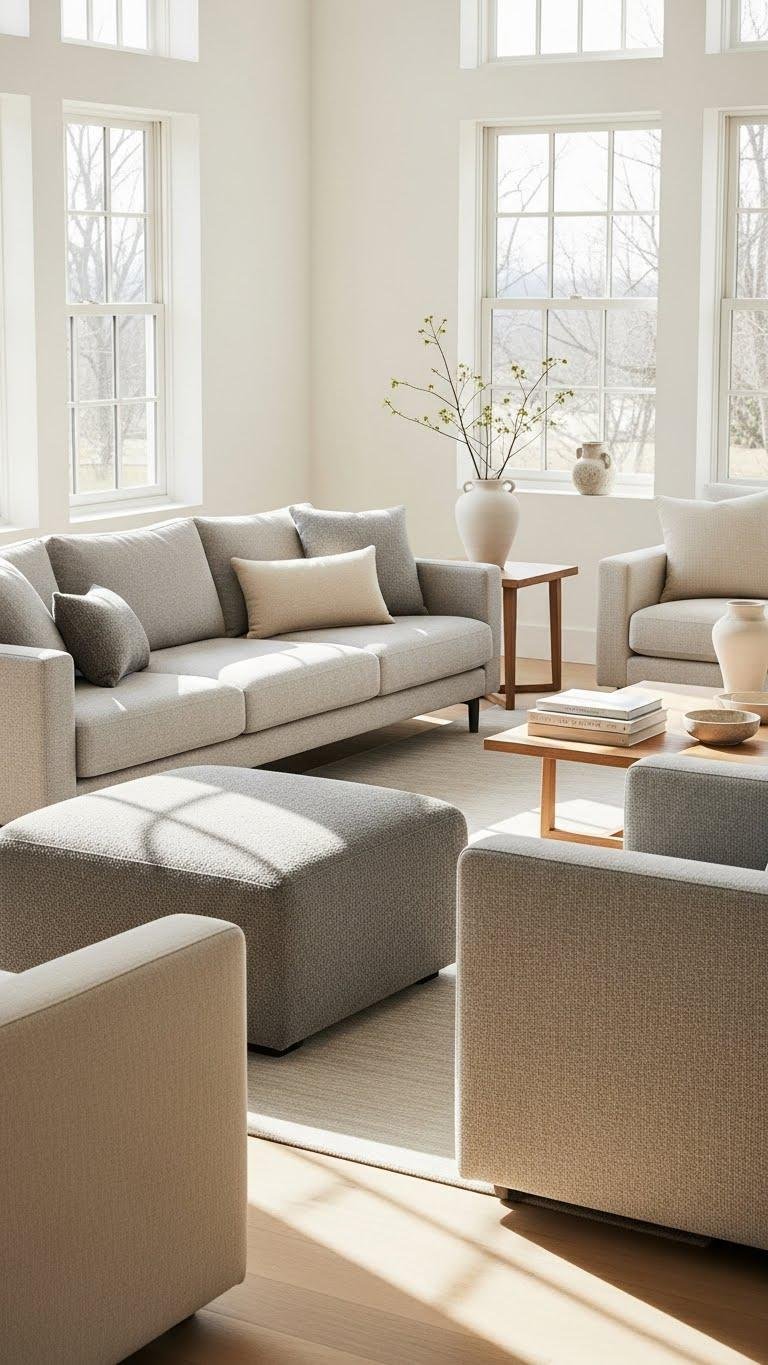
Often you’ll reach for performance fabrics when you want low-maintenance textiles that still look refined; they resist stains, dry quickly, and hold their color so your minimalist surfaces stay calm without constant fuss.
Choose stain resistant upholstery in neutral tones and performance blends that feel natural. You’ll enjoy durable, easy-care pieces that free time and attention for living, not perpetual upkeep.
One Throw and Two Cushions in Coordinated Tones
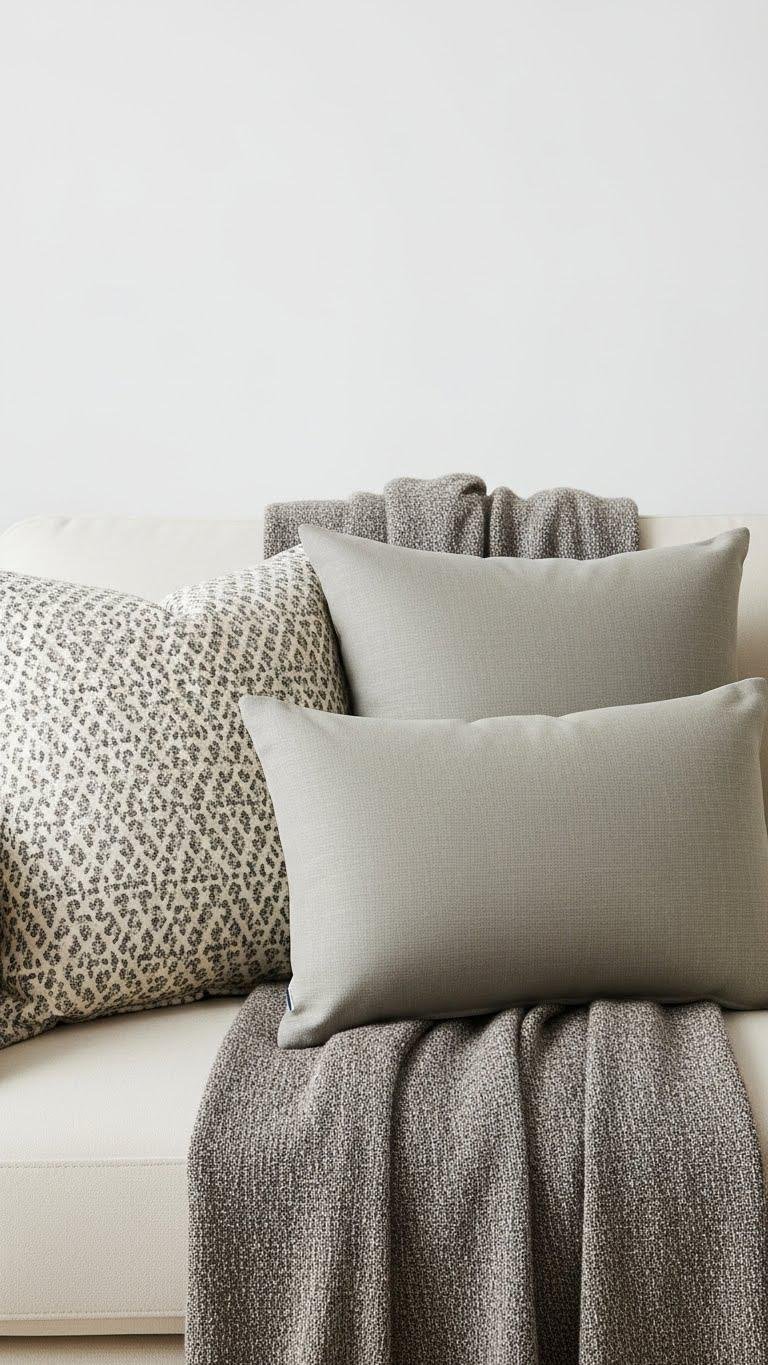
After you’ve chosen performance fabrics that keep surfaces low-maintenance, finish the look with one carefully chosen throw and two cushions in coordinated tones.
You’ll create calm freedom by selecting a muted palette, adding subtle texture contrast and a single patterned cushion for pattern balance.
Keep shapes simple, placements intentional, and colors restrained so the arrangement feels airy, purposeful, and effortlessly relaxed.
Regular Short Declutter Sessions
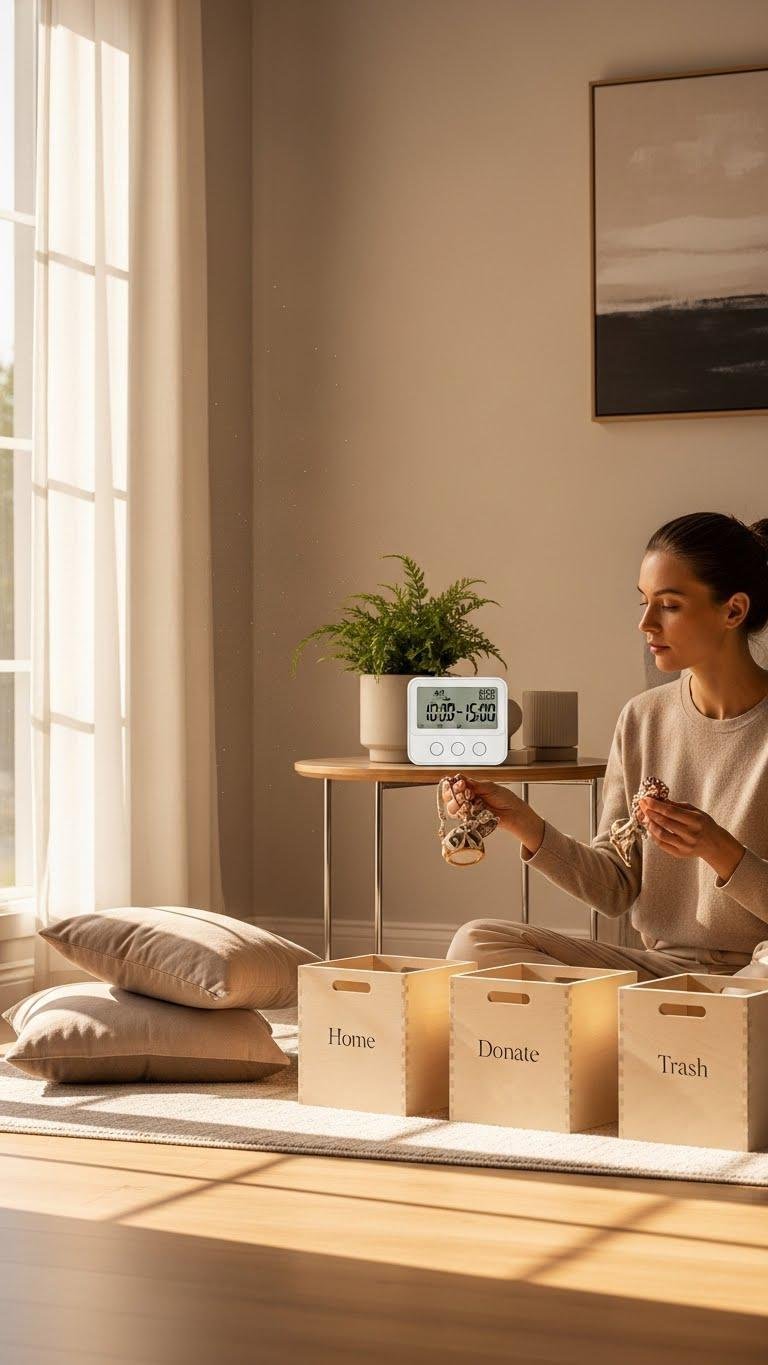
Schedule short declutter sessions into your week so clutter never piles up and surfaces stay serene. You’ll commit to quick tidyups—ten or fifteen minutes—to reset zones, letting each session be deliberate and light.
Use five minute sorting to decide items’ homes, donations, or trash. Regular, small efforts free your space and mind, keeping minimal decor purposeful and calm.
Practice the One-In, One-Out Rule

When you bring something new into your home, let go of one item in the same category so your belongings stay intentional and clutter-free.
You’ll create simple donation routines and set an edit frequency that suits your life. Stick to the rule when shopping, unwrapping gifts, or reorganizing—this keeps surfaces clear, choices easy, and your space feeling freeing and purposeful.