
You want a bedroom that instantly calms you the moment you walk in, so focus on natural textures, soft curves, and layered low light. Think linen, bouclé cushions, muted clay and sage tones, and unobtrusive storage that keeps surfaces clear. These 25 ideas are practical and tactile, easy to adapt, and meant to help you build a quiet, intentional sanctuary — with a few subtle tricks that change how the whole room feels.
Natural + Biophilic Retreat
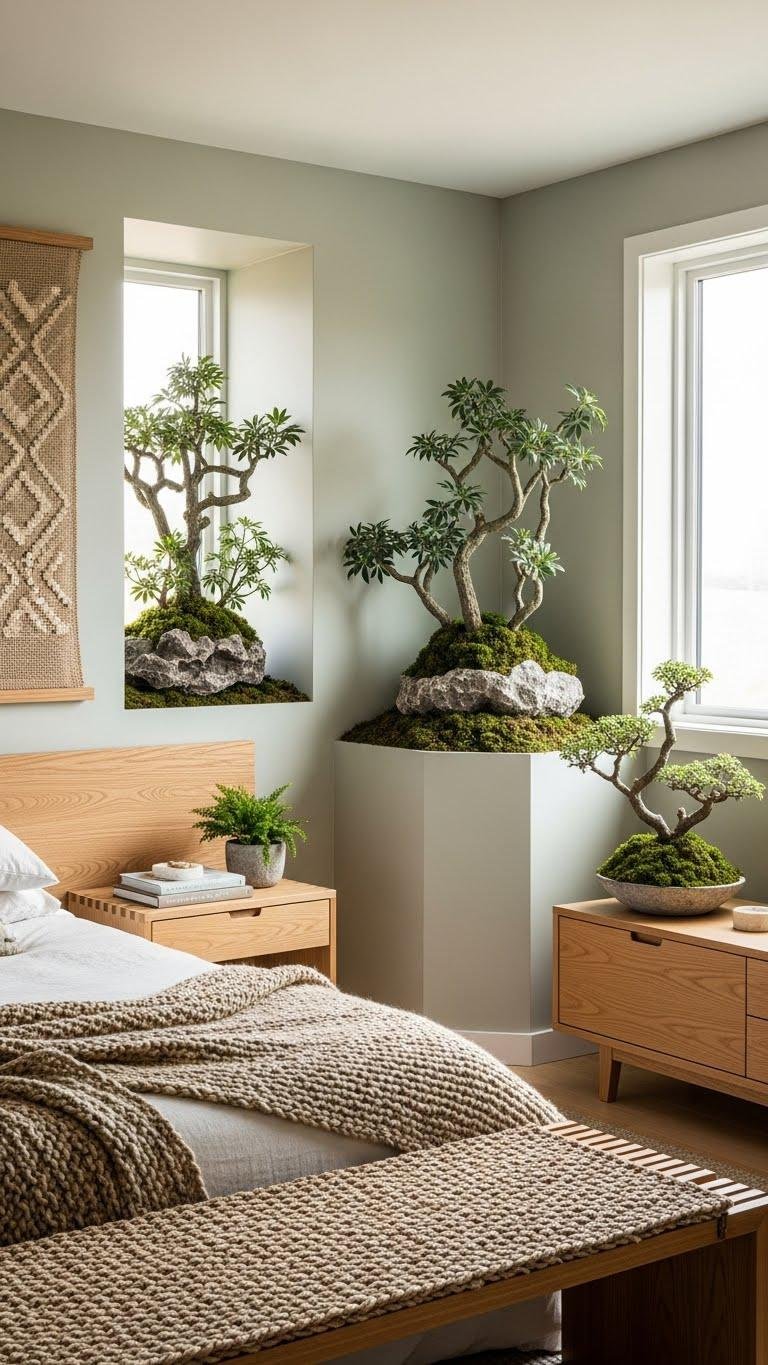
Bring the outdoors in by layering natural textures, green plants, and soft, daylight-inspired hues to create a calm, biophilic bedroom that feels like a private retreat.
You’ll balance woven throws, a natural fiber wall accent, and simple timber furniture. Add indoor rockeries for low-maintenance sculptural greenery, maximize light, and keep surfaces clear so you can move freely and wake refreshed.
Soft Curves & Cocooned Corners
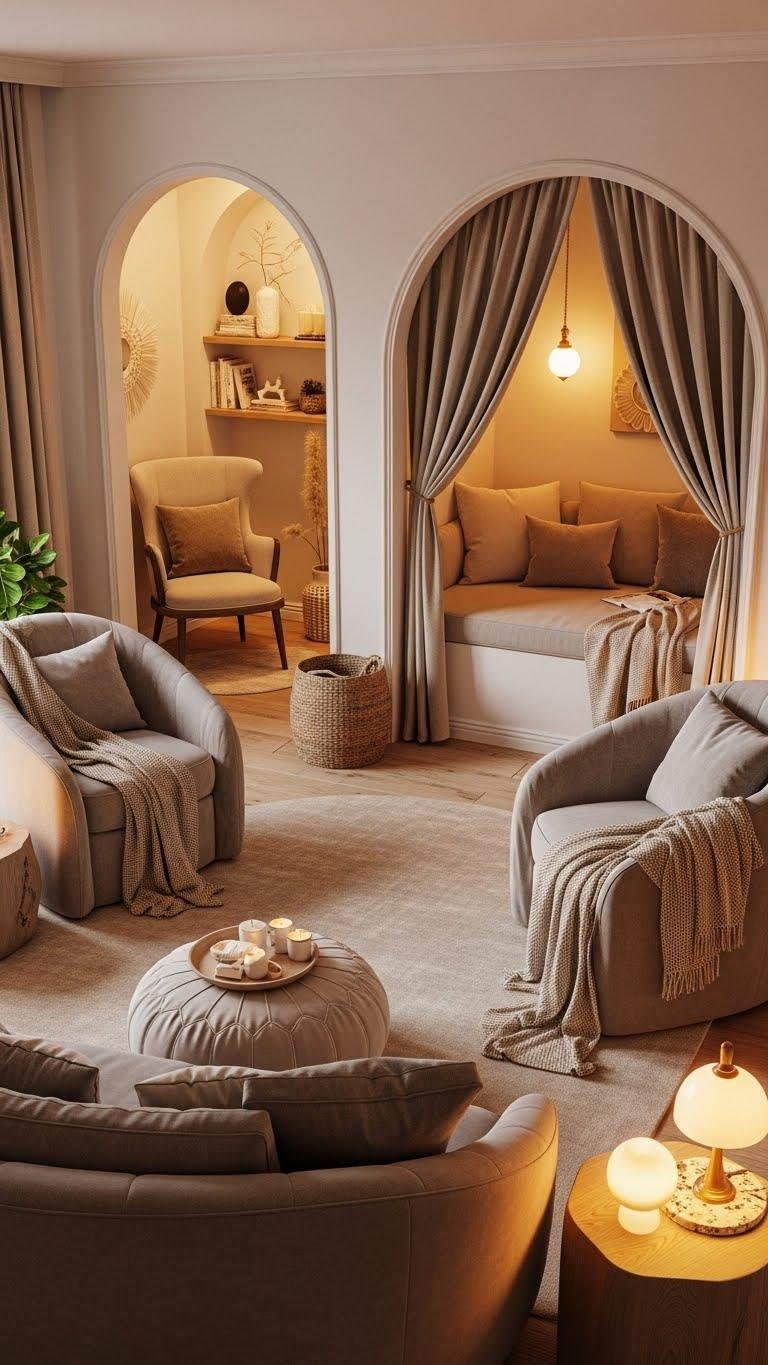
While you lean into gentle shapes, soften the room with rounded furniture and tucked-away nooks that invite lingering; curved headboards, arched alcoves, and poufs create a quieter, more intimate flow.
You’ll shape rounded nooks for reading or rest, layer cocoon fabrics on chairs and throws, and place soft lighting to hug each corner.
Move freely; the room wraps you in calm.
Muted Earthy Palette
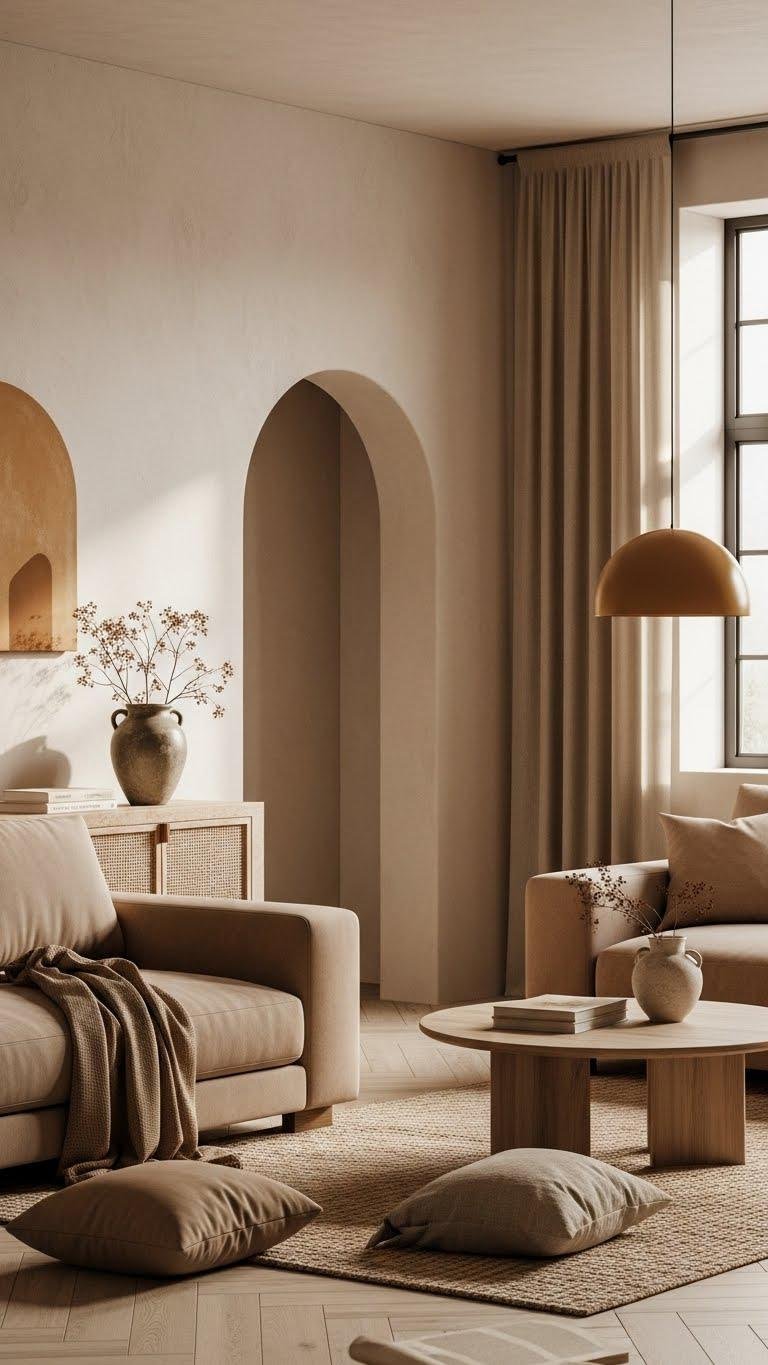
Choose a muted earthy palette to ground the room—soft clay, warm taupe, olive-gray, and sun-bleached sand will calm the eye and make curved forms feel even more inviting. You’ll pick muted ochre accents and clay taupe walls to create calm contrast, keep furniture simple, and let natural light read the tones.
The result feels liberated, steady, and quietly refined.
Textural Layering for Warmth
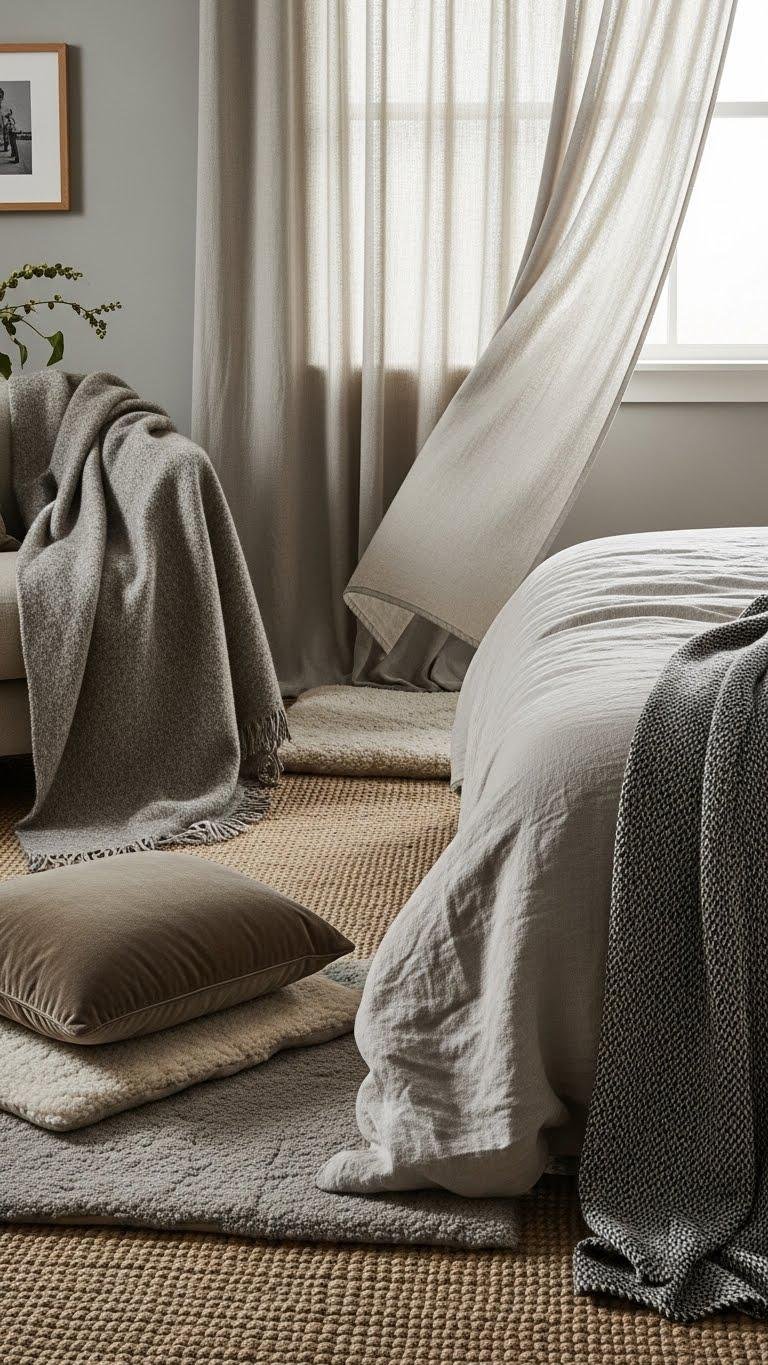
If you layer tactile materials—think nubby wool throws, linen curtains, and a low-pile jute rug—you’ll turn the muted palette into a room that feels lived-in and warm.
Mix tactile contrasts: a raw linen duvet, a velvet cushion, and basketweave blankets. Add plush underlays beneath rugs and seating for comfort. You’ll create a free, calm space that invites barefoot wandering.
Simplified Curated Styling
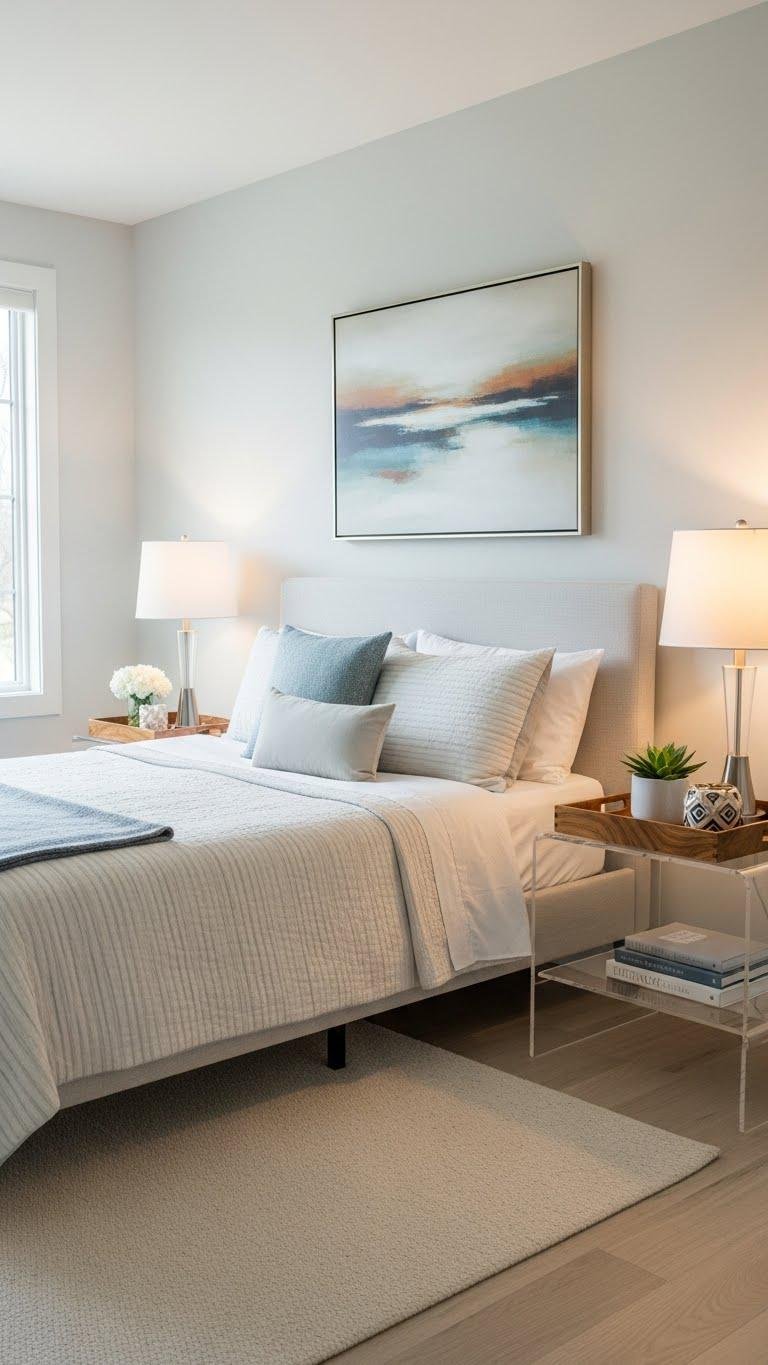
When you pare a room back to a few intentional pieces, everything reads calmer and more purposeful—think a signature bedspread, two matching bedside lamps, a single art piece, and one decorative tray instead of scattered knickknacks.
You choose with intentional selection, keep surfaces clear, and establish quick edit rituals. That spare approach frees your mind, simplifies upkeep, and makes each object feel meaningful.
Plant-Focused Minimalism
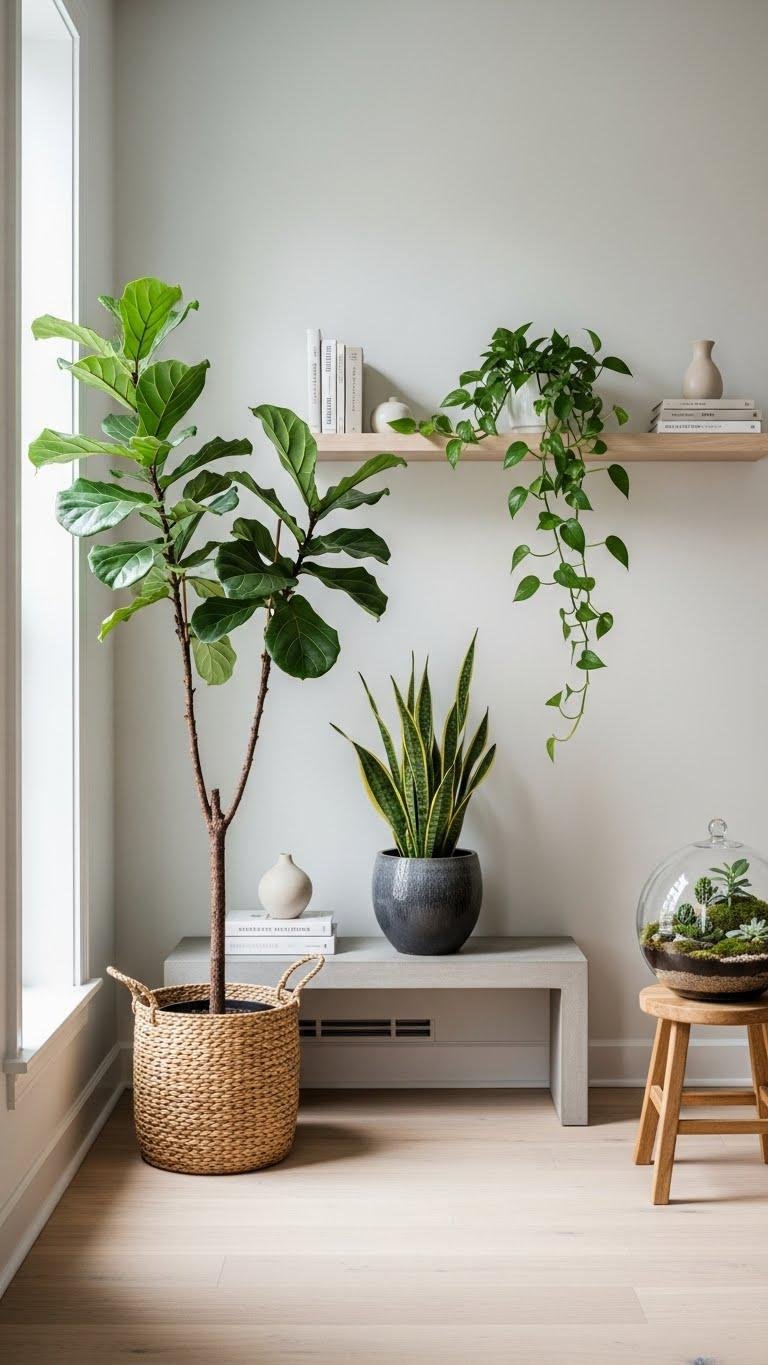
Bringing plants into a pared-back room adds life without clutter: pick a few sculptural specimens—a tall fiddle leaf fig, a trailing pothos, or a textured snake plant—and place them where they read like deliberate accents, not afterthoughts.
You’ll keep surfaces open, use a compact terrarium for tiny, contained green, and let each plant breathe.
You’ll feel freer, calmer, and more alive.
Warm Wood and Rattan Accents
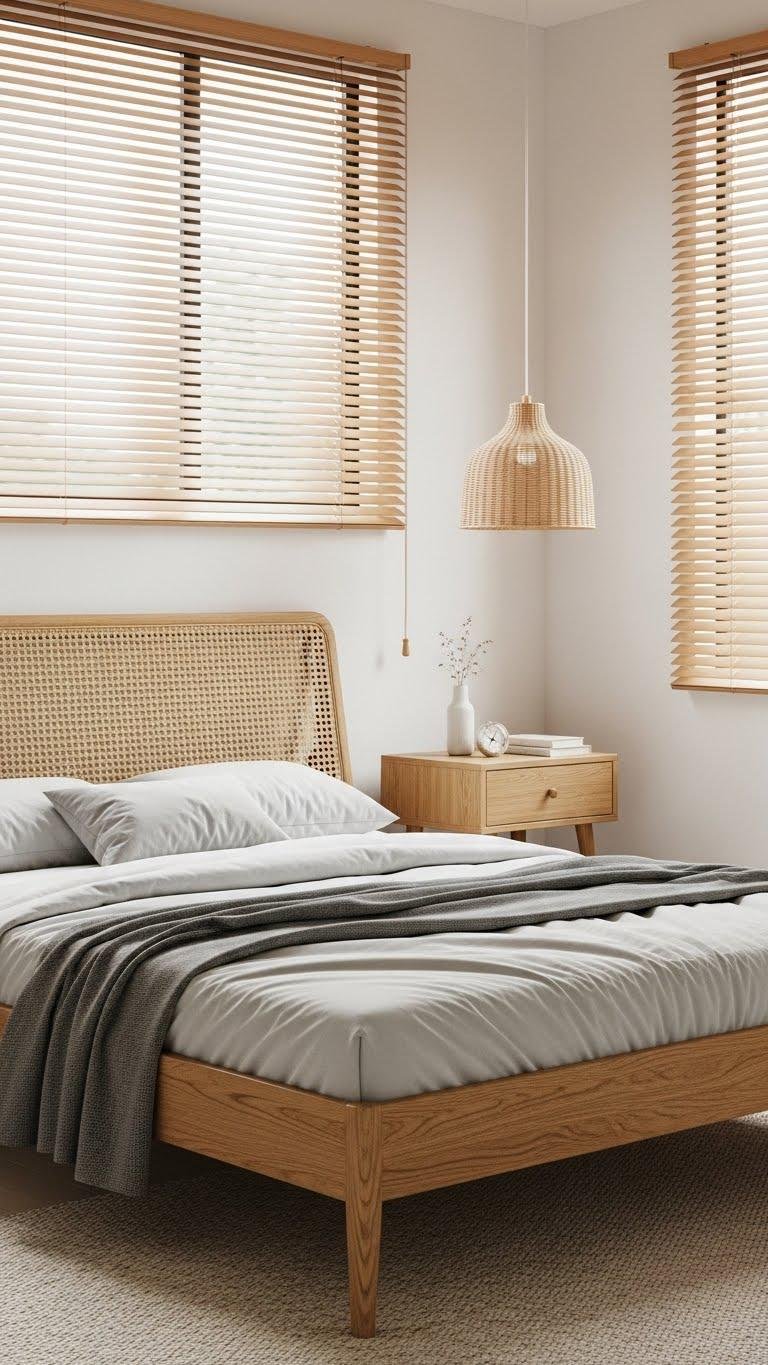
Warm-wood finishes and rattan accents warm a minimalist bedroom without adding visual weight: choose a low-profile bed frame in honeyed oak, a woven rattan headboard or pendant, and a slim bedside table with tapered legs to keep sightlines open.
Pair a rattan headboard with a teak bedside, hang a wicker pendant, and fit bamboo blinds for filtered light—clean, airy, and unconfined.
Linen-Centric Bedding Scheme
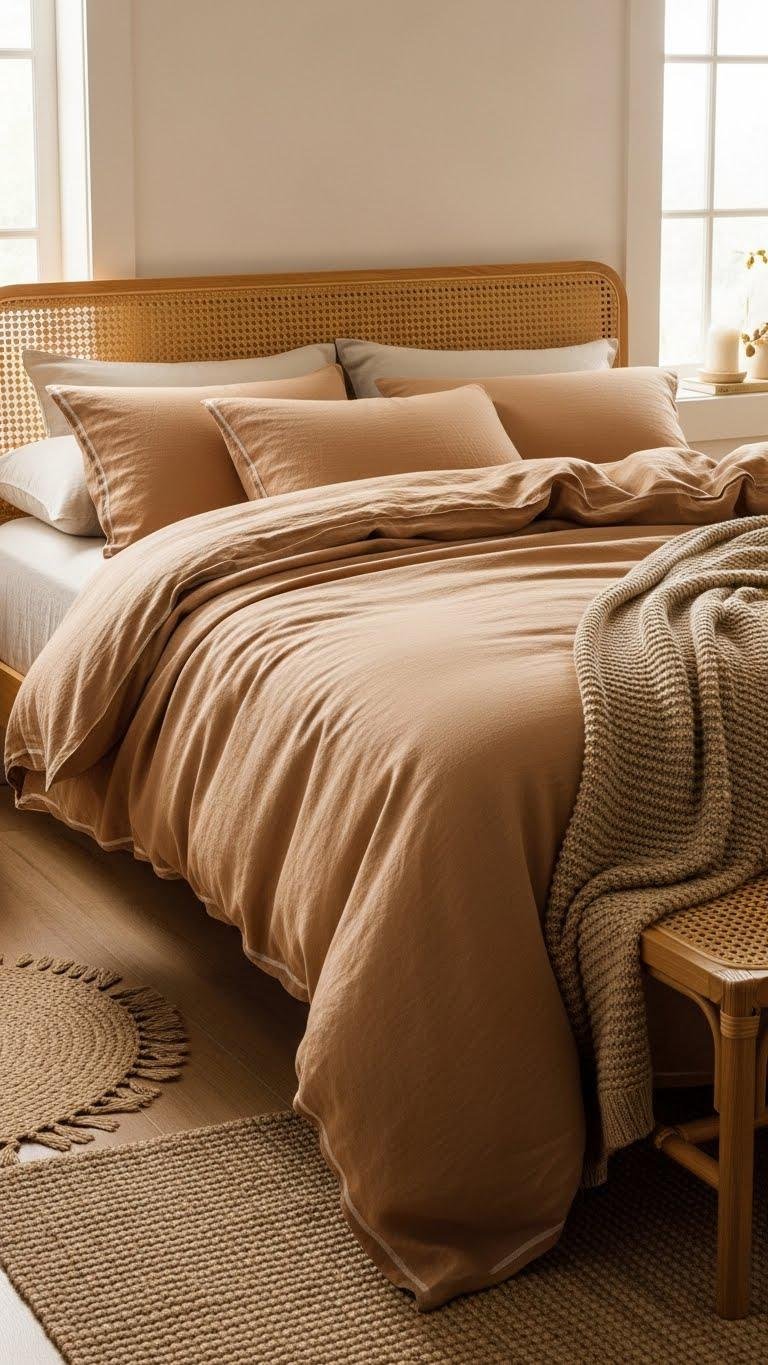
After you’ve established warmth with honeyed oak and rattan, let linen take over the bedding to keep the room feeling breezy and lived-in. You’ll choose a breathable weave for airflow, relaxed hemstitched edges for effortless style, and subtle light weight dyeing for natural tone variation.
Prioritize organic certification, layer simple textures, and let sheets sag comfortably for a free, unforced sleep haven.
Bouclé and Velvet Touches
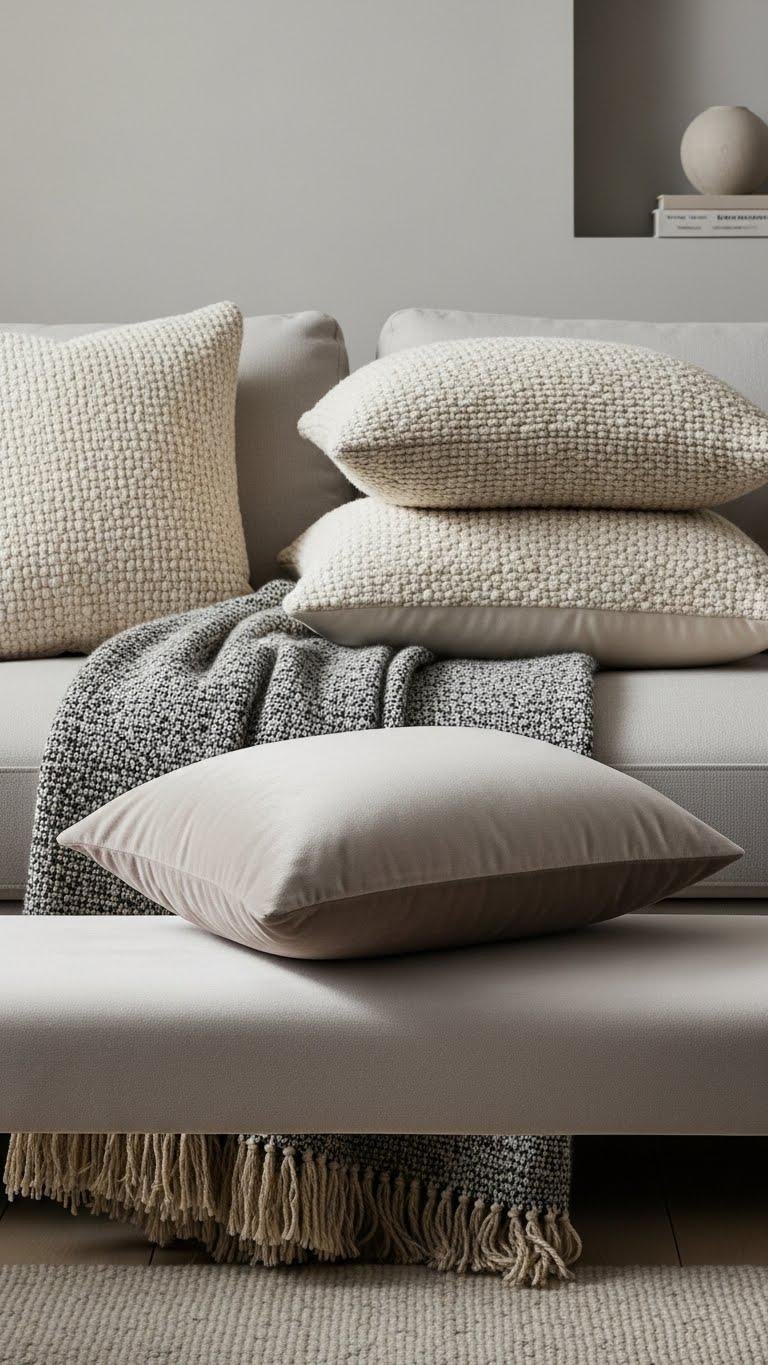
Layer in bouclé and velvet to give the room tactile contrast that still reads calm and curated. You’ll mix tactile boucle cushions and a low-profile throw for cozy dimension, then place a velvet bench or pillow to catch light with a soft velvet sheen.
Choose muted tones, simple shapes, and uncluttered placement so textures sing without crowding your peaceful, free-moving space.
Subtle Botanical Wallpapers
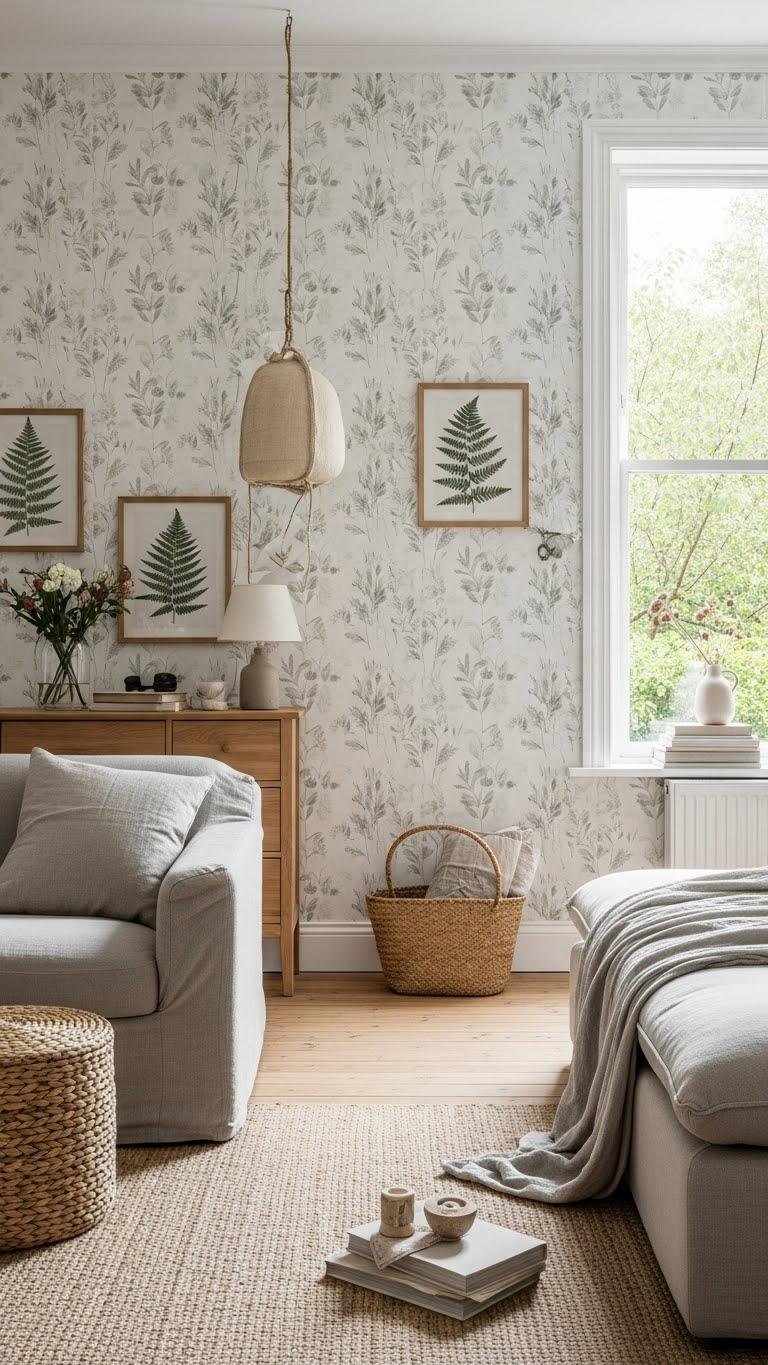
A whisper of foliage can shift a room from plain to peaceful: choose a subtle botanical wallpaper with small-scale leaves, soft line work, or muted watercolors so the pattern reads calm from across the room but rewards a closer look.
You’ll pick vintage fernprints or muted palm patterns to anchor a freeing, low‑drama backdrop—pair with linen, light wood, and uncluttered surfaces.
Pebble, Stone, and Water Details
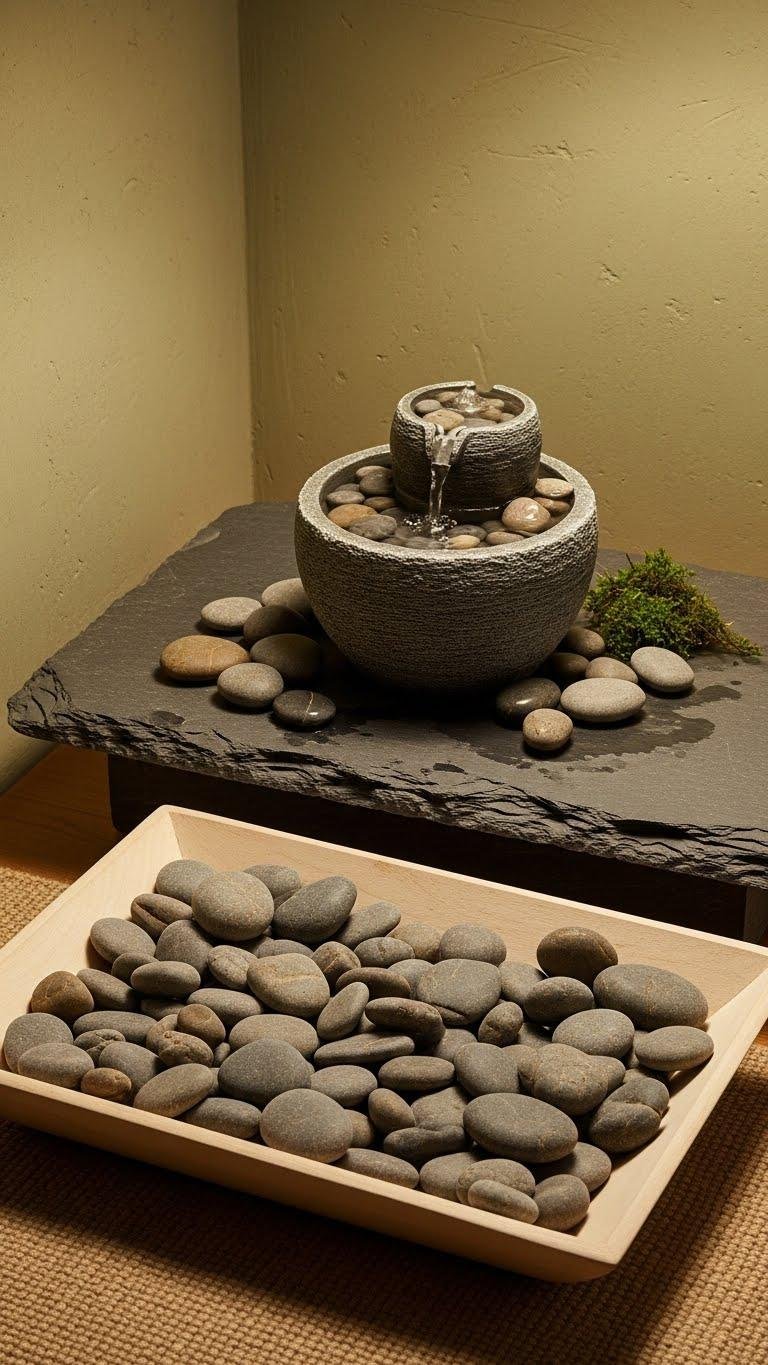
Bring the calm of foliage down to earth by introducing pebble, stone, and water details that echo the wallpaper’s quiet rhythm. Scatter river pebbles in a shallow tray, place a coastal slate bedside slab, and add a small tabletop fountain for soft motion.
You’ll craft a grounded, breathable corner that feels open, tactile, and effortlessly free.
Rounded Furniture Silhouettes
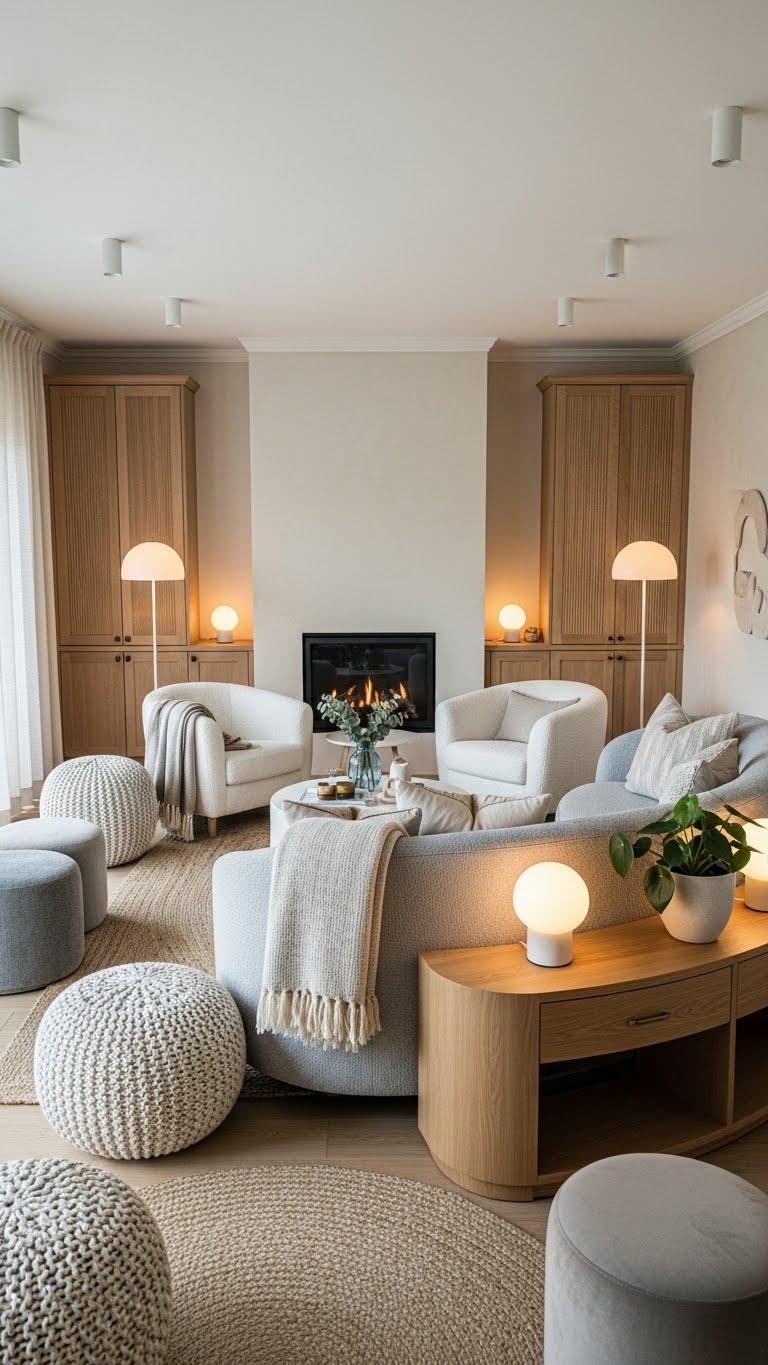
When you trade sharp corners for gentle curves, the room instantly feels softer and more inviting; rounded sofas, crescent nightstands, and barrel chairs guide the eye smoothly and make circulation effortless.
Choose rounded ottomans to anchor a lounging nook and curved cabinetry to soften storage lines. You’ll create a liberated, calm bedroom that encourages movement, relaxes posture, and invites lingering without feeling fussy.
Neutral Monochrome With a Soft Accent
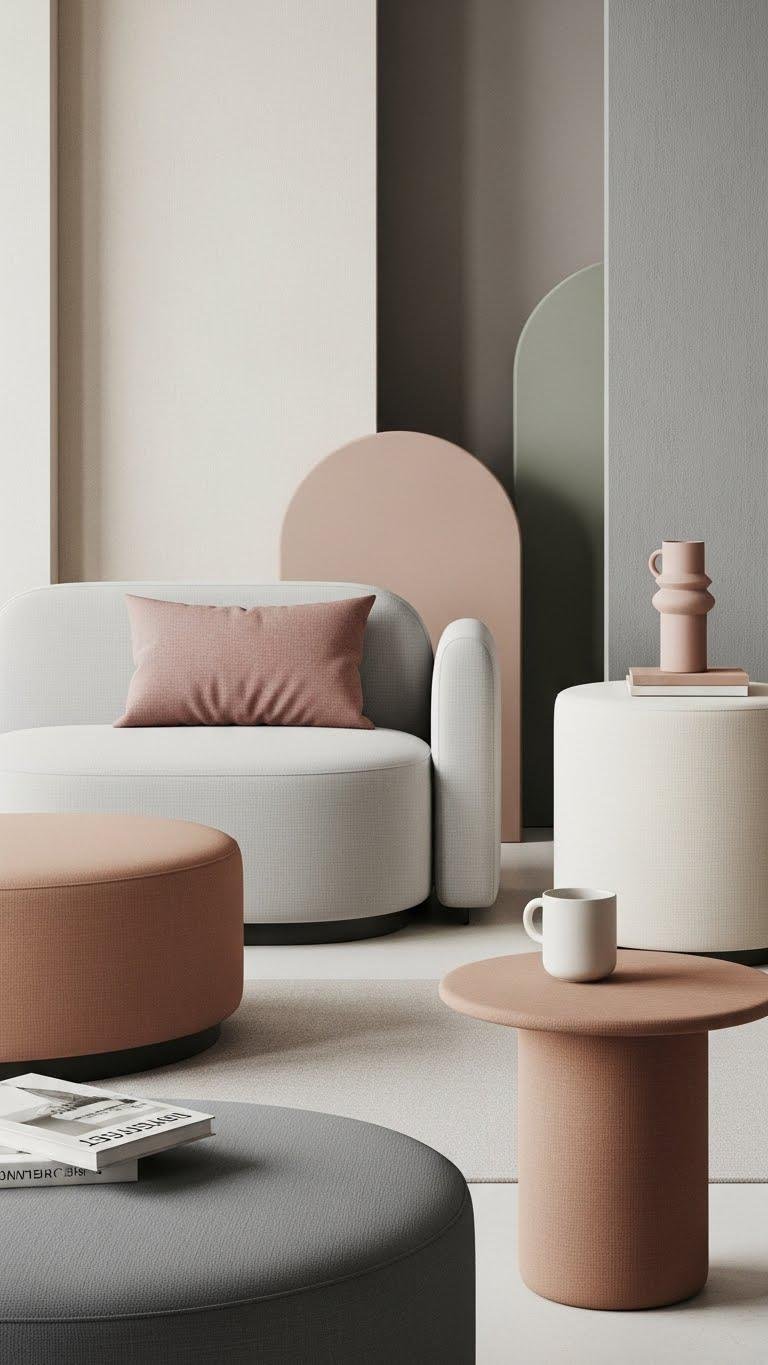
Rounded silhouettes pair beautifully with a restrained palette: think layered creams, warm greys, and soft taupes, punctuated by a single muted accent like dusty rose or sage. You’ll lean into muted taupe and a dove gray pairing for calm, add linen textures for tactile warmth, and use whisper accents sparingly—one pillow, one vase—to keep the room airy, uncluttered, and liberating.
Handcrafted and Vintage Textiles
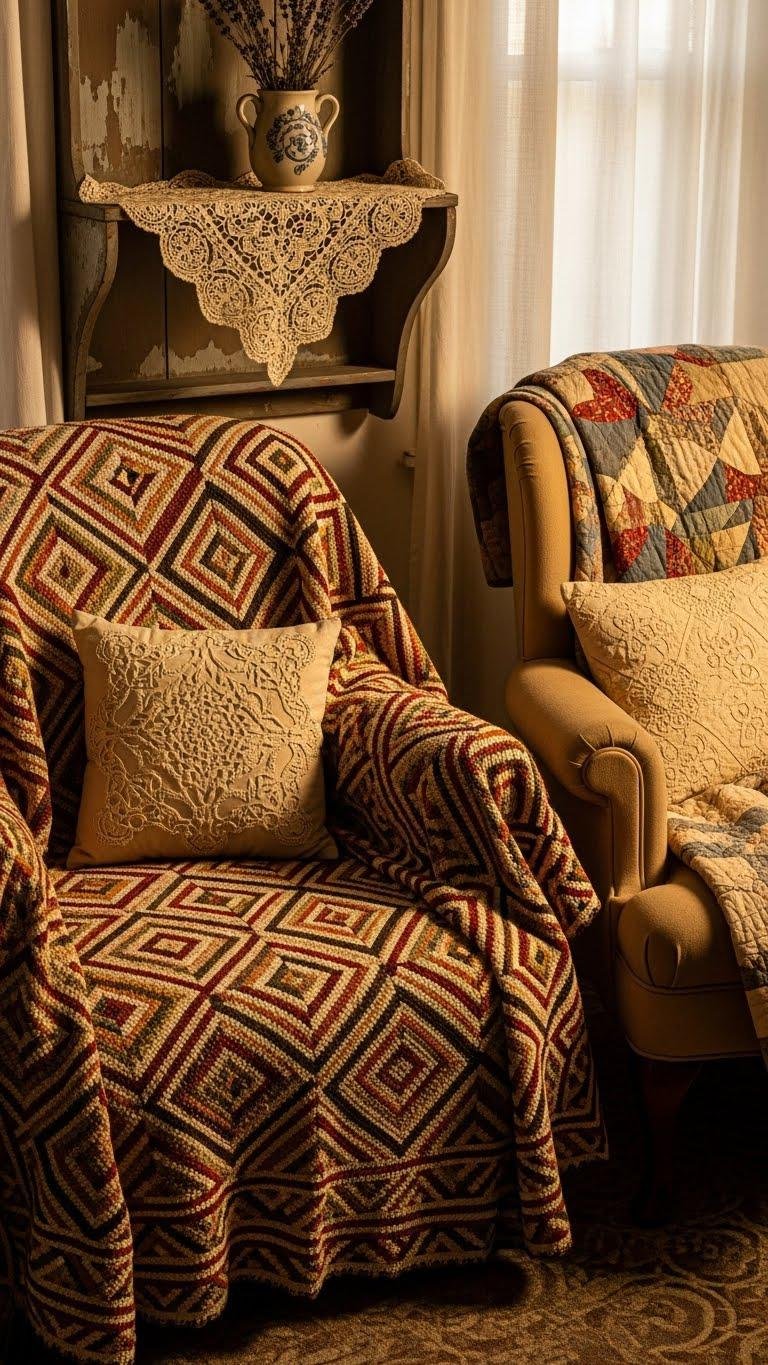
Though rooted in history, handcrafted and vintage textiles instantly make a room feel lived-in and personal; you’ll layer them to add pattern, texture, and quiet color without clutter.
Choose hand stitched throws for warmth and irregularity, drape a faded quilt over a chair, and tuck antique lacework into a shelf or pillow.
You’ll create a calm, free space that honors craft and comfort.
Low-Profile Cocooning Layout
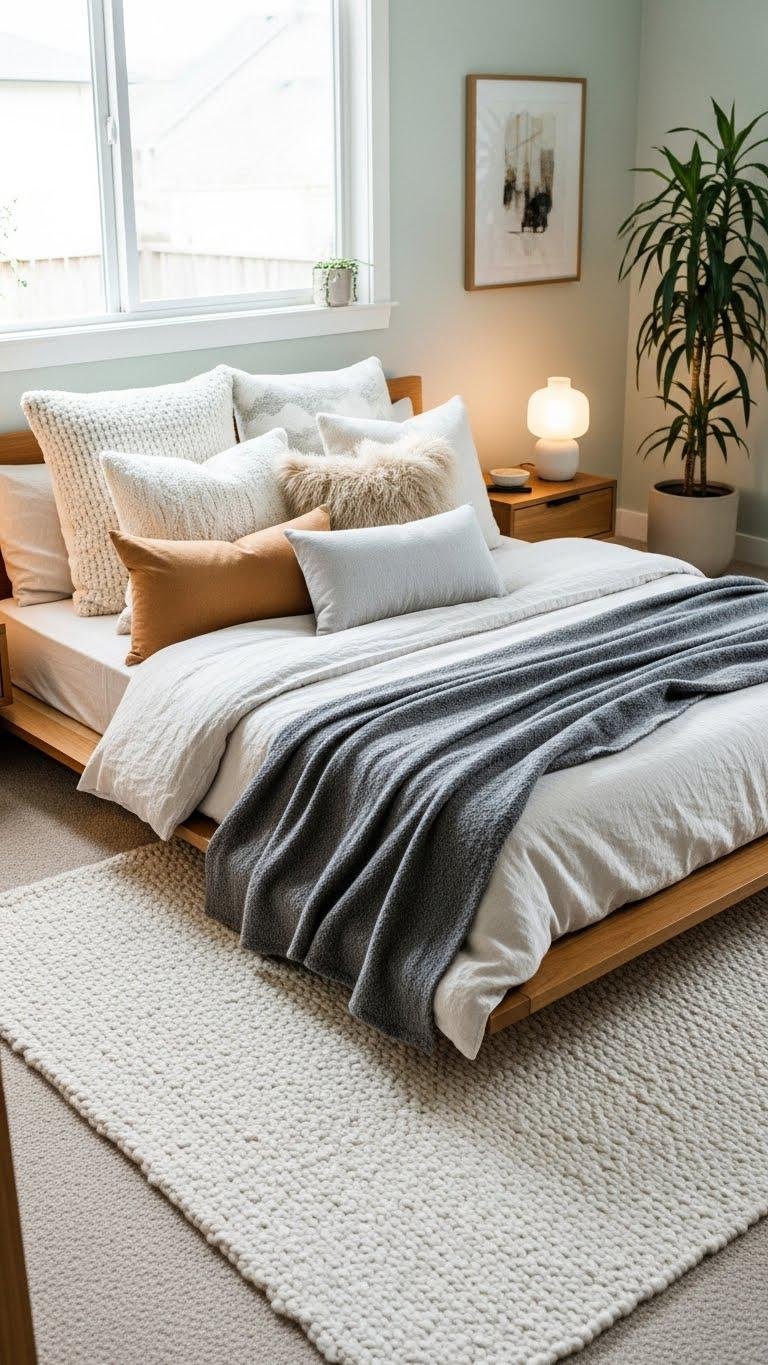
If you want your bedroom to feel like a protective hug, opt for a low-profile cocooning layout that keeps everything close, soft, and grounded. Choose low profile furniture—platform bed, low nightstands—and arrange pieces to create a compact flow.
Layer cocooning textiles: a weighted throw, plush rug, textured pillows. You’ll feel sheltered, calm, and free to move within intentional, pared-back space.
Hidden and Indirect Lighting Tricks
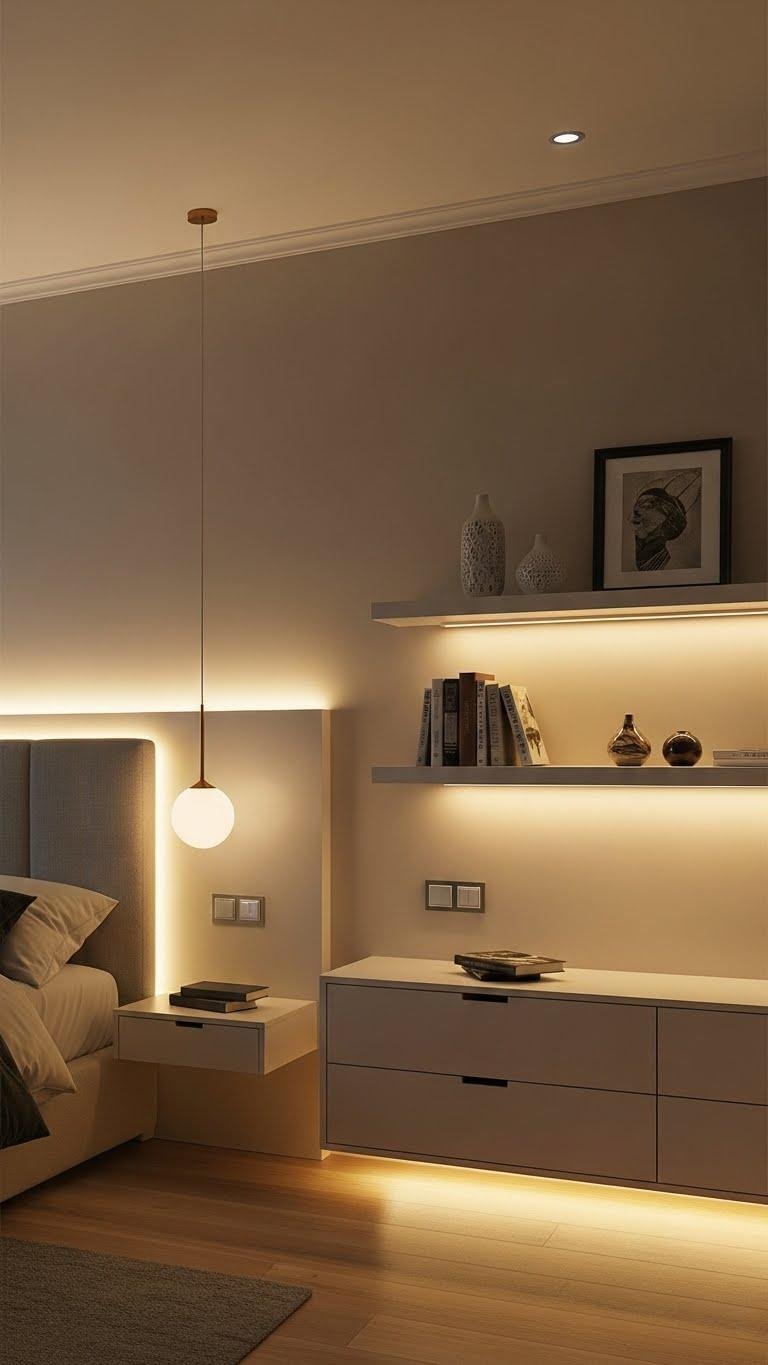
Because you want a bedroom that feels calm and layered, hidden and indirect lighting lets you sculpt mood without glare. Use recessed cove strips for soft perimeter wash, indirect uplighting behind headboards to lift the ceiling, toe kick glow under dressers for an effortless night path, and floating shelflight to showcase objects.
Keep dimmers, warm tones, and clean lines to maintain freedom and ease.
Cozy Reading Nook Design
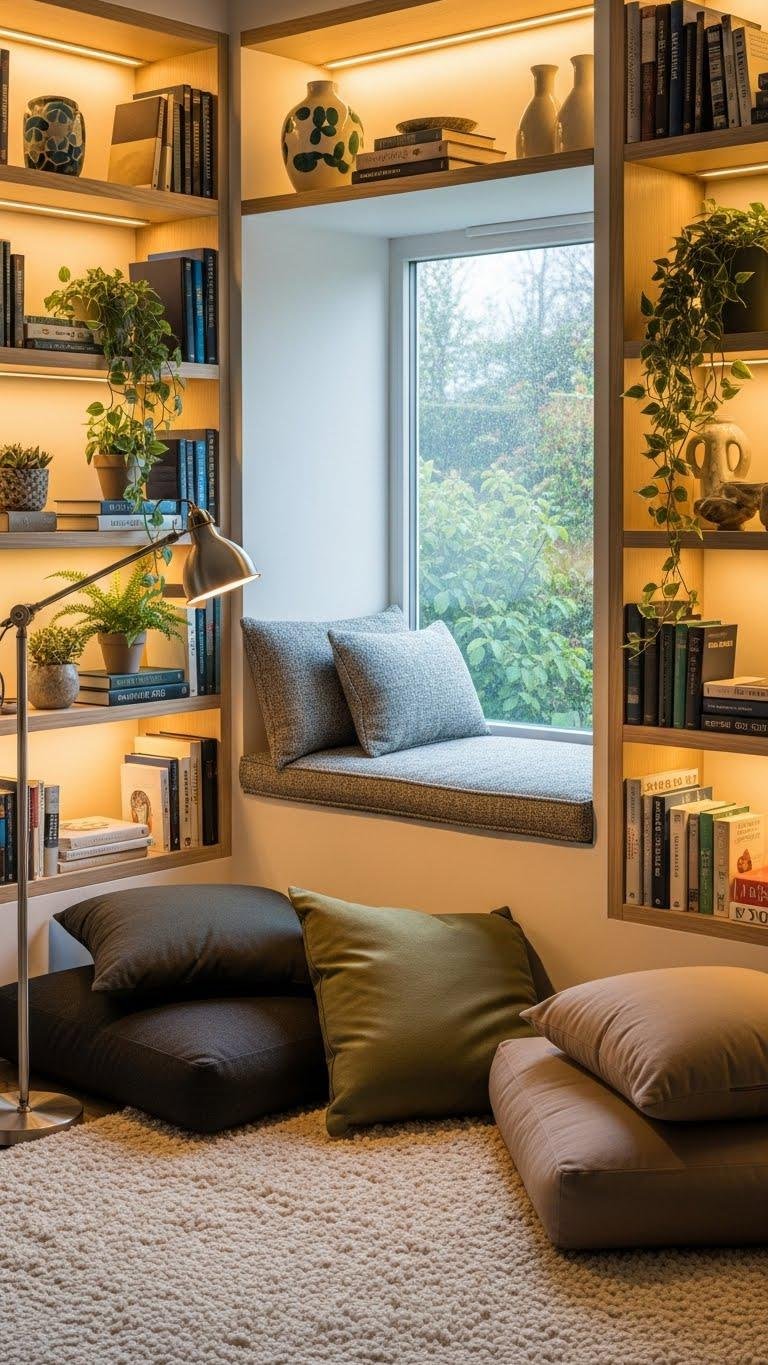
Carry the same soft, hidden lighting into a corner where you can curl up with a book; a cozy reading nook uses layered, indirect light to eliminate glare and create a private pocket of calm.
Claim a window alcove, add low floor cushions, float ambient shelving for books and plants, and position an adjustable lamp for focused reading.
Keep lines simple, colors muted, and access effortless.
Tactile Layered Rugs and Throws
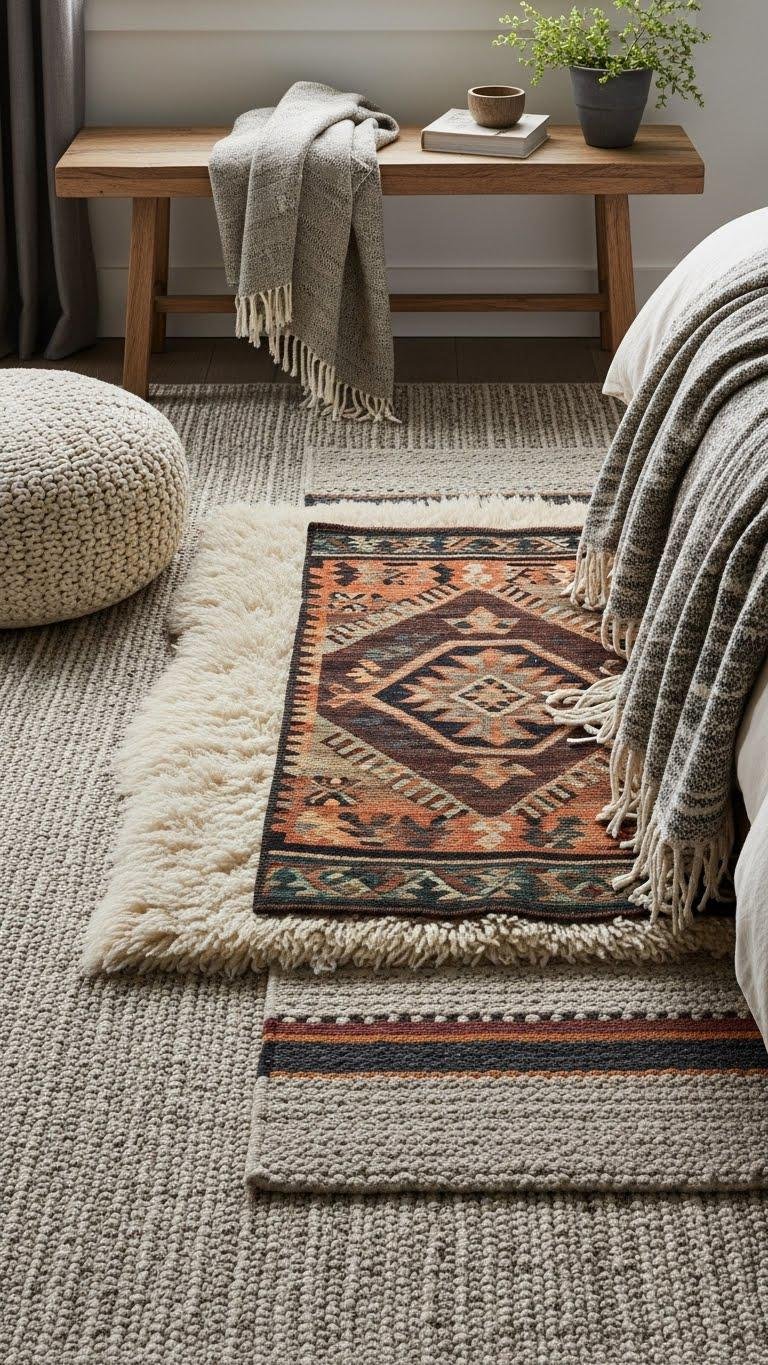
Layer rugs and throws to bring instant warmth and texture underfoot — start with a neutral flatweave as your base, then add a plush wool or shag for softness and a patterned kilim or vintage runner for visual interest. You’ll mix layered textures and tactile contrast, draping throws over benches and beds.
Keep scales varied, colors grounded, and edges relaxed so your space feels free and lived-in.
Calm Color-Zoned Spaces
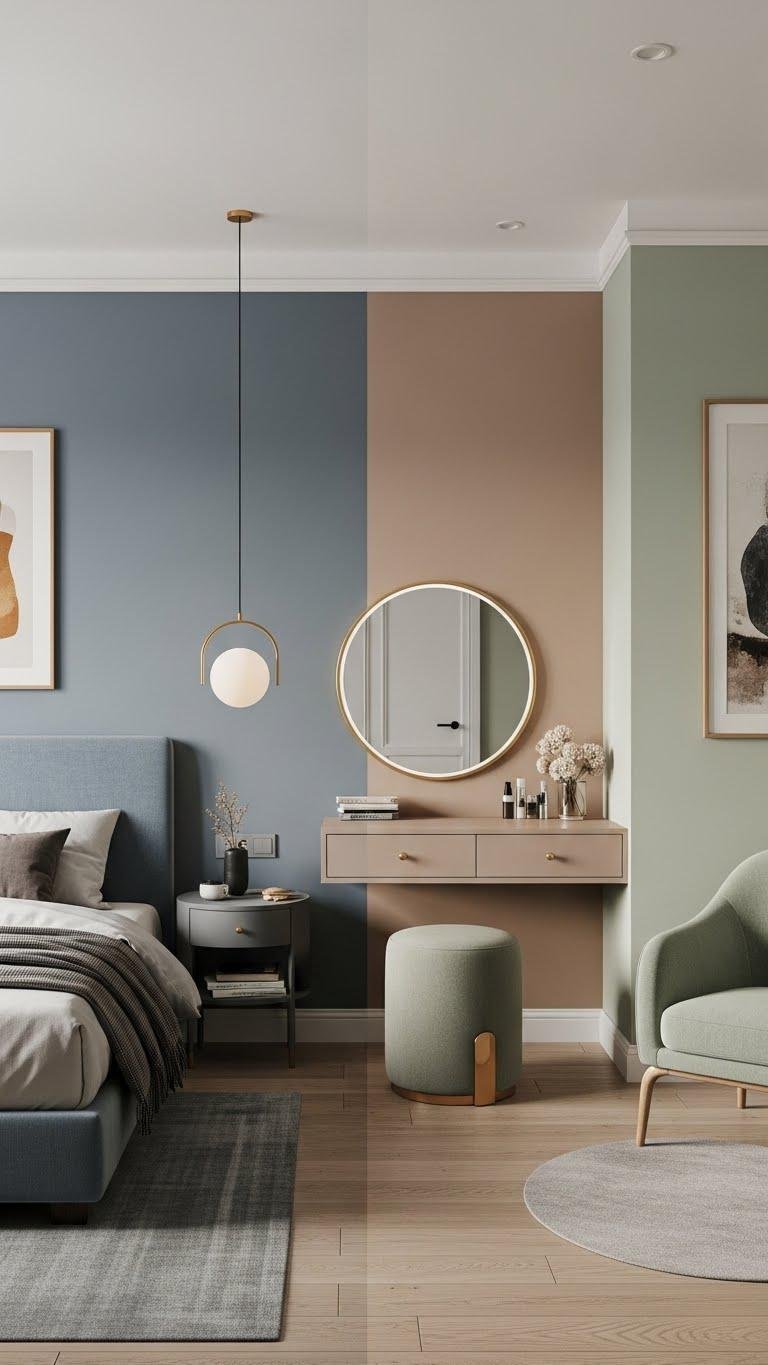
When you divide your bedroom into simple color zones—sleep, dressing, and lounging—you create calm without clutter.
You’ll use color zoning and subtle tonal separations to define each area: muted blues for rest, warm neutrals for dressing, soft greens for sitting.
Keep palettes narrow, contrasts gentle, and accents minimal so movement feels free and choices stay intentional.
Soft-Edged Storage Solutions
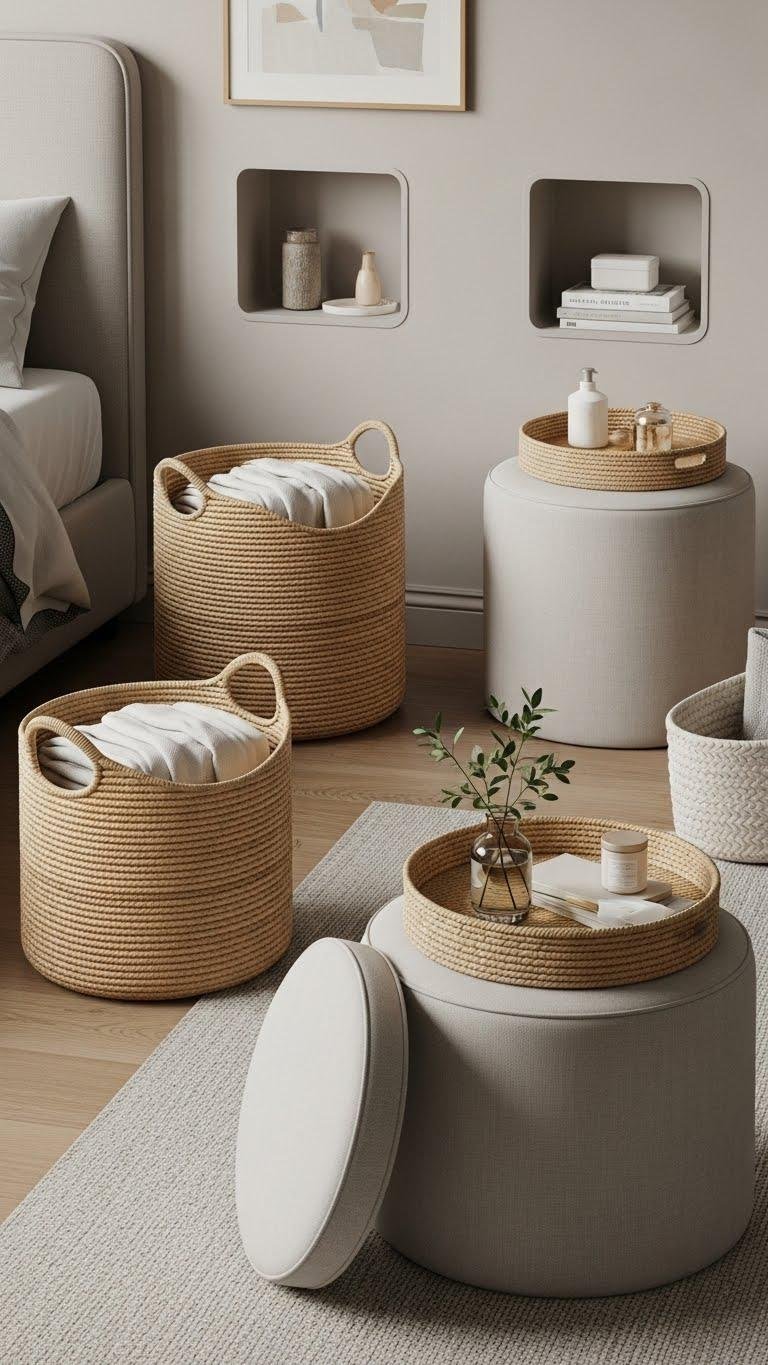
Tuck away clutter with rounded storage that feels as gentle as the room you’re designing: think low-profile chests with soft corners, woven baskets with sloped rims, and upholstered ottomans whose lids double as trays.
You’ll use rounded baskets for laundry and linens, tuck bedside items into recessed cubbies, and choose muted textures.
The result: calm surfaces, effortless access, and a freer, uncluttered bedroom.
Sleep-First Bed Styling
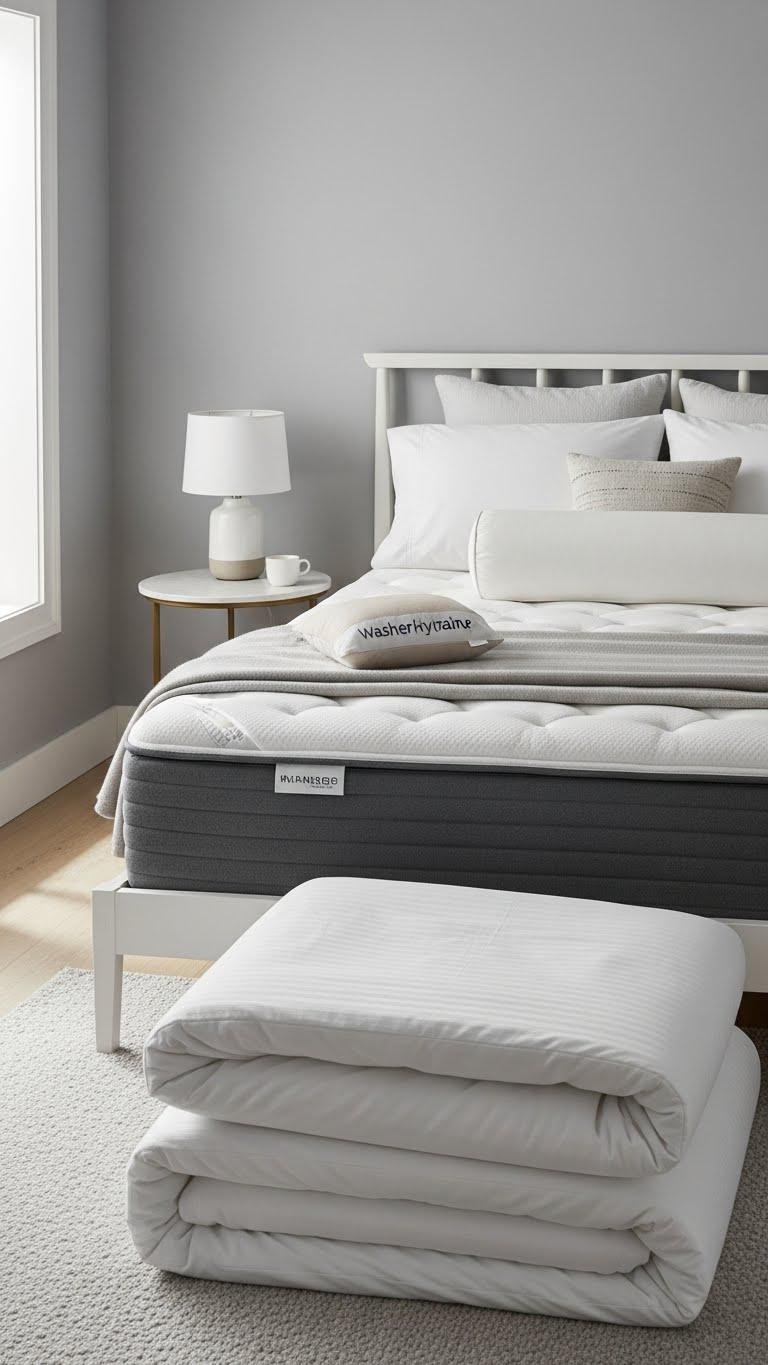
Often you’ll start by designing the bed around sleep, not looks: prioritize a supportive mattress, breathable linens, and a pillow setup that matches how you sleep.
You’ll arrange layers for comfort and clean lines, focus on mattress alignment to prevent aches, and choose washable covers to support sleep hygiene.
Keep styling minimal, functional, and freeing — a bed that invites rest, not fuss.
Quiet Sound and Scent Layers
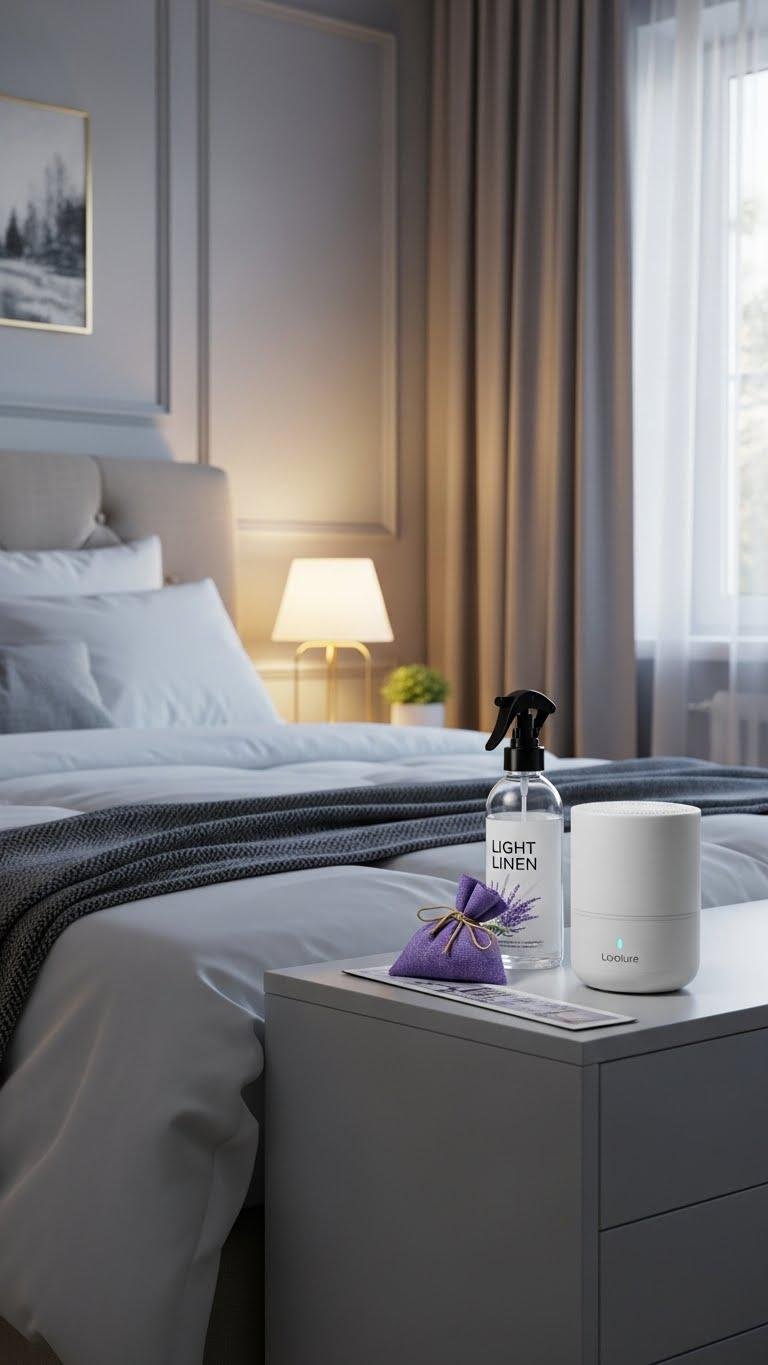
Because your bedroom should hush the day, layer quiet sound and subtle scents to cue sleep without calling attention to themselves. You’ll use a low-volume white noise source, timed to fade as you drop into rest.
Add scent layering: a light linen spray, a subtle diffuser note, maybe a lavender sachet. Keep levels minimal so freedom to drift stays yours.
Curated Personal Object Edits
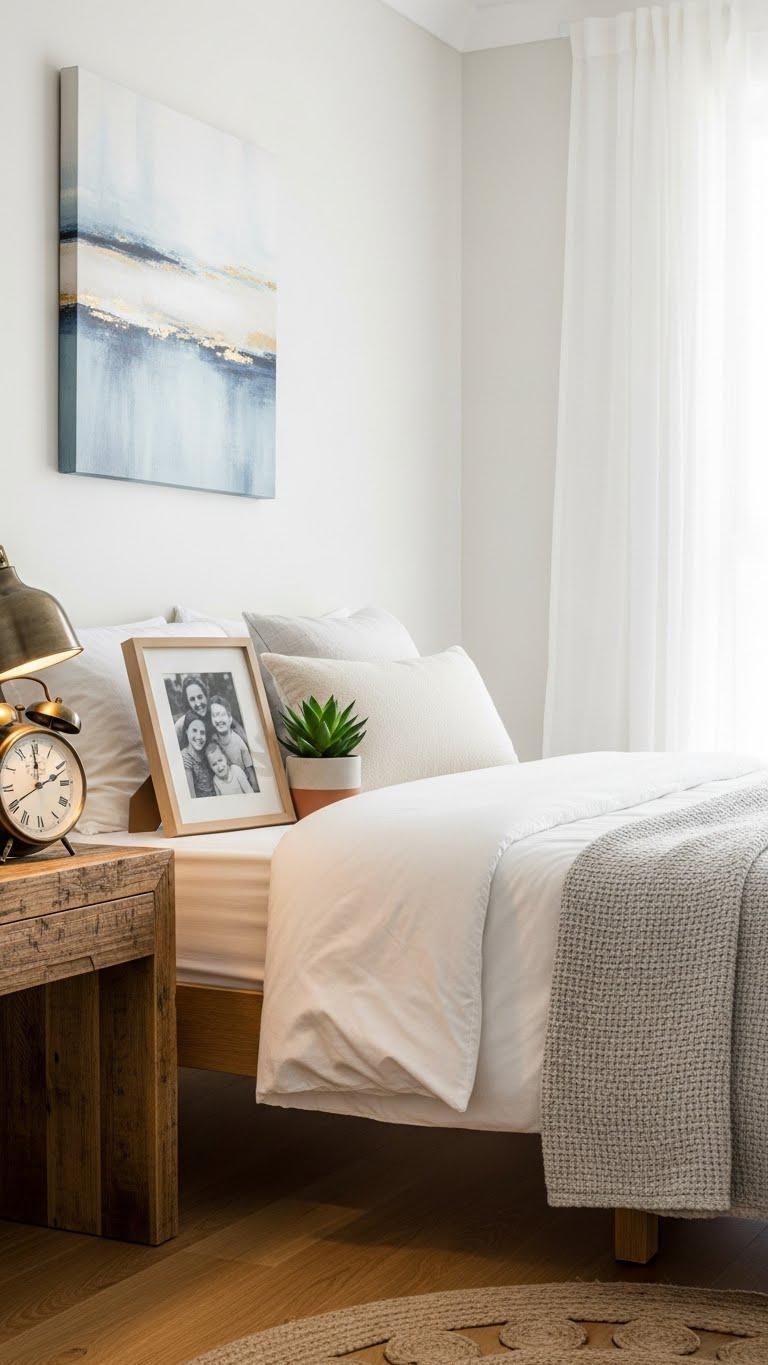
Pare down the visible clutter so each item in your bedroom earns its place and tells a story you want to live with. You’ll practice object curation: display fewer pieces, group meanings, and keep surfaces airy.
Use heirloom prioritization to decide what stays, what’s stored, and what’s gifted. The result feels lighter, intentional, and free — a calm room that reflects you.