
You’ll want a bedroom that feels like a quiet retreat, where layered neutrals and tactile materials do the calming work. Start with warm greige or a soft desaturated blue, add linen and wool bedding, matte wood and gentle metal accents, and keep artwork and clutter minimal. Thoughtful lighting and subtle scent finish the space—here are 22 practical, material-forward ideas to help you build that cocooned, breathable calm.
Embrace Warm-Neutral Paints for a Cocooning Feel
Paragraphs
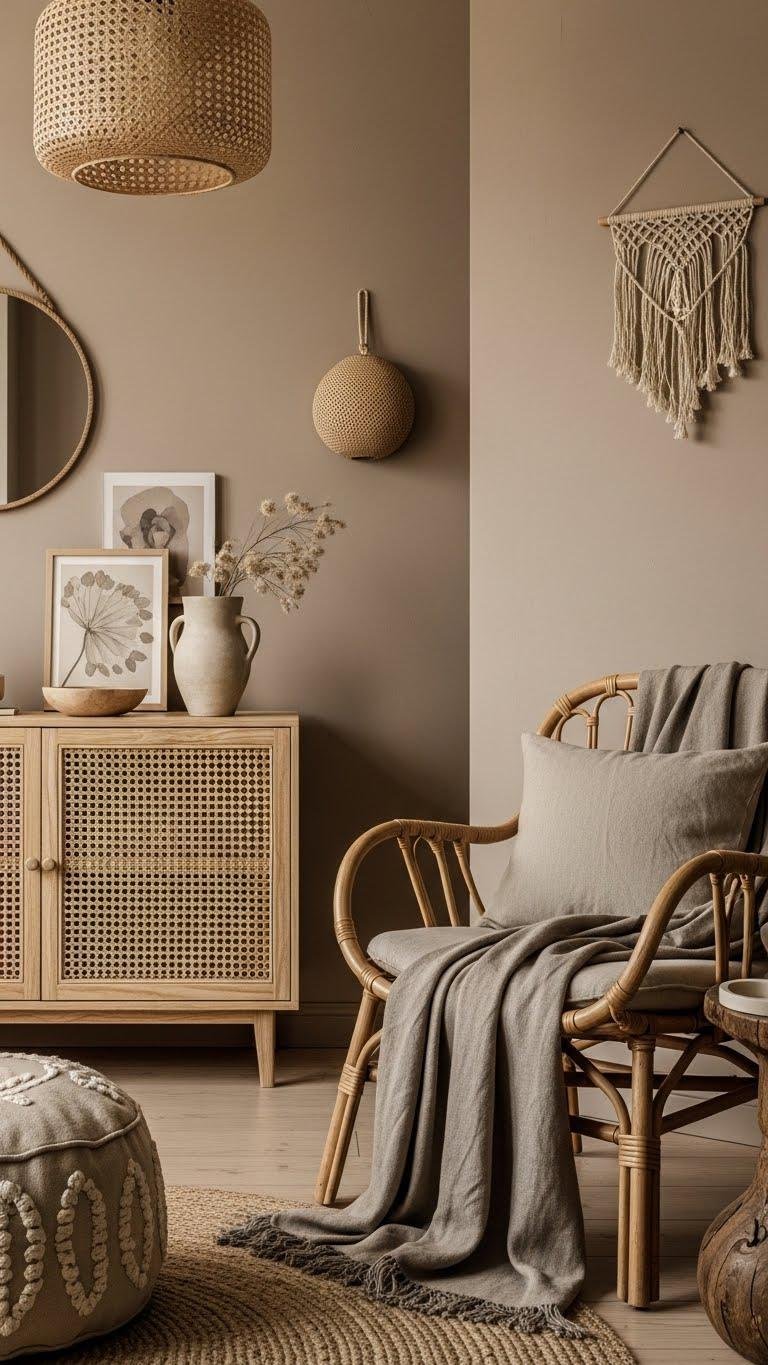
When you choose warm-neutral paints—think greige, soft taupe, or creamy mushroom—you anchor the room in a cocooning base that flatters wood tones and natural textiles.
You’ll lean into earthy plaster and cozy plasteration finishes, pairing soft taupes with warm greys to deepen texture.
Light grazes surfaces, revealing linen, rattan, and plaster warmth that invites calm and effortless freedom.
Layer Muted Greens as Modern Neutral Backdrops
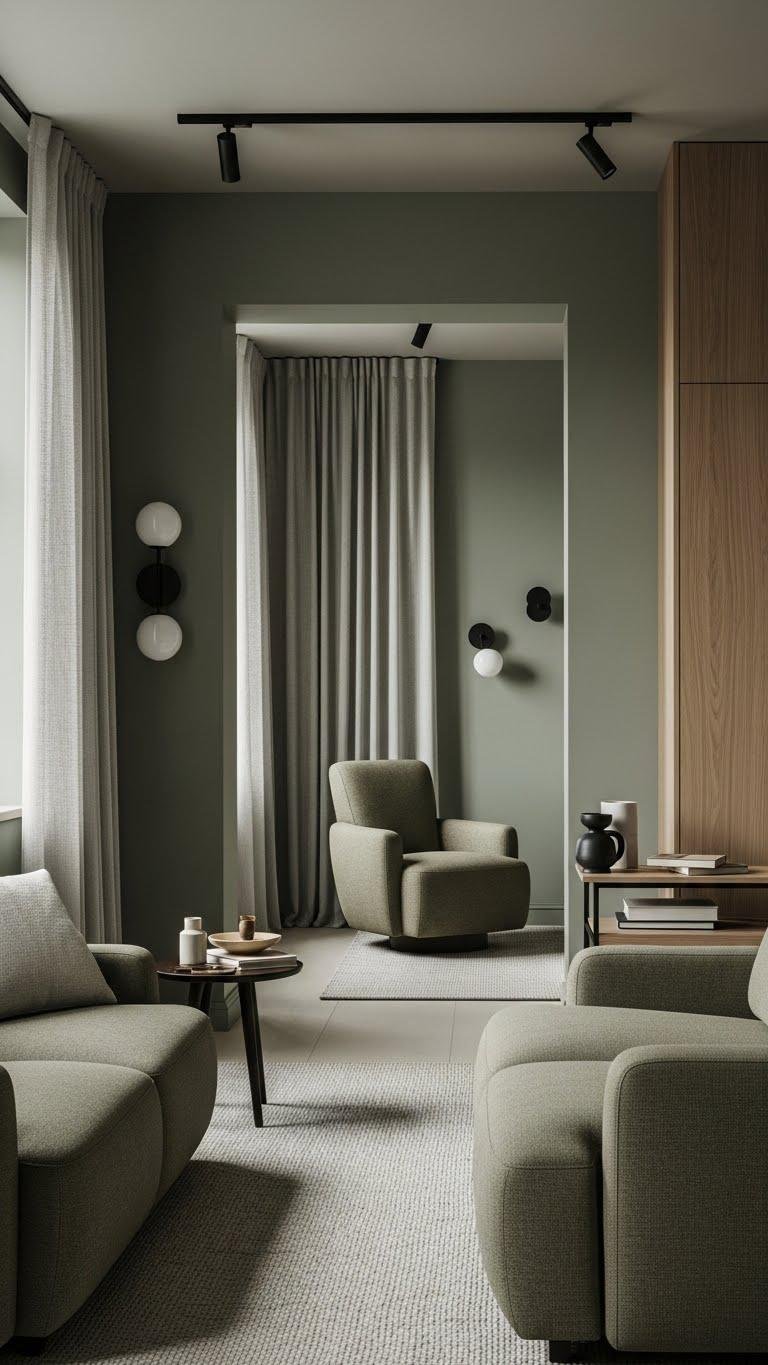
Layer muted greens—sage, olive-gray, and dusty pistachio—to create a modern neutral backdrop that reads calm and considered.
You’ll balance muted sage walls with olive taupe upholstery, add linen drapes and a wool rug for tactile depth. Keep finishes matte, wood warm, metals brushed.
The result feels free and intentional: a grounded, airy canvas that lets light and personal objects quietly breathe.
Choose Soft Desaturated Blues for Sleep-Friendly Walls
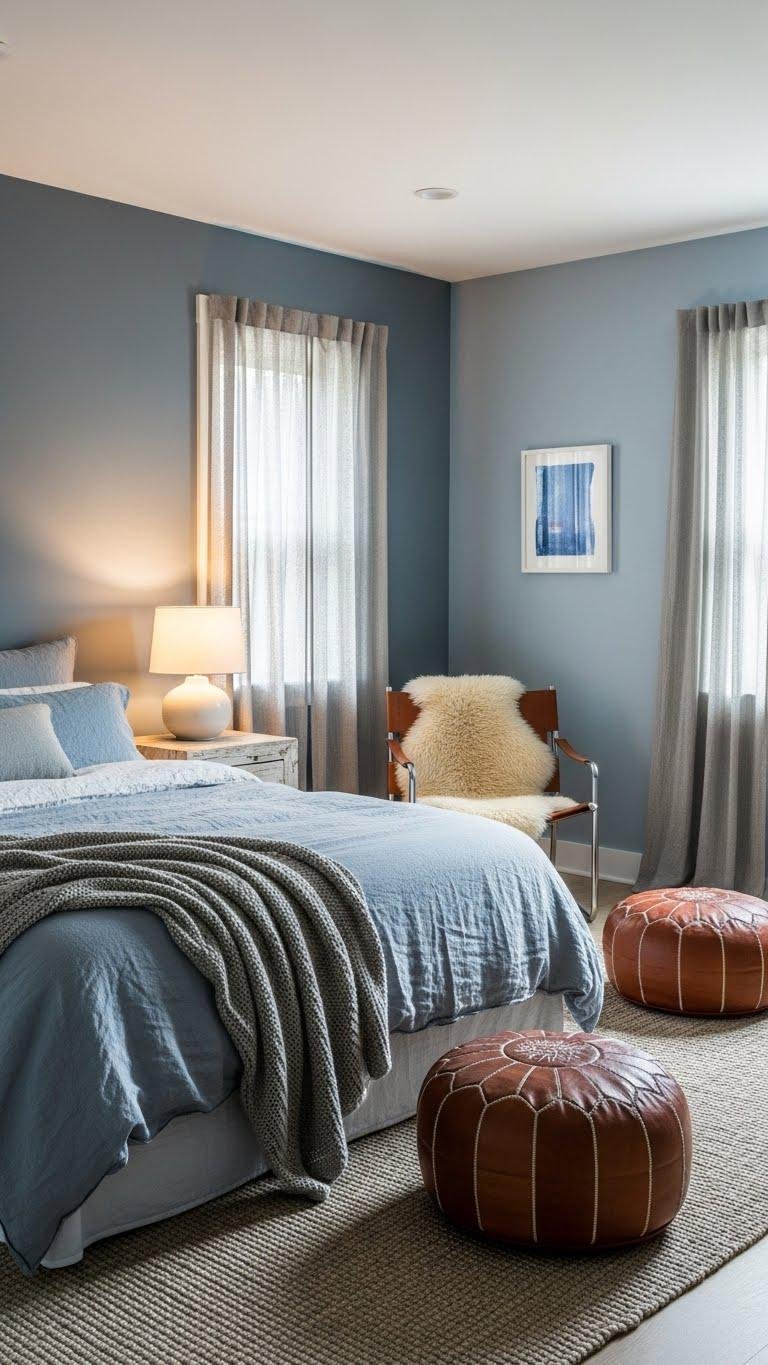
Choosing soft desaturated blues calms the room and nudges your body toward sleep: think slate, powder, and misty denim that read more like breathable fabric than bold color.
You’ll favor cool gray blues and washed denim muted tones on walls, pairing tactile linens, raw wood, and leather for contrast.
The palette feels open, unrushed, and easy to live in, inviting restful freedom.
Opt for Matte or Eggshell Finishes to Soften Light
Build Bedding Layers With Natural Fabrics

Start with breathable, natural fabrics—linen sheets, a cotton duvet, and a wool or cotton blanket—and arrange them so each texture shows.
You’ll choose organic fibers for a clean, honest feel, keeping colors muted.
Layer by weight for seasonal layering: lightweight top sheet, midweight duvet, heavier throw.
Rotate pieces with the seasons, letting simplicity and materiality guide a free, calm bedroom rhythm.
Mix Three or More Textile Textures for Depth

Once you’ve layered by weight, bring in varied textures to give the bed real depth. Mix hand stitched linens with crisp percale, a soft linen duvet, and a low-pile wool blanket so each layer reads differently.
Add a suede pouf nearby for tactile contrast and a small leather or woven cushion to punctuate the palette—simple, tactile, liberating.
Add a Chunky Knit Throw for Visual and Thermal Comfort
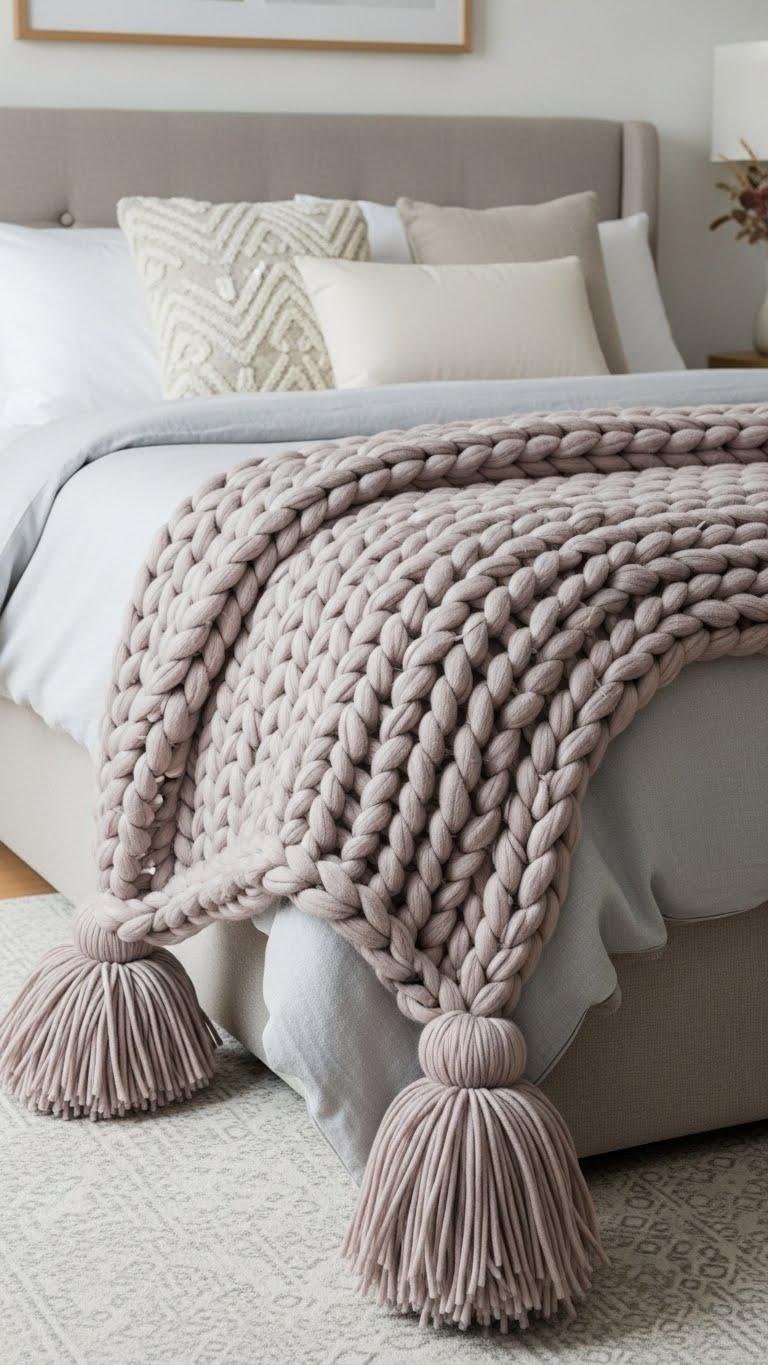
Drape a chunky knit throw across the foot of the bed to add instant visual weight and cozy warmth; its oversized stitches read from across the room, breaking up smoother surfaces and inviting touch.
You’ll choose an heirloom cableknit in a soft neutral, its tactile loops grounding the space. An oversized pompom or tasseled corner adds playful freedom while boosting thermal comfort and layered interest.
Use Tonal Bedding Palettes to Maintain Calm

After you layer a chunky knit throw at the foot of the bed, keep the rest of the bedding in a tonal palette so the textures can really sing.
You’ll choose linen, cotton and brushed voile in layered neutrals, mixing matte and slub weaves for depth. This keeps visual noise low, lets materials breathe, and creates seamless contrasts that feel liberating and restful.
Install Layered Lighting for Ambiance Control
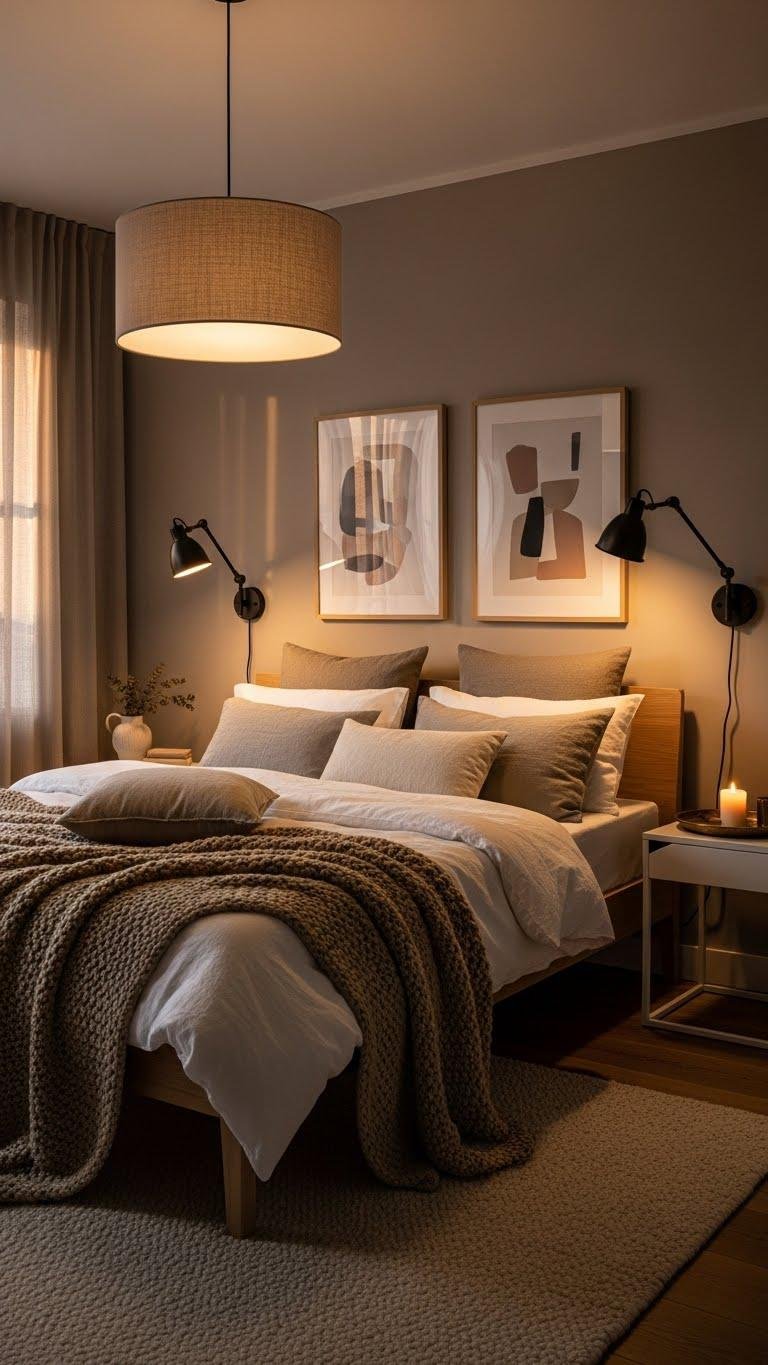
When you layer lighting—ambient, task, and accent—you give the room instant control over mood and function. Use a dimmable pendant over the bed for broad, soft wash; add accent sconces to frame artwork or a reading nook.
Mix matte metals, linen shades, and warm textures so light sculpts surfaces. You’ll create a calm, flexible space that feels open and deliberate.
Select Warm 2700K–3000K Bulbs and Dimmer Switches
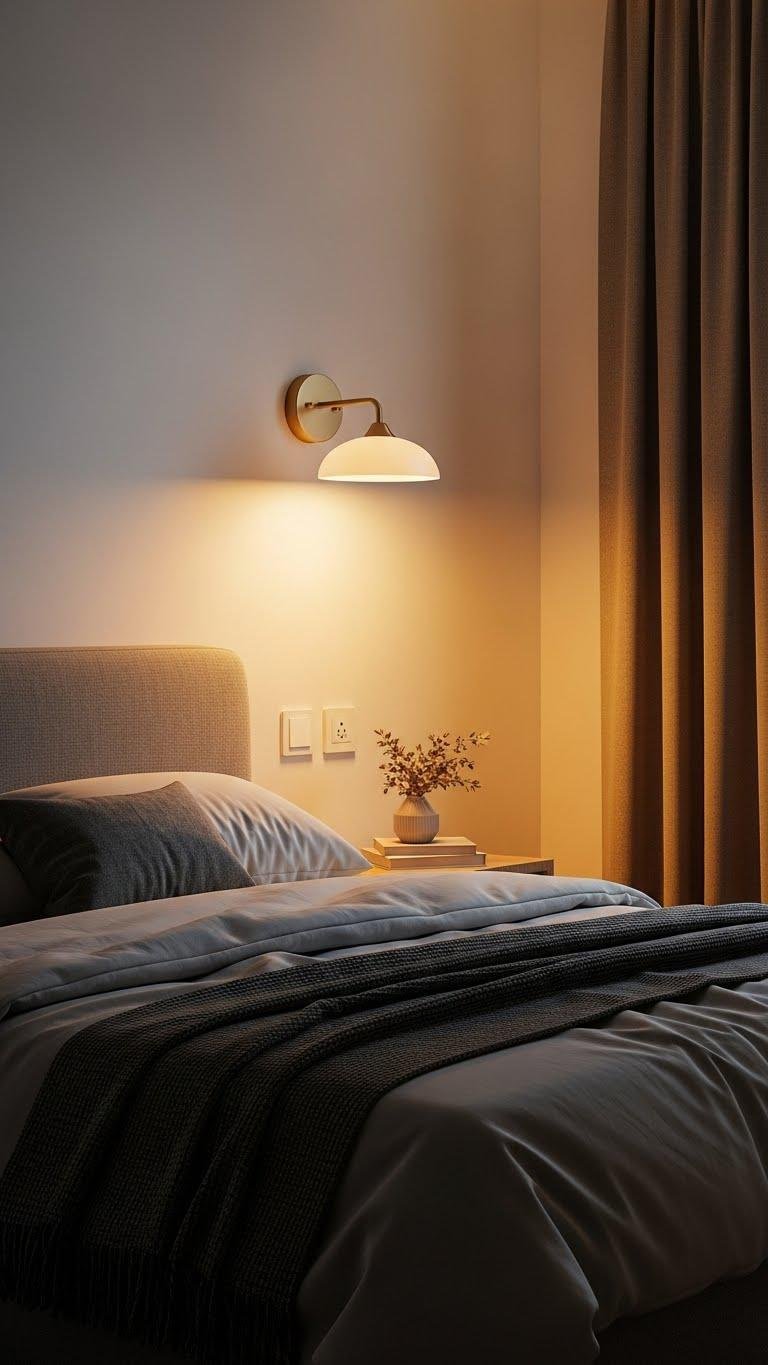
Though cooler bulbs can feel crisp, choosing warm 2700K–3000K LEDs gives your neutral bedroom a soft, golden glow that flatters linen, wood, and matte metals while keeping contrast gentle.
Pair them with smart dimmers to tune mood and save energy. Choose fixtures supporting tunable white so you can shift cooler for mornings, warmer for evenings, keeping your space calm and free.
Include Task Lamps for Cozy Reading Nooks
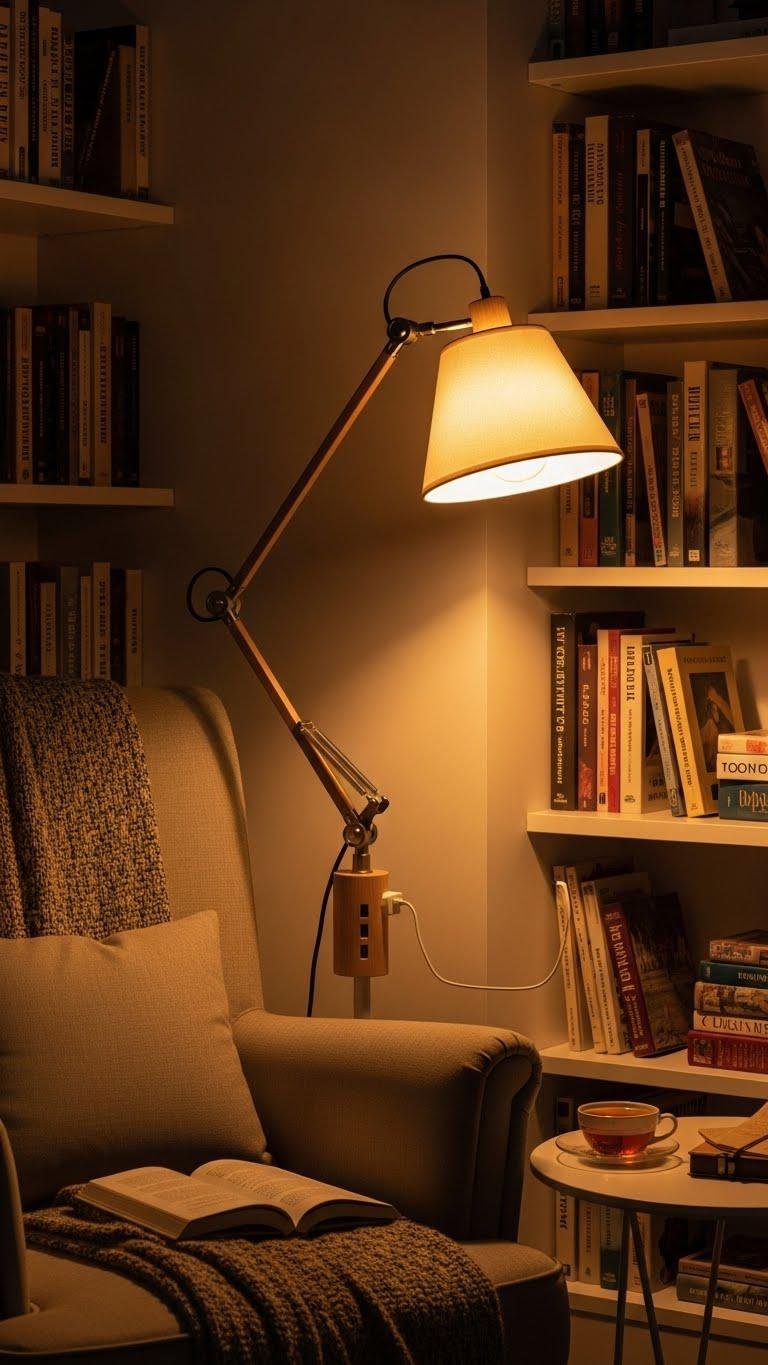
Warm ambient light sets the mood, but task lamps give you the focused beam a reading nook needs.
Choose an adjustable swing arm for precise positioning, a dimmable LED for mood control, and a fabric shaded design to soften glare. Pick finishes that feel natural and durable, and prefer models with integrated USB so you can charge devices without leaving your calm corner.
Favor Low-Profile Beds and Streamlined Furniture
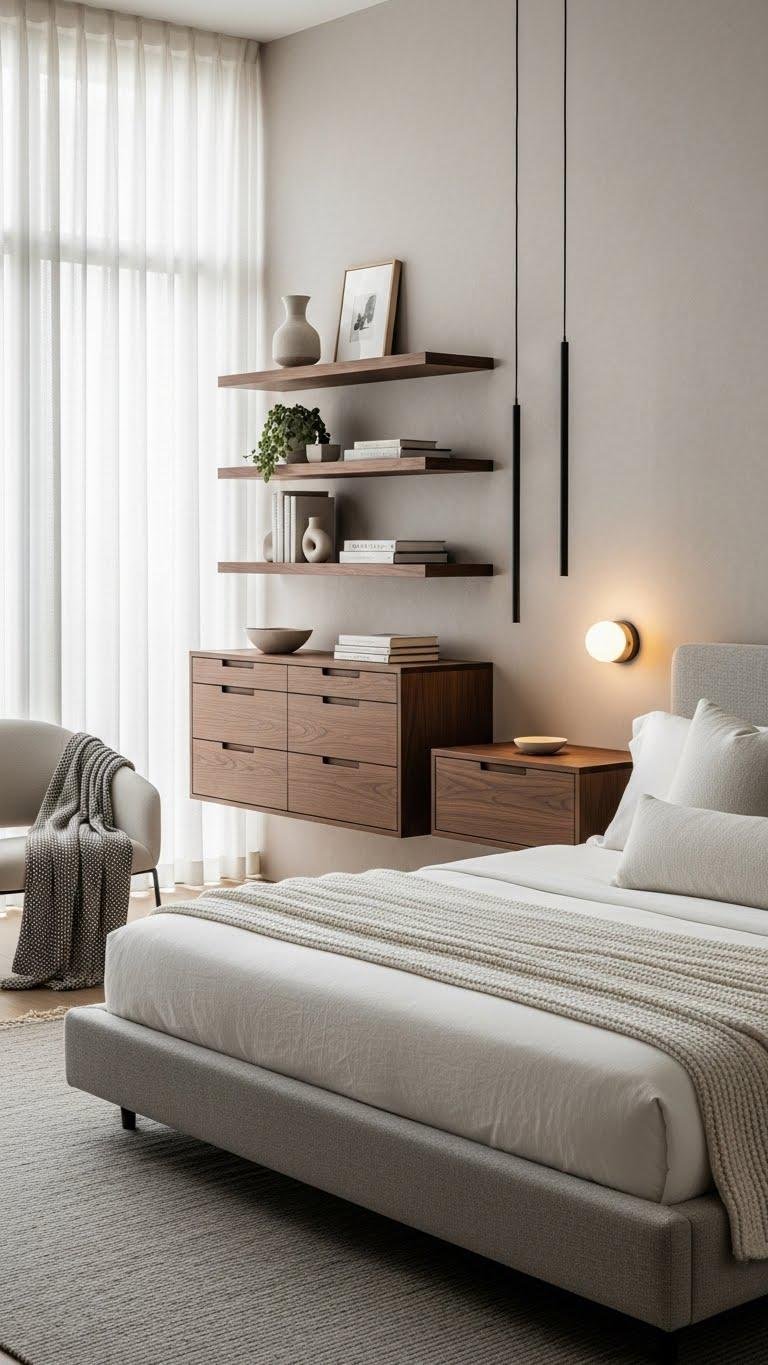
If you want a serene, grounded bedroom, choose a low-profile bed and streamlined furniture that keep sightlines clean and the room feeling larger.
Opt for low profile lighting—flush sconces or slim pendants—and streamlined storage like floating drawers and open shelves. You’ll enjoy uncluttered surfaces, breathable space, tactile fabrics, and furniture that lets you move freely without visual weight.
Incorporate Warm Wood Tones for Organic Warmth
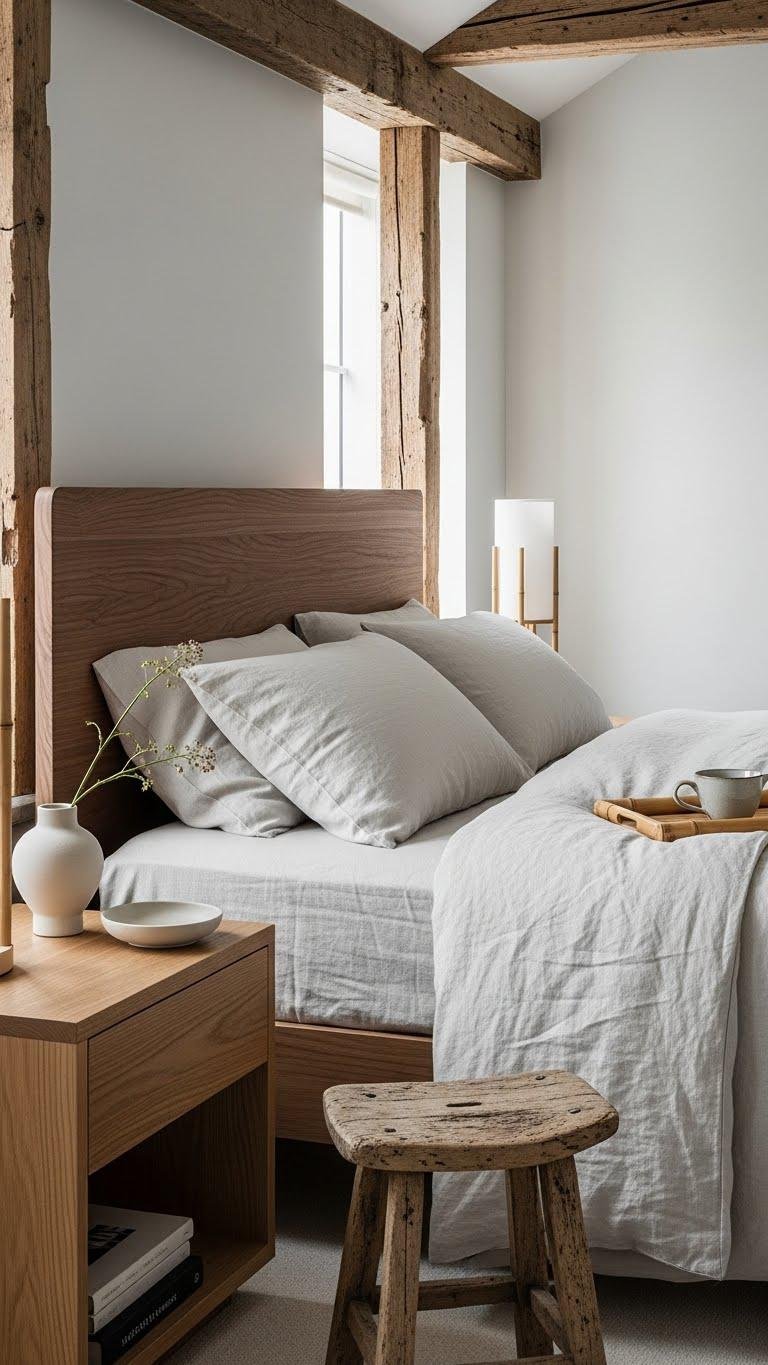
A walnut headboard or oak bedside table can instantly soften a neutral scheme, bringing organic warmth without competing with your palette.
Choose reclaimed timber for character and history, pairing it with pale linens and matte ceramics. Add slim bamboo accents — a lamp base or tray — to introduce lighter grain and movement.
You’ll create a calm, liberated room rooted in honest materials.
Maximize Functional Storage to Reduce Clutter

With clever built-ins and smart furniture choices, you’ll keep surfaces clean and the room feeling airy. Use under bed drawers for linens and seasonal gear, choosing muted woods or woven fronts to stay calm.
Add vertical shelving to draw the eye up, display curated objects, and free floor space. Pick multipurpose benches and tucked baskets to preserve that relaxed, unencumbered vibe.
Layer Rugs to Define Zones and Soften Floors

By layering rugs you’ll carve the room into purposeful pockets while adding tactile warmth underfoot; start with a large, low-pile foundation rug in a neutral weave, then place a smaller, textured rug—sheepskin, jute, or a soft wool—under the bed or seating to signal the sleeping zone and soften footsteps.
Add a rug pad for grip and crisp area delineation; let textures guide movement.
Introduce Velvet or Woven Cushions for Tactile Richness

Layer in velvet and woven cushions to add instant tactile richness and visual depth; they’ll invite you to sink in while contrasting neatly against linen or cotton bedding.
Choose a velvet lumbar for plush, elegant support and pair woven bolsters for organic texture. Mix muted tones and subtle patterns, rotating pieces seasonally so your sanctuary stays fresh, tactile, and effortlessly free.
Choose Matte or Textured Wall Finishes for Soft Reflections
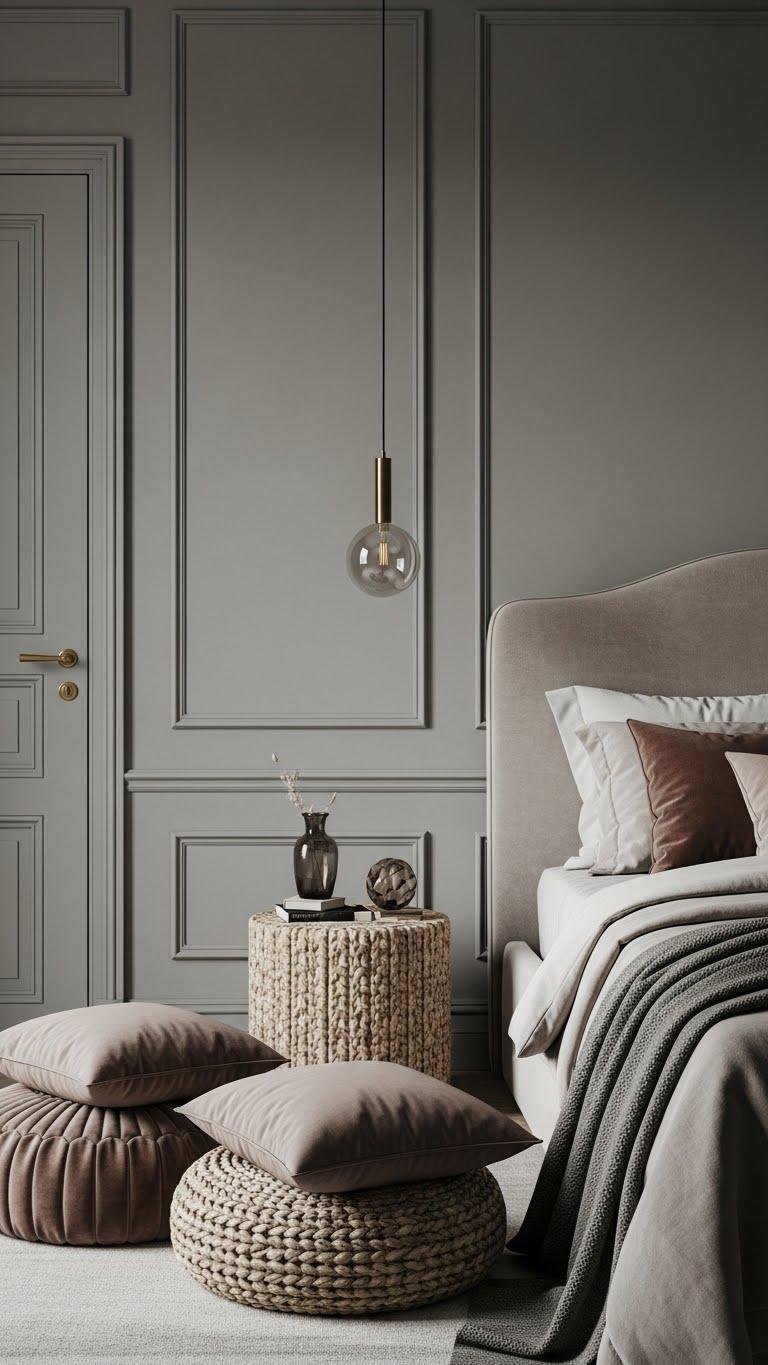
Add Live Plants and Botanical Accents in Muted Tones

Use Warm Metal Finishes for Subtle Luster
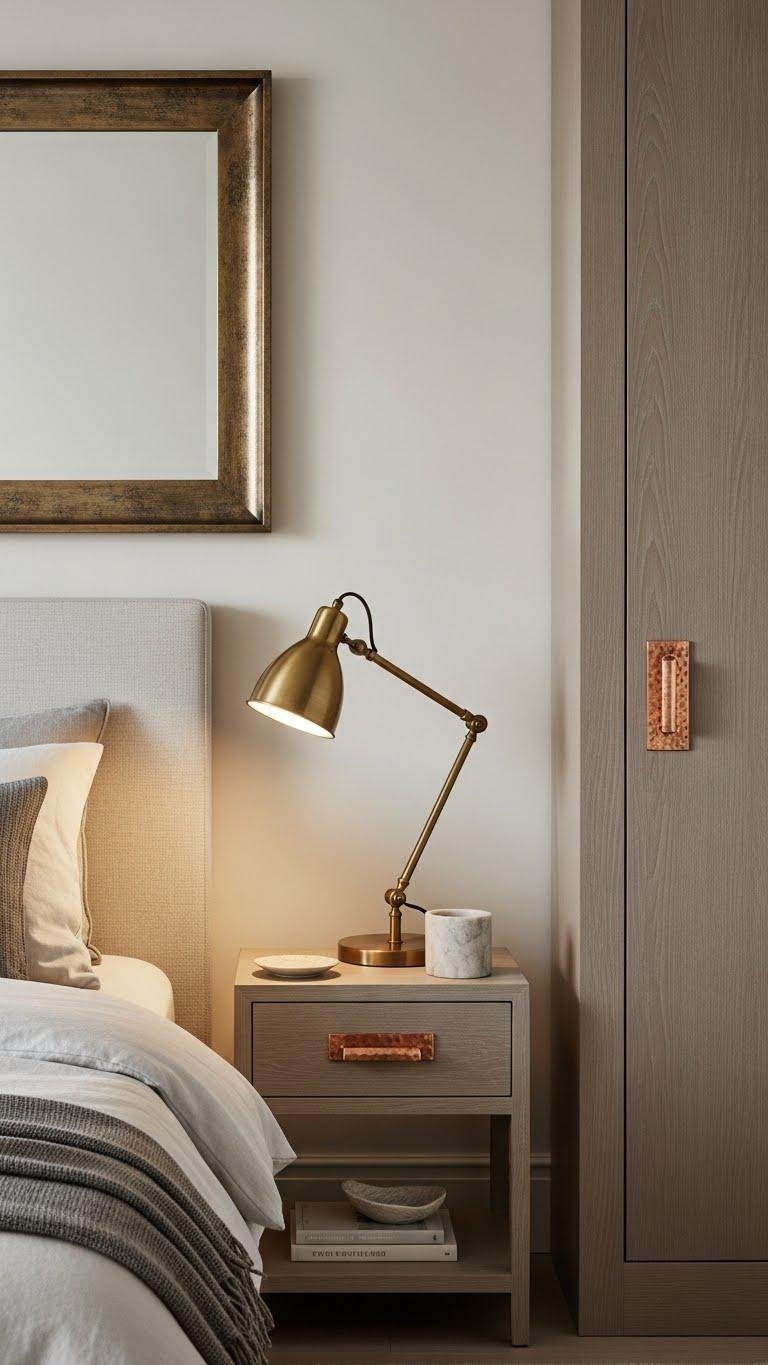
Warmed by soft lighting, brushed brass and aged bronze bring a quiet glow that lifts neutral palettes without stealing the show.
You’ll add thin metal bedside lamps, a brushed brass mirror frame, and hammered copper hardware to introduce texture and warmth. Keep finishes matte or lightly patinated so they whisper, not shout, blending with linen, wood, and stone for a liberated, uncluttered sanctuary.
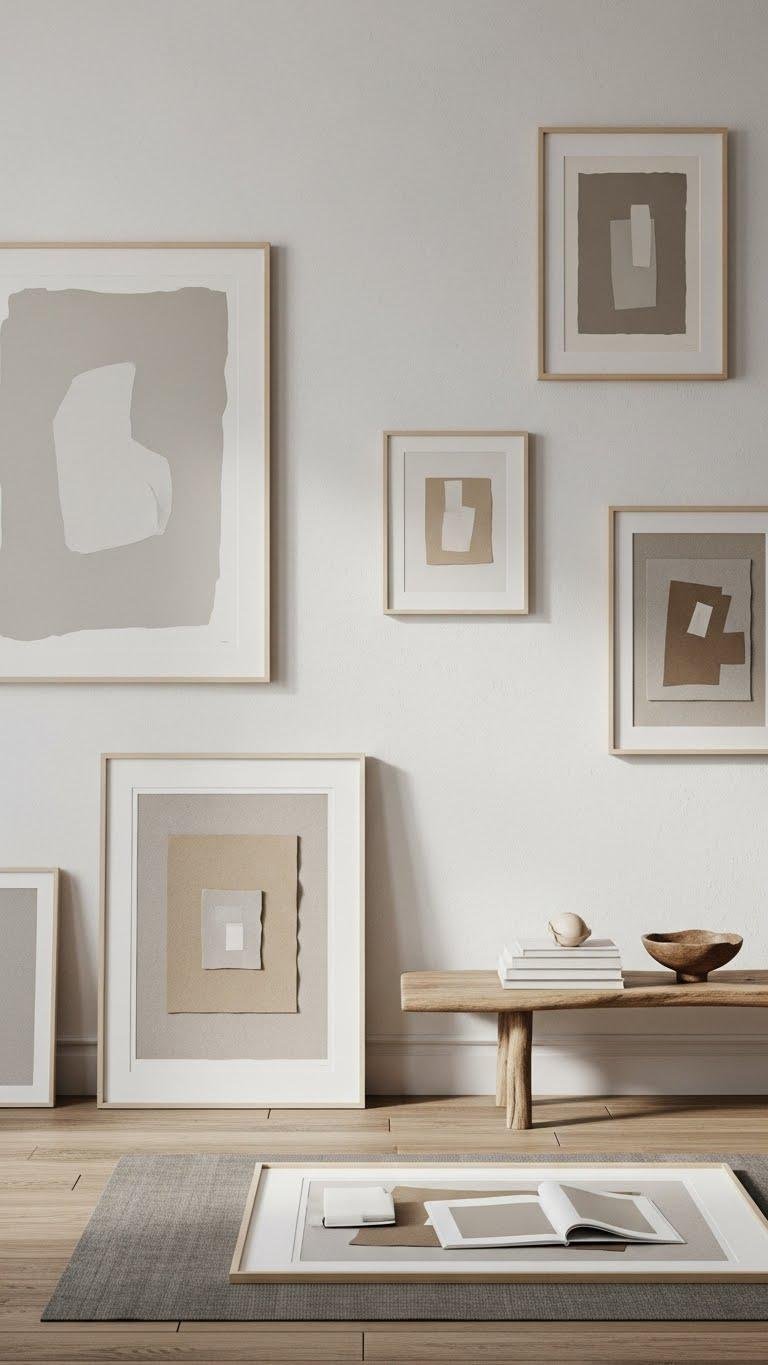
Keep Artwork Minimal and Tonal to Reduce Visual Noise
Integrate Soft Scents and Ambient Sound for Relaxation
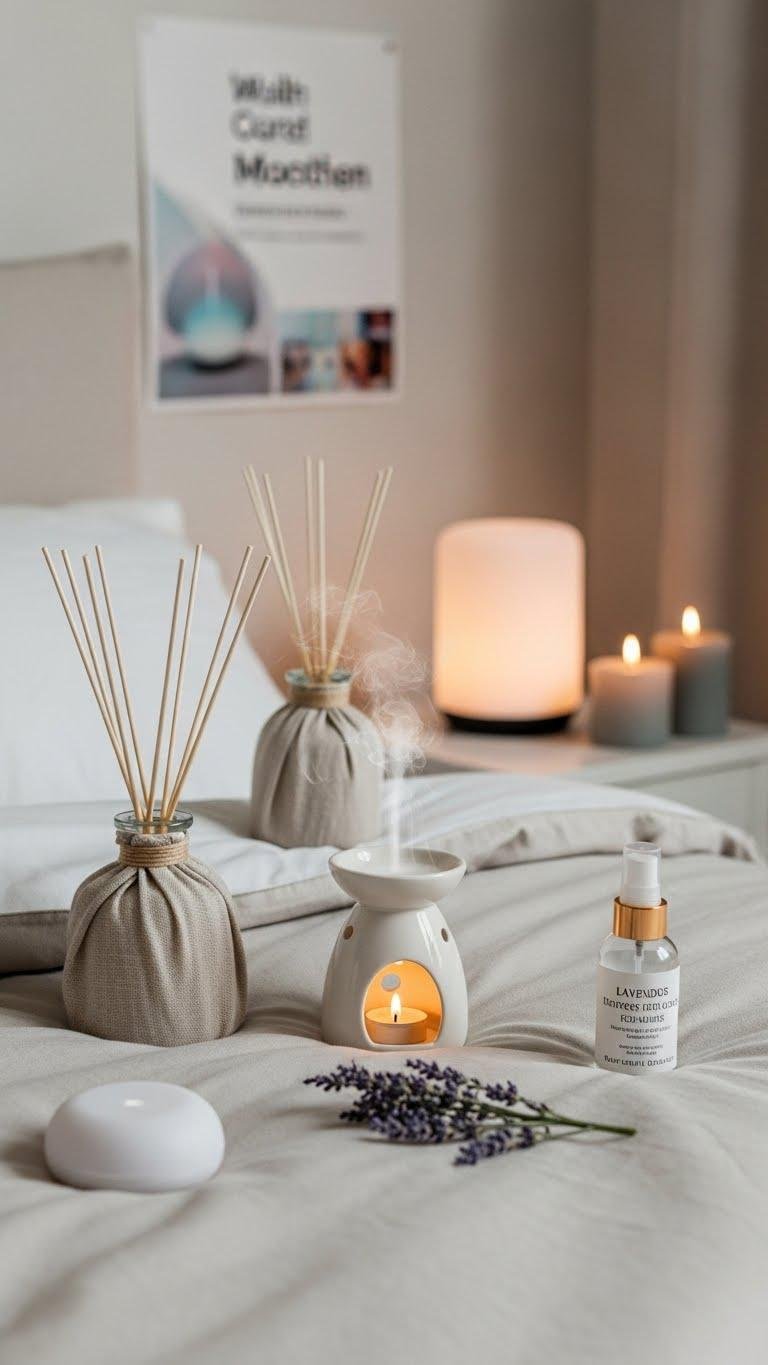
When you bring in subtle scents and gentle soundscapes, your bedroom becomes a layered sensory retreat that complements the neutral palette; think linen-wrapped reed diffusers, a small ceramic oil burner, or a spritz of lavender on the duvet to echo soft textures.
Choose low-profile aromatherapy diffusers and mute-tone candles, pair with curated ambient playlists, and let scent and sound quietly define your calm.
Coordinate Hardware and Finishes for a Unified Look
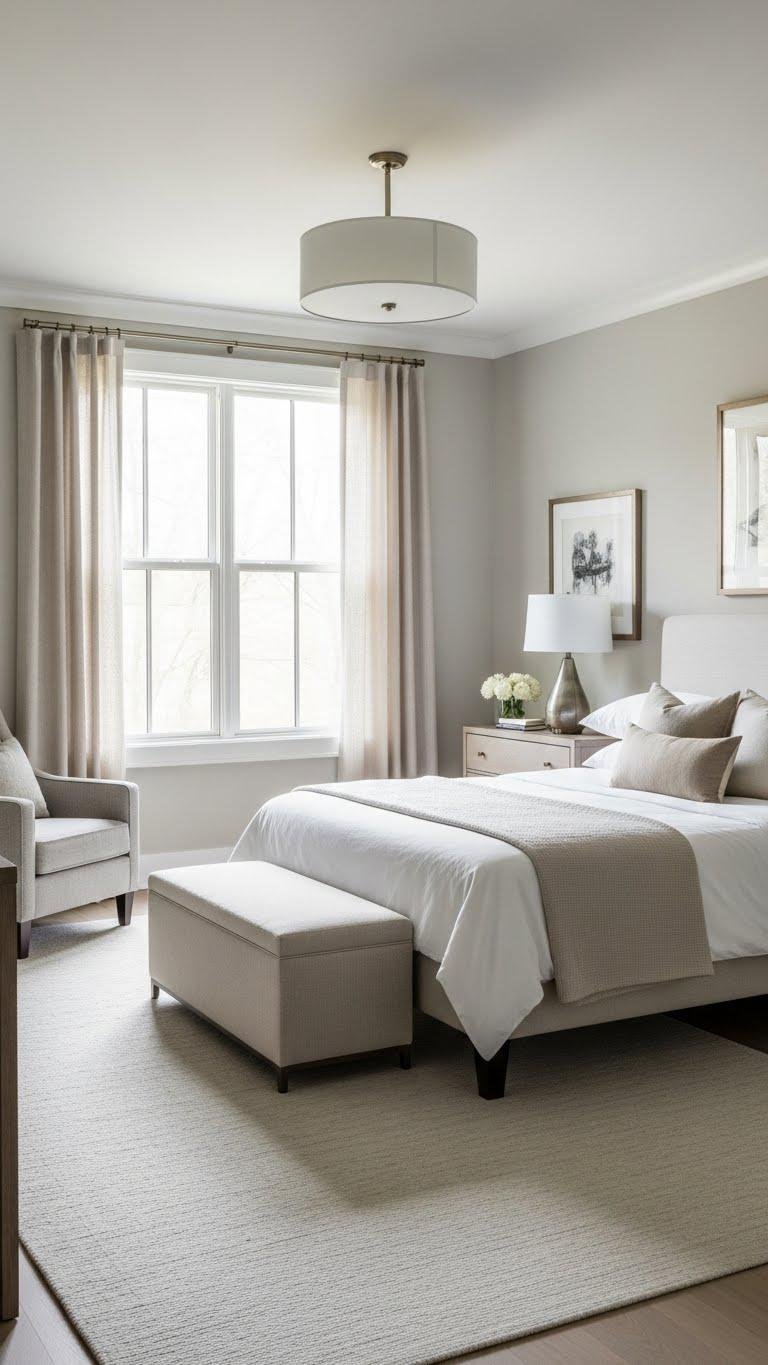
If you want your neutral bedroom to read as intentional rather than accidental, align metal tones and finishes across key pieces—drawer pulls, bedside lamps, curtain rods, and switch plates—to create a quiet visual thread.
Choose a primary finish and repeat it, tuck hidden hardware where possible, and balance matte and polished surfaces. That finish continuity keeps the room calm, sculpted, and free-feeling.