
You’ll want your bedroom to feel like a quiet, intentional sanctuary—soft tones, layered textures, and gentle lighting that cue your body to wind down. These 21 practical decor tweaks prioritize comfort and low contrast—think linen, muted blues or sage, blackout curtains, and dimmable lamps—so you’ll sleep deeper and wake clearer. Start with palette and bedding, then add lighting, sound control, and a small ritual corner to finish the transformation.
Choose a Soothing Color Palette
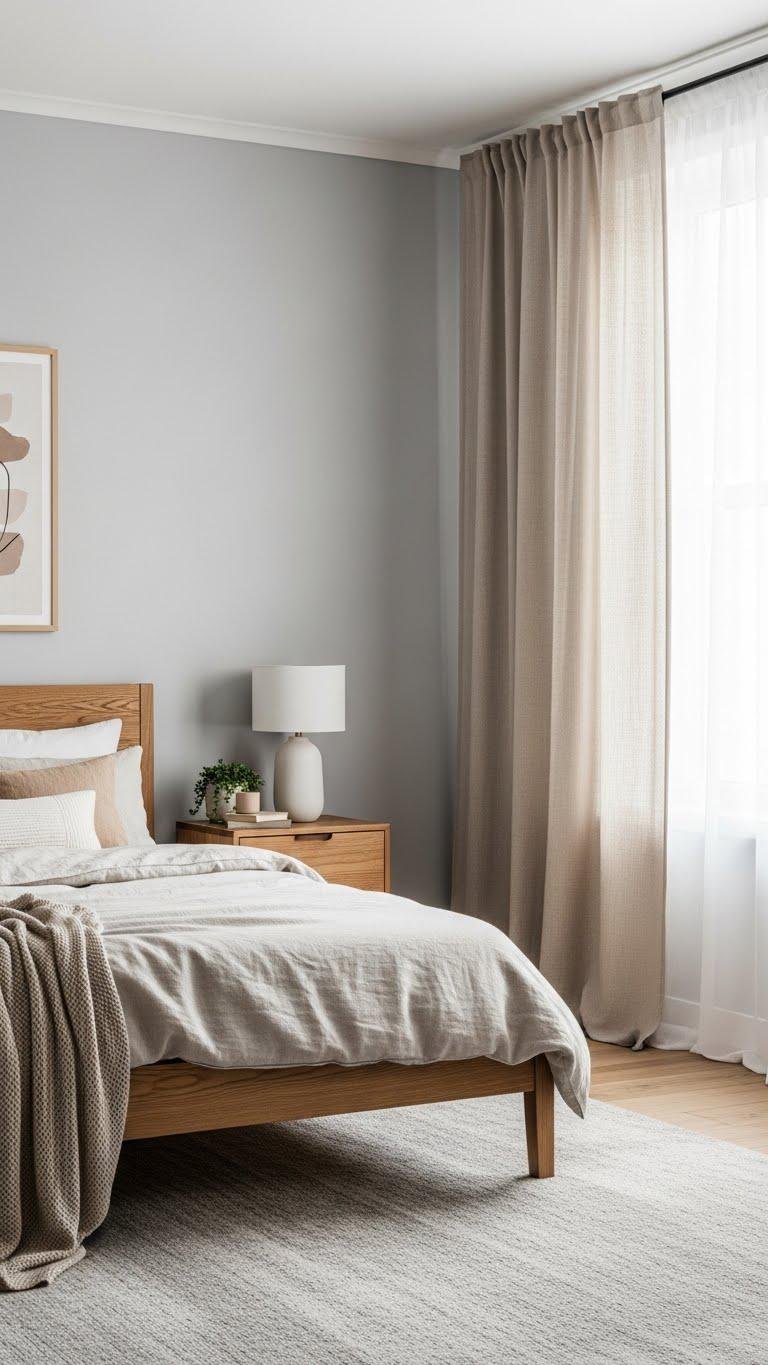
When you want your bedroom to feel calm, start with a restrained color palette that soothes rather than stimulates. Choose soft grey walls or a warm beige accent to create open, airy breathing room.
You’ll keep contrast low, use natural textures, and edit boldly. That pared-back clarity frees you to relax, move, and sleep without visual noise.
Layer Soft, Muted Bedding

Start by building your bed in soft, muted layers that invite you to sink in. Choose breathable soft linen sheets, a lightweight duvet, and toss a couple of muted velvets pillows for tactile contrast.
Keep patterns minimal, colors subdued, and textures deliberate so you can relax easily. This calm, uncluttered bedding lets you reclaim restful sleep and wake feeling free.
Install Dimmable Lighting
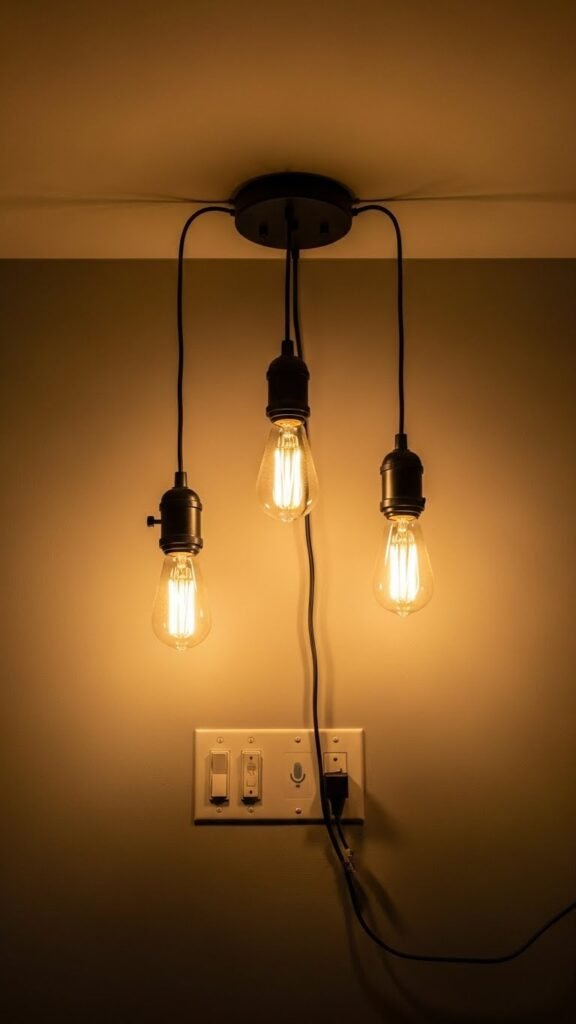
Often you’ll want to soften overhead light to match your mood, so install dimmable switches and fixtures that give you precise control from bright and functional to low and soothing.
You’ll enjoy freedom to set ambience: use dimmer switches for simple tactile control or integrate smart controls for schedules and voice commands. Keep wiring neat and choose warm, flicker-free bulbs.
Use Table Lamps Instead of Overhead Lights
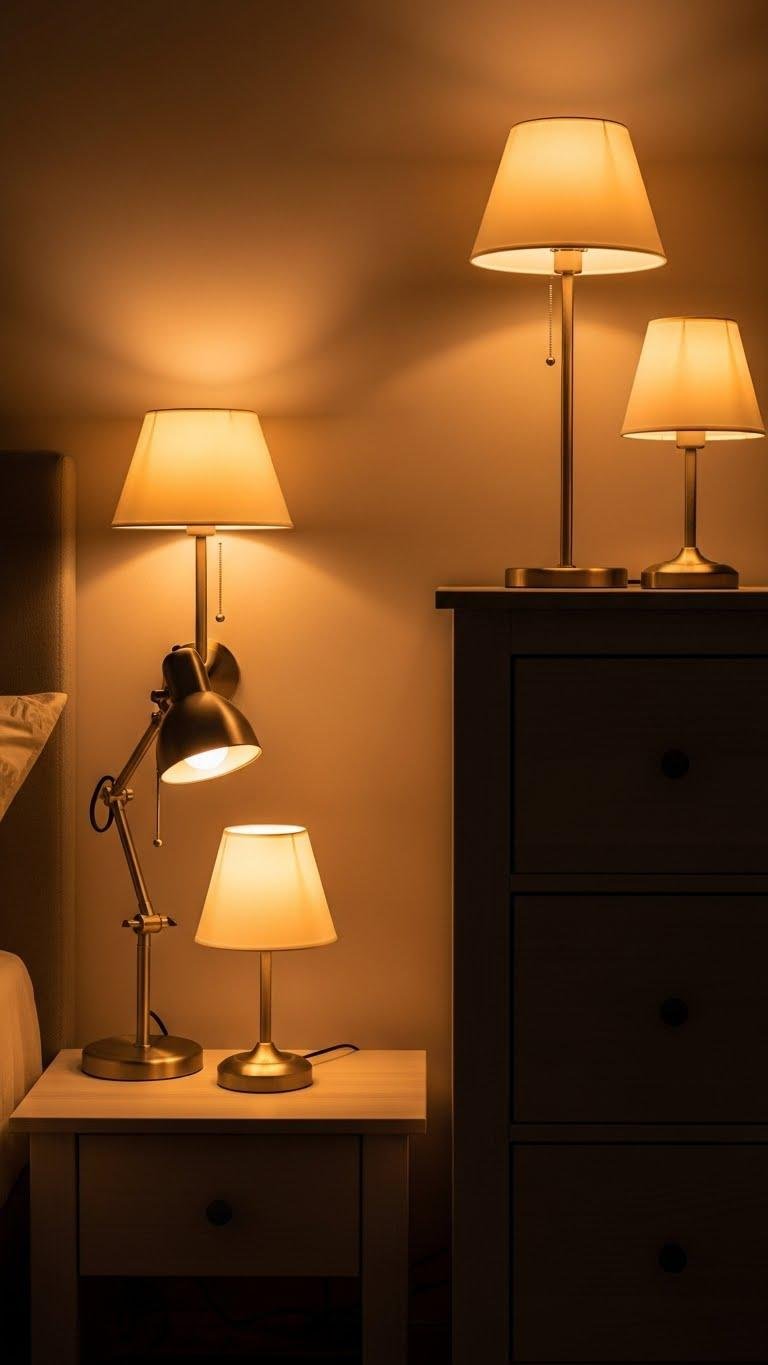
Frequently, swapping harsh overhead lights for table lamps transforms a bedroom into a calmer, more intimate space—place lamps on bedside tables or a dresser to create pools of warm light that you can layer, dim, or direct for reading without washing out the room.
Choose low watt bulbs and fabric shades, add a directional tasklamp for tasks, and use matching lampsets to keep the look free and cohesive.
Maximize Natural Light by Day
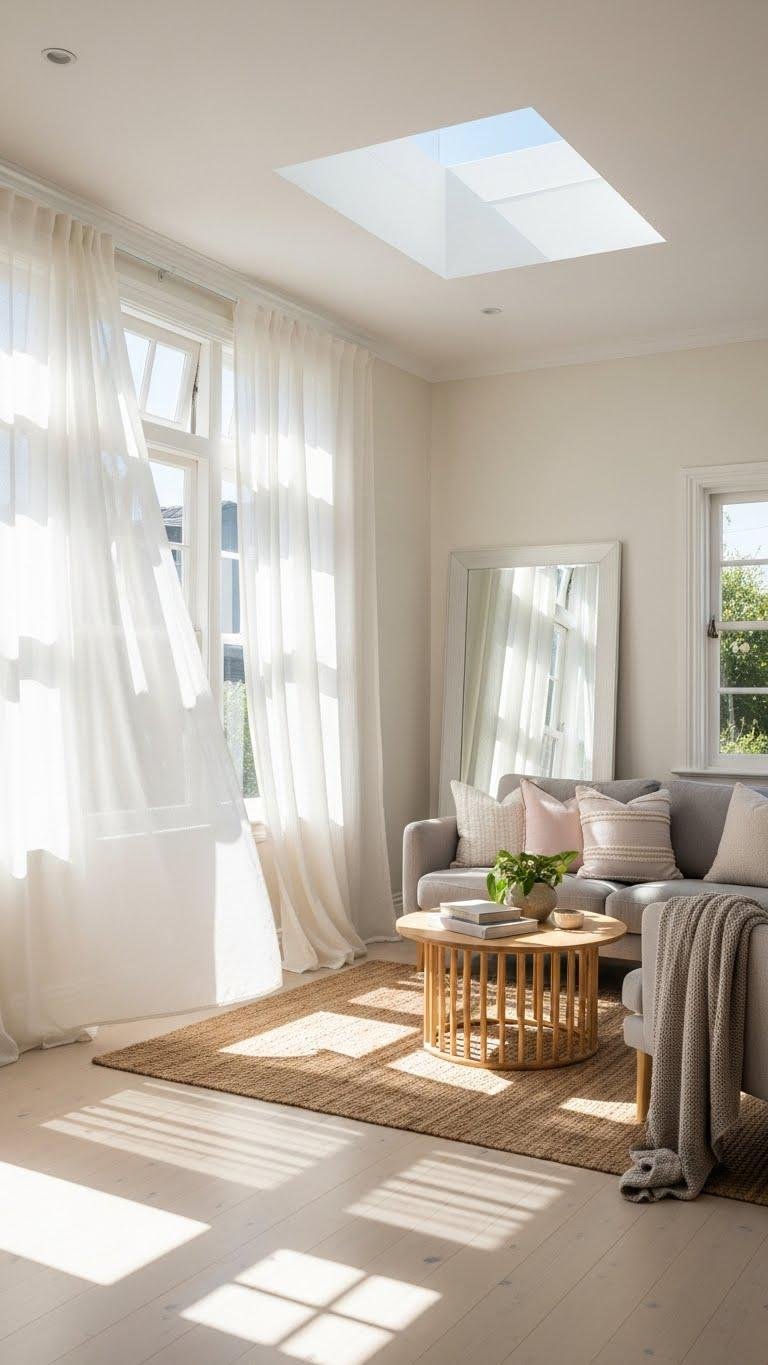
When you pull back heavy drapes and let sunlight flood the room, the space instantly feels larger, calmer, and more inviting—so choose lightweight, sheer curtains or roll-up shades that diffuse glare while keeping privacy.
Open windows each morning, position mirrors to bounce light, consider skylight installation for top-down brightness, and upgrade window glazing to improve insulation so daylight feels liberating without sacrificing comfort.
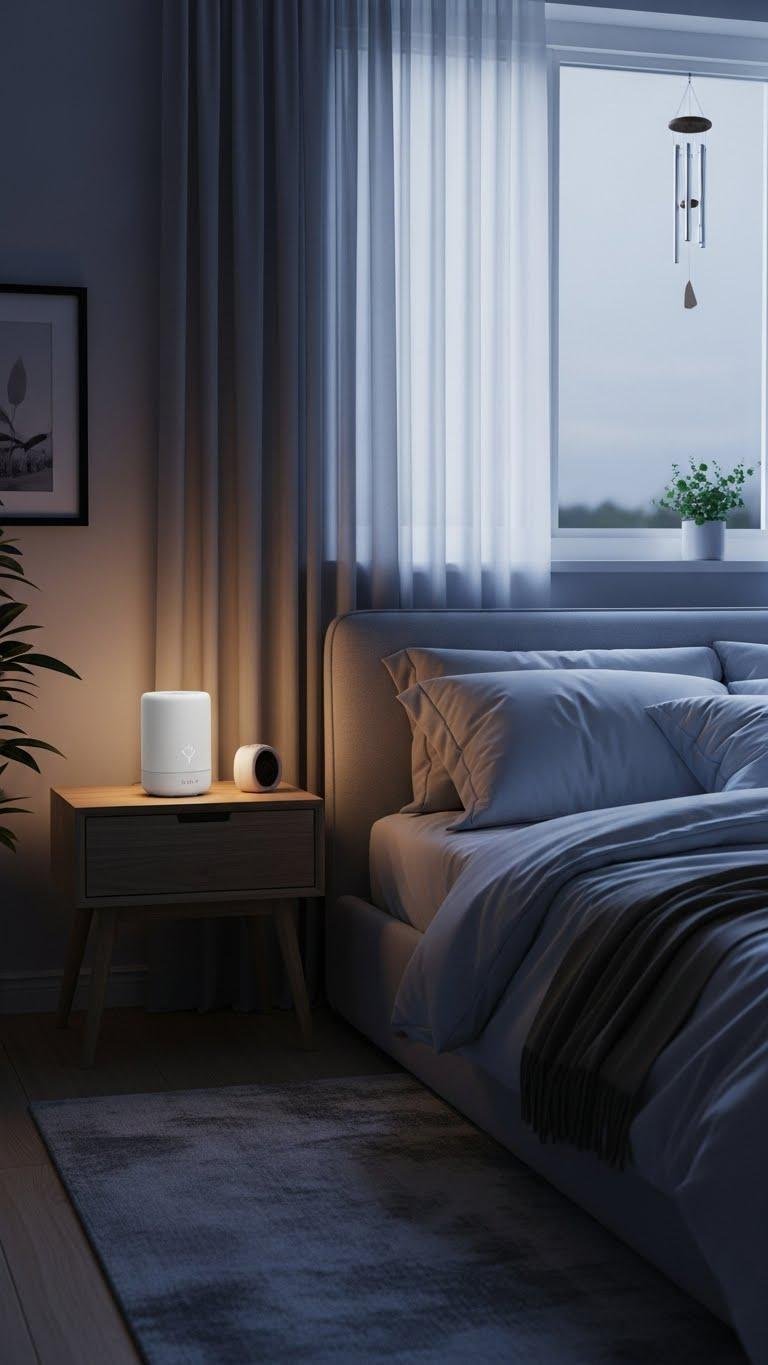
Add a Gentle White Noise Source
Paragraphs
Introduce Indoor Plants for Tranquility
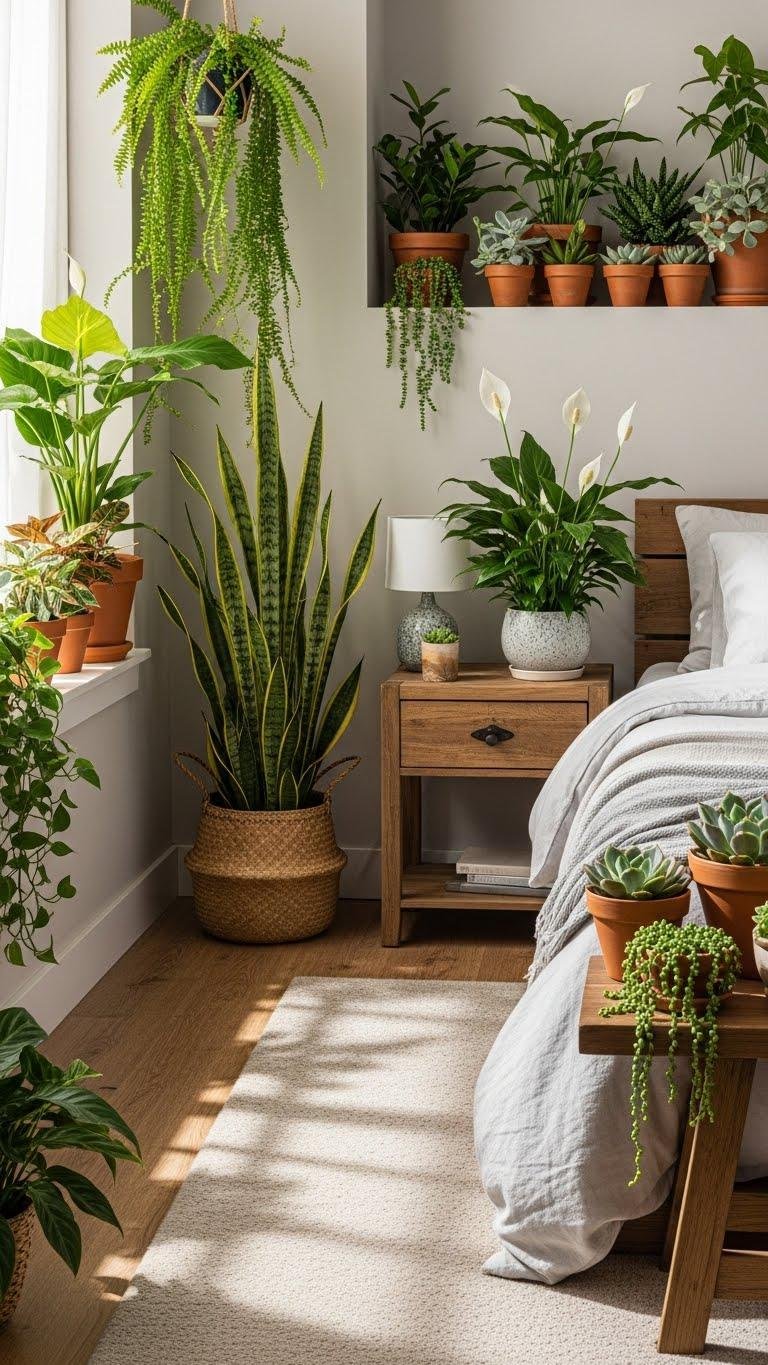
A few well-chosen plants can transform your bedroom into a calmer, more restorative space by softening lines, improving air quality, and adding a living layer of texture. Choose air purifying varieties and pet-friendly arrangements so freedom-seeking owners rest easy.
Place low maintenance succulents on a bedside ledge, add a sculptural fern, and keep watering simple to maintain serenity.
Opt for Minimal, Clutter-Free Storage
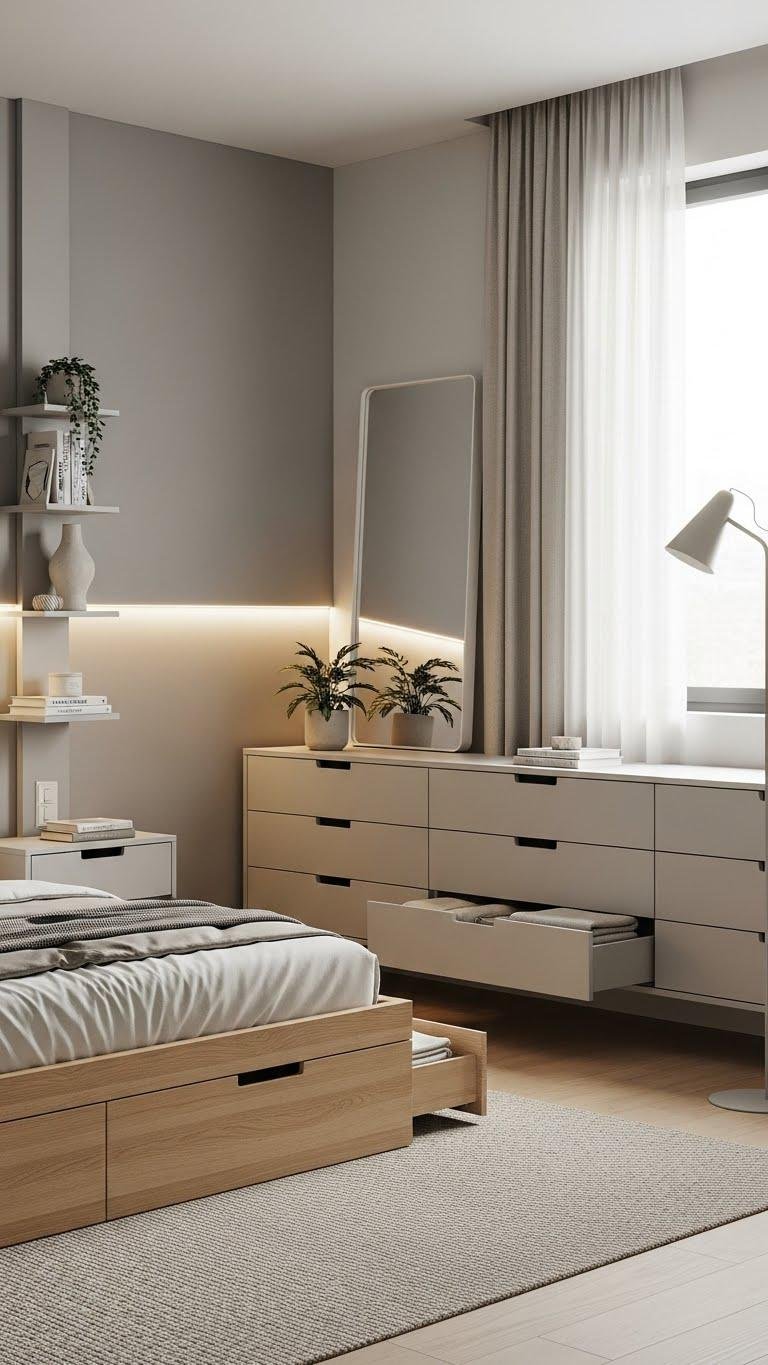
Because your bedroom should feel like a retreat, keep storage simple and intentional so surfaces stay clear and the room breathes.
You’ll choose multifunctional pieces with hidden compartments and clean lines, tuck belongings away, and favor vertical shelving to free floor space.
Commit to a capsule approach: one drawer per category, curated items only, and open sightlines that invite calm and freedom.
Select a Supportive, Comfortable Mattress
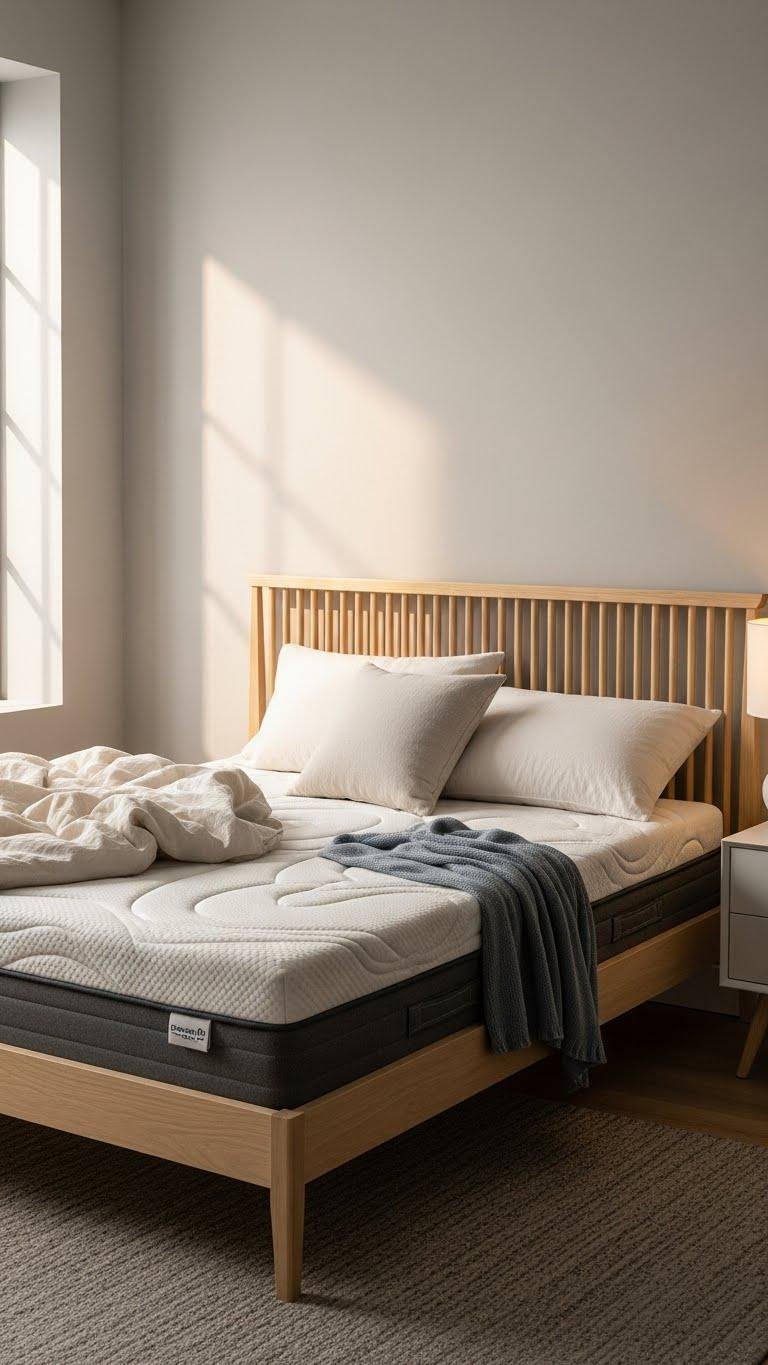
Once you’ve cleared surfaces and pared down possessions, give the same intentionality to the bed—your mattress shapes how rested you feel and how the room functions. Choose one that relieves tension using pressure mapping, balances firmness with contour, and offers solid edge support so you can stretch out without falling inward.
A thoughtful mattress lets you wake unburdened and free to move.
Incorporate Natural Materials and Textures
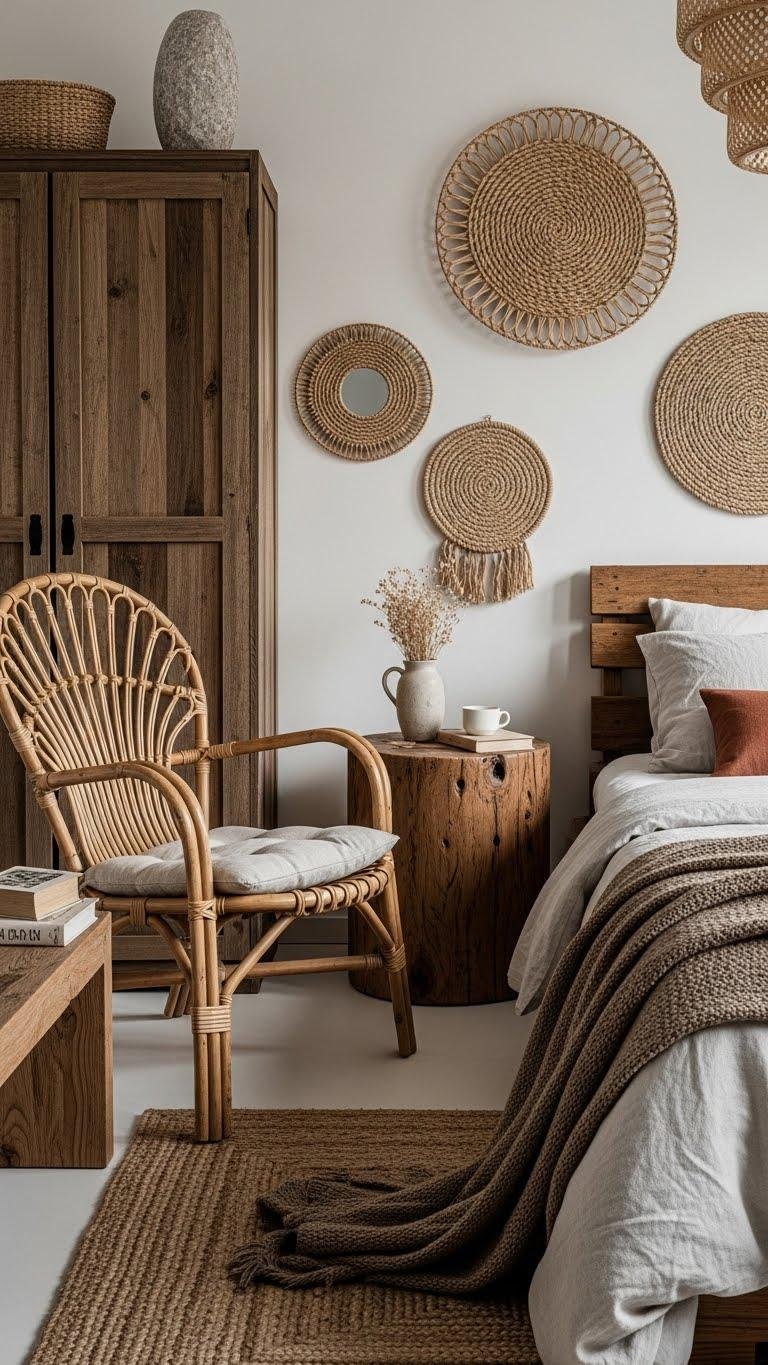
By bringing in wood, stone, linen, and woven fibers you ground the room with tactile warmth and quiet visual interest. Choose reclaimed wood furniture, a handcrafted rattan chair, and linen bedding to keep things honest and breathable.
Let natural textures suggest calm without clutter. You’ll feel freer, connected to materials, and able to rest in a simpler, more intentional space.
Use Soft Area Rugs to Soften Sound
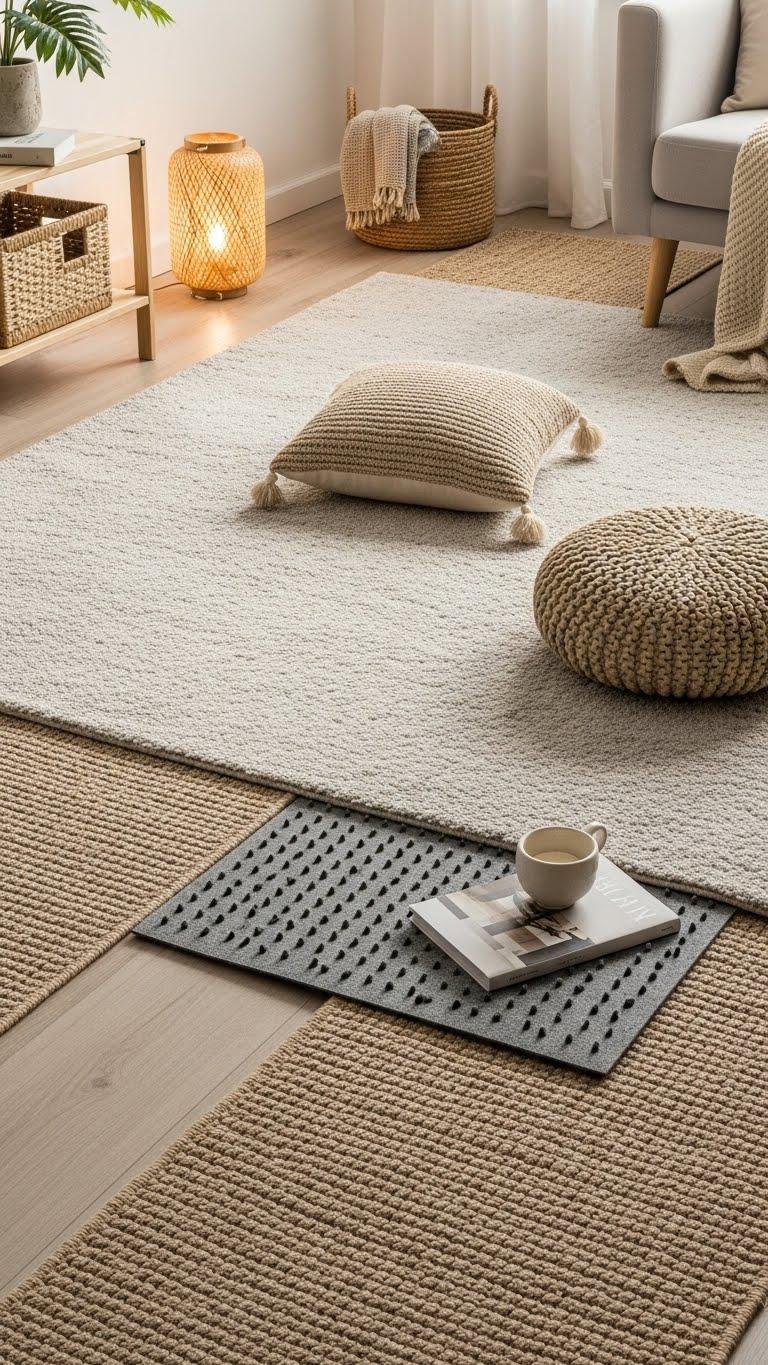
Soothing your room’s acoustics with a soft area rug instantly makes the space feel calmer and more intimate. Choose rugs with an acoustic underlay to cut echo and footsteps, then layer textured runners for warmth along pathways.
You’ll reduce noise, anchor furnishings, and create a liberated, serene vibe without clutter. Opt for neutral hues and natural fibers for effortless calm.
Limit Electronic Devices in the Room
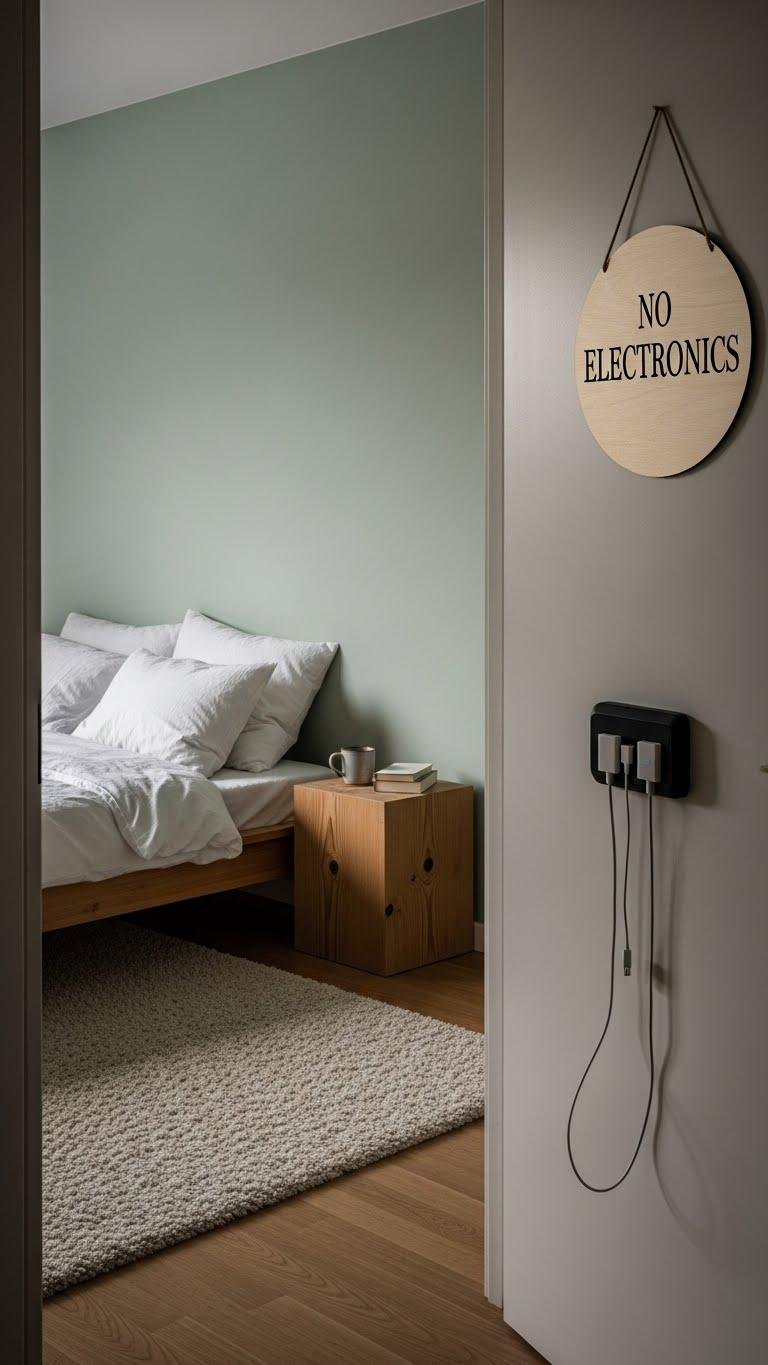
After you’ve softened sound with a rug, turn your attention to what’s playing in the space: electronics. Choose an electronics detox routine—charge devices outside the room, mute alerts, and keep screens out of sight.
You’ll reclaim calm, focus, and deeper sleep by treating the bedroom as a device free zone. Simplicity here feels liberating and restores control over your rest.
Apply Subtle, Nature-Inspired Patterns
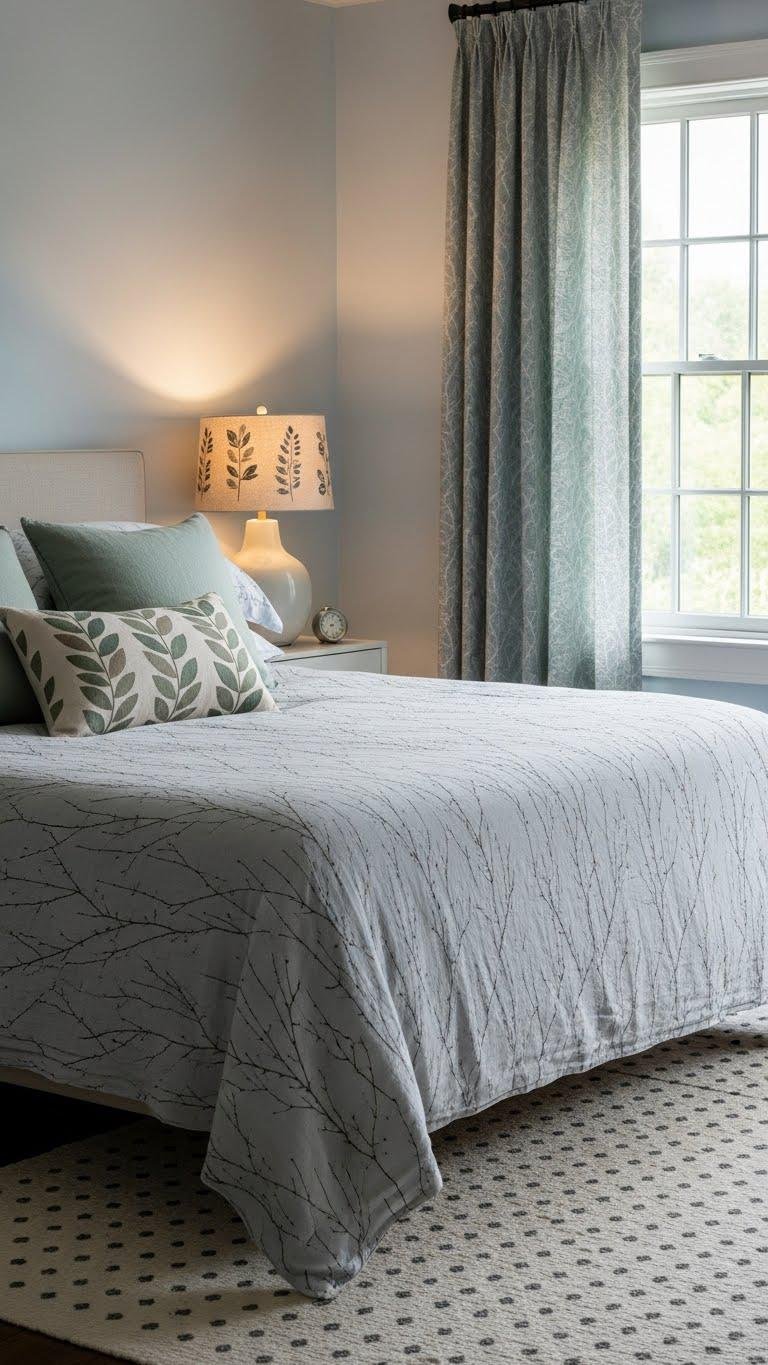
Drawing on nature’s calm, introduce gentle botanical and organic motifs in small doses—think a muted leaf print on throw pillows, a soft wave pattern on curtains, or a linen duvet with a barely-there twig texture.
You’ll balance these botanical motifs with restrained micro geometric prints on rugs or lampshades, keeping scale small so patterns feel freeing, grounded, and quietly restorative for better sleep.
Scent the Room With Lavender or Calming Oils
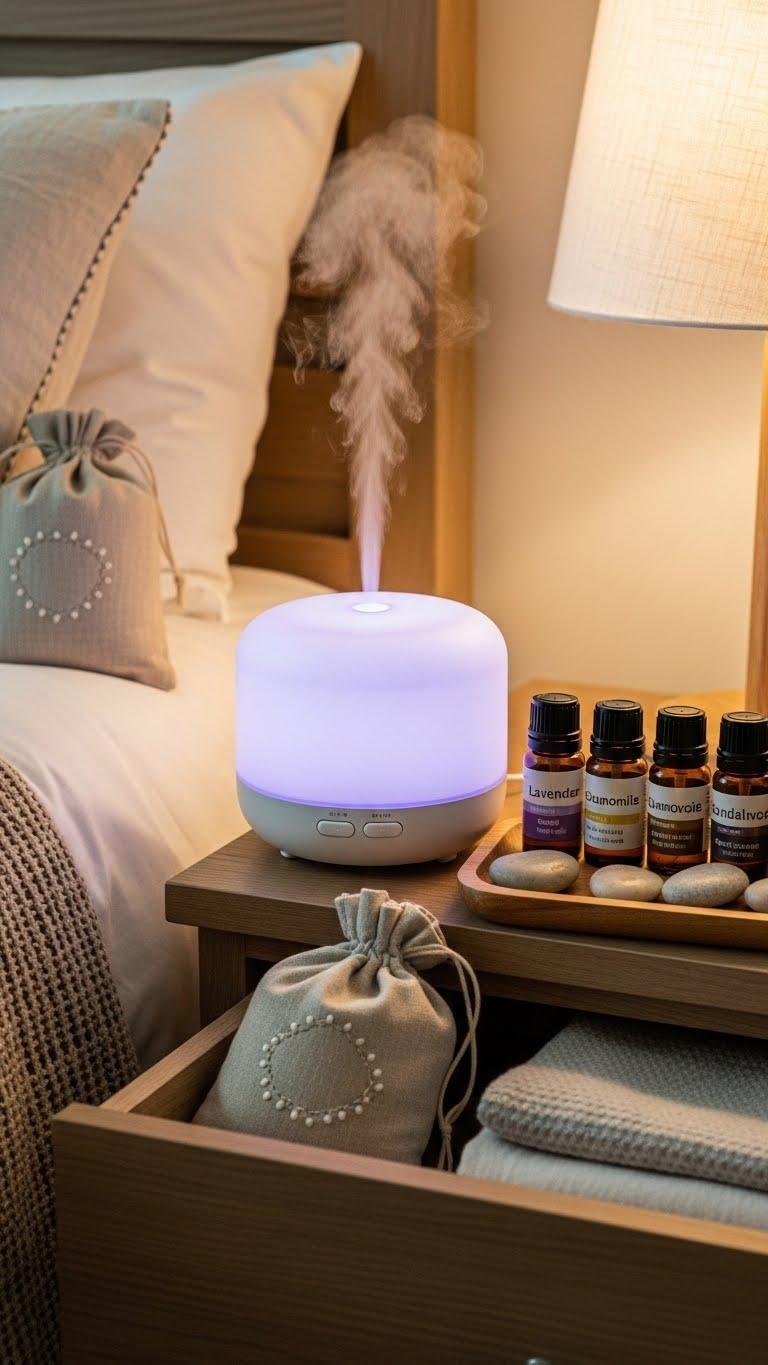
With a few drops of lavender or a calming essential-oil blend, you can gently shift the room’s mood toward rest without overwhelming your senses.
Place lavender sachets in drawers or near your pillow, use a low‑mist diffuser for subtle aroma, and follow simple diffuser maintenance tips to keep scents pure.
Rotate blends to match your mood and promote relaxed, liberated sleep.
Choose Curtains That Block Light and Reduce Noise
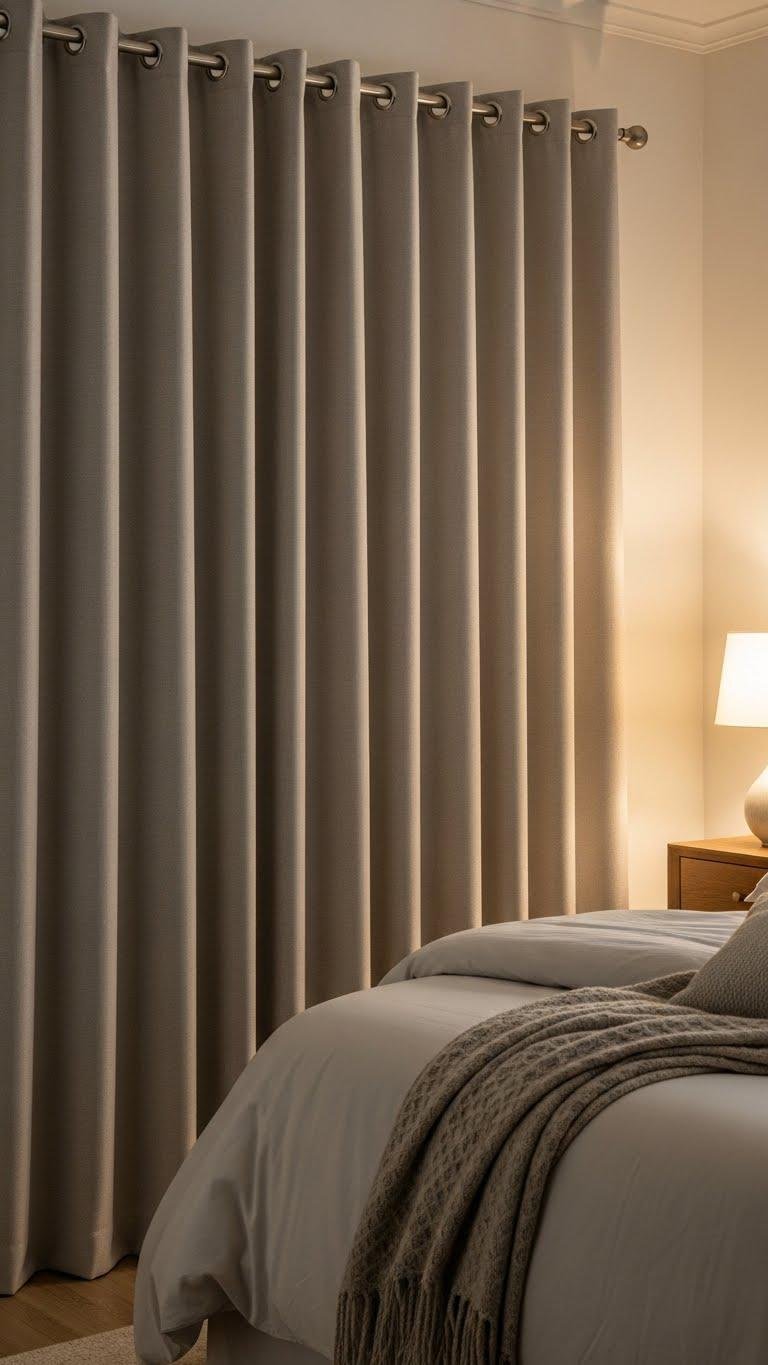
A soft scent sets the tone, but light and outside noise still pull you awake—so pick curtains that truly block both. You’ll want noise reducing blackout panels with dense weave and thermal insulating liners to cut light, street sound and drafts.
Choose floor-length, neutral tones and simple hardware for a liberated, uncluttered feel. Close them each night to protect your rest.
Arrange Furniture for a Relaxing Flow
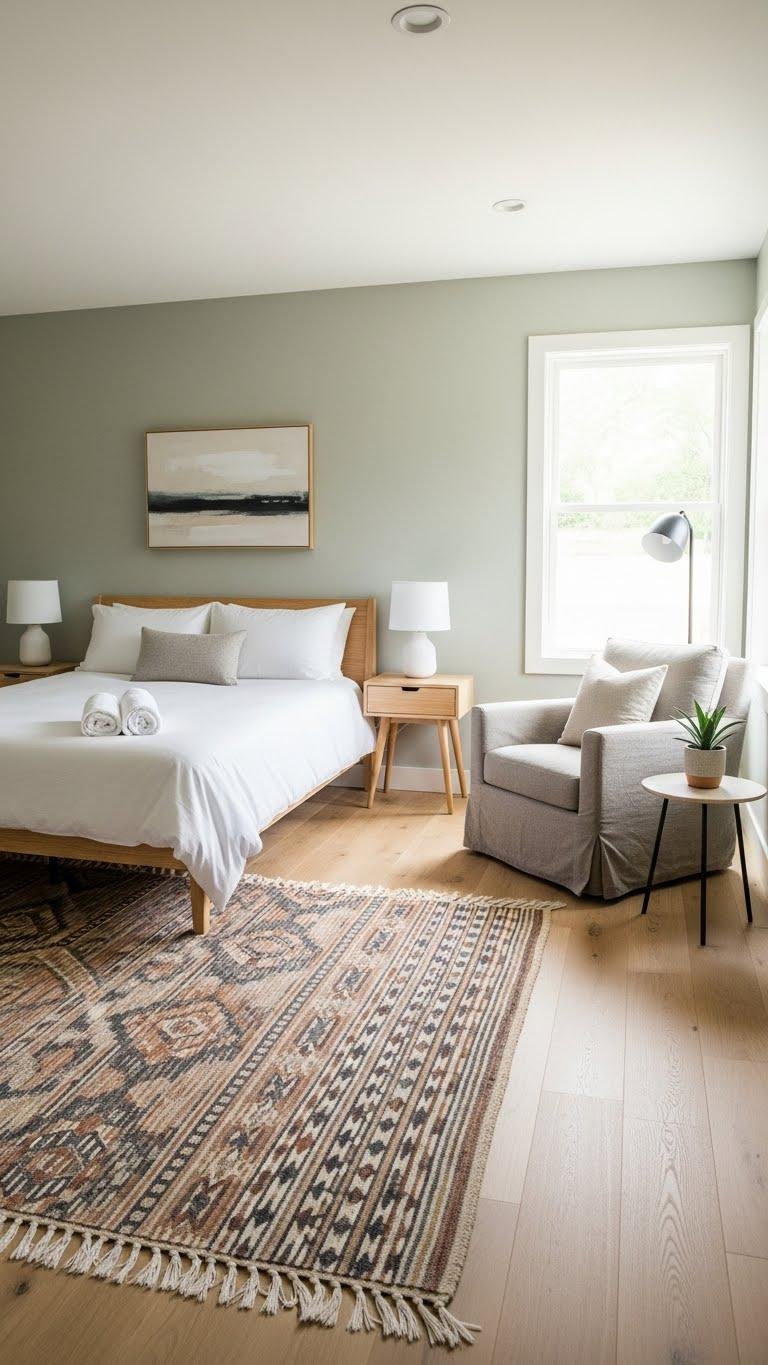
When you place furniture to encourage movement and calm, think in paths instead of pieces: leave clear walkways around the bed, angle seating toward natural light, and avoid blocking sightlines to windows or doors.
Define furniture zoning to create purposeful areas, keeping decor minimal so flow pathways stay open.
You’ll move freely, feel lighter, and sleep better in a balanced, uncluttered room.
Add an Upholstered Bench or Cozy Seating
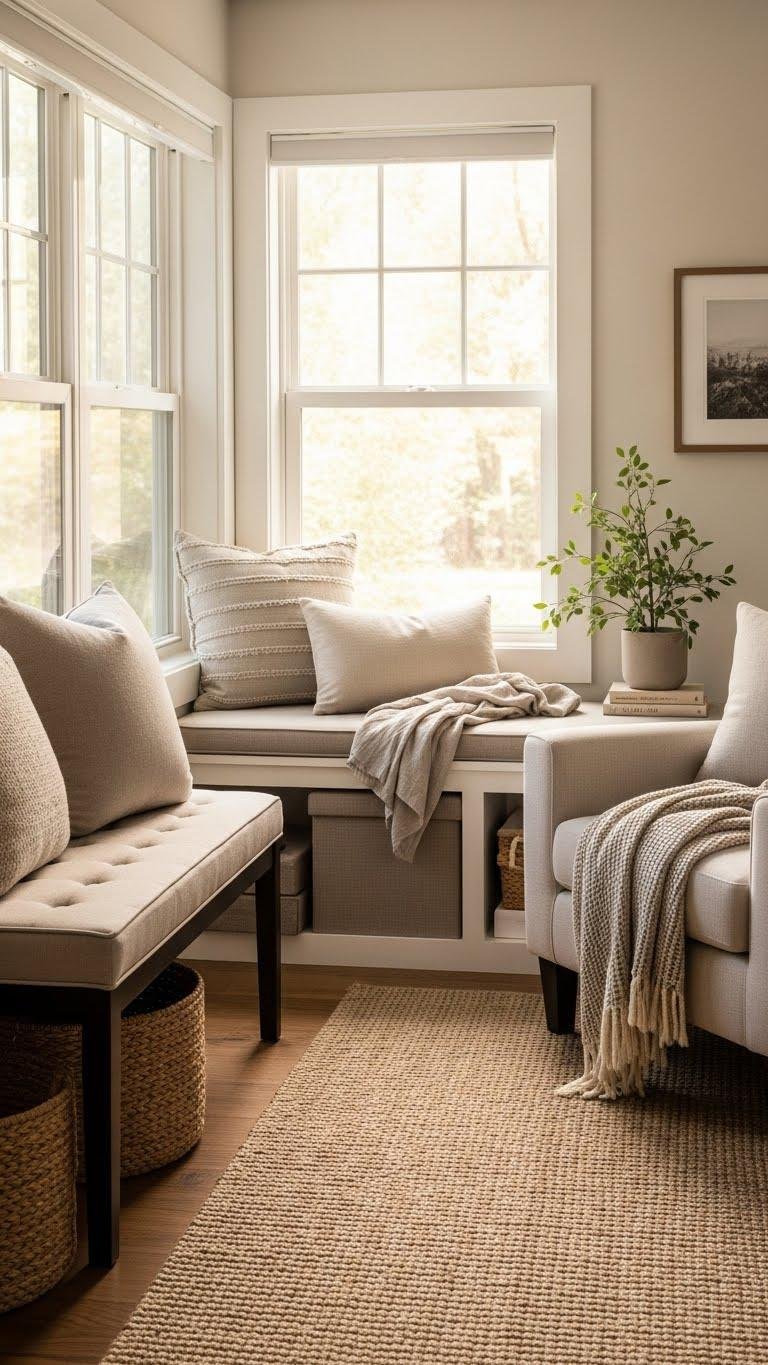
Paragraphs
Use Muted Accent Colors Like Pale Blue or Green
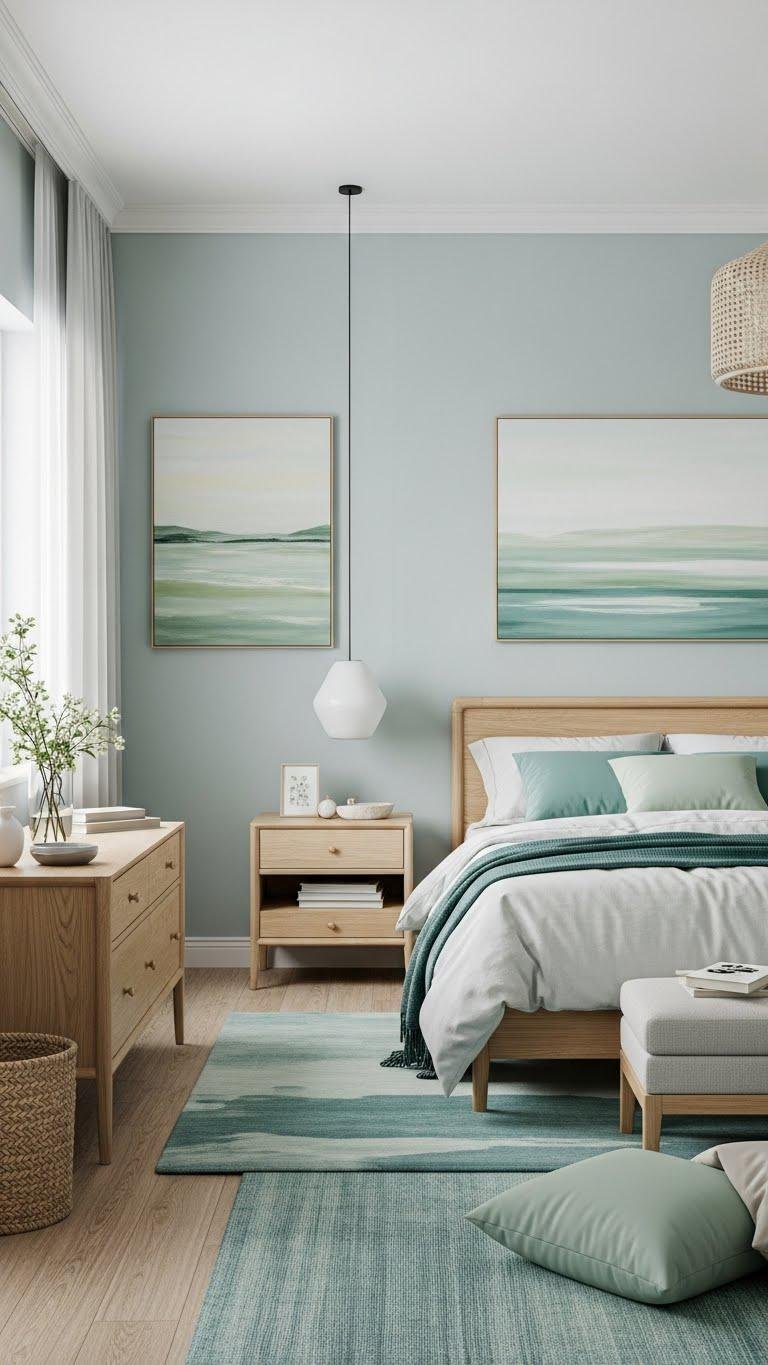
Soft, muted shades like pale blue or green bring a quiet freshness to your bedroom without overpowering the space, and they pair easily with natural textures and warm neutrals.
You’ll choose muted teal or gentle sage accents to create calm focal points—paint, a rug, or artwork—keeping contrast low so the room feels open, airy, and free while supporting restful sleep and relaxed mornings.
Layer Throw Blankets and Pillows for Comfort

Layer throw blankets and pillows to build instant comfort and visual depth—mix a plush, breathable blanket at the foot of the bed with a few lightweight throws and a curated set of pillows in varying sizes and textures. You’ll create a relaxed, personal nook by combining textured throws with neutral sheets, arranging layered cushions for support, and keeping the look simple so you can move freely and unwind.
Install Adjustable, Warm LED Lighting
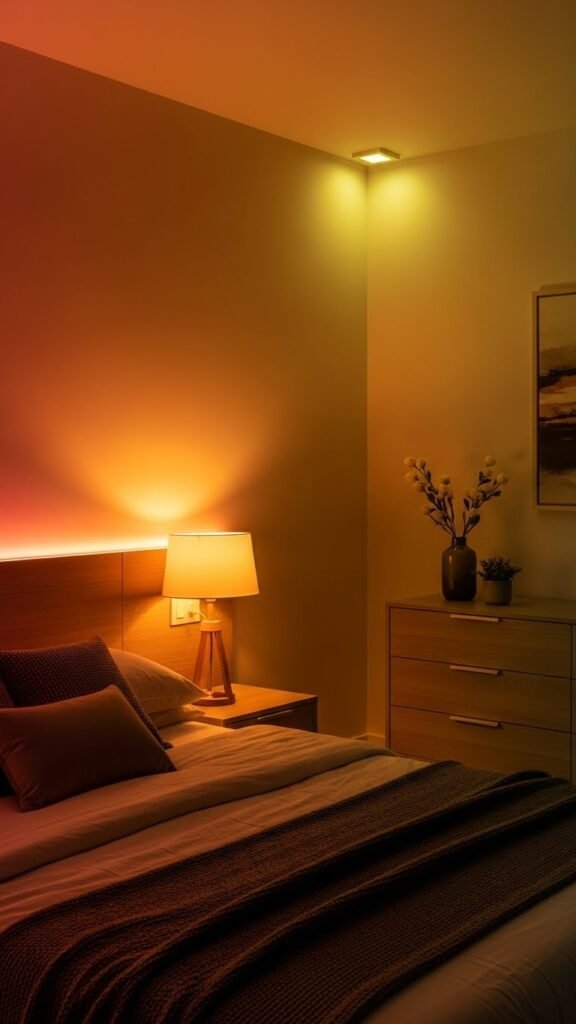
Install adjustable, warm LED lighting to instantly change your bedroom’s mood without fuss. You’ll choose dimmable fixtures and smart bulbs that deliver eye friendly warmth and circadian friendly hues, letting you shift brightness and color with ease.
Place soft uplights, bedside lamps, and strips behind furniture to craft a calm, flexible space that supports winding down and morning ease.
Create a Nighttime Ritual Corner
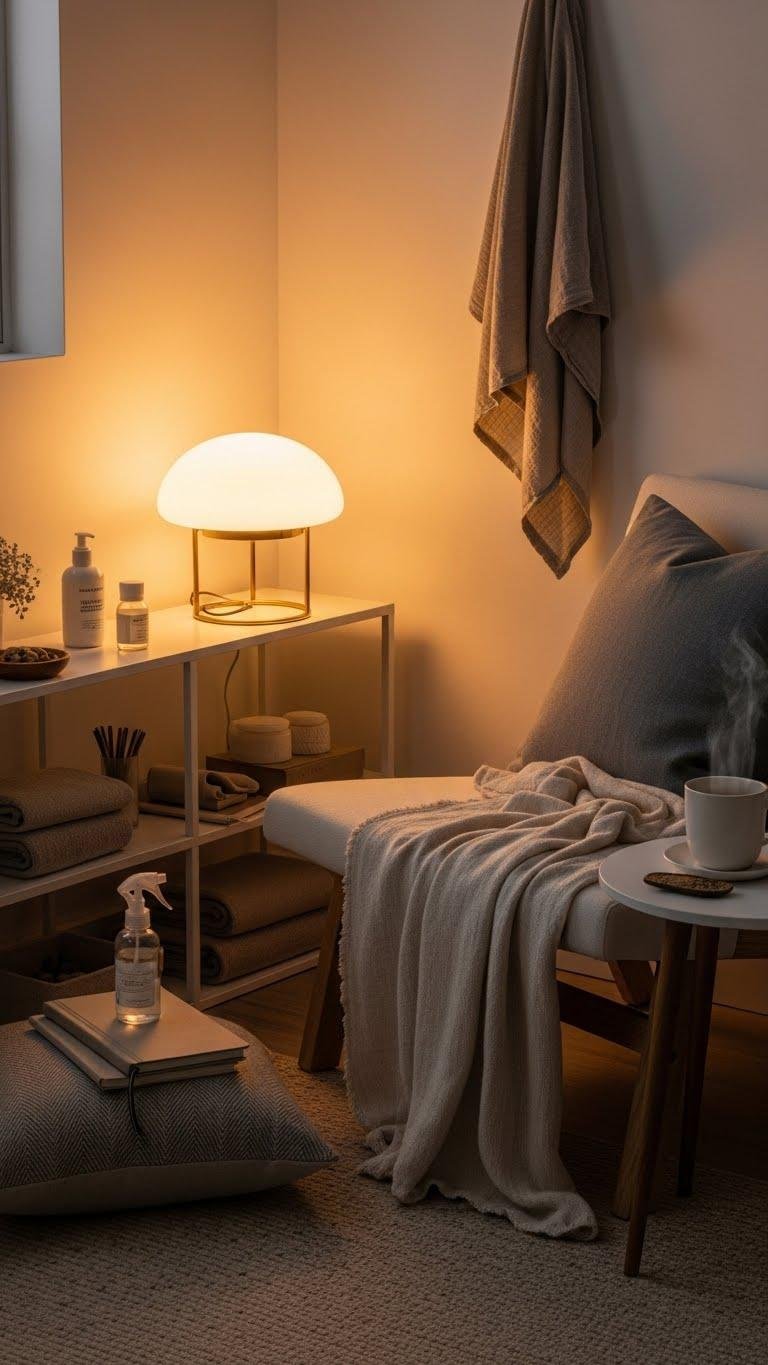
Now that your lighting helps you wind down, carve out a small nighttime ritual corner that makes ending the day feel intentional. Choose a low chair, a soft reading lamp, and a slim shelf for ritual storage. Keep textiles breathable and colors muted. Add a journal, a cup, and a calming spritz.
This compact, purposeful nook lets you close the day with calm and freedom.